Containerization and Kubernetes

Your infrastructure shouldn't require a specialist on call every time something needs to scale, recover, or ship.

We design and operate container infrastructure that runs predictably under pressure — so your engineering team spends less time managing environments and more time building the product.
Clutch 4.9 rating with 5 stars
100+Reviews
1000+Projects Delivered

Move From Fragile Infrastructure to Container-Native Architecture

NDA Protected
Response within 24hrs
No Obligation

550+ Engagements Since 2006 — Trusted By

Darden
SKF
WeWork-Client
Thyrocare
goosehead insurance
Blissclub
OliveGarden
MetroGhar
chant
soccerverse
ICICI
kingsley Gate
Coin up
Atsign
Darden
SKF
WeWork-Client
Thyrocare
goosehead insurance
Blissclub
OliveGarden
MetroGhar
chant
soccerverse
ICICI
kingsley Gate
Coin up
Atsign
Darden
SKF
WeWork-Client
Thyrocare
goosehead insurance
Blissclub
OliveGarden
MetroGhar
chant
soccerverse
ICICI
kingsley Gate
Coin up
Atsign

Most container infrastructure problems don't start with Kubernetes. They start with decisions made before Kubernetes was in the picture — services that weren't designed to run in containers, clusters that were stood up without a day-two operations plan, and workloads that scaled fine in staging but fell apart under real traffic.


By the time those problems surface, they're expensive to fix and hard to explain to leadership. Our Containerization and Kubernetes service is built around preventing that outcome. We assess where your container strategy is creating risk or holding back delivery, then build the infrastructure layer your platform needs to scale — without the operational weight that normally comes with it.

CUSTOMER STORIES

Client Results and Success

WHAT WE DO

Our Containerization and Kubernetes Services

Running containers in production is a different discipline from getting them working in a demo. The failure modes are different, the operational requirements are different, and the cost of getting it wrong shows up in ways that are hard to trace back to their origin. Our services are built for teams that need container infrastructure to actually hold up — at scale, under load, and without requiring constant expert attention.

Containerization Strategy and Implementation

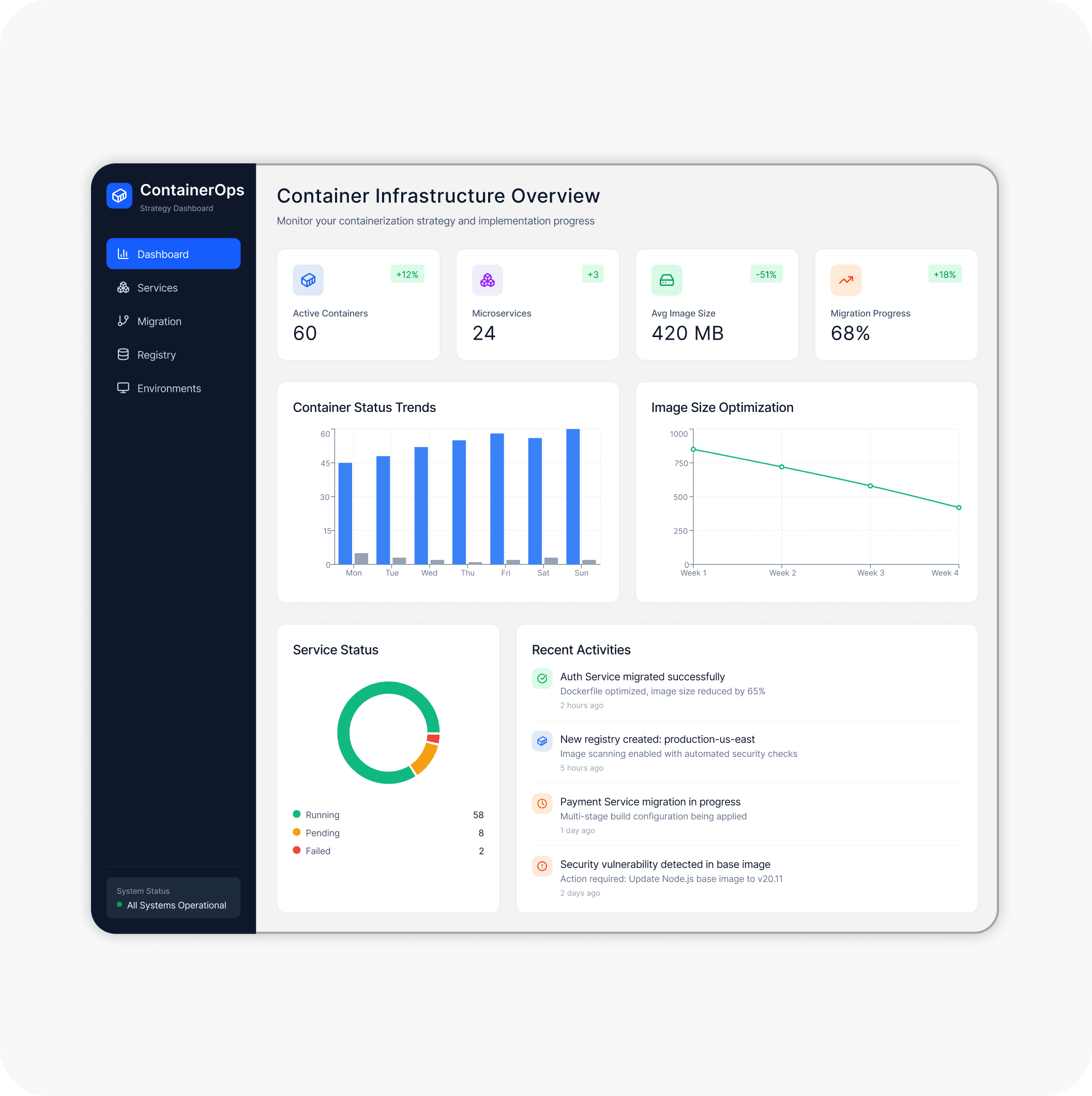
  • Workload assessment and container migration planning, from legacy services to greenfield architecture.
  • Dockerfile optimisation, image hardening, and registry management for secure, lean container builds.
  • Service decomposition guidance for teams transitioning toward a container-native architecture.
  • Local development environment alignment, so that what runs on a developer's machine behaves the same way in production.
Containerization Strategy and Implementation

Kubernetes Cluster Design and Operations

Scaling, Reliability, and Day-Two Operations

Observability and Incident Response

INDUSTRY EXPERTISE

Containerization And Kubernetes Across Every Industry

CTOs and engineering leaders don't invest in Kubernetes because it's technically interesting. They invest because unreliable infrastructure is expensive — in engineering time, in incident response, in delayed releases, and in cloud spend that doesn't map to value delivered. This is what changes.

Infrastructure That Holds Up When Traffic Doesn't Behave

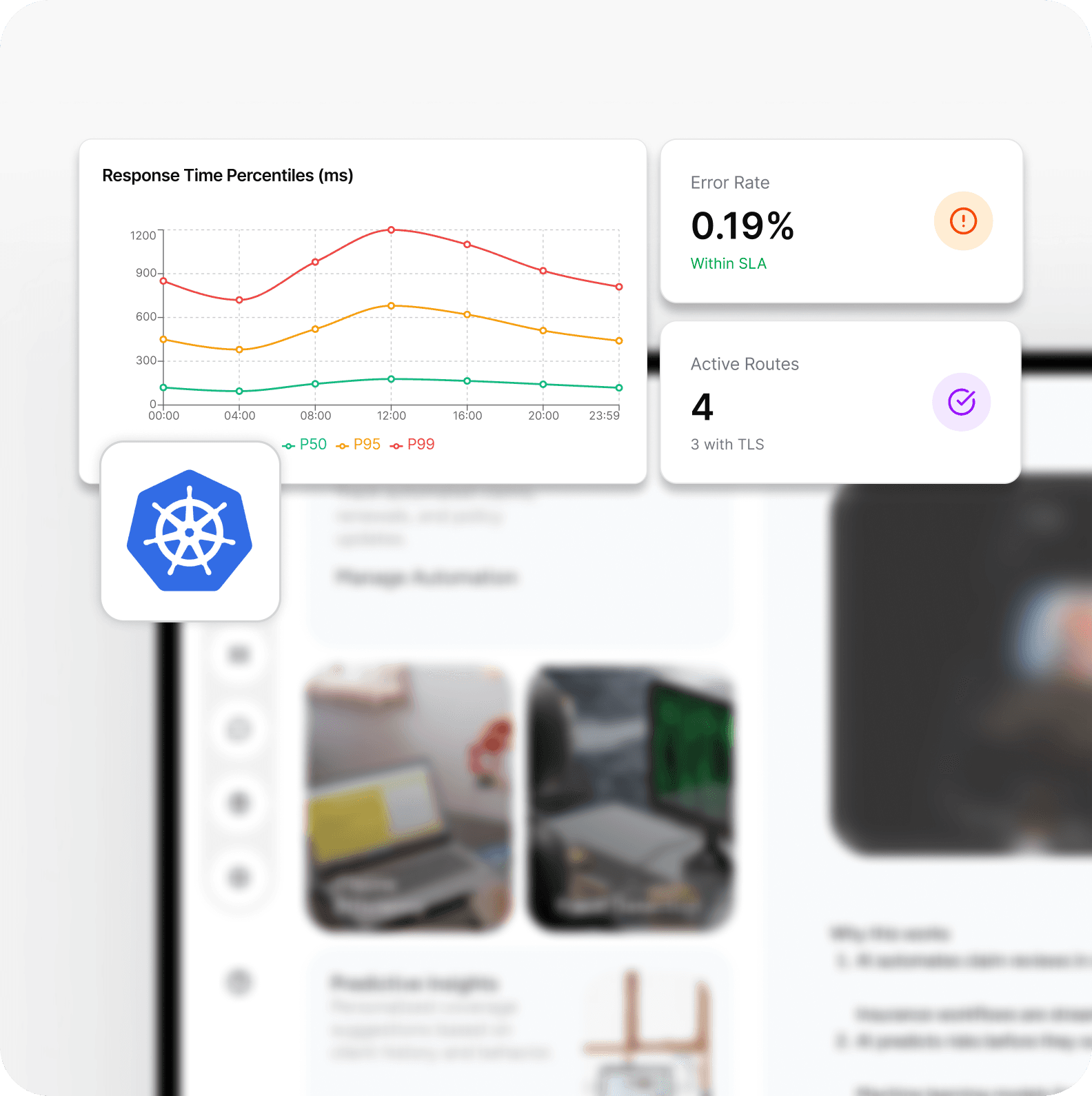
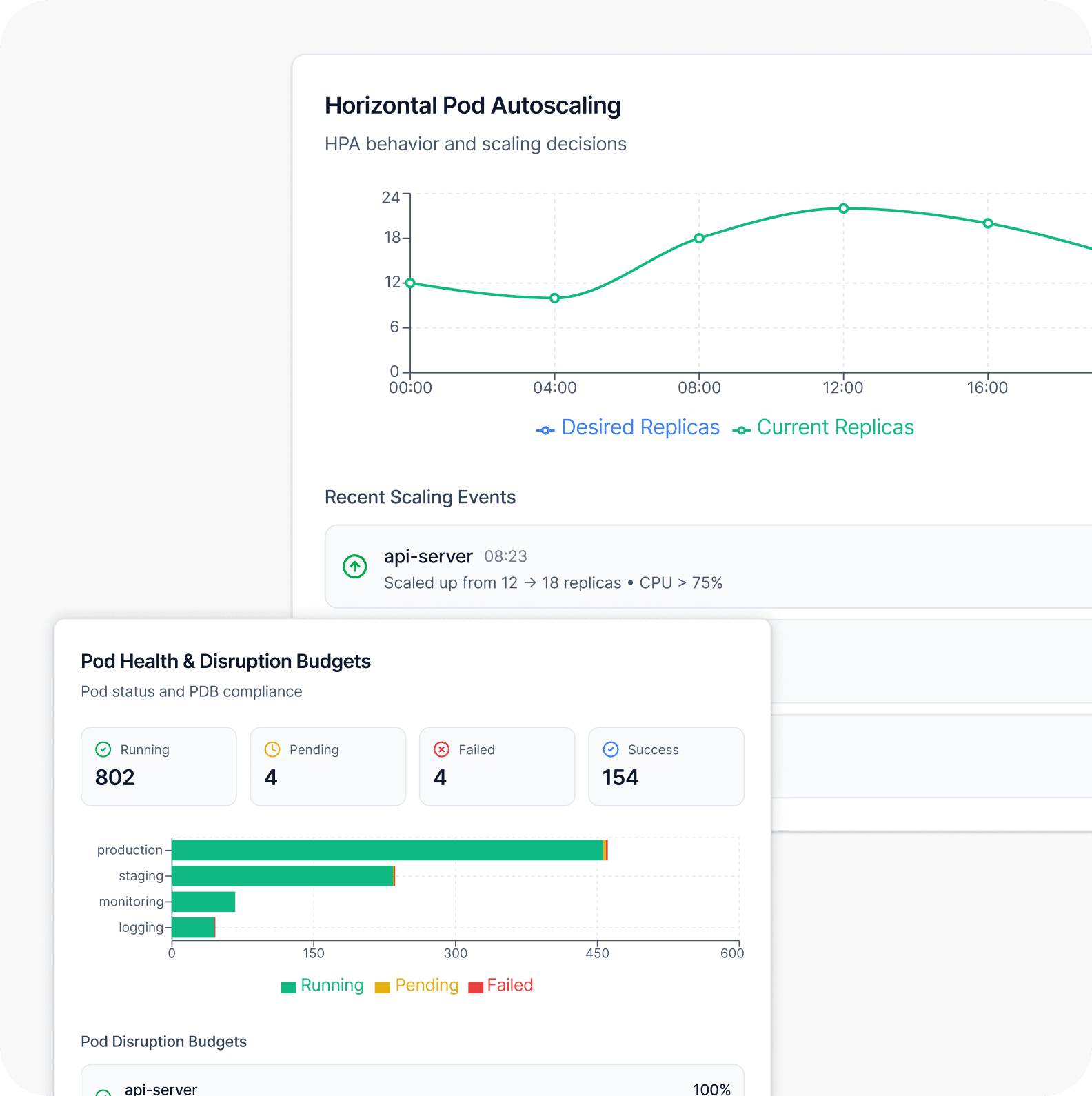
Properly configured autoscaling and pod-level resilience mean your platform responds to demand spikes without manual intervention and recovers from failures without your team being paged at 2 am.

Release Confidence Across Every Environment

Container-native delivery means the same image that passed testing is what reaches production. Environment-specific failures stop being a regular occurrence.

Infrastructure Costs Proportional to Real Demand

Right-sized containers and intelligent autoscaling mean you pay for what your workloads need when they need it — not for headroom that exists to compensate for infrastructure you don't fully understand.

Engineering Time Back Where It Belongs

When your container infrastructure is designed properly and documented thoroughly, it stops consuming engineering attention. Your senior engineers work on problems that move the product forward, not on keeping the cluster stable.

OUR RANGE OF IMPACT

Kubernetes and Containerization Across Every Industry

Container infrastructure requirements vary significantly depending on the industry. A fintech platform running under PCI-DSS has fundamentally different cluster security requirements than a consumer app optimising for release velocity. A healthcare system operating under HIPAA needs audit trails and access controls baked into the container layer. A high-traffic e-commerce platform needs autoscaling that responds in seconds, not minutes.

We design container infrastructure around the operational and compliance reality of the industry you operate in — not a generalised Kubernetes template adapted after the fact.

THE GEEKYANTS DIFFERENCE

Kubernetes Engineering from a Team That Has Operated It in Production Across 1000+ Projects

There's a significant gap between teams that have deployed Kubernetes and teams that have operated it — through scaling incidents, misconfigured RBAC, node pool exhaustion, and workloads that behaved perfectly in staging and failed in ways nobody anticipated in production.

We sit firmly in the second category. The experience we bring to your engagement isn't theoretical. It comes from years of operating container infrastructure across industries, platform types, and scale ranges where the cost of getting it wrong was real.

No Separation Between the People Scoping and the People Building

The engineers assessing your container infrastructure are the same engineers designing and implementing the solution. There's no account management layer between the conversation and the keyboard.

Kubernetes Architecture Designed for Your Operational Reality

Cluster design, namespace strategy, scaling configuration, and day-two operations planning are built around your team's size, your release cadence, and your platform's actual traffic behaviour — not a generic configuration that approximately fits.

Vendor-Neutral Across Cloud and Tooling

We work across EKS, GKE, AKS, and self-managed Kubernetes, with hands-on depth in Helm, ArgoCD, Istio, Prometheus, Grafana, Datadog, Terraform, Pulumi, and more. Recommendations are driven by what your environment needs — not tooling preferences.

Production-Ready and Fully Transferable

Every cluster, Helm chart, runbook, and configuration file we deliver is production-ready and documented for long-term operation by your team. The handover is complete — not a starting point that still requires our involvement.

Your Team Can Own and Extend What We Build

Structured knowledge transfer, operational documentation, and architecture decision records give the engineers inheriting the system the context to operate it confidently and make good decisions about where it goes next.

Future Ready

Our Offerings in DevOps Consulting and Services

DevOps Assessment

Infra, CI/CD & operations health checkRisk, cost & bottleneck identificationClear, prioritized improvement roadmap

CI/CD and Release Management

Fast, reliable deployment pipelinesSafer releases with easy rollbacksImproved developer delivery velocity

Cloud Infrastructure Management and Deployment

Day-to-day infrastructure operations & supportStable, secure cloud environmentsReduced operational overhead for teams

Deployment and Infrastructure Automation

Automated provisioning of infrastructure & deploymentsReduced manual errors and toilConsistent environments across stages

Infrastructure as Code

Version-controlled cloud infrastructureReproducible and auditable environmentsStandardized app and system configuration

Containerization and Kubernetes

Application containerizationPragmatic Kubernetes adoptionScalable and portable runtime platform

Observability- Monitoring, Logging & Alerts

Full system visibility and metricsFaster issue detection and debuggingReduced the production of firefighting

Cost Optimization and FinOps

Cloud cost visibility and trackingWaste elimination without slowing teamsPredictable and efficient cloud spend

Cloud Migration and Modernization

Low-risk cloud migrationsLegacy workload modernizationSimplified and future-ready infrastructure

Scalability and Performance Planning

Traffic and load readiness analysisBottleneck and capacity planningScale-ready architecture guidance

Reliability and Production Readiness

Production resilience and ownershipReduced outages and deployment failuresSustainable on-call operations

Security and Compliance Basics

Identity, access, and permission controlsNetwork isolation, traffic restrictions, and encryptionAudit logging and baseline compliance readiness

FEATURED CONTENT

Our Latest Thinking in DevOps

Discover the latest blogs on Our Latest Thinking in DevOps, covering trends, strategies, and real-world case studies.
Scroll for more
View all blogs

Build with us.Accelerate your Growth.

Customized solutions and strategiesFaster-than-market project deliveryEnd-to-end digital transformation services

Trusted By

Build with us.
Accelerate your Growth.

  • Customized solutions and strategies
  • Faster-than-market project delivery
  • End-to-end digital transformation services

Trusted By

WeworkSKFDardenOlive GardenGoosehead InsuranceThyrocare
clutch
Choose File

What You Need to Know

FAQs About Containerization And Kubernetes

Not necessarily — but it depends on where you're headed. Containers without orchestration work well up to a point. When services multiply, traffic patterns become unpredictable, or release cadence increases, the absence of orchestration tends to show up as operational overhead and scaling constraints. We help teams assess whether Kubernetes is the right next step and, if it is, how to make the transition without disruption.