
Observability Assessment Services
Make Your Systems Transparent and Traceable










Client Results and Success

Production-Ready Kubernetes Architecture
The platform was designed to support scalable production deployments with minimal resource consumption, enabling faster environment provisioning and operational stability.
3
environments K8s setup
95%
environments K8s setup
35%
savings over managed Kubernetes alternatives




Our Observability Assessment Covers Three Core Areas
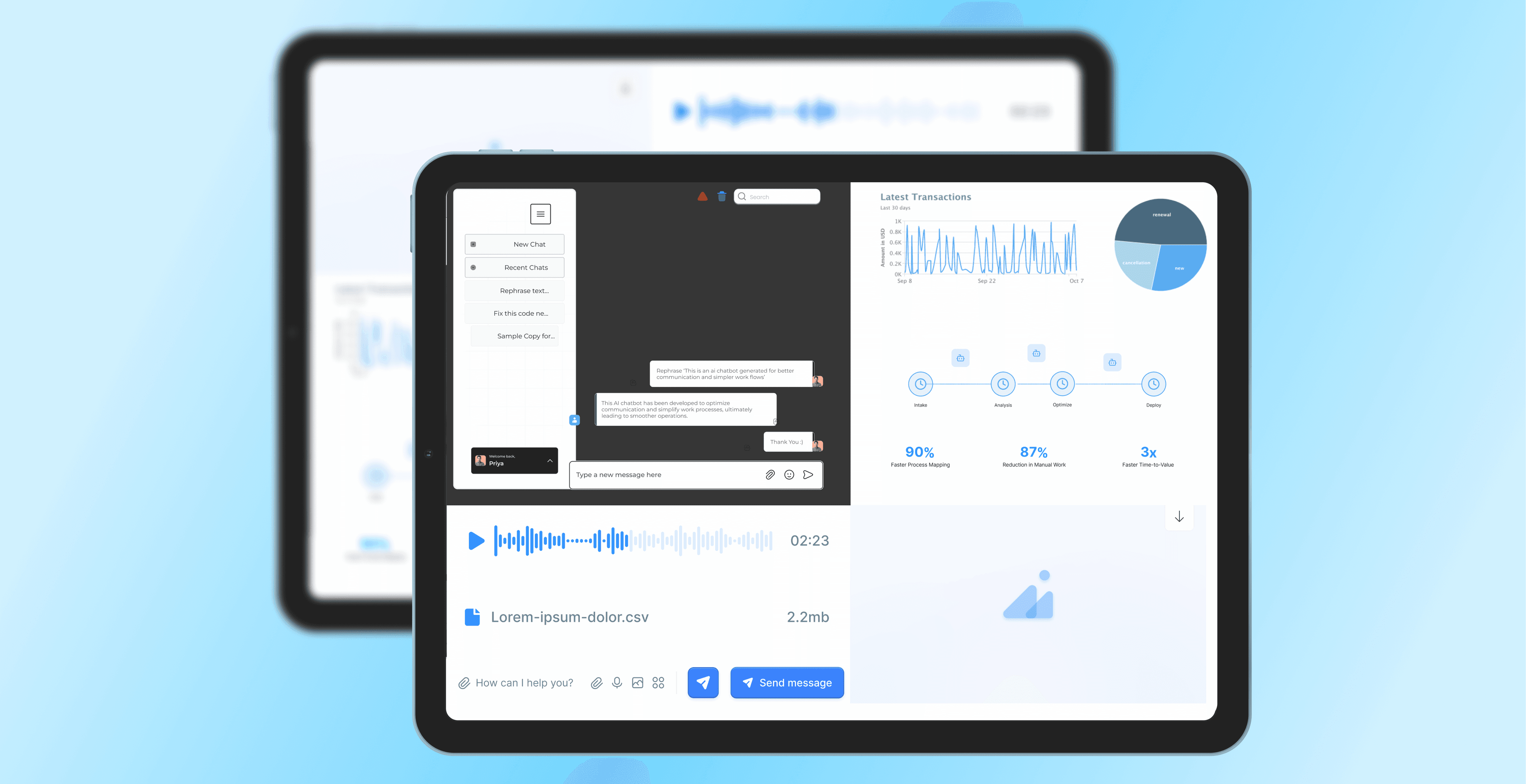
- Metrics stack assessment: Collection gaps, cardinality issues, dashboard effectiveness, and retention policies
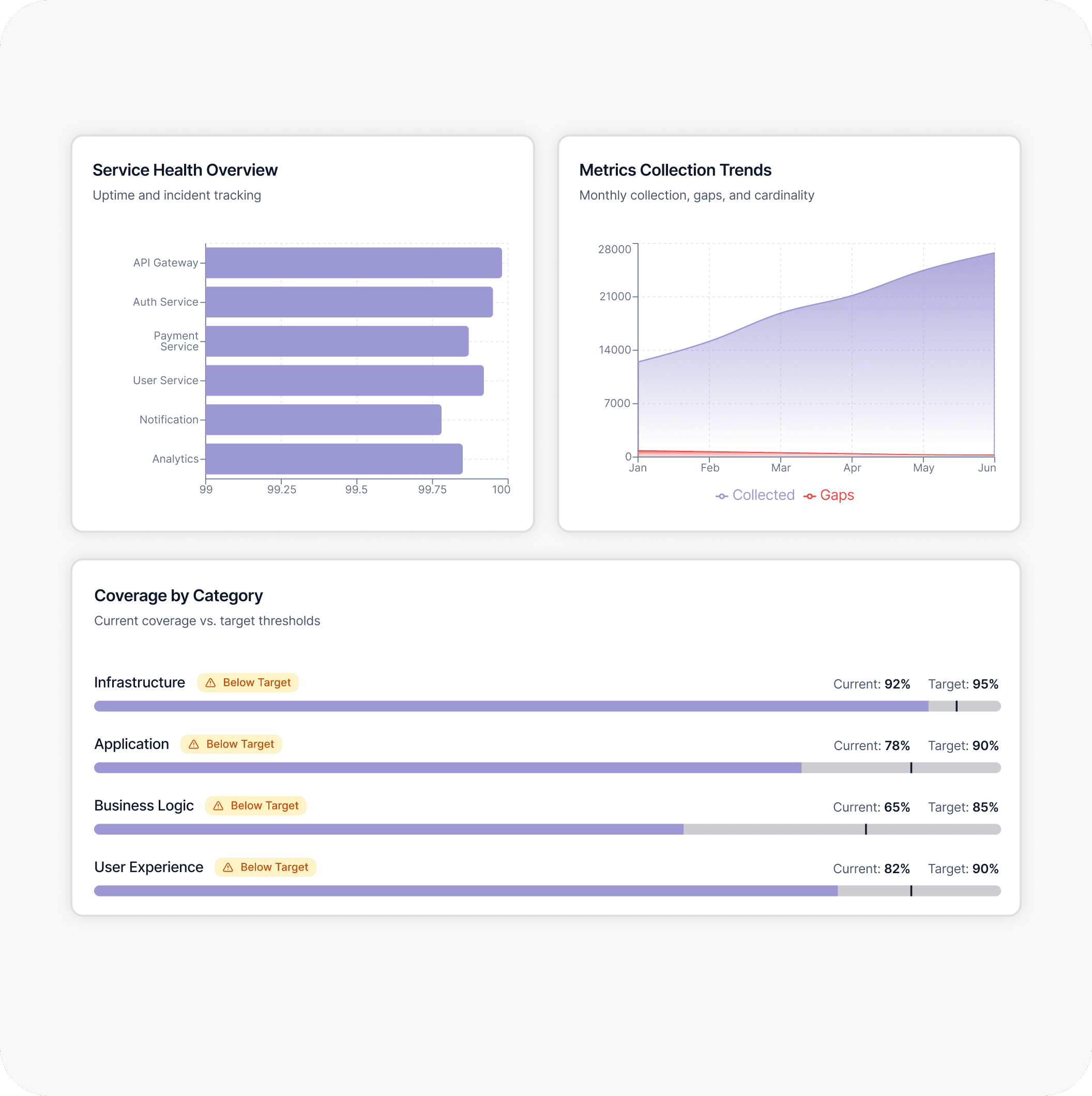
- Service-level visibility: Coverage across infrastructure, application, and business-layer metrics
- Synthetic and real-user monitoring: Uptime checks, transaction tracing, and user-journey observability
- Alerting threshold review: Whether your thresholds are tuned to your actual traffic patterns
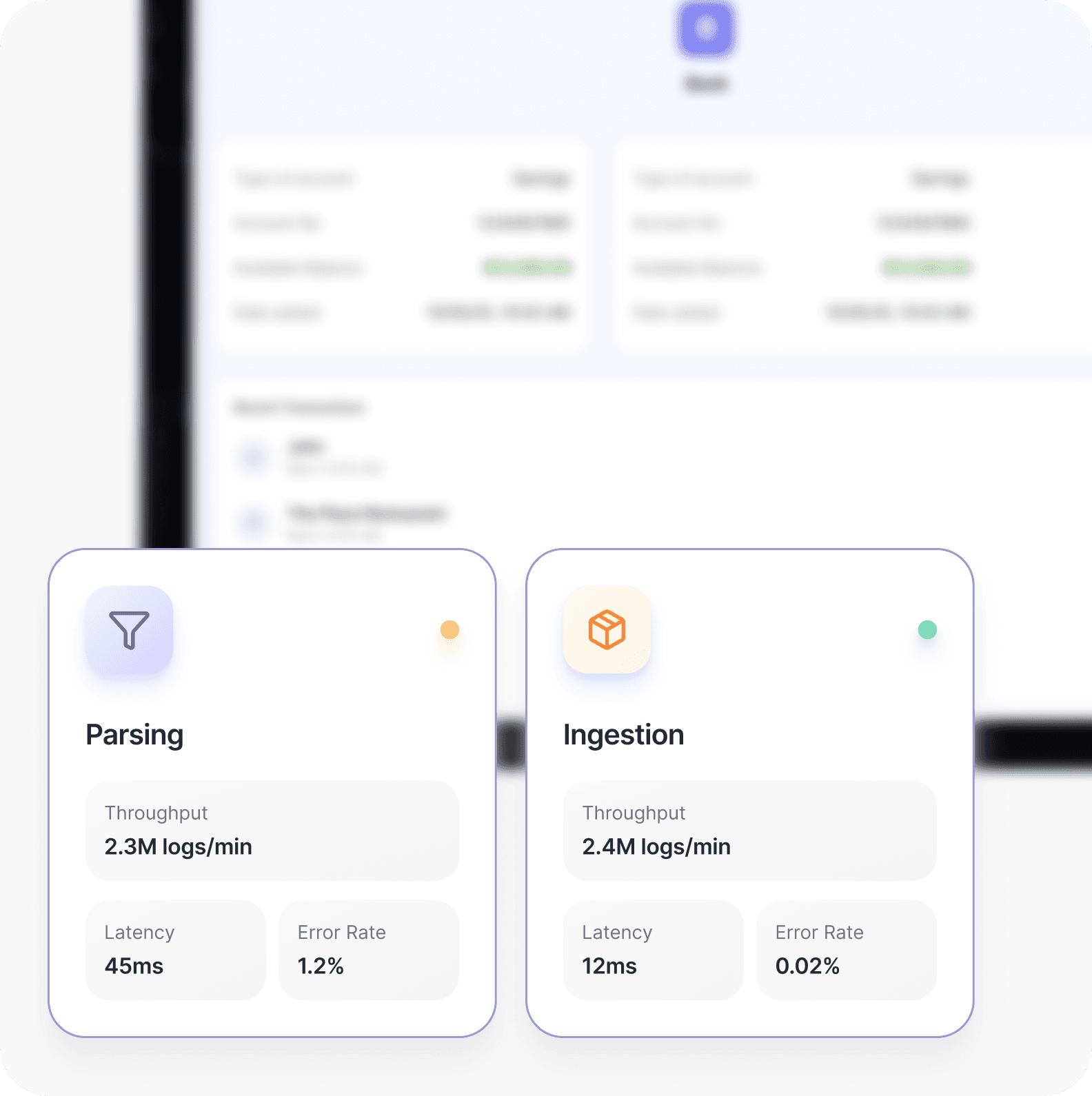
- End-to-end log pipeline audit: Ingestion, parsing, enrichment, and storage workflow mapping
- Structured logging adoption: Consistency of log formats across services and environments
- Log retention and compliance: Coverage against audit requirements, cost, and query efficiency
- Noise and verbosity review: Logs generating cost without contributing to diagnostic value
- Alert coverage gaps: Services and failure modes with no alerting in place
- Alert fatigue analysis: False positive rates, suppressed alerts, and on-call burnout indicators
- Escalation path review: Routing logic, on-call rotation structure, and runbook availability
- Incident correlation capability: Whether your tooling supports fast root cause identification across services
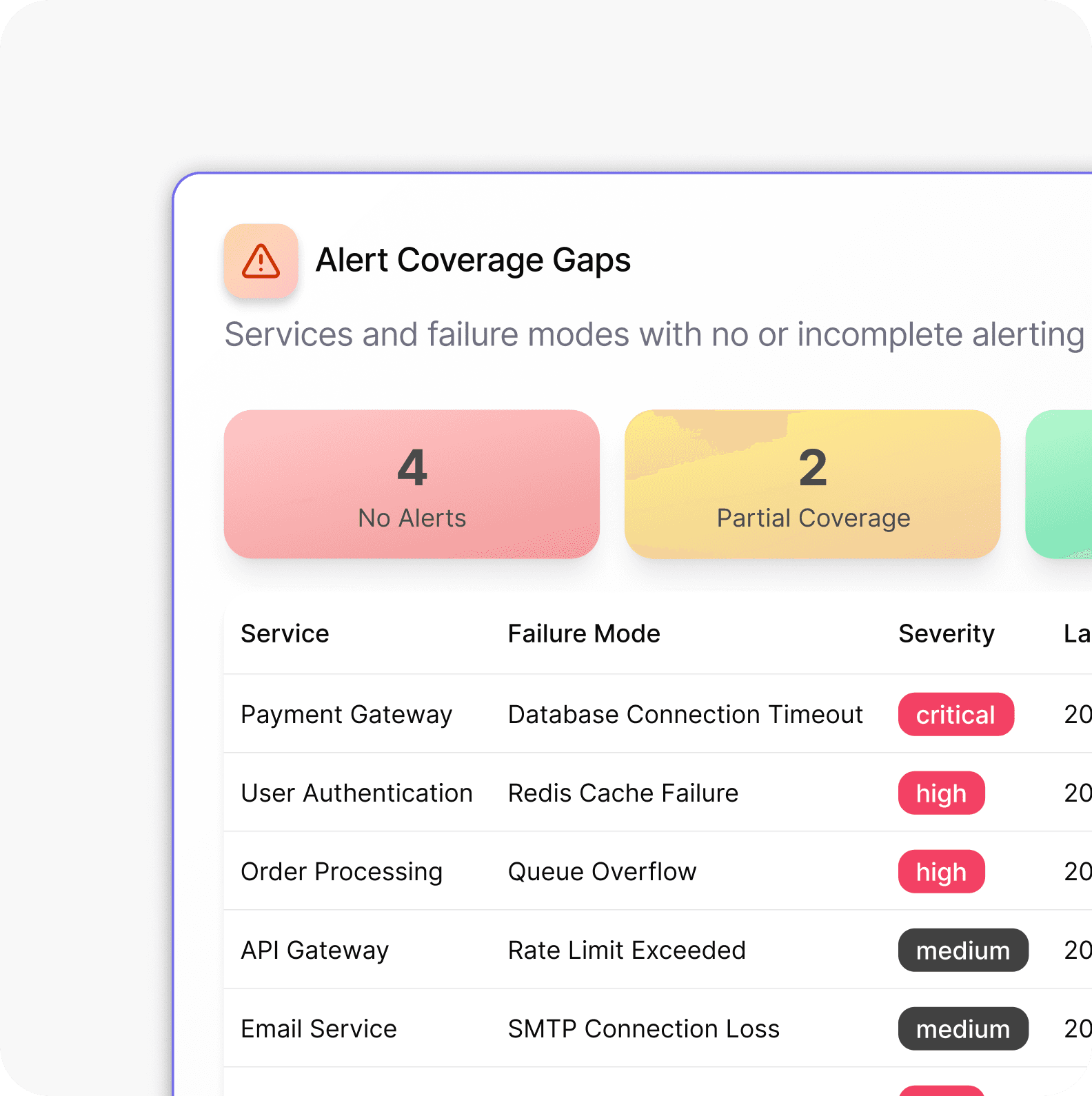
What the Data Shows About Observability Gaps Today
40%
of engineering time spent on reactive incident response instead of product work
60–80%
of alerts require no human action at all
50%
of teams still haven't adopted OpenTelemetry for tracing
87%
of ingested telemetry is never queried
Improvements an Observability Assessment Can Prioritize
Clear Ownership When Things Break
Improve Release Visibility
Make Every Environment Fully Visible
Stop Paying for Observability That Doesn't Observe
Industries We Service


DevOps Assessments by Engineering Teams that Have Built 1000+ Global Projects
Our Offerings in DevOps Consulting and Services
Our Latest Thinking
How GeekyAnts Evaluates AI Systems for Production Readiness
This blog explains how GeekyAnts evaluates AI systems for accuracy, security, bias, cost, and performance before production, supported by real project examples.
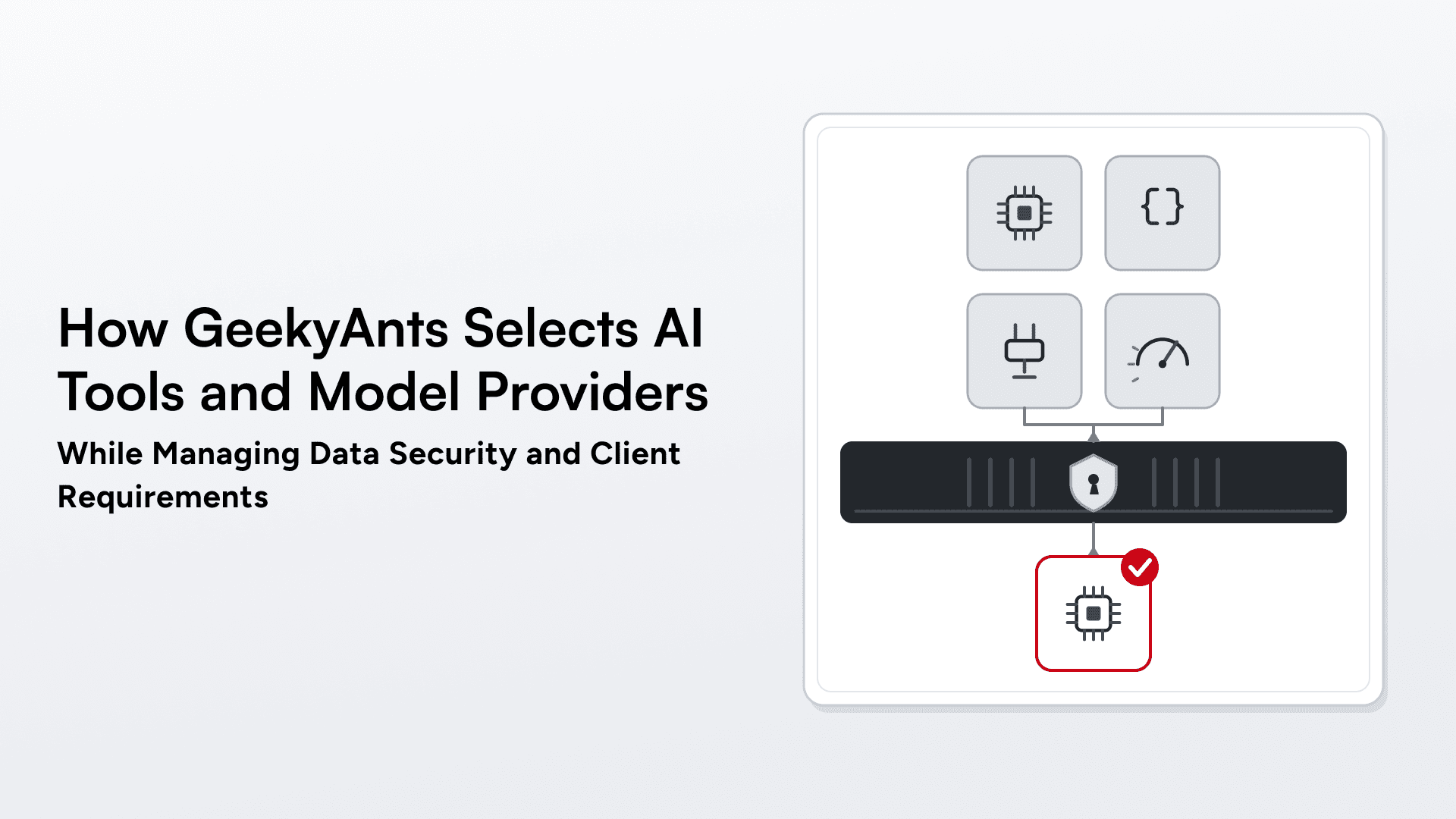
How GeekyAnts Selects AI Tools and Model Providers While Managing Data Security and Client Requirements
Explore the AI tools and model providers used in GeekyAnts’ documented projects, including Claude Code, Gemini, OpenAI, and Ollama. Learn how tool selection, data retention, subprocessors, hosting options, and client requirements shape AI adoption.
How GeekyAnts Uses AI in Software Engineering: From Requirements to Release
This blog explains how GeekyAnts uses AI across software development while maintaining human oversight, quality checks, and engineering accountability.
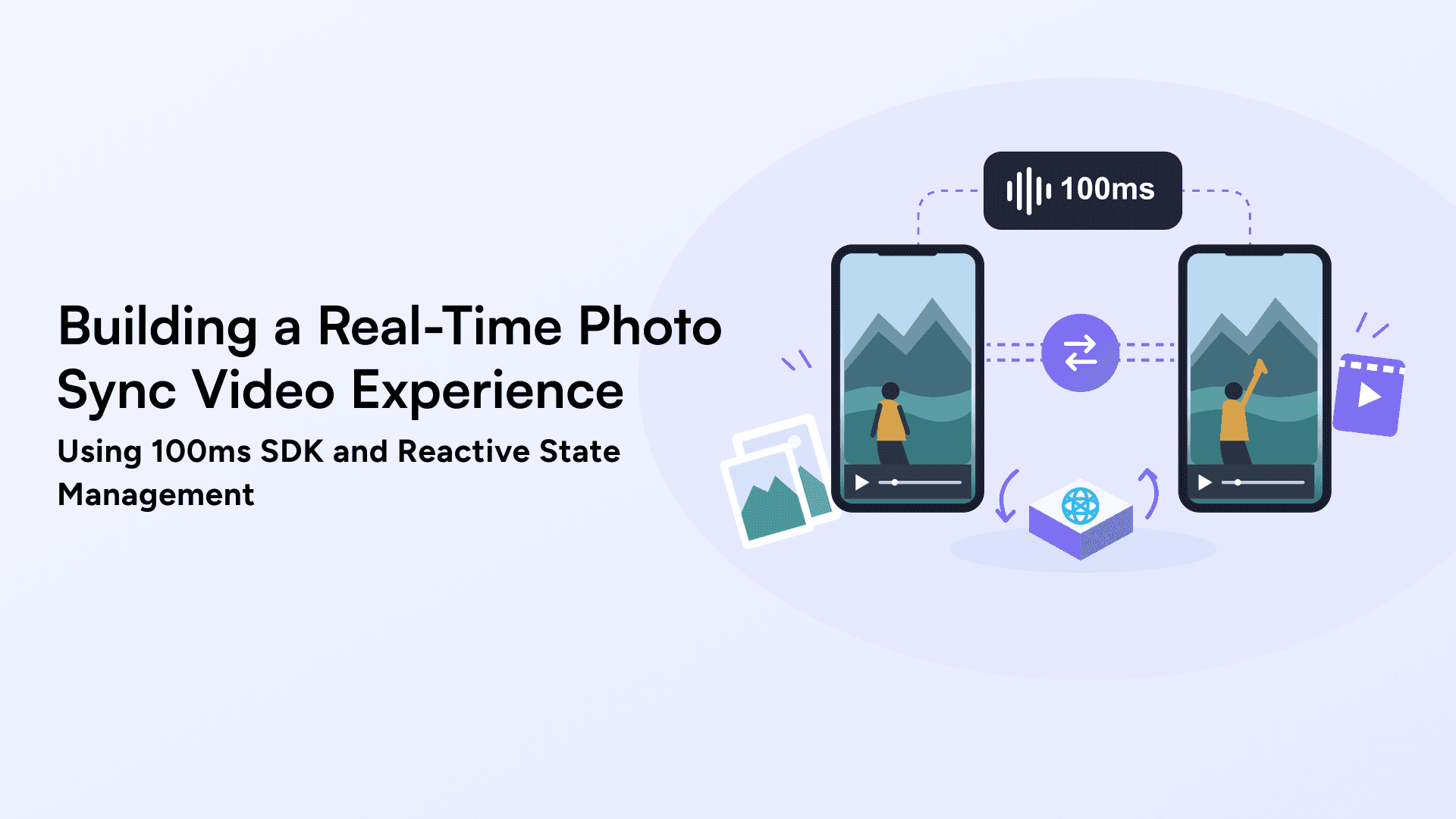
Building a Real-Time Photo Sync Video Experience Using 100ms SDK and Reactive State Management
This blog explains how to build a real-time video experience with synchronized photo sharing, chat, and reactive state management using the 100ms SDK.
How to Hire Fintech Software Developers: Skills, Costs, and Hiring Models
This blog explains how to hire fintech software developers by evaluating domain expertise, technical skills, security, compliance, hiring models, costs, and production experience.
Which GeekyAnts Clients Can Provide References? How Our Client-Reference and NDA Process Works
This blog explains how GeekyAnts handles client-reference requests, including client selection, consent, NDA restrictions, and alternatives when a reference call is unavailable.
