
AI-Native Engineering










Bolted-On AI vs. AI-Native Engineering
The Production Gap, Stagnation, and Debt are predictable. They are also fixable.
Impact We Have Made




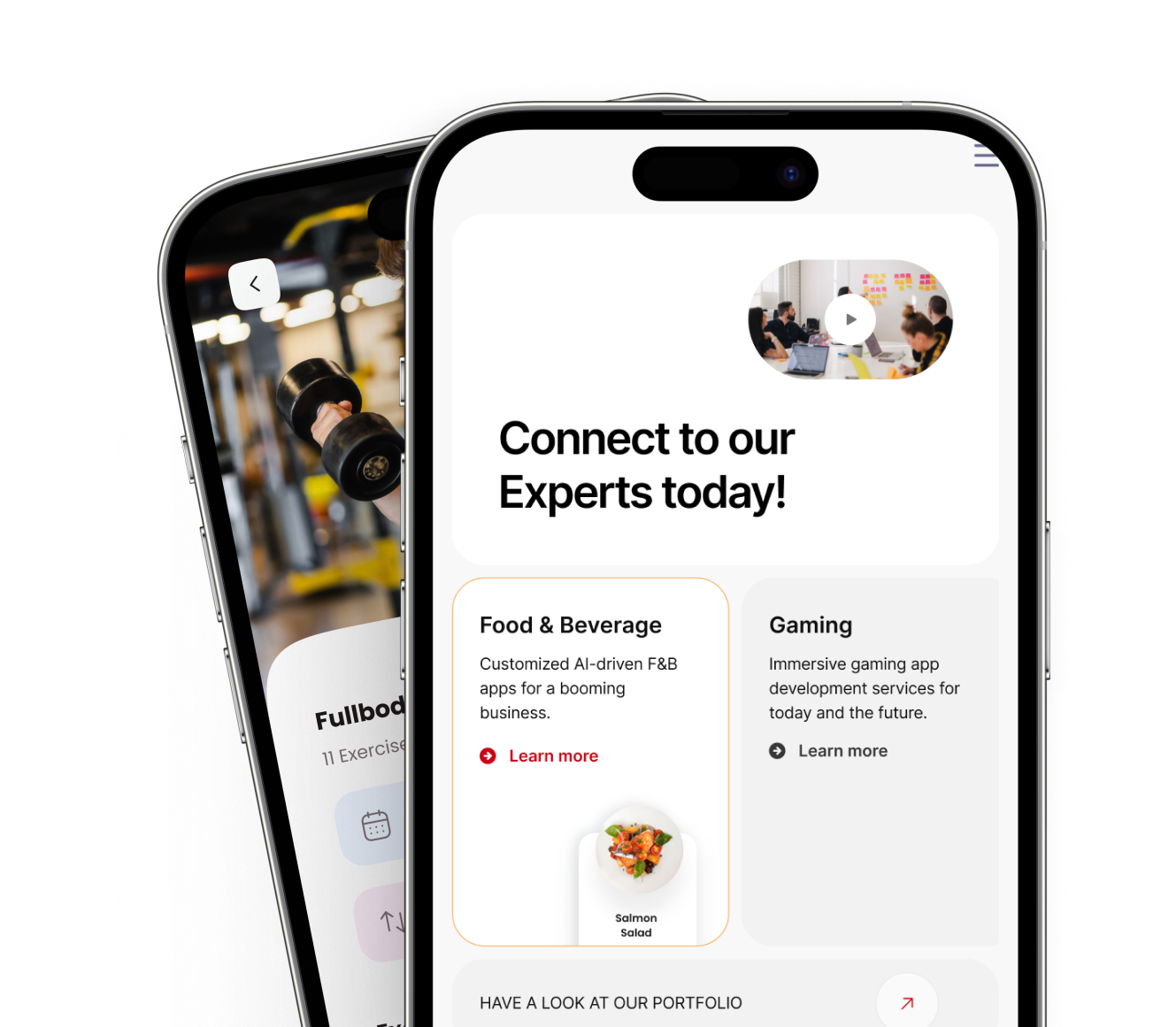
Healthcare SaaS Platform
We modernized Dentify’s onboarding workflows by introducing AI-driven automation and optimizing backend workflows, reducing friction in doctor onboarding and improving operational efficiency.
35%
Improvement in the doctor's efficiency for treatment planning
40%
Reduction in onboarding completion time
Real-Time
Patient Management







AI-Powered Translation System for Global Railway Division
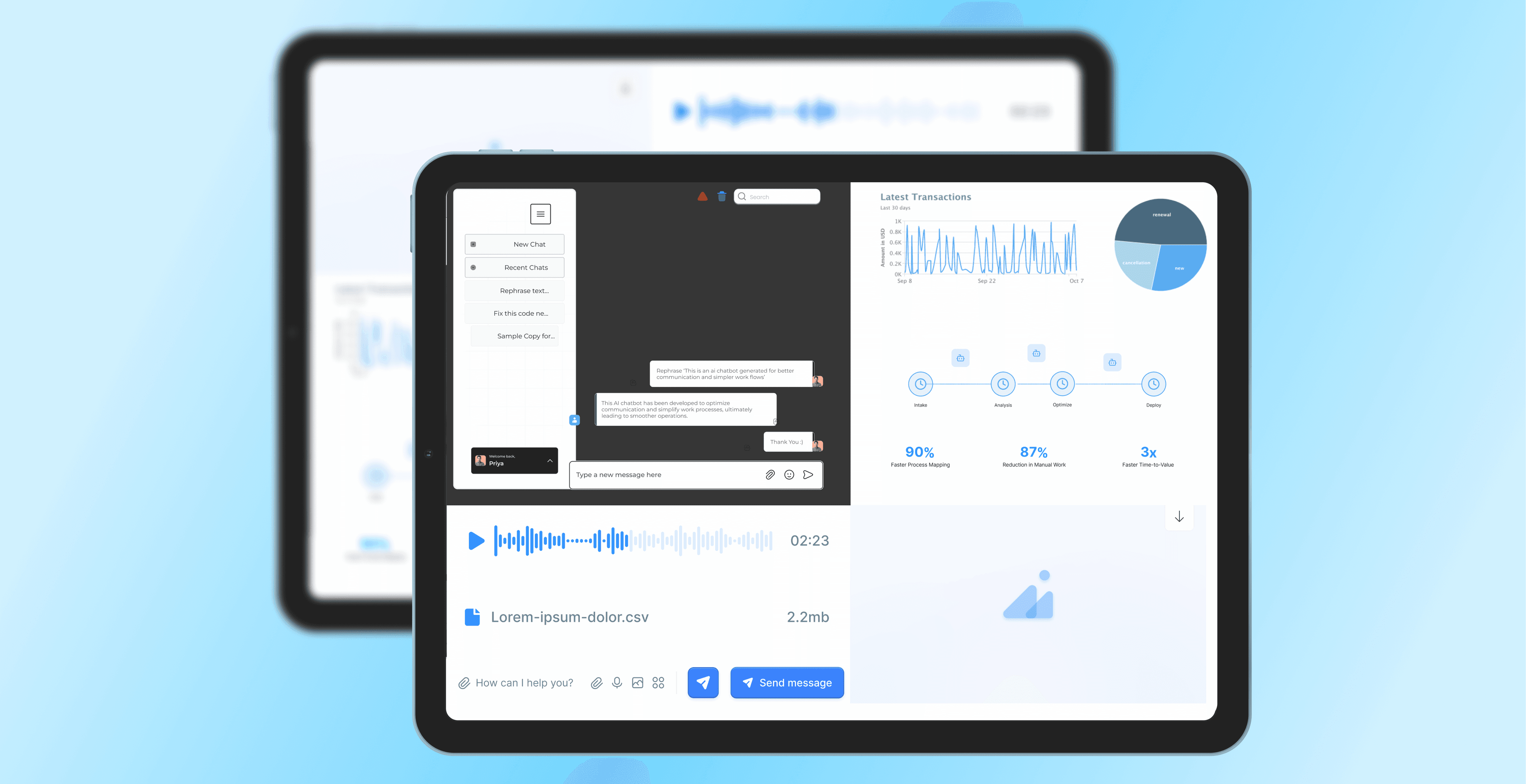
We developed an AI-powered translation solution for a global industrial leader in Europe. The system automates multilingual document translations while preserving formatting and securely managing data across web, mobile, and MS Teams.
10k+
Sensor Data Captured
12+
Countries Deployment
30%
Maintenance Reduction
Six Strategic AI Native Engineering Capabilities
RAG Pipelines & Vector Search
- Knowledge bases with document-level grounding
- Context-aware customer support
- Automated legal analysis.
AI Agents & Autonomous Workflows
- Research assistants for data synthesis
- Automated sales qualification
- Intelligent support ticket routing.
LLM Integration & Prompt Engineering
- Brand-consistent content generation
- Unstructured data extraction
- Domain-accurate translation.
Fine-Tuning & Custom Models
- Proprietary code generation
- Industry-specific language models
- High-precision classification.
AI Ops & Cost Optimization
- Real-time latency monitoring
- Feature-level cost attribution
- Quality scorecards.
Strategic Build vs. Buy Analysis
- API vs. Fine-tuning trade-offs
- Cloud inference vs. self-hosted models
- Long-term TCO frameworks.
From Architecture to Autonomy in 8 Weeks
Timeline: Week 1
AI Architecture Discovery
We map your product’s AI requirements against proven architecture patterns. Before writing a line of code, we determine exactly where RAG adds value, where LLMs are overkill, and where simpler ML wins.Strategic Outputs:- AI Feature Requirements Matrix
- Architecture Decision Records (ADRs)
- Model Selection with clear cost/quality tradeoffs.
Timeline: Weeks 2 – 3
Proof of Concept & Evaluation
We build a working PoC for your highest-risk AI feature to establish quality baselines. This isn’t a "shiny demo"—it’s a measured experiment with latency and cost benchmarks that prove the approach works before you invest in production infrastructure.Strategic Outputs:- Working PoC with real data
- full evaluation suite with quality metrics
- A data-backed Go/No-Go recommendation.
Timeline: Weeks 3 – 6
Production AI Pipeline
We engineer the "plumbing" that chatbot wrappers ignore: data ingestion, embedding generation, vector storage, and the orchestration layer. Our AI native software engineering approach builds a model abstraction layer with fallbacks to ensure your system never stays down.Strategic Outputs:- Production RAG/Agent pipeline
- Prompt versioning system
- Seamless integration with your existing product backend.
Timeline: Weeks 5 – 7
AI Ops & Monitoring
Most AI systems fail without warning. We build the observability layer to catch "hallucination decay" before your users do. We implement token tracking, response quality dashboards, and automated alerting for when quality drops below thresholds.Strategic Outputs:- AI Monitoring Dashboard
- Cost attribution (per feature/user)
- An automated quality regression framework.
Timeline: Weeks 7 – 8
Optimization & Handoff
We refine the system for the bottom line. Through semantic caching, prompt compression, and model routing, we typically achieve a 40–70% reduction in operating costs. We hand off a documented, tested, and monitored system that your team can actually own.Strategic Outputs:- Performance tuning, full operations documentation
- A comprehensive knowledge transfer to your internal team
20+
Years of Engineering Products
1000+
Products Shipped to Production
350+
Engineers
600+
Projects
Want to discuss more?
Engineering AI Digital Products Across Every Industry


Technology We Work With






Download the AI-Native Engineering Stack Guide
Partnered With the Platforms That Power Modern Enterprise.


Vercel
OFFICIAL PARTNER
Next.js deployment, edge computing, and performance-optimized frontend infrastructure for modern web applications.

GitHub
TECHNOLOGY PARTNER
Version control, CI/CD pipelines, code collaboration, and open-source contribution across the developer ecosystem.

Anthropic/Claude
MEMBER OF THE CLAUDE PARTNER NETWORK (Services Track)
Supporting Claude-based AI applications and agent workflows for enterprise use cases.

OpenAI
SELECT PARTNER
OpenAI Select Partner, supporting AI solutions built with OpenAI models and APIs.
Our Recognition
More Ways We Can Help You with AI-Powered Product
Our Latest Thinking
The Bug That Doesn't Show Up in Code Review: Why Your Flutter Web App Reloads on Safari
A real-world look at how oversized images can trigger Safari reloads and iOS crashes in Flutter apps and how smarter image decoding prevents them.
From Prompting to Process: What Changed When Flutter Shipped Agent Skills
This blog explores how Flutter Agent Skills improve AI-assisted development by combining official framework workflows with project-specific guidance for more consistent development.
Why Legacy Systems Block Real-Time AI Decision-Making
Learn how legacy systems limit real-time AI decision-making and what businesses can do to build an AI-ready infrastructure.
What Makes an AI Product Enterprise-Ready? A Business Leader’s Perspective
Most AI pilots never make it to production. Here are the five questions business leaders should ask before approving, buying, or scaling an AI product.
Building AI-Powered Banking CRM Platforms Without Replacing Core Banking Systems
Banks can modernize CRM with AI without replacing their core banking systems. This guide covers the architecture, use cases, governance, and roadmap to do it.
AI in Fintech: Everyone's Talking, Few are Shipping
This blog covers the key engineering, governance, and compliance principles required to build production-ready AI systems for financial services.
