

Key Takeaways
- RAG serves as the standard for accuracy and data freshness, allowing models to cite internal knowledge bases without retraining.
- Fine-Tuning functions as a specialization tool for tone, style, and domain-specific terminology, rather than a method for knowledge expansion.
- AI Agents represent the shift from passive information retrieval to active task execution through autonomous planning and tool utilization.
- Hybrid Architectures emerge as the dominant enterprise choice in 2026, combining the factual grounding of RAG with the specialized behavior of fine-tuned models and the autonomy of agents.
The enterprise AI systems landscape in 2026 has moved past the era of experimental chatbots. Organizations now demand systems that act as reliable extensions of their workforce. The core challenge for Technology Leaders is architectural design.
A wrong choice in the tech stack leads to high latency, spiraling token costs, or "hallucinations" that compromise brand trust. The decision between Retrieval-Augmented Generation (RAG), Fine-Tuning, and AI Agents is a balance of data volatility, performance requirements, and capital allocation.
Quick Decision Snapshot
Architecture | Primary Strength | Use Case |
|---|---|---|
RAG | Accuracy & Freshness | Enterprise Search, Policy Bots |
Fine-Tuning | Form & Domain Style | Medical Coding, Legal Writing |
AI Agents | Workflow Execution | End-to-end Support, Research Ops |
Market data indicates that enterprises utilizing a structured decision framework for these architectures see a 40% reduction in deployment time and a 2.5x increase in user adoption compared to those using a "model-first" approach.
The Strategic Importance of Architecture in 2026 Enterprise AI
In the current market, LLM adoption is universal. The competitive advantage shifted from having AI to how efficiently that AI operates. Every query carries a cost, and every second of latency impacts the bottom line.
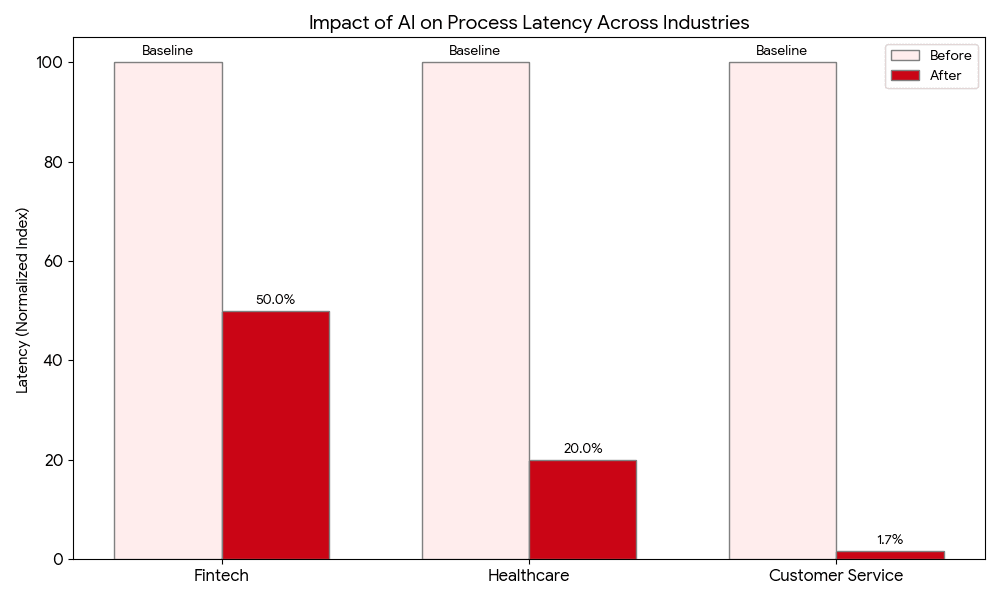
Selecting the wrong architecture creates technical debt. The choice of RAG vs Fine-Tuning vs AI Agents dictates the long-term viability of an AI project. Attempting to use Fine-Tuning for daily-changing price lists creates a maintenance nightmare, while relying on basic RAG for multi-step logistics—rather than deploying autonomous AI Agents—leads to system failure. Misaligning these tools leads to more than just poor performance; it results in the significant waste of expensive computing and engineering talent.
In 2026, the biggest constraint isn’t the model—it’s how well your system retrieves, reasons, and executes. Architecture matters more than memorization
 Saurabh SahuChief Technology Officer (CTO)
Deconstructing the Three Core Architectures
The value of a model exists in its constraints. Without a clear architecture, an LLM is a liability. To deploy at scale, a CTO must decide where the intelligence resides. Does it sit in the data retrieval, the model weights, or the execution logic? These three paths define the modern AI roadmap. Selecting the wrong foundation leads to technical debt and missed ROI. Leaders must view these not as software choices, but as the structural engineering of the digital workforce.
1. Retrieval-Augmented Generation (RAG): Grounding the Response
RAG remains the most popular enterprise choice because it provides a "bridge" between static models and dynamic internal data. It retrieves relevant documents from a vector database and feeds them to the model as context.
- Best for: Accessing changing enterprise knowledge (policies, support tickets, product docs).
- The Flow: User Query → Search Vector DB → Context Injection → LLM Response.
- Benefits: Real-time data access, minimal hallucination, and clear citations.
- Disadvantages: Reliance on search quality and increased prompt token costs.
2. Fine-Tuning: Embedding Specialization
Fine-Tuning involves adjusting the actual weights of a pre-trained model using a specific dataset. In 2026, we use this for "form" rather than "facts."
- Best for: Niche terminology, specific output formats (JSON, Python), and brand voice.
- The Flow: Raw Model + Proprietary Dataset → Training → Specialized Model.
- Benefits: Lower latency (no need for long context), consistent style, and deep domain intelligence.
- Disadvantages: High upfront cost, data becomes stale immediately, and lack of transparency in reasoning.
3. AI Agents: The Autonomous Layer
AI Agents are the frontier. They do not just talk; they act. An agent uses an LLM as a "brain" to plan tasks, call APIs, and use software tools to achieve a goal.
- Best for: Multi-step workflows and cross-system automation.
- The Components: Memory + Toolsets + Planning + LLM Logic.
- Examples: Automating employee onboarding across HR, IT, and Finance systems.
- Benefits: High autonomy and ability to correct its own errors.
- Disadvantages: Unpredictable logic paths and potential for "looping" costs.
These architectures form a hierarchy of maturity. Most organizations start with the accuracy of RAG. They graduate to the precision of Fine-Tuning. They eventually reach the autonomy of Agents. The goal is a system that scales without a linear increase in cost or error.
RAG vs. Fine-Tuning vs. AI Agents: The Enterprise Matrix
Architecture selection forces a trade-off between control, cost, and capability. An AI system that provides information is a cost center; a system that executes a process is a value driver. The friction for enterprise leaders lies in the balance between data accuracy and operational autonomy. The following matrix maps these technical paths to the business metrics that dictate ROI. This framework allows teams to align engineering effort with the risk tolerance and maturity of the organization.
Feature | RAG | Fine-Tuning | Column 4 |
|---|---|---|---|
Primary Purpose | Information Retrieval | Behavioral Adaptation | Goal Execution |
Data Freshness | Real-time | Static (at training) | Real-time via tools |
Explainability | High (Source Citations) | Low (Black Box) | Moderate (Trace logs) |
Implementation | Moderate Complexity | High Complexity | High Complexity |
Cost Model | OPEX (Token heavy) | CAPEX (Upfront training) | High OPEX (Iterations) |
Time to Pilot | 2–4 Weeks | 2–4 Months | 1–3 Months |
Failure Mode | Poor search results | Overfitting/Drift | Infinite loops |
How to Choose the Right Architecture
The following framework moves past technical specifications to focus on operational outcomes.
Deploy Retrieval-Augmented Generation (RAG) for the Knowledge Gap
RAG is the primary choice when the value of the AI depends on the freshness and verifiability of its facts. It functions as an open-book exam for the LLM.
Select RAG when:
- Information Volatility is High: The underlying data (price lists, inventory, legal updates, or news) changes daily or hourly.
- Auditability is Mandatory: The business requires the model to cite specific pages, documents, or database entries to maintain trust and compliance.
- Budget Favors OPEX: The organization prefers a "pay-per-use" model via token consumption rather than a heavy upfront investment in R&D and model training.
- Truth is the Priority: The use case has a zero-tolerance policy for hallucinations, requiring the model to state "I do not know" if the information is missing from the provided context.
Deploy Fine-Tuning for the Style and Structure Gap
Fine-Tuning is the choice when the "way" a model speaks is more important than "what" it knows. This process modifies the model's internal weights to master a specific domain or format.
Select Fine-Tuning when:
- Domain Jargon is Proprietary: The task involves language that standard models lack, such as niche medical coding, specialized engineering specs, or unique legal terminology.
- Latency Constraints are Strict: The application requires immediate responses. Fine-tuning allows the use of smaller, faster models that achieve the same performance as larger models without long context windows.
- Output Consistency is Key: The system must produce rigid, machine-readable formats (JSON, XML, or specific code structures) for downstream software integration without fail.
- Brand Voice is a Differentiator: The AI acts as a customer-facing persona where tone, empathy levels, and brand-specific phrasing are non-negotiable.
Deploy AI Agents for the Action Gap
AI Agents represent the transition from a conversational interface to a digital employee. Agents use reasoning to solve problems that a single prompt cannot handle.
Select AI Agents when:
- The Objective is "Do," not "Say": The success metric is a completed task, such as processing an invoice, resolving a support ticket, or generating a research report.
- The Workflow is Multi-Step: The problem requires a sequence of events—plan, execute, check, and correct—rather than a direct answer.
- System Interoperability is Required: The AI must interact with external software ecosystems, including CRMs (Salesforce), ERPs (SAP), or communication tools (Slack and Email).
- Ambiguity is High: The user request is broad, requiring the AI to ask clarifying questions or browse multiple data sources to form a strategy before taking action.
Engineering for Inference Efficiency
The ultimate goal of this framework is inference efficiency—achieving the desired outcome at the lowest possible cost and latency. RAG provides the truth, Fine-Tuning provides the form, and Agents provide the results.
Real-World Applications by Industry: RAG vs Fine-Tuning vs AI Agents Use Cases
Competitive advantage now stems from how an organization maps specific technical architectures to the unique friction points of its industry. The choice between RAG, Fine-Tuning, and Agents is the difference between a system that provides a service and a system that generates a margin.
Fintech: Precision Compliance and Fraud Telemetry
The financial sector operates under the weight of shifting regulatory frameworks and the need for sub-second fraud detection. A singular architecture cannot meet these demands.
- The Mix: Enterprises utilize Fine-Tuning to embed the logic of SEC, FINRA, and GDPR mandates into the model weights. This ensures the AI reasons with the skepticism and vocabulary of a compliance officer.
- The Edge: RAG then layers on top of this specialized core to pull real-time transaction telemetry and ledger updates.
- The Result: A system that understands the "spirit" of the law through fine-tuning while identifying a specific fraudulent transaction through RAG retrieval.
Healthcare: Clinical Evidence and Patient Outcomes
Healthcare leaders face the challenge of data freshness in a field where medical journals are updated daily. At the same time, the administrative burden of patient management drains clinician resources.
- The Mix: RAG serves as the clinical evidence layer, grounding every recommendation in the most recent HIPAA-compliant research and patient histories.
- The Edge: AI Agents take these insights and move into action—automatically scheduling follow-up appointments, updating Electronic Health Records (EHR), and coordinating with pharmacy APIs.
- The Result: The system moves from a research tool to a clinical partner that reduces practitioner burnout by handling the execution of the care plan.
Retail and E-commerce: The Digital Concierge and Inventory Logic
In retail, conversion is a function of two variables: brand trust and product availability. A system that recommends out-of-stock items or breaks character destroys the customer relationship.
- The Mix: Fine-Tuning scales the brand’s specific persona across millions of interactions, ensuring the AI speaks with the tone of a high-end concierge or a technical specialist.
- The Edge: RAG connects this persona to the live inventory database and personalized user profiles.
- The Result: The AI maintains a consistent brand voice while providing accurate, real-time stock information, effectively acting as a salesperson that never misses a detail.
SaaS and Enterprise Platforms: Feature Orchestration
For software providers, the goal is feature adoption and churn reduction. Users no longer want to click through menus; they want to describe a goal and see it completed.
- The Mix: AI Agents function as the primary interface, possessing the toolsets to navigate the platform’s internal APIs.
- The Edge: RAG provides these agents with the context of the specific user’s project documentation and previous support tickets.
- The Result: Users experience "Invisible UI," where an agent uses RAG to understand the user’s intent and then executes the necessary commands across the platform.
Economics: Cost, Scalability, and ROI
ROI is now a function of inference efficiency. This is measured in Tokens Per Second per Dollar (TPS/$). As enterprises move from experimental chatbots to high-throughput production systems, the goal is to maximize the logic-per-token ratio.
- RAG: The OPEX Heavyweight: RAG systems have low entry barriers but carry a high variable cost. Every query requires the model to read hundreds of retrieved tokens before generating an answer. For organizations with moderate query volumes (under 10,000 daily), RAG is the winner for initial ROI. However, as volume scales into the millions, the context tax—the cost of processing retrieved data for every single request—can erode margins.
- Fine-Tuning: The CAPEX Investment: Fine-tuning requires a significant upfront investment in data preparation and compute. However, it enables the use of Small Language Models (SLMs). By embedding domain logic into the model weights, you eliminate the need for long context windows in every prompt. This reduces the cost per query by 30% to 50% compared to RAG-heavy systems. At 100,000+ queries daily, the upfront training cost amortizes within months, making fine-tuning the more scalable economic choice.
- AI Agents: The Outcome-Based Model: Agents are the most expensive to operate. A single user intent can trigger 50 to 500 internal reasoning steps. This creates a disconnect between token spend and business value if not governed. Yet, agents offer the highest ROI because their benchmark is not cost per query, but cost per task completion. By replacing manual labor hours in support and research, agents achieve an average ROI of 171%, far exceeding the gains of simple information retrieval.
Hybrid AI Architecture: When to Combine RAG, Fine-Tuning, and AI Agent
Modern enterprise systems rarely use one architecture in isolation. The most resilient systems follow a hybrid model:
- Fine-Tuned Small Language Models (SLMs) for speed and specific formatting.
- RAG Pipelines to feed those models the latest corporate data.
- Agentic Orchestration to manage the workflow and use tools when the model identifies a task that requires an external API call.
This "Agentic RAG" model provides the accuracy of a librarian and the execution capability of a junior analyst.
Navigating the Friction: Pitfalls in AI Execution
Implementation is where grand strategies meet the messy reality of enterprise data. The failure of an AI project rarely stems from the model itself; it stems from a fundamental misunderstanding of how these architectures handle information and logic. In 2026, the firms that scale are those that anticipate the inherent friction in their chosen stack.
The primary failure in RAG deployments is the assumption that a vector database acts as a cure for poor data. If the source documents contain contradictions, duplicates, or lack structure, the retrieval mechanism fetches noise. This "RAG Trap" forces the model to synthesize answers from low-quality context, leading to confident but incorrect outputs. Success requires a shift in focus toward data hygiene and document preprocessing. The architecture depends on the quality of the index, not just the power of the search algorithm.
Fine-tuning becomes a liability when treated as a substitute for a search engine. Retraining a model to correct a factual error is a waste of capital. This approach creates a static snapshot of knowledge that decays the moment the data changes. The strategic play is to reserve fine-tuning for behavioral adjustments—formatting, tone, and domain-specific logic—while delegating factual truth to retrieval systems. Using the wrong tool for knowledge updates creates a maintenance cycle that no engineering team can sustain.
Autonomy brings the risk of drift. When agents operate in a vacuum, they can enter infinite logic loops or execute unintended API calls that spike costs. This "Agent Drift" occurs when systems lack the constraints necessary to navigate ambiguity. The solution lies in defined guardrails and the integration of human-in-the-loop checkpoints for high-stakes decisions. An agent must have a sandbox and a clear escalation path. Without these boundaries, an autonomous system moves from a productivity asset to an operational risk.
Executive Checklist: What to Consider Before Choosing Between RAG, Fine-Tuning, and AI Agents
- How often does the underlying knowledge change?
- Do we need citations for auditability?
- Are we optimizing for answers or actions?
- Do we have enough high-quality training data for fine-tuning?
- What systems must this solution integrate with?
- Who owns the quality of the retrieval vs. the quality of the model?
The Road to Multi-Agent Systems
The end of 2026 points toward Federated Agents—specialized agents (fine-tuned for specific roles) that communicate with each other using shared RAG repositories. We are moving toward a world of "Adaptive Models" that can update their own weights in real-time, but until then, the hybrid architecture of RAG + Fine-Tuning + AI Agents remains the gold standard for enterprise stability.
Sources & Citations