
Automation Testing Services
Automation testing brings consistency and speed to quality assurance. Through scripted, repeatable test execution, teams can validate critical workflows, catch regressions early, and maintain product stability across every release.
Tell us about your project. Our team will get back to you with the right approach.











Most teams treat testing as a final checkpoint, a gate before release. This pushes defect discovery late into the cycle, where fixes are expensive, timelines stretch, and quality becomes a negotiation rather than a standard.
Quality is engineered from the start, not inspected at the end. Through strategic automation, performance validation, and continuous testing practices, we embed quality across every stage of the product lifecycle, making reliability a built-in outcome, not an afterthought.
Our Capabilities in Automation Testing
Our QA practice spans the full spectrum of quality engineering from test strategy and functional validation to performance, security, and accessibility.
Our Automation Approach
A structured, metrics-driven process built for scalability, coverage, and long-term maintainability.
Requirement Analysis
We identify high-ROI test cases, critical user journeys, and automation goals to ensure maximum impact.
Tool Selection
Choosing the right tech stack (Playwright, Appium, etc.) based on your application architecture and team skills.
Framework Design
Architecting a modular, data-driven, and scalable test engine that minimizes maintenance and maximizes reuse.
Test Development
Scripting robust, self-healing, and readable test cases using industry best practices like Page Object Model.
Execution & Reporting
Automated runs across environments with detailed, actionable insights and real-time dashboards.
Continuous Optimization
Refining suites based on failure patterns and new feature releases to maintain peak efficiency.
Why Partner with Us for Automation?
We engineer quality into your product's foundation, not just your test suite. Every automation strategy we deliver is built to accelerate releases, scale with complexity, and integrate with the way your teams already work.
Velocity
Faster feedback loops reduce functional testing bottlenecks, giving teams the confidence to ship without slowing down.
Scale
Modular frameworks that grow with your product, maintaining consistent quality across increasing complexity and platforms.
Efficiency
Repetitive, high-volume tasks are automated, reducing operational overhead and freeing your team for higher-value work.
Alignment
Automation is integrated directly into Agile and DevOps workflows, making quality a shared responsibility across teams.
We track key performance indicators, which provide a detailed insight into your system’s functions and guarantee an optimal user experience.
40%
Faster Market Entry
99%
Product Integrity
50%
Cost Optimization
5x
Test Coverage
Client Results and Success
We have partnered with 700+ clients across more than 50 industries to build systems that handle real-world scale. These stories show how we turn complex technical challenges into business growth and reliable performance.
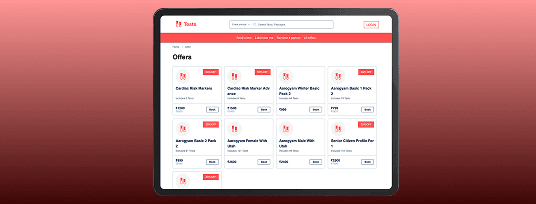
High-performance and SEO-optimized healthcare platform
Rigorous QA cycles combined with performance optimization and Next.js architecture improved loading speed and overall platform reliability.
- performance score
- 100
- best-practice SEO score
- 100
- sec page load time
- 0.7
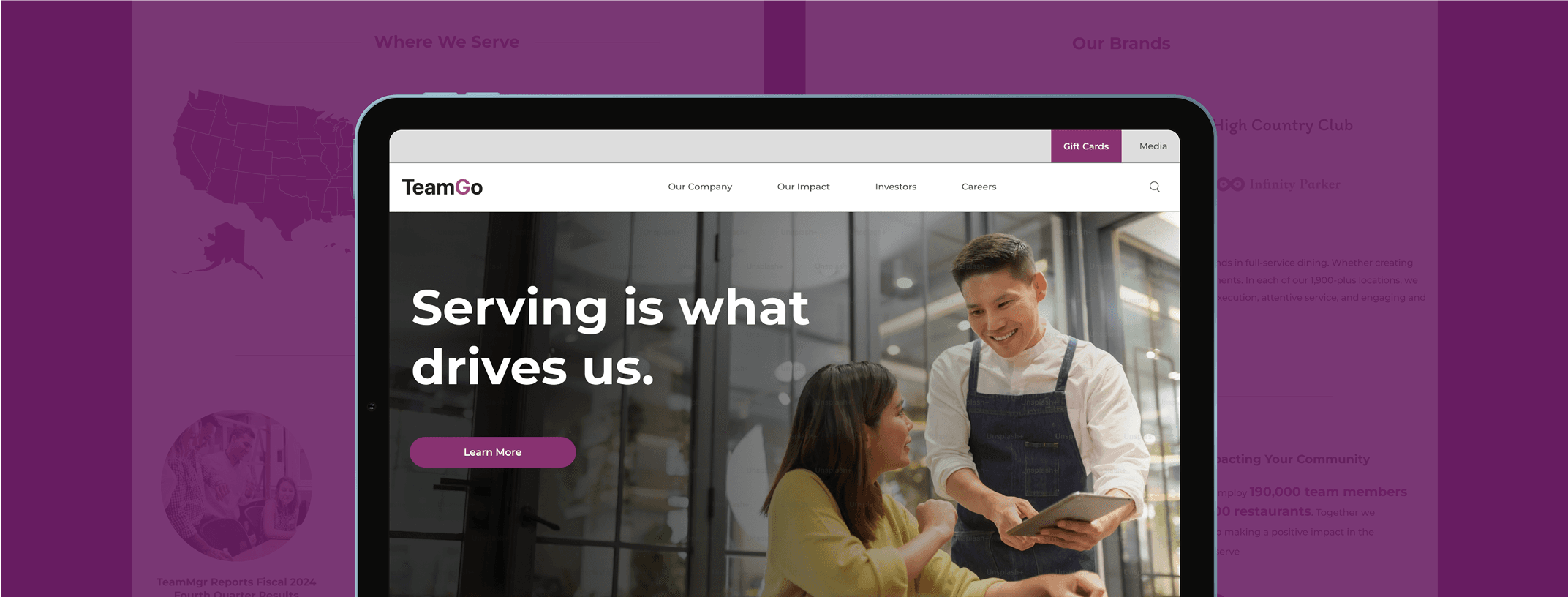
Improved security and authentication reliability
Automated testing and QA validation cycles ensured stable authentication across platforms and reduced compliance risks.
- Development Hours Saved
- 70%
- Boost in Security
- 80%
- Reduction in Compliance Risks
- 60%
Operational efficiency across fleet management systems
Integration testing and sprint-based QA ensured stable real-time data tracking and communication between system modules.
- week development timeline
- 6
- reduction in SMS notification costs
- 80%
Automated document processing and analytics at scale
Testing and iterative refinement ensured reliable AI-driven extraction and analysis across large document volumes.
- reduction in manual effort
- 99%
- pages processed in 2 minutes
- 10,000
- insight accuracy
- 85%+
Faster testing cycles with AI-driven validation
Automation and AI agents reduced manual validation overhead and accelerated testing cycles.
- reduction in manual validation cycles
- 50%
- faster testing cycles
- 30%
Technology Stack for Automation Testing
Every technology in our stack is selected to support scalable, reliable, and pipeline-ready quality engineering. From programming languages and automation frameworks to performance, security, and DevOps tools, each choice is deliberate, integration-ready, and built to scale with your development lifecycle.
- TypeScript

- Javascript

- Python

- java
- TestNG
- cucumber
- Data driven
- TestRail
- JIRA
- Allurereport
- k6
- apache streamline
- burp suite
- Owasp zap
- GitHub Actions
- Docker
- Kubernetes
- Jenkins
- BrowserStack
- Cypress
- Playwright
- Selenium
- Appium
- Maestro
- Detox
- Postman
- Rest Assured
- Jenkins
- GitHub Actions
- Docker
Comprehensive Solutions for QA Engineering
Our Latest Thinking


FAQs on Automation Testing
Automation testing uses scripted tools to execute test cases without manual intervention. It validates functionality, detects regressions, and generates consistent results across builds. Teams that adopt automation reduce release cycles, lower defect escape rates, and scale their QA coverage without scaling their headcount.
Manual testing relies on human execution for every test case, making it time-intensive and prone to inconsistency. Automation testing runs predefined scripts across multiple environments and builds in a fraction of the time. Both serve different purposes — automation handles repetitive, high-volume test cases while manual testing covers exploratory and usability scenarios.
Regression testing, smoke testing, functional testing, API testing, load testing, and performance testing are well-suited for automation. UI testing and end-to-end workflow validation can also be automated with the right frameworks. The choice depends on your application type, tech stack, and release frequency.
We work with industry-standard tools, including Selenium, Cypress, Playwright, Appium, Jest, and RestAssured, depending on the project requirements. For performance and load testing, we use tools like JMeter and k6. Our framework selection is driven by your stack, team capabilities, and long-term maintainability.
Set up timelines that depend on the complexity of your application, the scope of test coverage, and the existing state of your QA process. A foundational framework with core test suites can be operational within two to four weeks. Broader coverage across multiple modules and environments typically takes six to twelve weeks.
Yes, automation testing is most effective when embedded directly into your CI/CD pipeline. Tests run automatically on every code commit or pull request, giving developers immediate feedback on build stability. This eliminates manual trigger dependency and ensures defects are caught before they reach staging or production.
Automation testing is a core enabler of agile and DevOps workflows. Frequent releases demand fast, reliable test feedback, something manual testing cannot sustain at speed. Automated test suites support sprint-based delivery by validating each iteration without adding overhead to the release cycle.
We follow modular, reusable scripting practices that reduce maintenance overhead as the application evolves. Test scripts are version-controlled, documented, and structured to isolate changes, so updates to the application don't require rewriting entire test suites. Regular script audits are built into our QA process.