

Key Takeaways
- AI wearable healthcare app development requires three foundations: architecture for real-time data and EHR integration, a compliance framework covering HIPAA, FDA, FTC, and CMS, and an ROI structure tied to clinical outcomes.
- Wearable devices now support clinical-grade monitoring for chronic conditions, with AI enabling early risk detection and automated alerts.
- Embedding compliance and architecture from the start reduces rework costs and creates a defined path to CMS reimbursement and provider adoption.
- The ROI case for AI wearable devices is backed by peer-reviewed evidence confirming reductions in hospital readmissions and emergency department utilization through remote monitoring programs.
How Are AI Wearable Healthcare Apps Changing the U.S. Healthcare Industry?
AI wearable healthcare apps are converting continuous sensor data into real-time risk predictions, proactive alerts, and early clinical interventions. For healthtech companies and established healthcare organizations operating in the AI wearable market, that capability is reshaping what providers expect from a digital health product and redefining the requirements for clinical adoption.
The post-pandemic period accelerated a structural shift in the U.S. healthcare industry. Healthcare providers moved toward hybrid and preventive models, and both patients and providers now expect continuous monitoring, real-time health insights, and proactive alerts as standard product features. According to the CDC, three in four American adults have at least one chronic condition, and over 90% of adults aged 65 and above are affected by at least one chronic disease, reinforcing the scale of demand for continuous remote monitoring.
The clinical value of a wearable platform is determined by its AI layer. That layer converts raw sensor output into actionable signals, and it is what separates a consumer fitness device from a clinical-grade wearable solution built for chronic disease monitoring, elderly care, and remote vitals tracking.
The problem is that most wearable-AI initiatives fail before reaching that outcome. Fragmented data pipelines, HIPAA gaps, over-engineered infrastructure, and the absence of a measurable ROI framework are the failure points that derail technically sound ideas at the build stage. Non-technical founders face challenges with stack selection and regulatory navigation. Digital health founders and established healthcare organizations face compliance penalties and the pressure to prove ROI before committing capital.
This article breaks the build process into three pillars: architecture, compliance, and ROI. By the end, you will have the foundations needed to launch a compliant, scalable, and commercially viable AI wearable solution in the U.S. healthcare market.
Why Should U.S. Healthcare Providers Invest in AI Wearable Healthcare App Development?
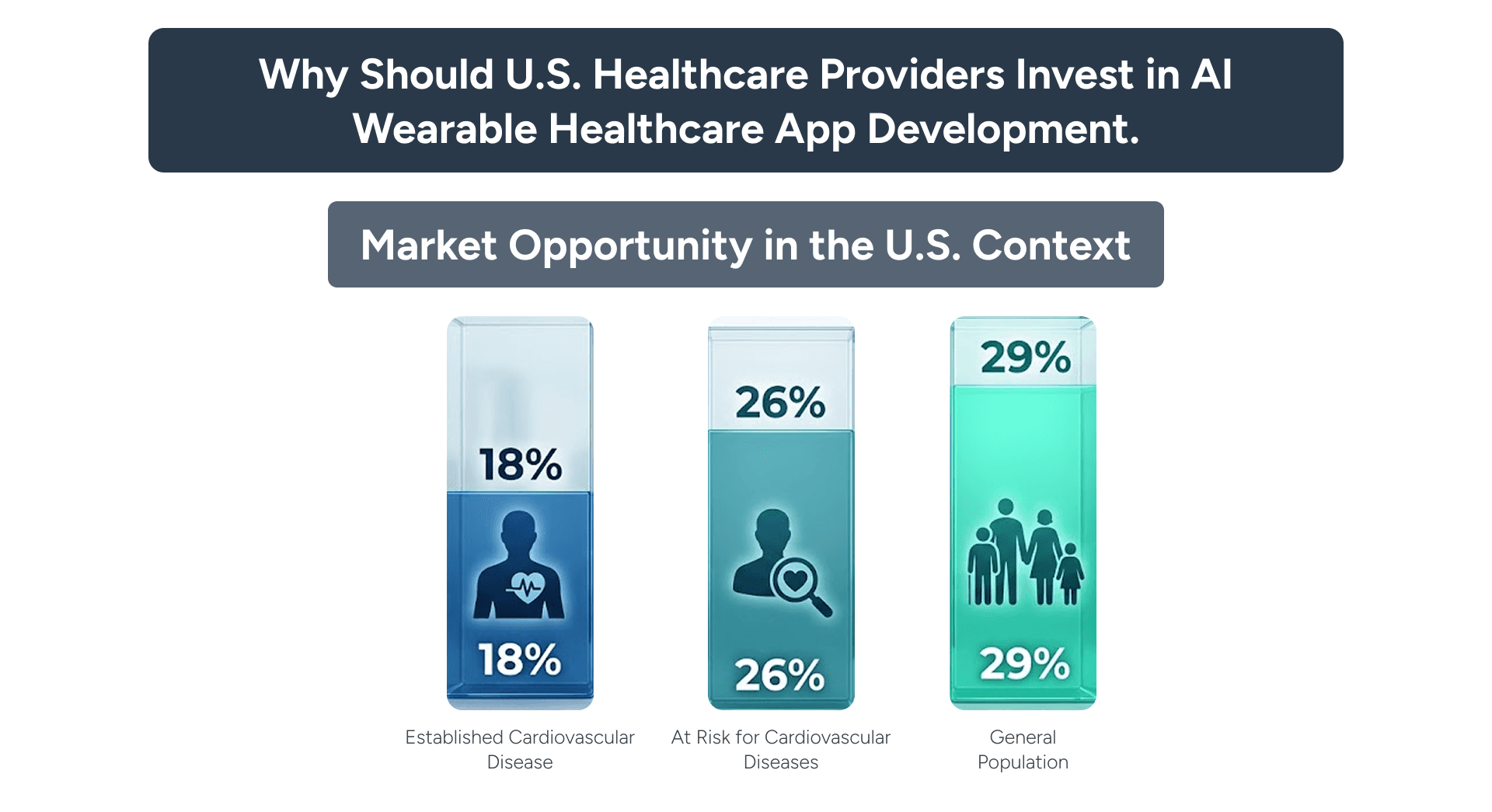
Building AI-powered wearable healthcare applications gives U.S. healthcare providers and digital health founders a platform to address three compounding pressures, including a growing chronic disease burden, rising care costs, and a clinical workforce stretched across a larger patient population than traditional care models were built to support.
What Is the Market Opportunity for AI-Driven Wearable Healthcare App Development?
A peer-reviewed national analysis of Medicare data published in Health and Social Care in the Community found that over 13.5 million remote monitoring services, totaling more than $664 million in Medicare reimbursements, were billed between 2019 and 2023. As of late 2023, 37 state Medicaid programs had established reimbursement coverage for remote patient monitoring.
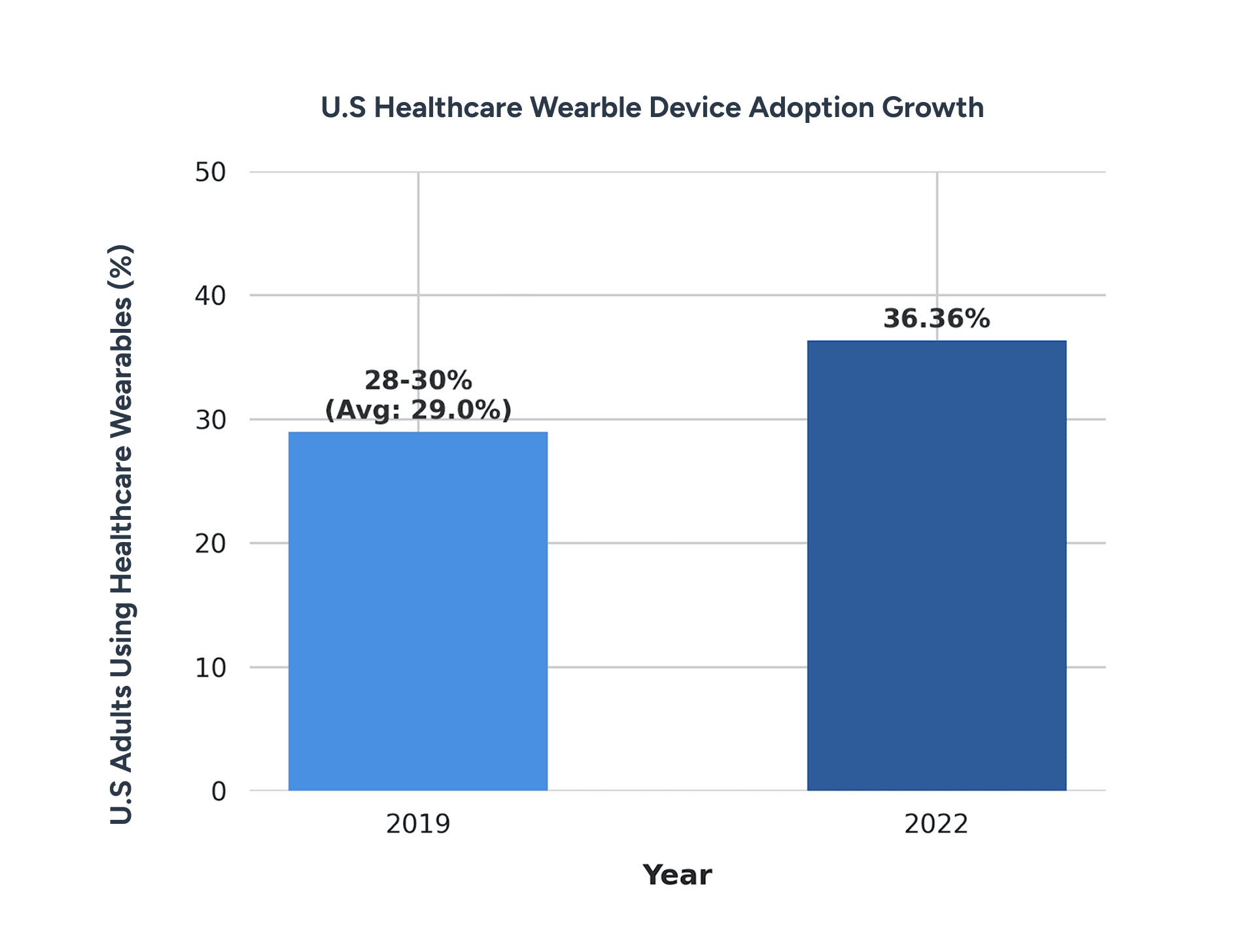
According to the CDC, 76.4% of U.S. adults, representing 194 million people, reported at least one chronic condition in 2023. Wearable AI systems that deliver real-time monitoring, early risk signals, and automated alerts give wearable device providers a tool to move toward preventive care at a population level. For healthtech founders, CMS remote patient monitoring billing codes are in place, making this a market with both clinical demand and an established reimbursement structure.
Which Use Cases Drive Provider ROI?
These four use cases represent where U.S. providers are directing AI wearable investment.
Remote Patient Monitoring
Continuous tracking of vital signs, meaning heart rate, blood pressure, and blood oxygen levels, combined with automated alerts, reduces avoidable hospitalizations. Founders can build RPM solutions eligible for CMS billing codes, creating a product with both clinical and financial adoption incentives.
Chronic Disease Management
For cardiac patients, diabetics, and those with chronic obstructive pulmonary disease (COPD), wearables provide trend analysis and early risk detection at a clinical monitoring level. This precision is where a focused product earns long-term provider contracts. This clinical focus is where a product earns long-term provider contracts.
Early Diagnostics Using Continuous Biometrics
AI models identify patterns in the continuous data a wearable device captures from the body, such as early signs of irregular heart rhythms or respiratory deterioration, that a scheduled clinical review would take longer to surface. This positions wearable AI devices as a proactive care tool for digital health providers building preventive care pathways.
Virtual Care and Telehealth Integration
Wearable data flowing into virtual consultation platforms gives providers access to a patient's recent health readings before and during each consultation, improving the quality of care delivered through telehealth channels.
Why Do AI Wearable Device Initiatives Fail in U.S. Healthcare?
AI wearable devices fall short on three fronts: architecture that struggles to handle real-time data pipelines and EHR integration, compliance gaps around HIPAA and patient data handling, and no clear framework for measuring ROI. The sections that follow address each of these, giving founders and providers a concrete framework for the build.
The U.S. healthcare market has sustained demand for wearable AI solutions. The founders who succeed here treat architecture, compliance, and ROI as foundational decisions, building products that hold up in real clinical environments with real data and real system dependencies.
 Saurabh SahuChief Technology Officer (CTO)
What Types of AI Wearable Devices Are Used in Healthcare App Development?
The six device categories used in healthcare wearable app development each map to a distinct clinical problem, regulatory profile, and reimbursement pathway. The device category a healthcare provider selects determines which patients the platform can serve, which regulatory framework applies, and which reimbursement codes the provider can bill against. Choosing the right category shapes every architecture, compliance, and commercial decision that follows.
1. Cardiac Monitoring Devices
ECG patches support continuous heart rhythm tracking, covering atrial fibrillation detection, post-discharge monitoring, and remote cardiac care. A 2025 meta-analysis in BMC Cardiovascular Disorders reported high sensitivity and specificity for ECG patch-based atrial fibrillation detection, supporting their use in clinical-grade wearable healthcare app development.
2. Continuous Glucose Monitors
CGMs transmit real-time blood glucose readings without manual testing. A 2025 analysis in Endocrinology and Metabolism found CGM use produced time-in-range improvements of 15% to 34%, supporting a reimbursable RPM use case under existing CMS billing codes.
3. Wearable Blood Pressure Monitors
CMS covers remote blood pressure monitoring under its remote patient monitoring reimbursement program, giving healthcare founders building hypertension management platforms a defined reimbursement structure to build toward.
4. Sleep Monitors
Sleep data connects to cardiovascular, metabolic, and behavioral health condition pathways within a single data stream, allowing founders to expand clinical scope without adding a second device category to their product.
5. Fall Detection Wearables
A 2025 review in Sensors confirmed high detection accuracy across machine learning frameworks. For post-discharge and elderly care platforms, fall detection addresses a documented safety priority for U.S. providers.
6. Biosensor Patches and Smart Textiles
These form factors remove the device compliance barrier common in other wearable categories, making them suited to post-surgical recovery and home-based chronic care programs.
Each category produces a distinct data profile, and the architecture layer built around it determines the clinical value the platform can deliver.
How Is a Healthcare Wearable App Development Architecture Built for AI?
A healthcare wearable app development architecture is built across five layers: the device and sensor layer, the data pipeline, the AI and machine learning layer, the EHR integration layer, and the cloud and security infrastructure. A weakness in any one of them affects the reliability of the entire system. For digital health founders building in this space, understanding how these layers connect is what separates a product that earns clinical adoption from one that stalls before launch.
Healthcare wearable systems touch more parts of a clinical environment than most teams anticipate at the start. The device layer, the data pipeline, the EHR integration, the compliance requirements, each one has its own set of constraints, and they interact with each other in ways that only become visible once you start building. The teams that get this right are the ones that map those interactions before the architecture is set, because changing course mid-build in a healthcare context carries a cost that is hard to recover from.
 Manav GoelPrincipal Technical Consultant.
How Does Data Move From a Wearable Sensor to a Provider's Screen?
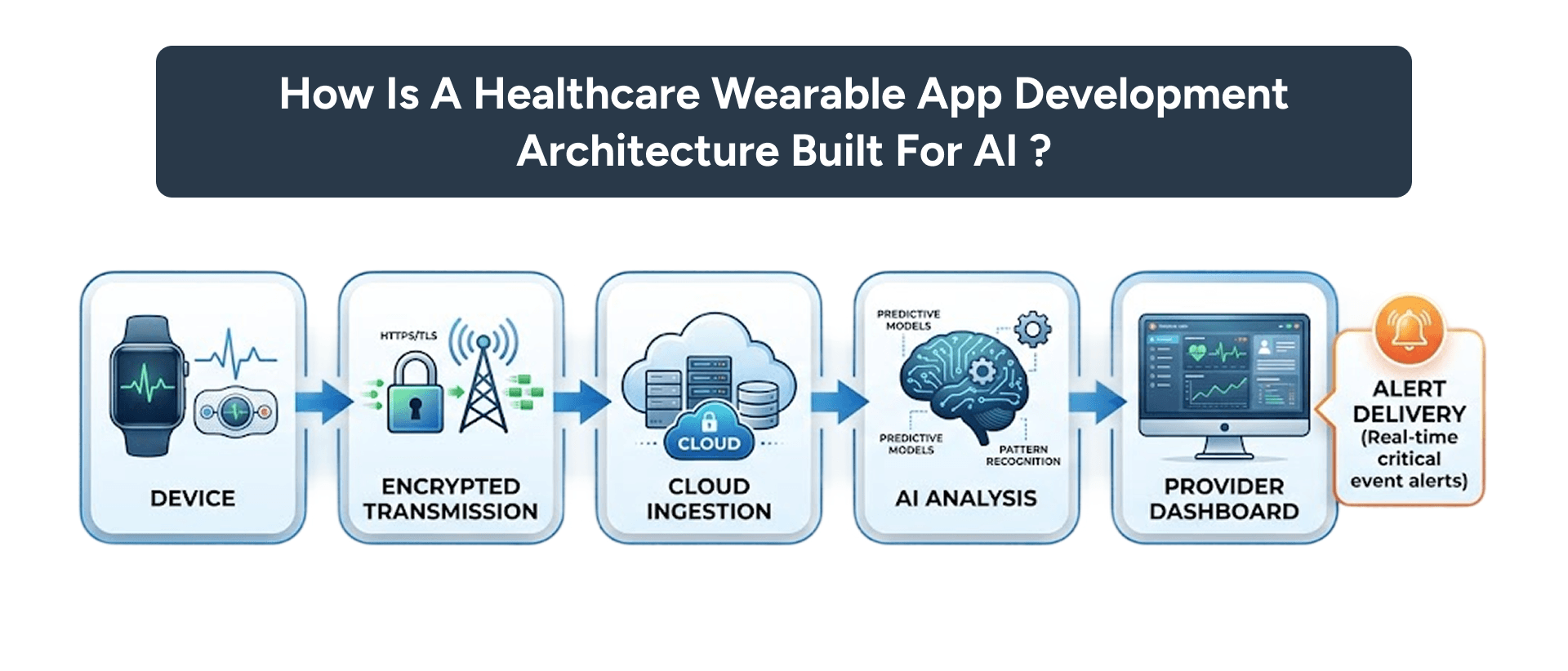
Raw sensor data moves through five stages before it reaches a provider: data capture at the device, encrypted transmission, cloud ingestion and processing, AI-based analysis, and delivery to the provider dashboard. Each stage carries its own failure risk, and healthcare wearable systems require infrastructure built to handle all five without data loss or delivery delays.
In a remote patient monitoring context, the time between a device detecting an abnormal reading and a provider receiving an alert determines the window for intervention. Alert delivery pipelines must be built and maintained as dedicated infrastructure alongside data storage pipelines because the two serve different clinical functions. This is one of the core reasons healthcare wearable app development demands a more rigorous build approach than a standard mobile product.
Which Devices and Sensors Power a Healthcare Wearable System?
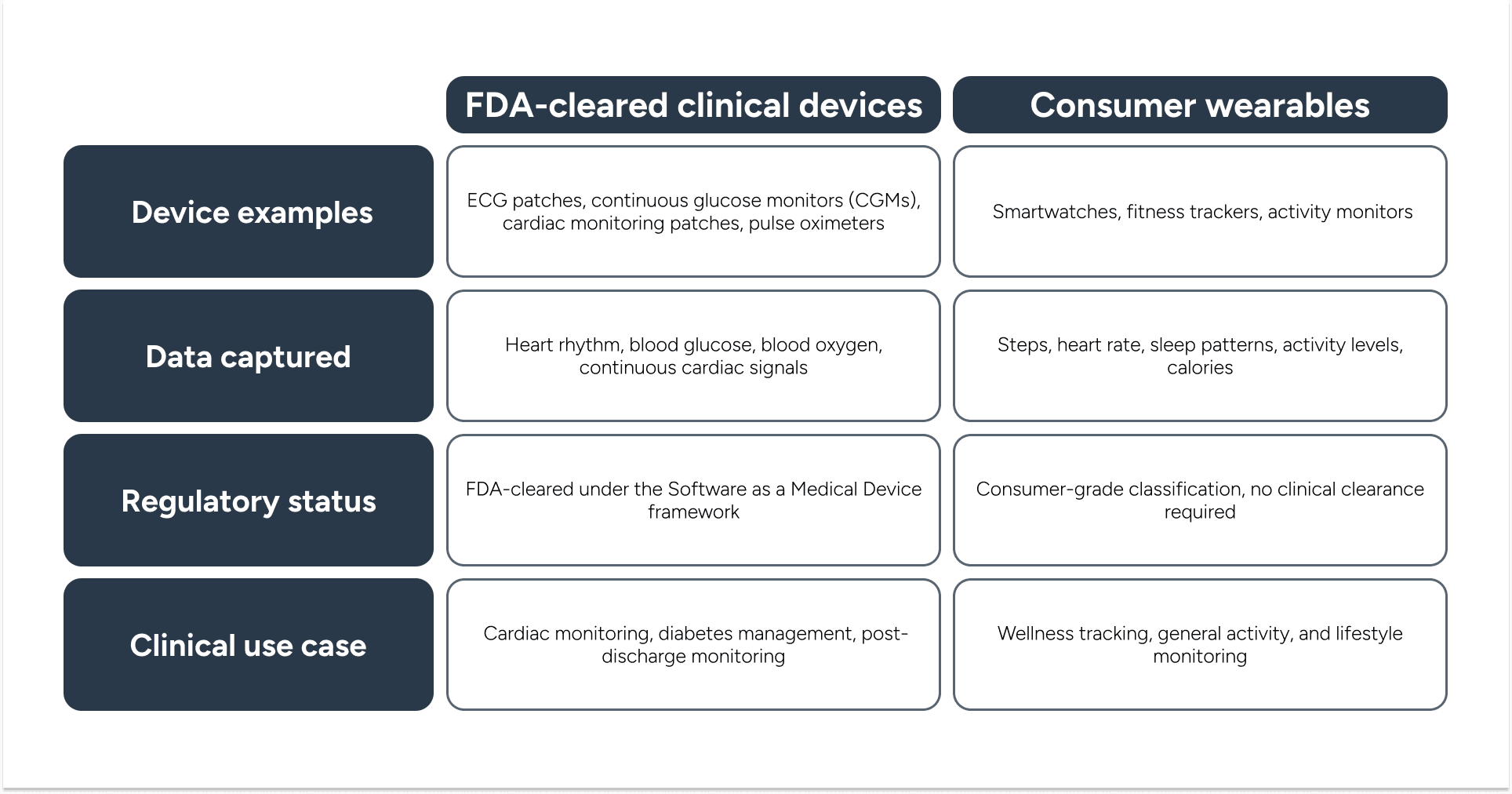
FDA-cleared devices such as electrocardiogram patches, continuous glucose monitors, and cardiac monitoring patches power clinical-grade wearable systems. Consumer devices such as smartwatches and fitness trackers serve wellness and general monitoring purposes. The device layer shapes what clinical data is available, how accurately it is captured, and what regulatory obligations the system carries.
For digital health founders selecting a hardware partner, this distinction has direct commercial consequences. A system built around a consumer device holds a different reimbursement eligibility and regulatory liability profile. The hardware decision made at the start of the build shapes every product and compliance decision that follows.
How Does the AI and Machine Learning Layer Work in a Wearable Healthcare System?
The AI layer converts continuous sensor data into information a provider can act on through three functions: pattern deviation detection, risk prediction, and personalization. Pattern deviation detection flags when a patient's readings shift from their individual health baseline, such as a change in heart rhythm that may precede a cardiac event. Risk prediction models use a patient's historical data to estimate the probability of a future health event. Personalization models refine alert thresholds based on individual patient data over time, which reduces unnecessary alerts and produces outputs calibrated to each patient's health history.
Federated learning is an AI architecture method where models train across multiple devices or institutions without centralizing patient records on a single server. Research published in Scientific Reports confirms this approach supports HIPAA, which stands for the Health Insurance Portability and Accountability Act, the primary U.S. law governing patient data protection, and improves model performance across diverse patient populations. For healthcare founders building for provider adoption, this is the architecture approach that addresses regulatory requirements and clinical performance within a single build decision.
How Does a Healthcare Wearable System Connect to EHR and Provider Workflows?
A healthcare wearable system connects to EHR platforms through integration middleware and FHIR-compliant data exchange protocols that transform raw device data into a format clinical systems can process and display within provider workflows. HL7 FHIR, which stands for Fast Healthcare Interoperability Resources, is the U.S. standard that governs how health data must be structured for major EHR platforms such as Epic, Cerner, and Allscripts to accept it. Raw device data arrives in formats unique to each device manufacturer that major EHR platforms require transformation to ingest. Integration middleware, a software layer that sits between the wearable system and the EHR, handles the transformation and routing that makes the data usable within a clinical record. A peer-reviewed study on PubMed Central documents how FHIR-based platforms process thousands of daily clinical transactions within EHR workflows. Founders who defer this layer face the heaviest rework costs in the entire build process.
How Is Scalability, Security, and Cloud Infrastructure Managed in a Healthcare Wearable System?
A healthcare wearable system manages scalability, security, and cloud infrastructure through a combination of edge computing for real-time data processing and modular cloud infrastructure on HIPAA-compliant platforms such as AWS or Microsoft Azure. The latency demands introduced at the pipeline layer make edge computing a foundational infrastructure decision. Edge computing processes data on or near the device, with results transmitted to a central server for storage, which reduces alert delivery times and keeps monitoring functions active during network disruptions. Research has shown that edge-based systems maintain monitoring functions even during complete network outages, which gives care teams uninterrupted access to patient readings in any continuous monitoring program.
A modular cloud infrastructure on HIPAA-compliant platforms such as AWS or Microsoft Azure allows teams to scale or update specific components independently. For healthtech companies and established healthcare organizations building a healthcare wearable product, this infrastructure model supports compliance requirements, system uptime, and the capacity to onboard a growing patient population as the platform matures.
What Are the U.S. Compliance Requirements for Healthcare Wearable App Development?
Healthcare wearable app development in the U.S. operates under a stricter regulatory standard than a general health app. Continuous data collection, AI-driven analysis, and clinical decision support each carry their own compliance obligations, and together they produce a layered regulatory burden that compounds with each additional capability the app introduces. Founders who treat compliance as a post-launch consideration lose provider contracts, payer partnerships, and investor confidence before the product reaches the market.
What Is the Regulatory Landscape for Healthcare Wearable App Development?
Four regulatory frameworks apply to healthcare wearable app development in the U.S., each with different obligations depending on what the app does and who uses it.
HIPAA — Health Insurance Portability and Accountability Act
Any app that collects, stores, or transmits individually identifiable patient health information must comply with HIPAA. For AI wearable apps, this means restricting who can access patient data, encrypting data during transmission and storage, keeping records of all data access events, and maintaining a breach notification process. The volume and frequency of data that wearables collect expand these obligations in ways a standard health app does not encounter.
FDA — Software as a Medical Device (SaMD)
Apps intended to diagnose, treat, or monitor a medical condition may be classified as a Software as a Medical Device by the FDA. This classification requires confirmation that the device performs as intended, documentation of the app's clinical use case, and ongoing performance monitoring after launch. The FDA's January 2025 draft guidance introduced additional requirements for apps where the AI model updates over time, a characteristic common to wearable AI systems.
FTC — Health Breach Notification Rule
Consumer-facing health apps and wearable platforms with no covered entity relationship are subject to the FTC's Health Breach Notification Rule, updated in July 2024 to cover health apps and connected devices. Companies that fail to notify users of a health data breach face penalties of up to $43,792 per violation per day, as confirmed by the FTC.
CMS — Remote Patient Monitoring Reimbursement Rules
The CY 2026 Medicare Physician Fee Schedule Final Rule, published by CMS, expanded reimbursement for remote patient monitoring and introduced new payment codes that make it easier for providers to bill for AI wearable-enabled services. Building the healthcare app to meet CMS documentation and data transmission requirements from the start determines whether providers can bill for using it at all.
How Should AI Governance and Model Risk Be Managed?
AI systems in wearable apps carry governance obligations that require a dedicated compliance framework on top of standard software requirements. Research published in npj Digital Medicine identifies bias in AI models as a primary governance risk, noting that models trained on non-representative patient populations produce outputs that perform unequally across demographic groups. For healthtech companies and established healthcare organizations, establishing processes to test and confirm model accuracy, documenting training data sources, and tracking model performance after deployment signal the kind of operational rigor that investors and provider partners evaluate during due diligence.
How Should Privacy and Data Security Be Built In?
Data security in a wearable healthcare app must be embedded into the architecture from the first build decision. This includes full encryption of data during transmission and storage, verified user authentication at every access point, defined patient data retention policies, and documented consent management.
The FTC and HHS have confirmed that consumer health data collected through wearables falls under overlapping regulatory obligations. Security gaps at any layer of the architecture create regulatory exposure across multiple frameworks at the same time. For non-technical founders, data security requirements must be part of the engineering and vendor brief from day one.
How Should Vendors and Devices Be Governed?
Every third-party vendor, device manufacturer, and data processor in a wearable ecosystem carries compliance obligations that reach the platform itself, and each one requires formal governance before the product goes to market. Business Associate Agreements, which are formal contracts governing how vendors handle individually identifiable patient data under HIPAA, must be in place with every vendor that touches that data.
The Health Sector Coordinating Council's April 2026 AI Third-Party Risk Guide recommends that AI-specific vendor evaluation cover model training practices, data use policies, controls that check for unequal model performance across patient groups, and scheduled reviews of how the model is updated after deployment. For small teams, this is the compliance area that provider and payer partners examine most carefully during procurement, and the one that receives the least preparation during early-stage builds.
How Is ROI Measured for AI-Enabled Healthcare Wearable App Development in the U.S.?
For healthcare providers offering a wearable-plus-AI solution to U.S. providers, ROI is the argument that gets a project approved at the CIO or CEO level. A strong architecture and a compliant build, as covered in the earlier sections of this article, are the foundation that makes measurable outcomes possible. This section breaks down what those outcomes look like and how to frame them for a provider audience.
Building the Business Case
ROI in healthcare wearable app development falls into two categories that providers and their finance teams assess as a pair.
Direct ROI refers to outcomes that produce a measurable financial return:
Reduced hospital readmissions
A randomized clinical trial published in Scientific Reports found that wearable-based remote monitoring improved readmission prediction accuracy when combined with AI models that identify patterns in patient activity data. Given that hospital readmissions cost the U.S. healthcare system an estimated $17 billion annually, reductions at the program level translate to measurable savings on the provider's balance sheet.
CMS reimbursement revenue
As covered in the compliance section, the CY 2026 Medicare Physician Fee Schedule introduced new remote patient monitoring payment codes. Apps built to meet CMS documentation requirements generate a direct reimbursement stream for providers.
Reduced emergency department utilization
Continuous monitoring allows care teams to intervene before a patient's condition requires emergency care, reducing one of the highest-cost points in the care pathway.
Indirect ROI refers to outcomes that strengthen the provider's operational and competitive position:
Staff efficiency
Remote monitoring screens allow clinical staff to manage larger patient populations without increasing headcount, addressing a staffing and capacity challenge that U.S. providers have faced for years.
Patient retention and satisfaction
The 2025 State of Digital Health Purchasing survey, conducted by the Peterson Health Technology Institute in partnership with NORC at the University of Chicago, found that increased patient engagement and improved health outcomes are the two primary drivers of digital health spending across all purchaser groups. Wearable-enabled continuous care contributes to both."
Value-based care positioning
Value-based care contracts, where providers are reimbursed based on patient outcomes, reward the kind of continuous monitoring and early intervention that wearable AI systems enable.
ROI Metrics and Measurement Framework
For a wearable AI product, the metrics that matter to a provider audience include:
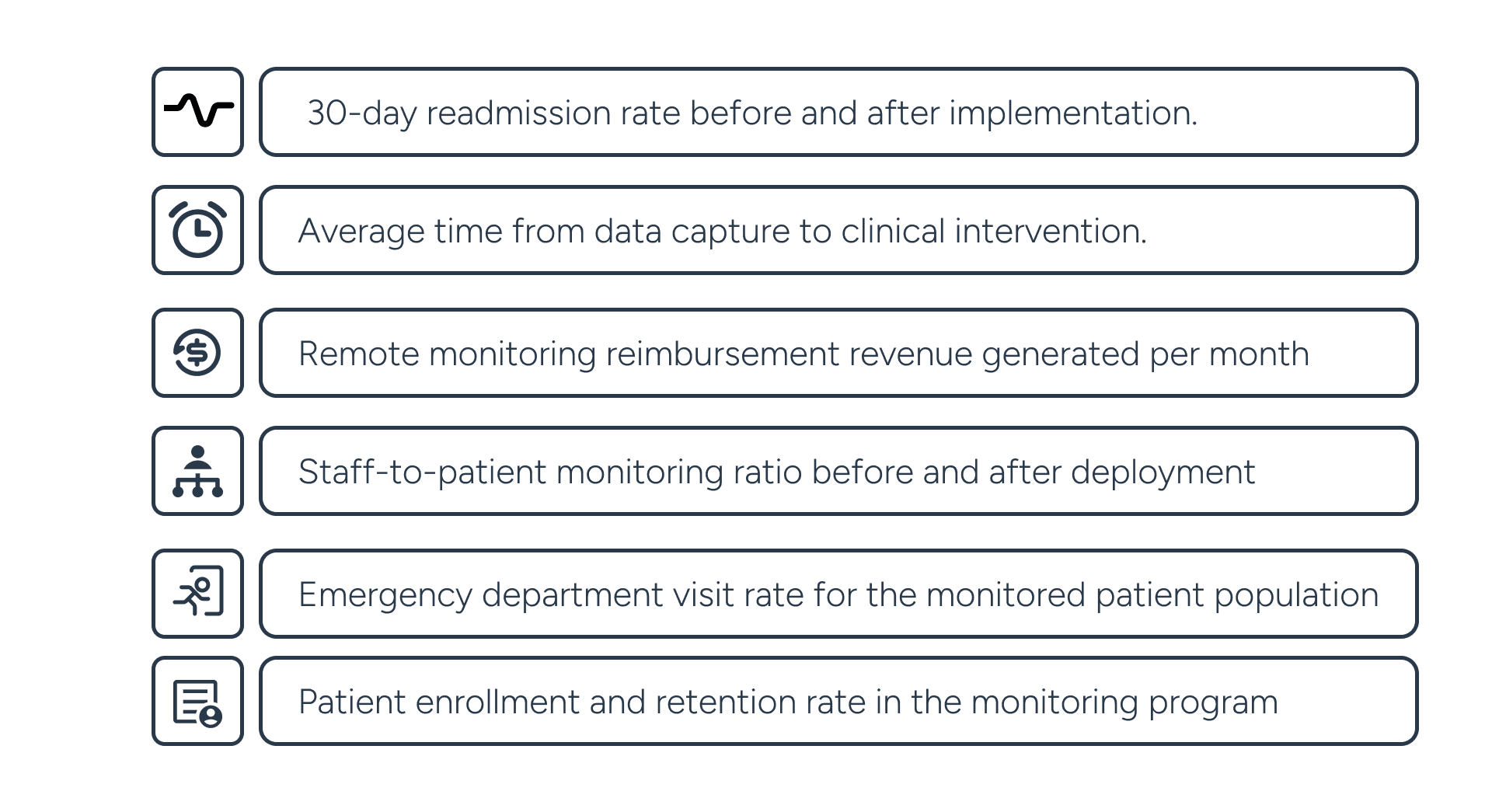
Founders pitching to a CIO or CEO should present these metrics as a before-and-after framework tied to the provider's existing cost structure.
U.S. Case Examples
A prospective cohort study published on PubMed Central found that home telemonitoring for high-risk post-discharge patients produced measurable reductions in hospital readmissions and emergency department visits within three and six months of implementation. A randomized trial published in Scientific Reports confirmed that wearable activity monitoring after hospital discharge improved readmission prediction accuracy, with wearables capturing sleep and activity data that phone-based monitoring did not collect.
For growth-stage healthcare businesses and healthtech companies, these published outcomes provide a template for the metrics a provider will want to see before committing to a program, and demonstrate that the ROI case for wearable AI in U.S. healthcare rests on peer-reviewed clinical evidence.
What Is the Implementation Roadmap for Healthcare Wearable App Development?
A healthcare wearable app implementation follows three phases: a controlled pilot, an enterprise rollout, and a continuous optimization program. Skipping or rushing any phase is where most deployments lose provider confidence and fail to reach consistent clinical use.
Phase 1: Clinical leads define acceptance criteria before the pilot closes.
- Define the clinical use case, target patient group, and data points the platform will collect before selecting a device.
- Run the pilot with a defined patient group, gather structured feedback from clinical staff, and confirm the platform meets your compliance obligations before expanding.
- Success criterion: The platform generates reliable data, and clinical staff can act on it within their existing workflow.
Phase 2: Department heads sign off on training completion before each expansion stage.
- Expand department by department, with dedicated training for each clinical team before go-live.
- Confirm that billing documentation meets CMS remote monitoring requirements at each stage.
- Success criterion: Patient enrollment grows without increasing staff workload per patient.
Phase 3: The product and clinical teams review performance data together on a quarterly basis.
- Review AI model accuracy on a scheduled basis and track readmission rates, monitoring revenue, and patient retention against the targets set in your business case.
- Success criterion: Outcomes improve across successive review periods, and the program accommodates new patient populations without restarting the build process.
How Do You Identify and Address Healthcare Wearable App Development Challenges?
Healthcare wearable app development introduces a set of challenges that require attention at the build stage. Addressing them before launch determines whether the product reaches clinical adoption or faces rejection at the provider level.
Challenge | Why it matters | How to address it |
|---|---|---|
Data quality and sensor accuracy | Interference and inconsistent device placement produce unreliable readings that compromise clinical decision-making | Validate device accuracy across varied environmental conditions and user behaviors, and build device performance checks into the development process. |
EHR integration complexity | Non-standardized data formats and closed manufacturer protocols create delays that increase development time and cost | Plan EHR integration at the architecture stage and use FHIR-compliant middleware from the start |
Data privacy and security | Continuous collection of sensitive patient data creates overlapping obligations across HIPAA, FTC, and FDA frameworks | Embed patient data protection controls, defined access permissions, and HIPAA compliance into the architecture from the first build decision. |
User adoption and engagement | Complex interfaces and varying digital literacy among patient populations reduce consistent device use | Prioritize intuitive interface design and a guided setup process with ongoing in-app support to maintain consistent device use across the patient population. |
AI model bias | Models trained on populations with limited demographic representation perform unequally across patient groups | Use patient data drawn from diverse demographic groups in model training, and schedule accuracy assessments after the model goes live |
Why Choose GeekyAnts for AI-Enabled Healthcare Wearable App Development?
Healthcare is one of the few industries where a poor technical decision carries consequences beyond budget overruns. Provider trust, once lost, takes years to rebuild. Every healthcare engagement we take on starts with understanding the environment the product will operate in before a single line of code is written.
Saurabh SahuChief Technology Officer (CTO)GeekyAnts has built healthcare digital products across chronic disease management, connected device monitoring, and clinical workflow modernization, with each engagement delivered under a HIPAA-compliant development process. For healthtech companies and established healthcare organizations building AI wearable products, that depth of domain experience translates directly into faster time to clinical deployment and lower compliance risk.
For a digital health client managing Type 1 diabetes care, we built a mobile and web application suite that connected real-time glucose readings from continuous glucose monitors, meaning devices that track blood sugar at regular intervals throughout the day, to a shared platform used by patients, families, and nursing staff. The platform covered blood glucose levels, insulin usage, and sleep pattern tracking within a single interface.
For a healthcare provider focused on modernizing clinical intake processes, we reduced patient onboarding time by 40% by integrating AI-powered voice-to-text documentation and automated generation of treatment plan drafts, eliminating manual data entry from the intake workflow.
Both engagements required the same core capabilities that healthcare wearable app development demands: architecture built for real-time data, integration with clinical systems, and compliance embedded from the first build decision.
What Is the Future of AI Wearable Healthcare App Development?
AI wearable healthcare app development is moving toward direct integration with telehealth platforms, where wearable data flows into virtual consultation workflows, broader coverage of chronic condition monitoring across cardiac, metabolic, and respiratory care pathways, and AI models that refine their clinical outputs as they process more patient data over time. For U.S. healthcare providers and founders, these directions point toward a market where clinical standards for wearable products will increase, and where the architecture, compliance, and ROI foundations covered in this article will become the baseline for market entry.
Providers and founders who establish this groundwork now will be equipped to meet those higher clinical and regulatory thresholds. The three pillars this article has addressed, building the right architecture, maintaining a compliant development process, and measuring outcomes against a clear ROI framework, form the basis for any AI wearable healthcare product positioned for long-term clinical adoption in the U.S. market.
Sources and Citations
- https://www.cdc.gov/chronic-disease/data-research/facts-stats/index.html
- https://www.cms.gov/newsroom/fact-sheets/calendar-year-cy-2026-medicare-physician-fee-schedule-final-rule-cms-1832-f
- https://www.ftc.gov/business-guidance/resources/complying-ftcs-health-breach-notification-rule-0
- https://pubmed.ncbi.nlm.nih.gov/40575760/
- https://www.ncbi.nlm.nih.gov/pmc/articles/PMC11437225