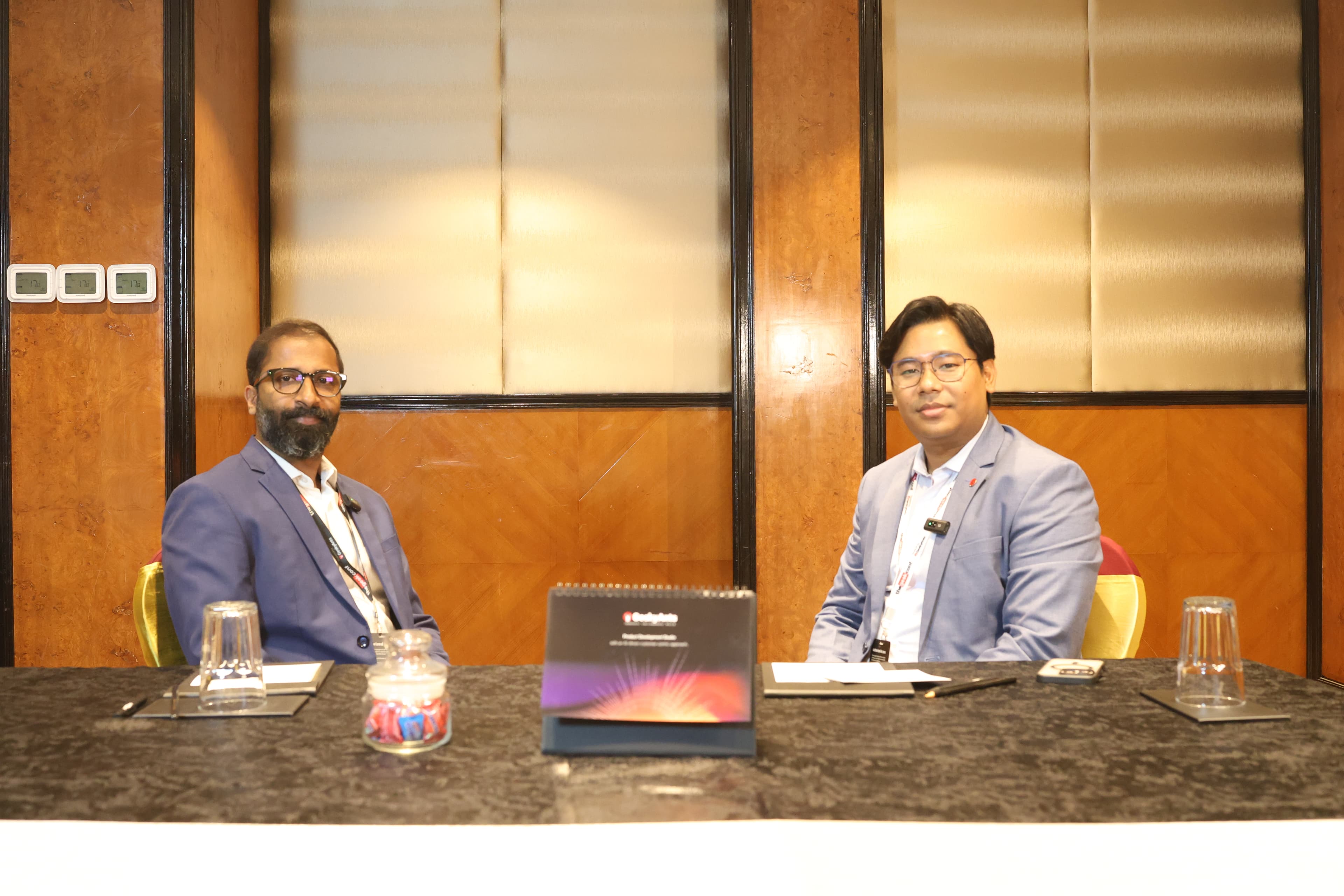

Editor’s Note: On the sidelines of thegeekconf 2025, Anupam, Head of ZEISS Digital Partners, sat down with Rakesh Ningthoujam, Head of Growth Marketing at GeekyAnts, to discuss what drives successful digital transformation. Looking past the latest tech trends, they explore why lasting change depends more on company culture and leadership support than on the technology itself. Their conversation offers practical insights for organizations committed to sustainable digital change.
RN (Rakesh Ningthoujam): Based on your session on Building the Workforce and Culture for the Future, you emphasized that culture and leadership are the primary foundations for the workforce we need right now. What specific mindset changes are required before a company can effectively adopt these new capabilities?
AC (Anupam Chaturvedi): The most significant requirement is a fundamental shift in mindset and a broad acceptance of the transition across every level of the company. This acceptance must start with the leadership and trickle down to the rest of the workforce. We have to give people the confidence that these tools are intended to enable them to perform better. It is important to address the common anxiety regarding displacement and reassure teams that the goal is to empower them to achieve greater things.
RN: Do you observe a persistent hesitation in the market despite the high level of interest we see currently?
AC: There are certainly different levels of hesitation across various cohorts. For a professional in a finance backend role, the primary concern is job security. For leadership, the hesitation usually centers on security and whether the investment will provide a tangible return. We have to tackle these uncertainties systematically to ensure the technology can actually deliver on its potential. This is a long-term commitment that requires both consistency and persistence.
RN: Boardroom discussions often focus on quarterly results. How long should a leadership team realistically wait before they start asking for a return on their investment in this field?
AC: This is a long haul rather than a series of short wins. We believe the management should have the patience to invest for at least two to three years. During the first year, the focus should be on building the foundation layer, which includes frameworks, governance, and responsible usage policies. In the second year, you can begin selecting a pool of specific use cases to test for results. Investment must cover the governance, the platforms, and the people simultaneously.
RN: Enterprises are often built on legacy systems and established processes. How do you suggest making this transition without disrupting existing operations?
AC: Transitioning legacy systems is always a difficult task for leaders. It requires a serious change process and transparent communication with the workforce. This is similar to moving from one major ERP platform to another, which can take several years because large enterprises handle massive volumes of data. There has to be an intentional overlap between the old and the new systems to ensure that processes are streamlined without breaking the business.
RN: Have you seen the actual development or change cycles reduce because of these new tools?
AC: The technology is evolving every day, and we have seen cycle times reduced by roughly 30 to 40%. While traditional platforms like CRM or ERP systems used to have investment lifecycles of five to ten years, the current landscape is moving much faster. In these advanced fields, the landscape changes significantly every one or two years.
RN: Has this speed changed who is actually making the decisions in the company? Are we seeing AI Leads or technical officers taking over the roles traditionally held by the CTO or COO?
AC: The primary decision makers generally stay the same, but there is a much higher level of inclusiveness now. We see AI Officers, Digital Officers, and Technical Officers being brought to the table to provide their expertise. Leaders have recognized that they need specialized input in such a fast-paced environment, so these subject matter experts now act as significant influencers in the final decision.
RN: Compliance is a major hurdle for enterprises, especially with risks like data leaks or unrefined answers. What is your strategy for adopting these tools while maintaining ethical and legal frameworks?
AC: For organizations in highly regulated fields like medical or financial technology, compliance is the highest priority. Our strategy involves building a foundation of responsible governance frameworks that are rolled out to everyone from the beginning. While establishing these models takes time, it reaps better results in the long run. We use a method where we test the technology in a specific pool of use cases while we are building the governance in parallel. By the time you reach the most sensitive parts of the operation, your platforms and tools are already prepared to handle the compliance requirements.
RN: To close, is there a specific word or phrase that describes the current state of the industry for you?
AC: The industry is currently evolving, though it is chaotic. My advice is to be consistent, persistent, and patient. Realizing the potential of this technology requires a great deal of work and exploration, but the results will follow if you keep working through it.