AI MVP Development Services
Our AI MVP development services turn an AI idea into a market-testable product in 6-8 weeks with discovery, AI feasibility, product design, LLM and RAG engineering, full-stack development, and real-user learning in one accountable pod.










Proof That Sits Behind the MVP Build
These outcomes come from GeekyAnts AI and product engineering work across document intelligence, healthcare workflows, global platforms, and production systems.
99%
Less manual effort
10K
Pages processed in 2 minutes
40%
Faster onboarding
5K+
Concurrent users
550+
Engagements since 2006
The Biggest AI MVP Risks We Help You Reduce
Teams can demonstrate an AI feature quickly. An AI MVP has a different job: prove that a specific user will adopt, trust, and value it inside a real workflow, while showing which assumptions should shape the next investment.
Demo Without Demand
A model can look impressive in a demo and still fail to solve a workflow users will adopt. We define the user, problem, business outcome, and success signal before the build expands.
Unproven AI Feasibility
Model quality, retrieval, latency, cost, data readiness, and human oversight must work together. We test these constraints before they become scale-stage surprises.
Overbuilt First Release
Too much scope slows learning and raises investment before evidence exists. We prioritize the riskiest assumption and the smallest credible release that can test it.
Disposable Prototype Architecture
A throwaway demo can create a second rebuild later. We use clean architecture, essential security, testing, deployment automation, and observability without premature enterprise over-engineering.
Weak Learning Signals
Without instrumentation and AI evaluation, teams leave the pilot with opinions. We build product analytics, feedback loops, and evaluation criteria into the MVP.
Hidden Delivery Risk
Scope, budget, quality, dependencies, and release status should remain visible. Shared delivery evidence helps product and engineering leaders make faster decisions without losing control.
What We Deliver in Your AI MVP
To ensure cutting-edge AI product development standards, a focused first release designed to validate demand, prove AI feasibility, reach selected users, and turn opinions into evidence for the next product decision.
Validated MVP Scope
A prioritized release built around the riskiest assumption, the core user journey, and a measurable signal of product-market fit.
AI-Native Architecture
LLM orchestration, RAG pipelines, agent workflows, model abstraction, vector search, and evaluation designed as a system rather than an API afterthought.
Full-Stack Product
User experience, frontend, backend, data, authentication, integrations, administration, and AI capabilities built as one usable release.
Scalable Starting Point
Clean architecture, essential security, testing, deployment automation, and observability with enough engineering discipline to support credible learning.
Evidence to Learn From
Instrumentation, product analytics, feedback loops, and AI evaluation criteria that show what users value and what should be built next.
Complete Handoff
Source code, architecture decisions, API and product documentation, deployment setup, known risks, and a prioritized scale-up roadmap.
What Should The First Release Validate Before You Scale?
The right AI MVP reduces commercial and technical uncertainty without creating a disposable codebase. It gives founders, CTOs, and product leaders evidence for what deserves further investment.

Validate Market Demand
Put the core workflow in front of real users and measure adoption. Use the evidence to support product-market fit, funding, or an enterprise investment decision.

De-Risk the AI
Test model quality, retrieval quality, data readiness, latency, cost, and human oversight before scaling infrastructure and features.

Create a Fundable Asset
Pair a compelling user experience with a credible product evolution roadmap that investors, buyers, and internal stakeholders can evaluate.

Preserve a Route to Scale
Build only the foundation needed for credible learning while keeping a clear route forward for ideas that earn the right to scale.
AI Products You Can Validate With an MVP
Our AI MVP development services support products where AI is central to the user experience and the business workflow, not a decorative chatbot added after the application is built.
Generative AI SaaS
Multi-tenant AI products with subscription workflows, secure data access, administration, analytics, and model operations.
Enterprise Copilots
Context-aware assistants grounded in approved company data, permissions, workflows, and human escalation paths.
RAG Knowledge Products
Search and question-answering experiences using document ingestion, vector databases, retrieval evaluation, and citations.
Agentic Workflows
AI agents that plan, use tools, coordinate steps, request approval, and automate bounded business processes.
Voice and Conversational AI
Real-time voice or chat products with transcription, orchestration, session context, guardrails, and observability.
AI products that extract, classify, summarize, validate, and route information from complex business documents.
From Product Hypothesis to Market Evidence
We combine discovery, validation, scoping, design, agile development, iterative shipping, and user feedback with AI feasibility and measurable evaluation.
- Step 01
AI Product Discovery
Define the business outcome, target user, workflow, differentiator, data, and success signal. - Step 02
Idea Validation
Test whether AI creates enough user and business value to justify the build. - Step 03
MVP Scoping
Define must-have, conditional, and post-launch scope to protect speed and focus. - Step 04
AI Feasibility
Evaluate models, RAG, agents, data readiness, accuracy, latency, cost, and human oversight. - Step 05
Product Design
Turn complex AI behavior into a clear, trustworthy experience with explicit human handoffs. - Step 06
Agile Development
Build vertical product slices across UX, application, data, AI, integrations, and QA. - Step 07
Iterative Shipping
Demo working software, evaluate output, and integrate stakeholder feedback throughout delivery. - Step 08
Pilot + Learn
Release to a defined user group, capture product and AI signals, and prioritize what deserves further investment.
AI MVP Development: From Idea to Pilot in 6—8 Weeks
The sequence is compressed through parallel product, design, AI, application, QA, and DevOps work. Timing is confirmed after data, integration, security, and scope dependencies are understood.
Week 1: Validate
Confirm the problem, target user, product hypothesis, AI feasibility, success metrics, and release boundary.
Week 2: Design the Experiment
Finalize critical journeys, prototype the experience, choose the model and data approach, and define evaluation criteria.
Weeks 3-6: Build the MVP
Ship the core user journey across frontend, backend, AI, data, integrations, analytics, and essential quality controls.
Week 7: Validate
Run end-to-end testing, AI evaluation, usability checks, stakeholder review, and pilot-readiness remediation.
Week 8: Pilot
Release to selected users, monitor behavior and AI quality, collect feedback, and agree the evidence-led roadmap.
How We Keep The First Release Visible and Accountable
Both teams work from the same backlog, delivery evidence, AI evaluation results, budget view, dependencies, and release plan. Communication cadence is shaped around your expectations.
Backlog and sprint access; agreed demo frequency; weekly progress reports; named project manager.
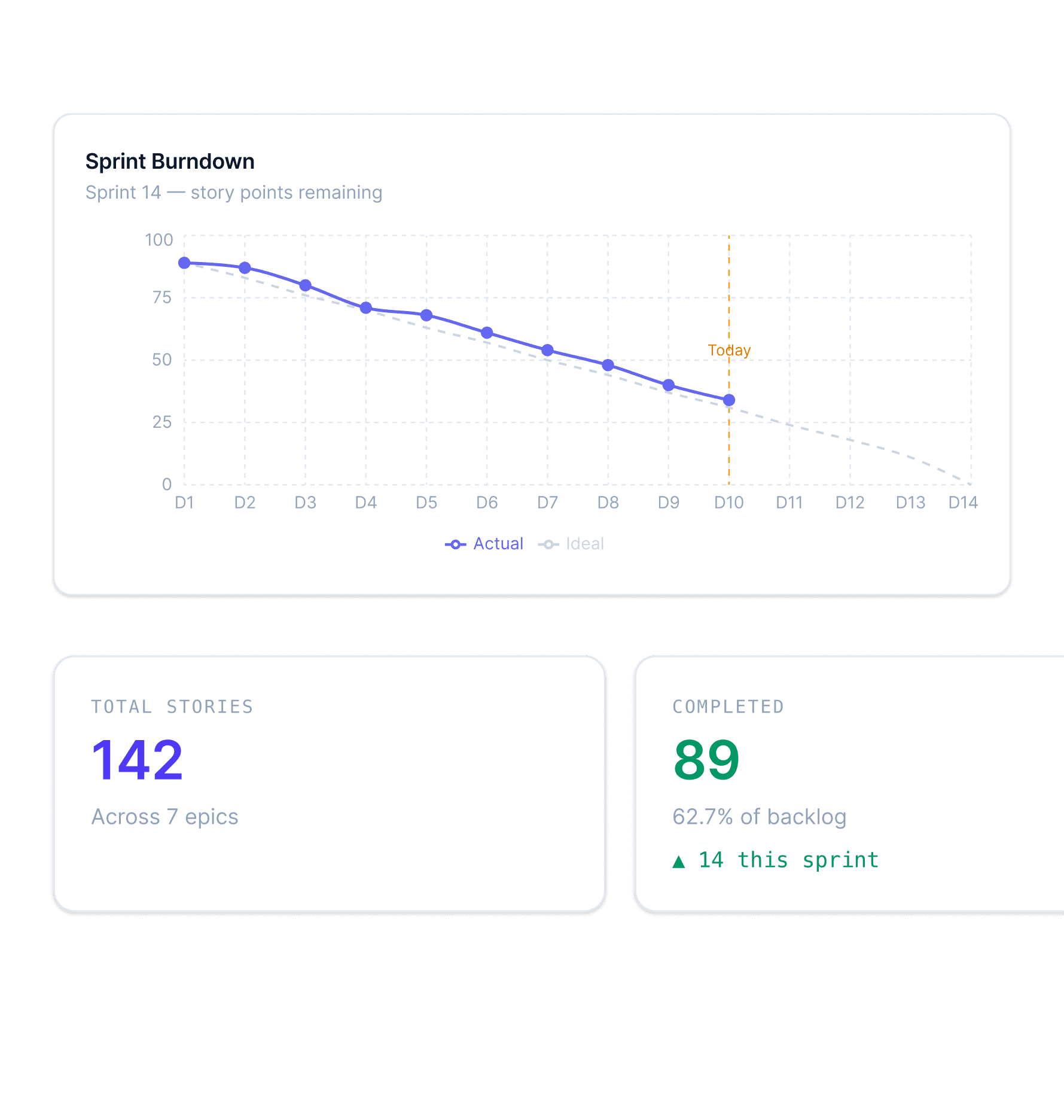
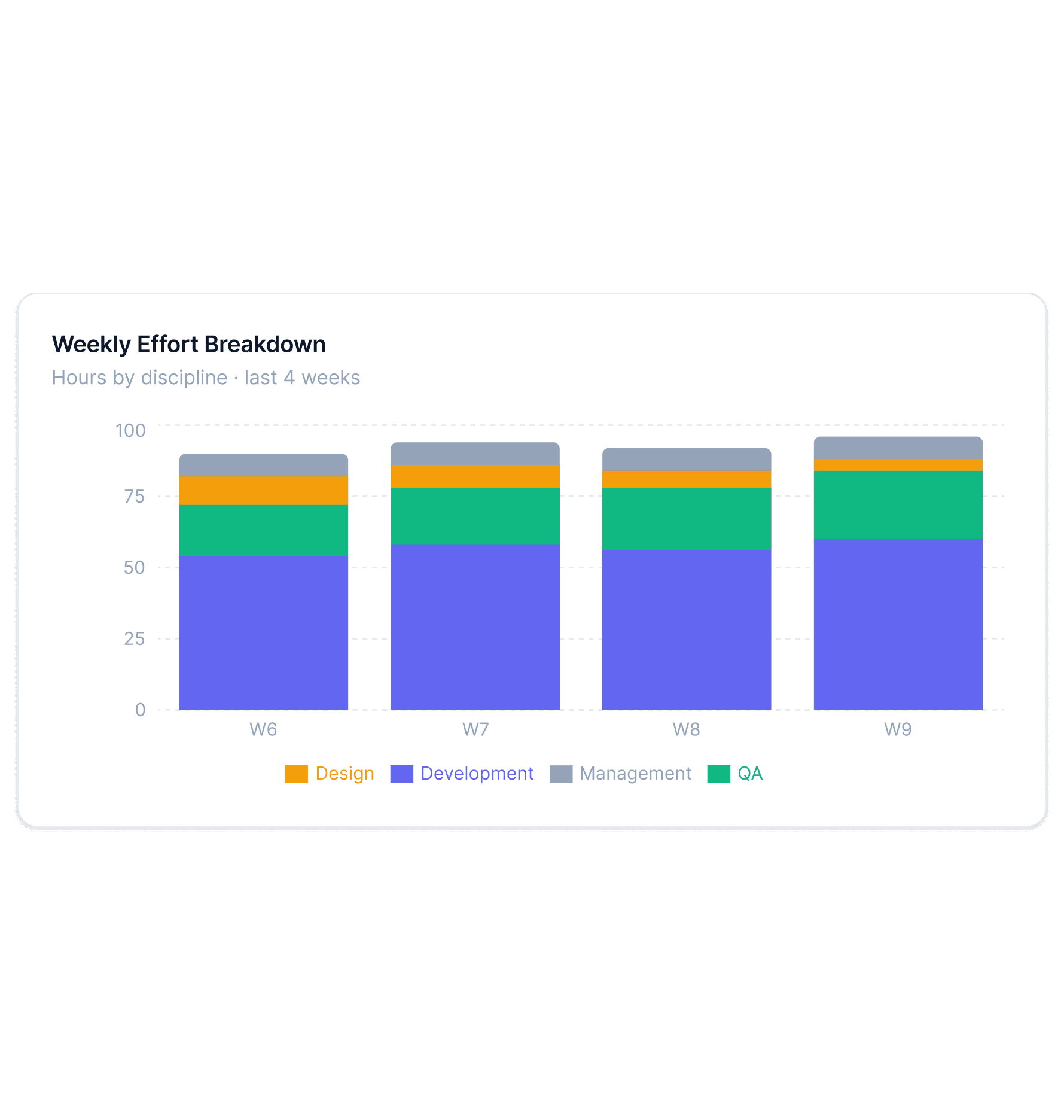
Time and effort reporting; budget and burn visibility; capacity utilization; estimate revisions.
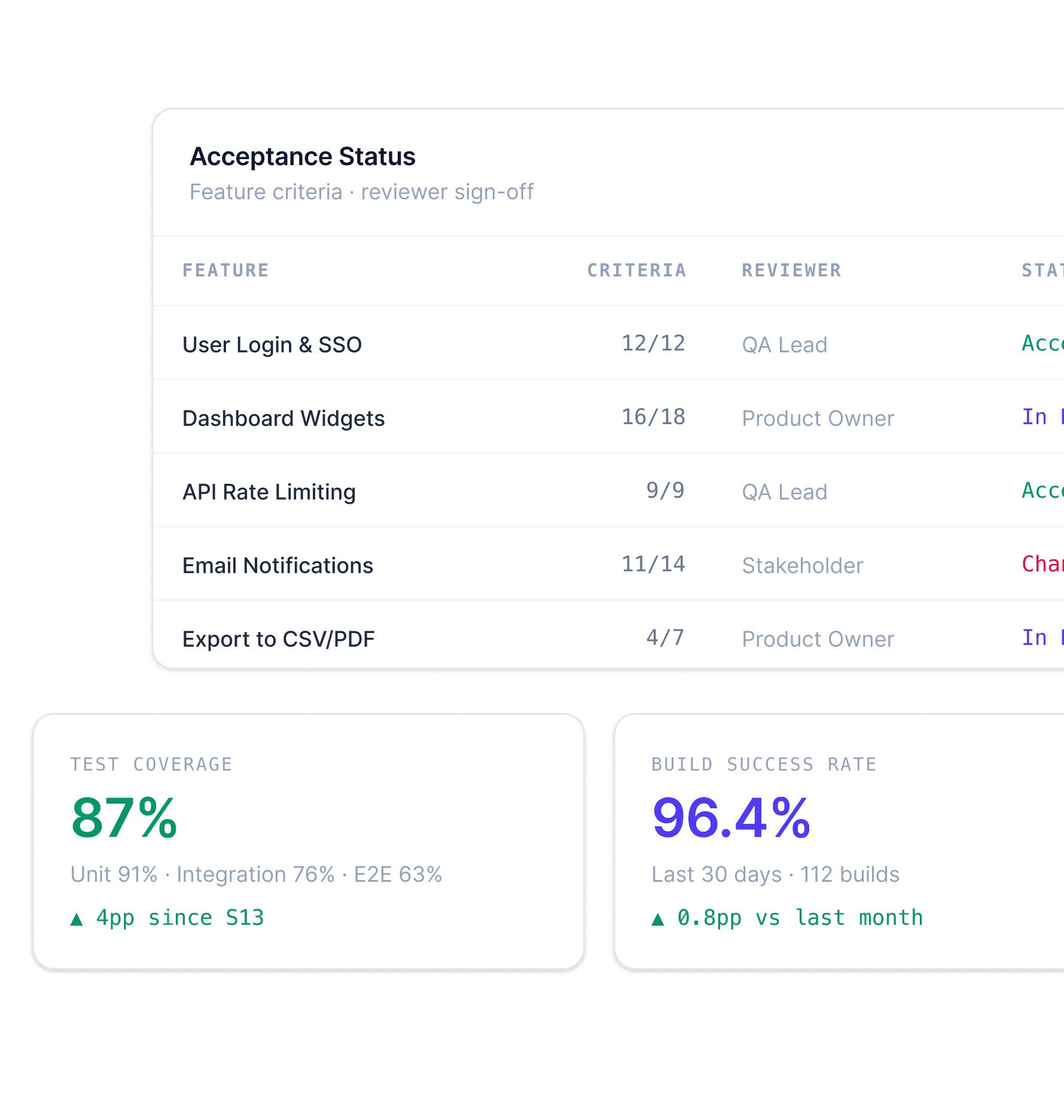
Source-code access; quality and test reports; code-review visibility; acceptance status.
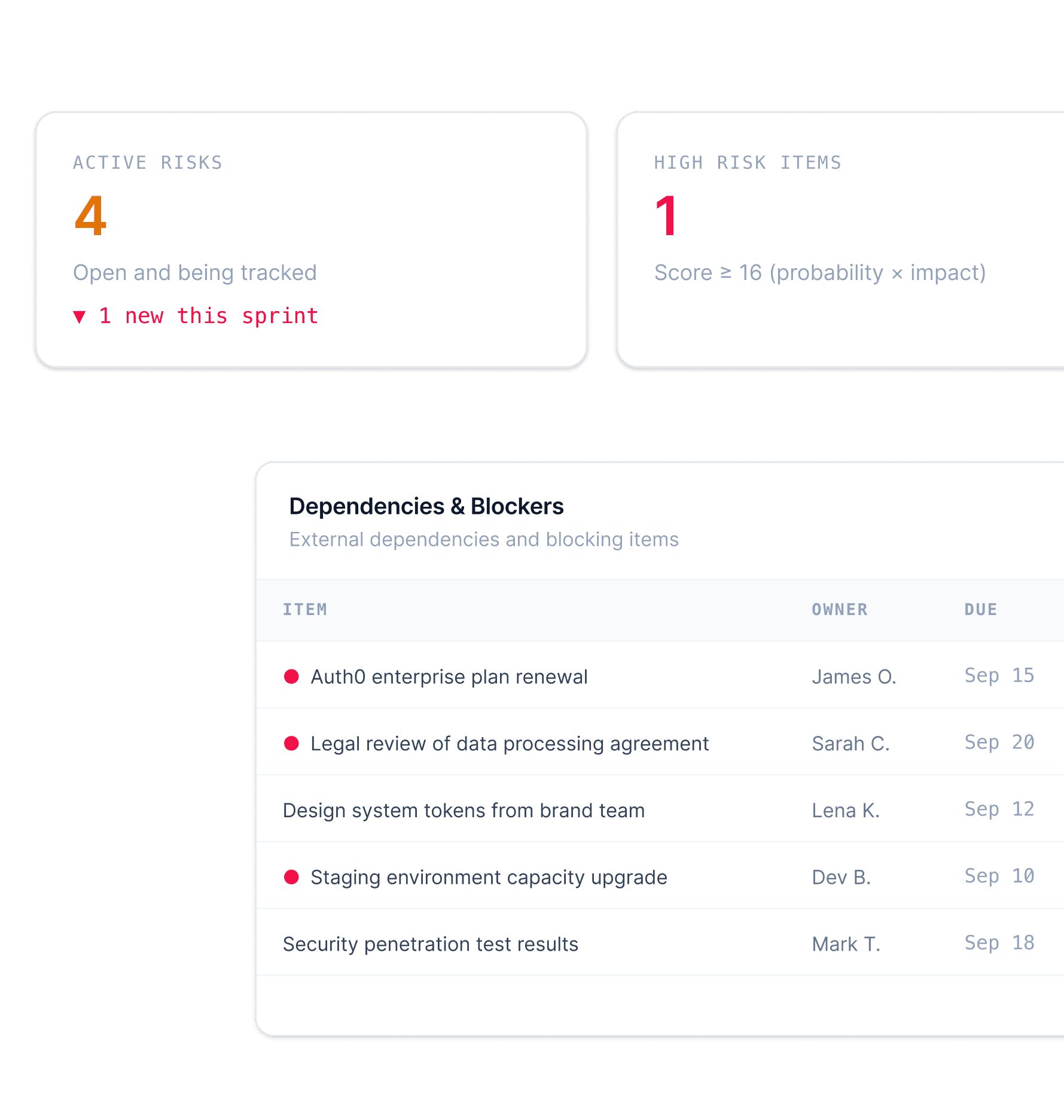
Risk and dependency register; documented assumptions; blocker ownership; decision history.
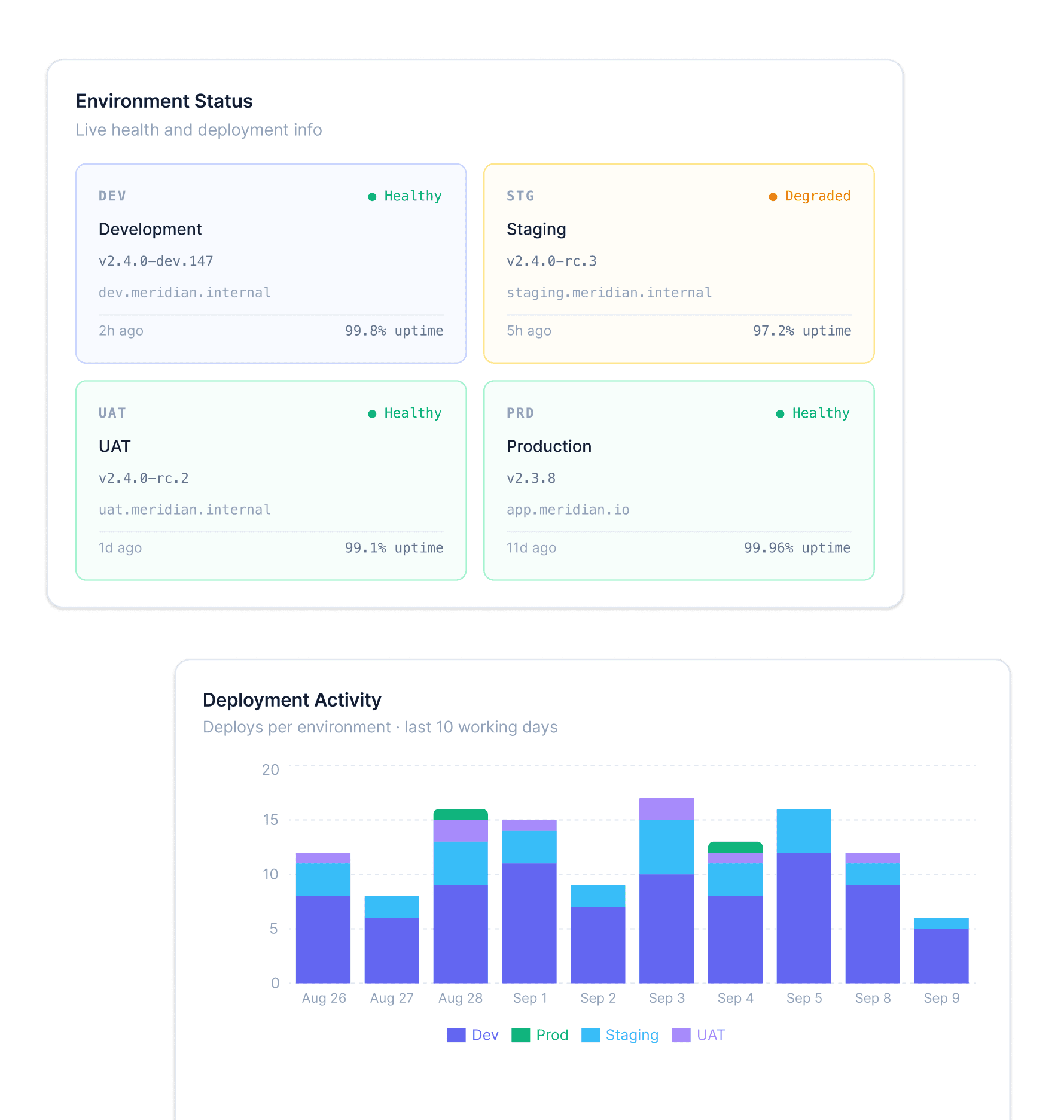
Release and deployment visibility; known limitations; environment status; handover documentation.
AI Accelerates the Build. Product Judgment Makes the Initial AI Product Viable.
We use AI across the software lifecycle and within the product itself. Senior engineers remain accountable for the architectural and product decisions that determine whether the MVP lasts.
AI-Augmented Delivery
What Senior Product Engineers Own
Requirement and user-story analysis
MVP scope and product trade-offs
Rapid prototypes and design exploration
Model, retrieval, and agent architecture
Code scaffolding and implementation
Security, privacy, and data boundaries
Automated test and test-data creation
AI evaluation and failure handling
Documentation and review assistance
Defect and operational analysis
Pilot release readiness
Why Choose GeekyAnts as Your AI MVP Development Company
Backed by 20+ years of product engineering experience, 800+ delivered projects, and work with 550+ clients, GeekyAnts brings proven delivery depth to AI MVP development.
Product discovery, UX, application engineering, AI feasibility, data, QA, and DevOps move together instead of becoming separate handoffs.
The release is built around a measurable success signal, a defined pilot group, and the assumptions that matter most to the next investment decision.
Essential security, testing, deployment automation, observability, and clean architecture are included without turning an MVP into an enterprise transformation program.
Backlog, quality reports, budget view, risks, assumptions, dependencies, release status, and source code remain visible throughout delivery.
AI helps accelerate analysis, scaffolding, testing, and documentation. AI MVP developers remain accountable for scope, architecture, security, quality, and pilot readiness.
You receive source code, architecture decisions, API and product documentation, deployment setup, known risks, and a prioritized scale-up roadmap.
Technologies Powering Our AI MVP Engineering
We select the stack around the product, data, AI behavior, integration needs, security boundaries, and the learning goals of the MVP. The technologies below represent a flexible stack we can adapt to the MVP's product and engineering requirements.
- React
- React Native
- Flutter

- Angular
- VueJS
- SvelteJS

- Expo

- PostgreSQL
- MongoDB
- MariaDB
- MySQL
- Firestore
- Amazon DynamoDB
- Vector search
- LangChain
- LlamaIndex
- Firebase Genkit
- AWS Bedrock
- RAG pipelines
- Agent workflows
- Open-Source AI Models
- Proprietary AI Models
- Manual testing
- Automation testing
- Selenium
- Performance testing
- Security testing
- AI Evaluation
- Pilot Acceptance
- Encryption and key management
- SSL pinning
- RASP tools
- Biometric authentication
- CI/CD
- Deployment automation
- Essential security checks
- Dynatrace
- Hypertrace
- APM dashboards
- Alerting workflows
- Product analytics
- Figma
AI Proof of Concept vs AI MVP vs Prototype to Production
Our AI MVP Development services are designed for zero-to-one validation. If you already have a working prototype, the next step shifts from proving the idea to hardening the architecture and preparing it for production.
Stage 01
AI Product Discovery
Define the business outcome, target user, workflow, data, differentiator, success signal, and riskiest assumptions that the MVP needs to test.
Stage 02
AI MVP Sprint
Design, build, validate, and pilot the focused release. Indicative delivery: 6-8 weeks, subject to data, integration, security, and scope dependencies.
Stage 03
Prototype to Production
For a working prototype or MVP that now needs architecture re-engineering, security hardening, CI/CD, observability, load testing, and scalable infrastructure.
When Your AI MVP Is Ready for Real-User Validation
The MVP is complete when the core journey works, AI quality is measurable, the product can reach a defined pilot group, and the team can learn from behavior rather than presentations.
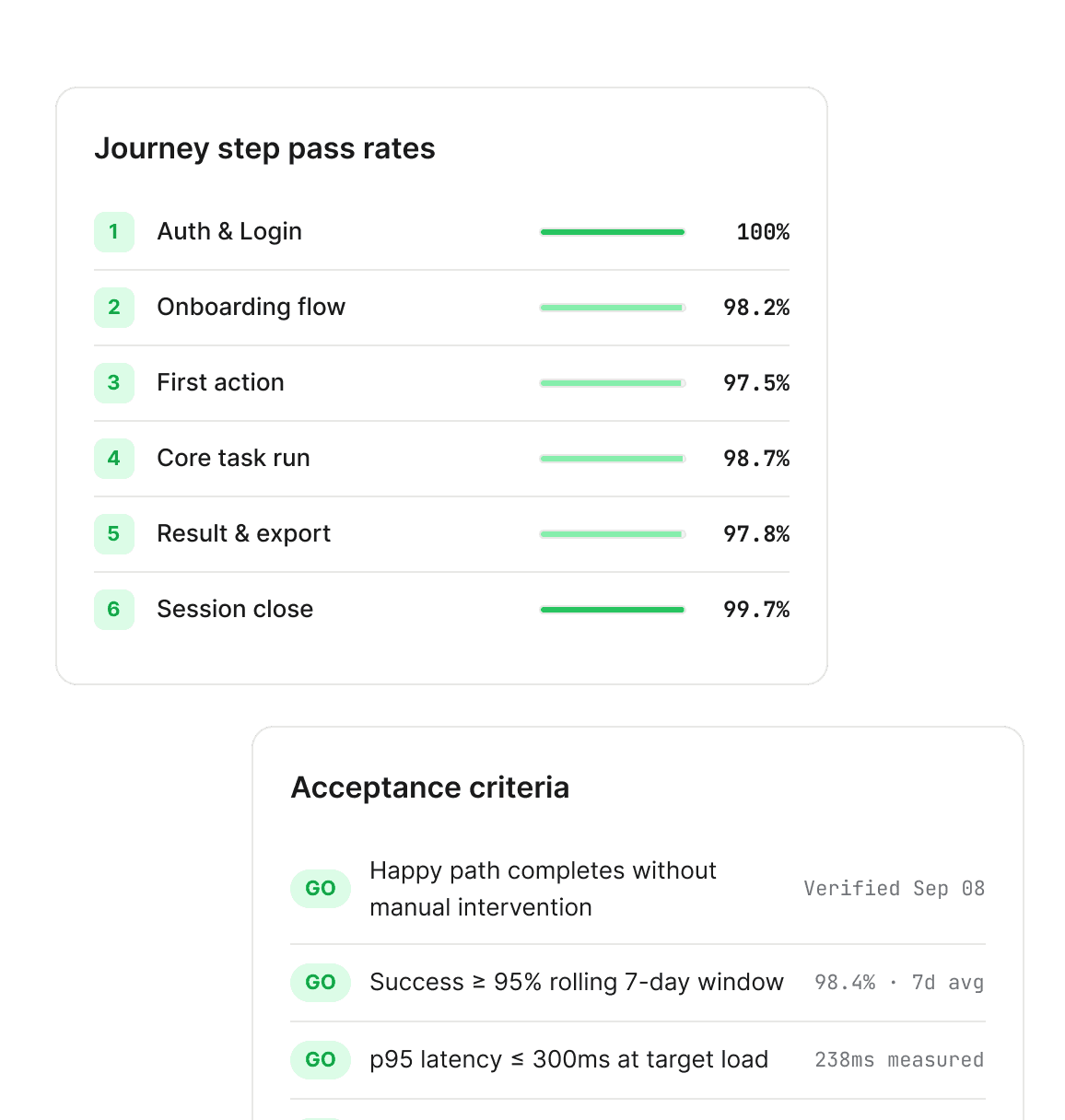
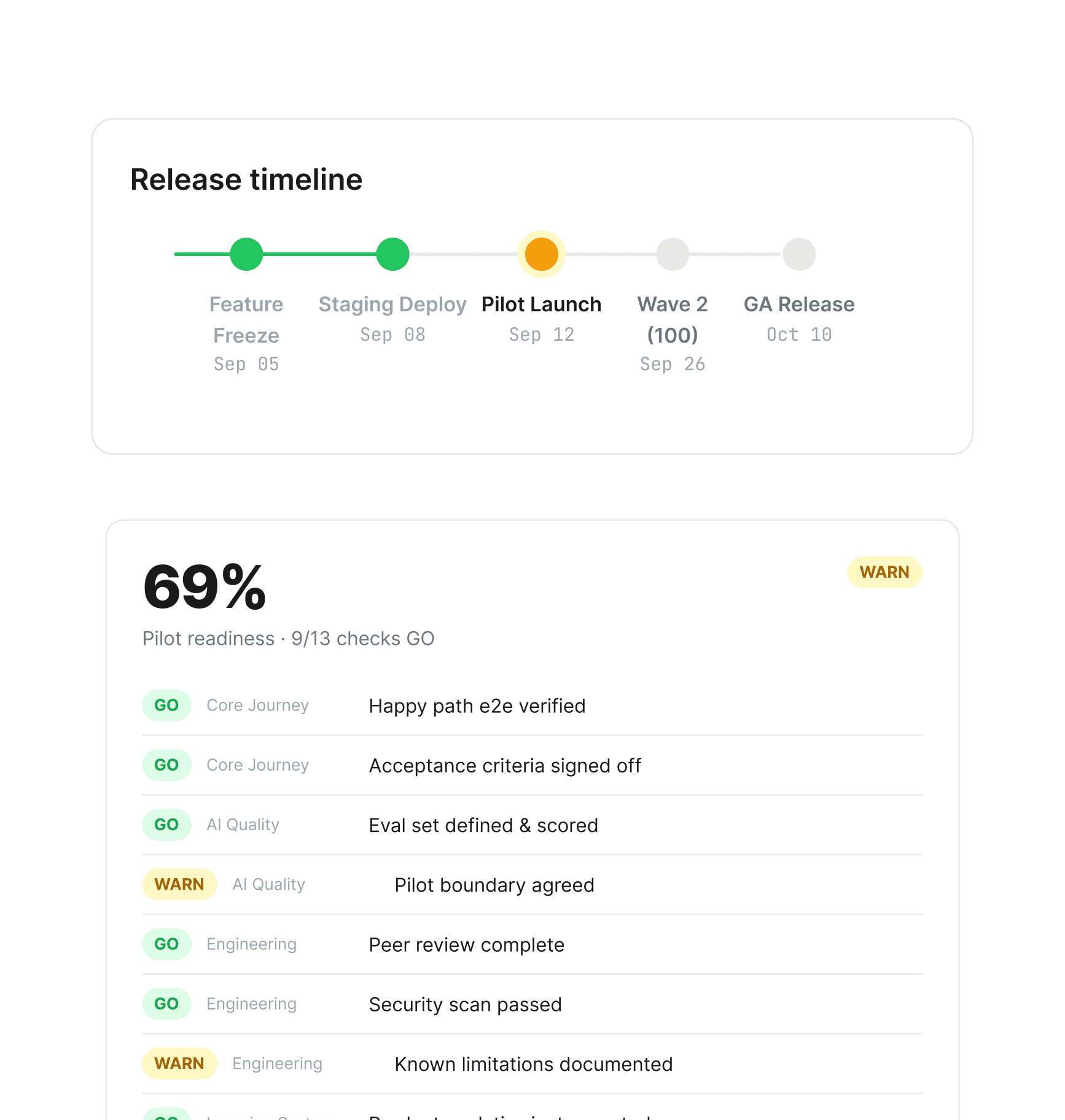
The priority user journey works end to end and acceptance criteria are satisfied.
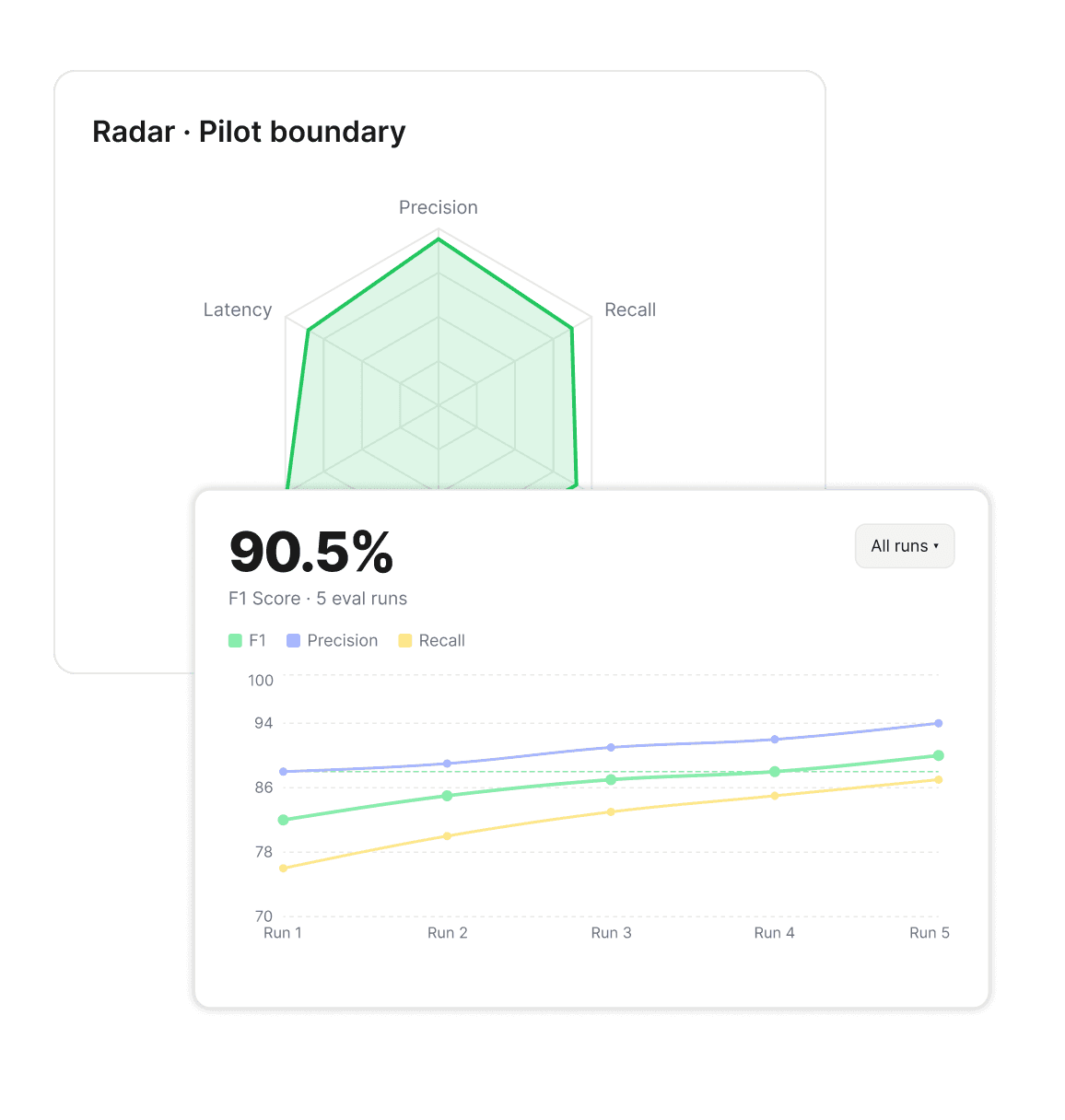
Evaluation criteria are defined, measurable, and met for the agreed pilot boundary.
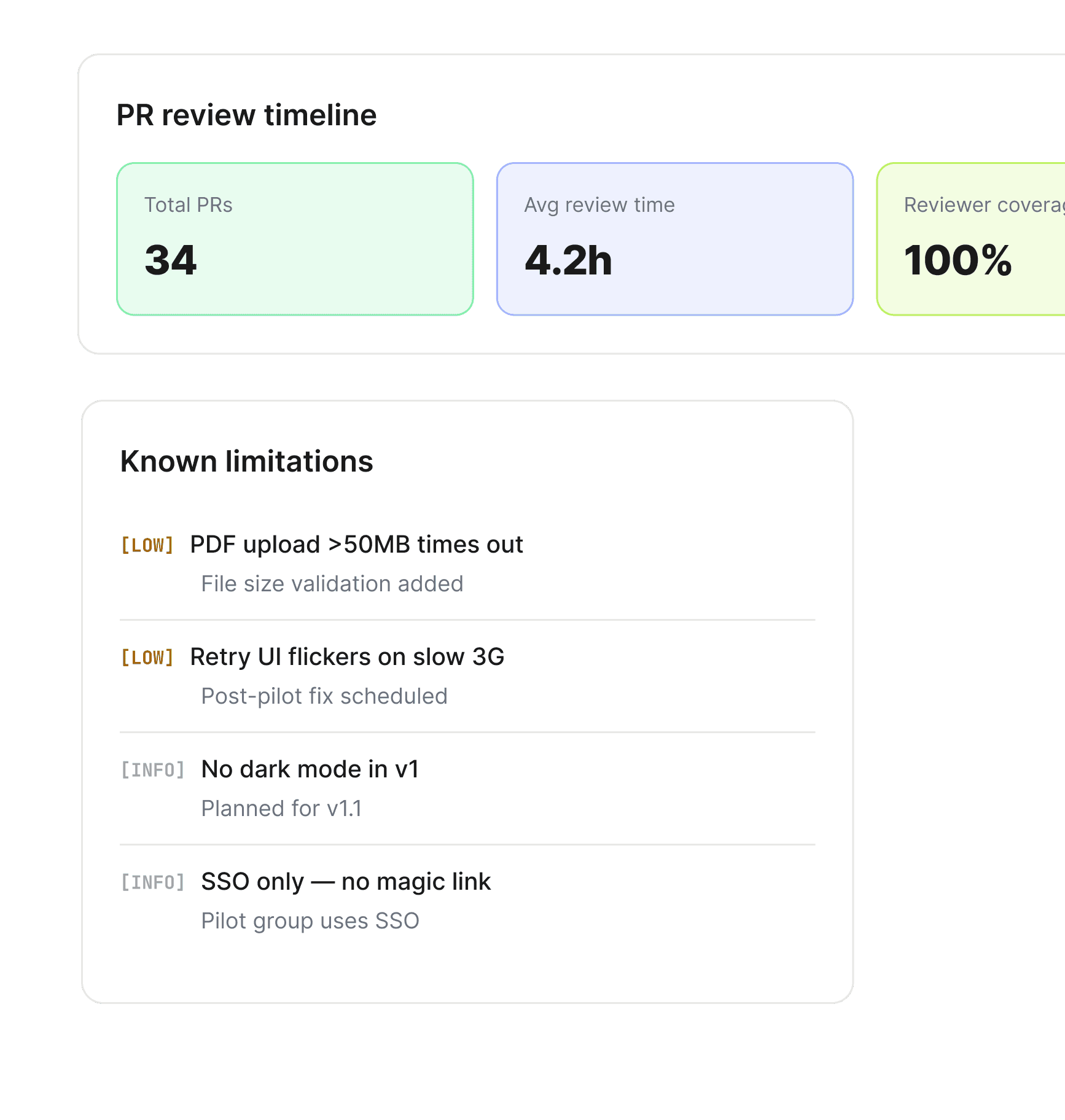
Peer review, essential security checks, testing, and known limitations are documented.
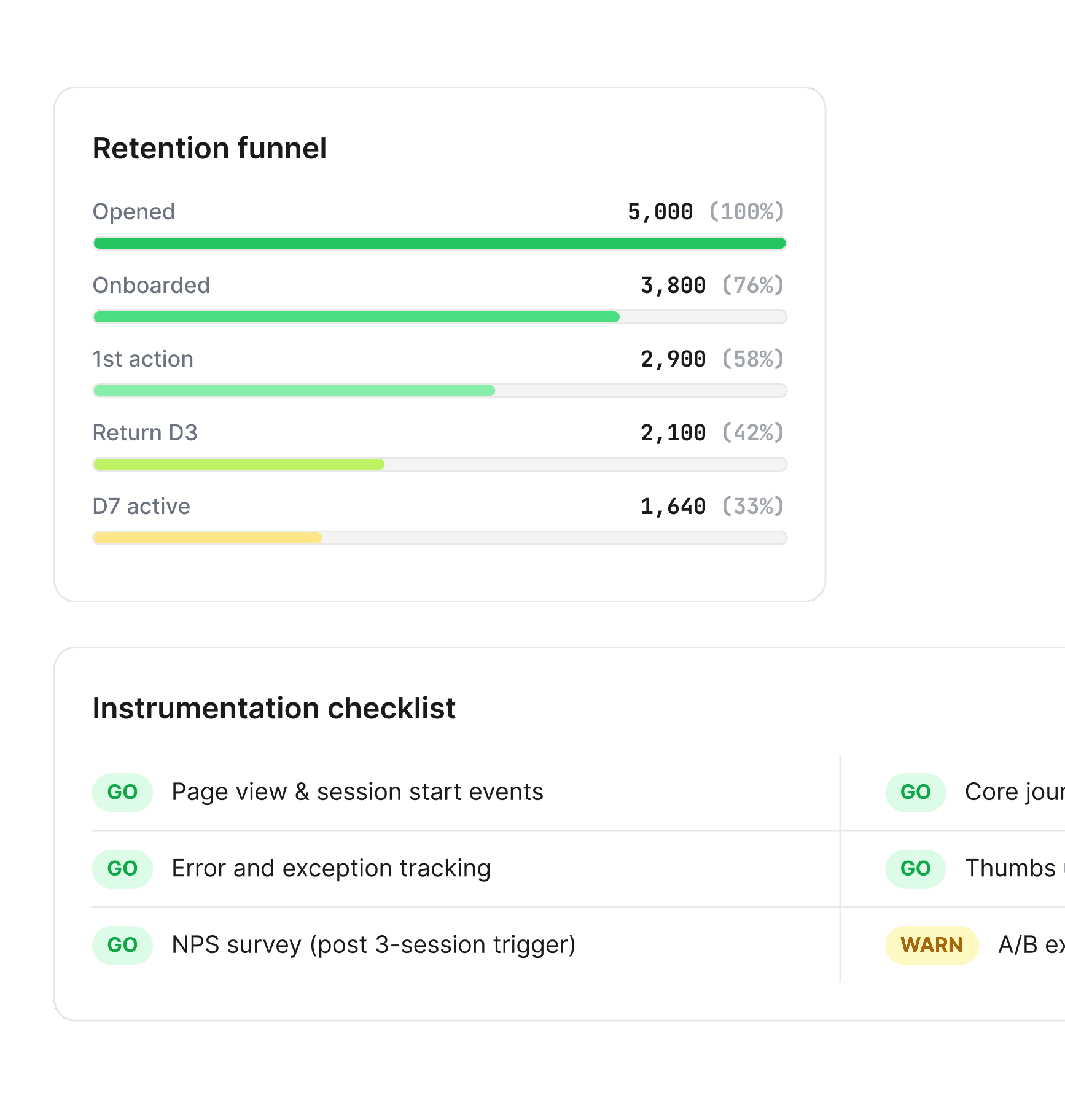
Product analytics and a user feedback loop are instrumented.
Release plan, target pilot group, environment status, and handover responsibilities are agreed.
Clear Contracts Before Product Development Begins
We can sign an NDA before technical discussion, then use the MSA and SOW to make scope, IP, source-code access, responsibilities, acceptance, dependencies, and change handling explicit.
NDA
Before Detail
Protects confidential product, technical, and commercial information during deeper discussions.
MSA
The Relationship
Establishes the broader legal, commercial, and operational framework between both organizations.
SOW
The Engagement
Defines project scope, deliverables, timeline, investment, governance, acceptance, dependencies, and change process.
Turn your AI idea into a scalable product
Tell us the workflow, user, data, and business outcome you want to prove. We will define the smallest credible release, the validation plan, and the signals that should guide your next investment.
Turn Your AI Idea Into Something Users Can Test.
Book an AI MVP discovery call to define the right release, validate feasibility, and map a focused path from idea to a market-testable product.
Contact us
FAQS About AI MVP Development
A focused AI MVP can often be designed, built, validated, and piloted in 6-8 weeks. The timeline depends on data readiness, integrations, model complexity, security or compliance needs, and how quickly product decisions can be made during the sprint.
The engagement can cover product discovery, idea validation, MVP scoping, AI feasibility, UX and product design, LLM, grounded AI, retrieval engineering, full-stack development, integrations, QA, product analytics, AI evaluation, deployment, pilot support, and a complete technical handoff.
AI MVP investment depends on the release boundary, data and integration requirements, AI complexity, security needs, and the amount of product and engineering work required. After the scope is understood, the SOW defines the deliverables, timeline, investment, dependencies, governance, and acceptance criteria.
Yes, when the idea earns further investment. The MVP is built with clean architecture, essential security, testing, deployment automation, and observability so there is a credible route forward. If production requirements expand significantly, the next phase can add hardening, load testing, deeper observability, and scalable infrastructure.
A prototype is mainly useful for proving that an interaction or technical concept can work. An AI MVP goes further: it is a usable release for a defined user group, includes product and AI evaluation signals, supports real workflow validation, and produces evidence for the next product decision.
The stack depends on the use case. Our AI MVP capabilities include LLM orchestration, RAG pipelines, agent workflows, vector search, LangChain, LlamaIndex, Firebase Genkit, AWS Bedrock, prompt engineering, product analytics, and AI evaluation alongside full-stack web, mobile, backend, data, QA, and observability technologies.
GeekyAnts can sign an NDA before detailed technical discussions. The MSA and SOW can then make confidentiality, IP, source-code access, responsibilities, acceptance, dependencies, investment, and change handling explicit throughout the engagement.
Choose AI MVP Development when you are still validating a zero-to-one product hypothesis. If you already have a working prototype or MVP and the main need is architecture re-engineering, security hardening, CI/CD, observability, load testing, or scalable infrastructure, Prototype to Production is the more appropriate next step.
Yes. We support teams across the US, UK, and Europe with a delivery model centered on a shared backlog, visible progress, documented decisions, product and AI evaluation evidence, and an accountable engineering pod.