
Engineering teams spend between 15 and 25% of their development time responding to CI/CD pipeline failures. This figure represents hours that do not go toward product work, architecture, or anything a team ships. The cost compounds further when context-switching comes into the frame: Microsoft's Developer Productivity research found that each interruption to debug a build failure costs an average of 23 minutes of recovery time. Multiply that across a team and a sprint, and the number becomes an operational liability.
The pattern that makes this problem solvable is its predictability. Seventy-three percent of pipeline failures fall into automatable categories: type errors, broken imports, dependency conflicts, and test regressions. Google's SRE handbook advocates automating any repetitive operational task that scales linearly with growth. To solve this, we built a Stateful Agentic Remediation System—an autonomous agent designed to watch your pipelines and act the moment something breaks.
What the AI Agent Does
The system is a stateful agentic remediation system. When a CI/CD pipeline fails, it detects the failure, diagnoses the root cause using AI, generates a targeted code fix, and opens a pull request—all without requiring a developer to act. The fix is then validated against the same CI pipeline, running on GitHub runners, that surfaced the original failure.
If the fix does not pass after three attempts, the system escalates to the engineering team via Slack with full context: the original error, every attempted fix, and the agent's reasoning at each step. It is not a chatbot; it is an always-on agent that watches your pipelines and acts the moment something breaks.
Architecture Overview
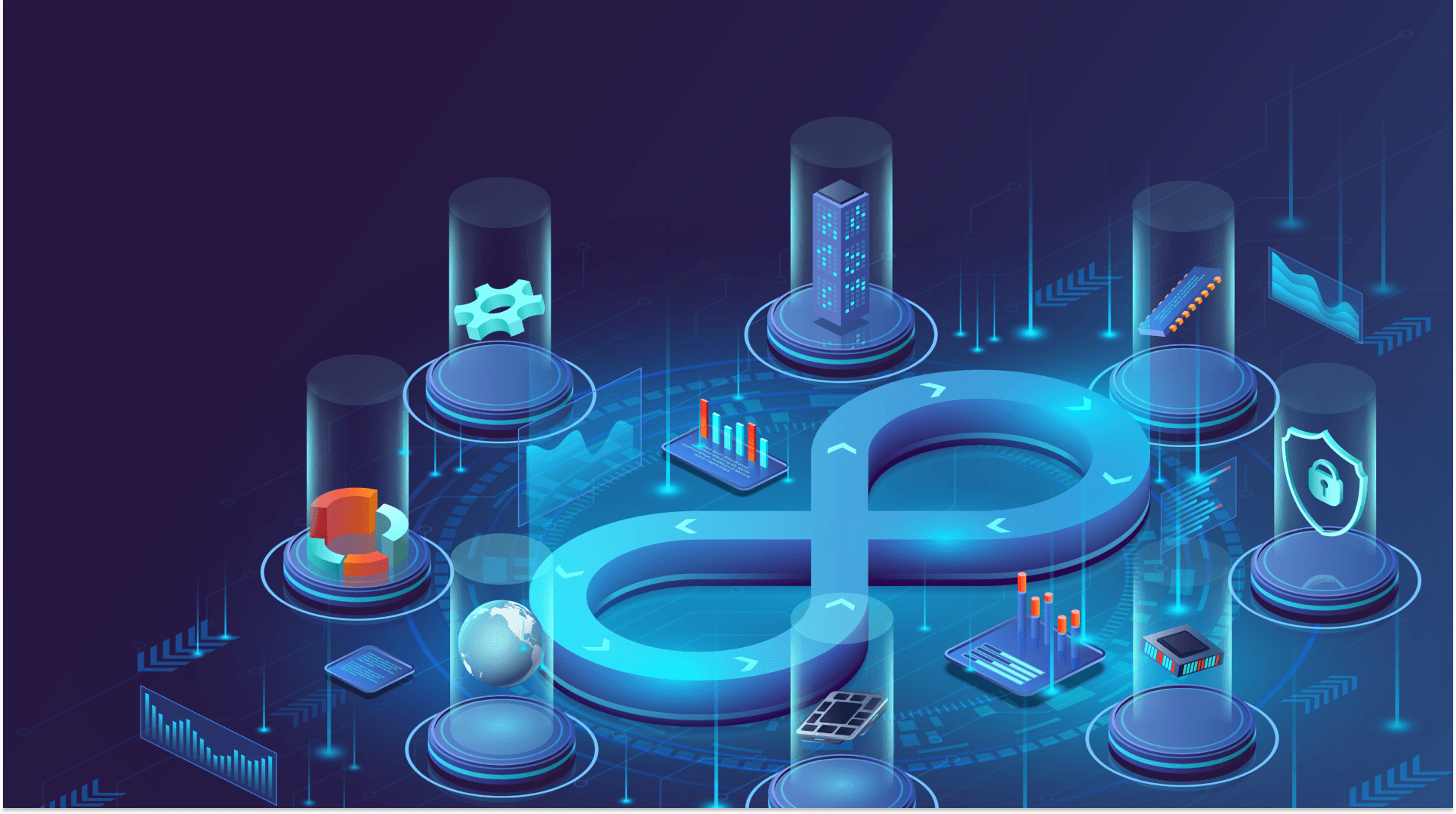
The system runs as a distributed, event-driven architecture with three separated layers: Detection, Reasoning, and Orchestration. The entire codebase lives in an Nx monorepo containing:
- A NestJS backend API that handles webhook intake and orchestration.
- A BullMQ worker process that processes jobs asynchronously.
- A Next.js frontend dashboard that provides visibility into every repair cycle.
The Tech Stack
The backend runs on NestJS with TypeScript at maximum strictness. Data persistence uses Drizzle ORM against PostgreSQL, extended with pgvector for embedding-based semantic search. Redis powers both the caching layer and the job queue. The AI layer routes through OpenRouter to Claude Sonnet 3.5, using LangChain.js for structured prompting and LangGraph for stateful agent execution.
How it Works: End-to-End
1. Detection
GitHub sends a webhook event to the controller on pipeline failure. All processing happens asynchronously via BullMQ.
2. Log Parsing
The agent strips noise (ANSI codes/timestamps) and isolates the specific TypeScript or build errors. It enriches these with source code snippets fetched directly from the GitHub commit.
3. Semantic Search
Every past fix is stored in PostgreSQL with vector embeddings. The system performs a similarity search to see if a similar problem was solved before, improving accuracy and reducing token usage.
4. AI Diagnosis
An error classifier categorizes the failure (e.g., syntax, dependency). The agent generates a structured JSON fix with a confidence score.
5. Fix & Validate
The agent commits changes and opens a PR. If the pipeline passes, it’s ready for review. If it fails, the agent captures the new logs and retries with an adjusted strategy (capped at three attempts).
Safety and Security The system operates on the principle of least privilege:
- Write access is restricted to temporary branches; no direct access to main.
- It never auto-merges; a human reviewer must approve every PR.
- Loop prevention ensures the agent never attempts to fix its own generated branches.
The Dashboard
The Next.js frontend provides a single visibility layer for the entire system. On landing, it displays all connected repositories. Drilling into a repository reveals its branches; drilling into a branch shows individual commits with their pipeline statuses, passed, failed, in progress, or under repair. For each pipeline run, the dashboard shows the exact changes the agent made. Engineering teams gain full transparency without switching between tools or parsing logs.
Results
Metric | Without an AI Agent | With an AI Agent |
|---|---|---|
Mean Time to Recovery | 30 – 60 minutes | 3 minutes |
Cost per Incident | $150 (developer time) | $0.05 (tokens) |
Developer Interruptions | High | None |
Night / Weekend Failures | Block releases | Auto-resolved |
What Comes Next
The roadmap addresses several key areas: converting the system into a platform any team can adopt with one click, real-time pipeline status surfacing, cross-repository learning, and multi-language support (Python, Go, Java, Rust).
The goal of this project was to return the hours they spend on routine build failures so they can concentrate on what matters: building software that ships.