

The following text is an excerpt from the keynote address by GeekyAnts Founder Sanket Sahu at thegeekconf.
It’s inspiring to see so many energized faces here today. We’re all part of something historic—this is the first thegeekconf, and you’re making history by being here. Today is not just another event; it marks the beginning of something significant that will influence the future of technology.
As the founder of GeekyAnts, many of you might recognize us for our contributions to the React Native ecosystem. Whether it’s NativeBase—recently rebranded as gluestack ui—or our involvement with the React Native Bangalore meetup, we’ve always strived to push the boundaries of what’s possible. Our work has consistently aimed to explore new areas in technology, developing tools and frameworks that empower developers worldwide. Today, we’re here to reflect on the remarkable journey of React Native and to explore how it has grown into an essential tool for the modern web.
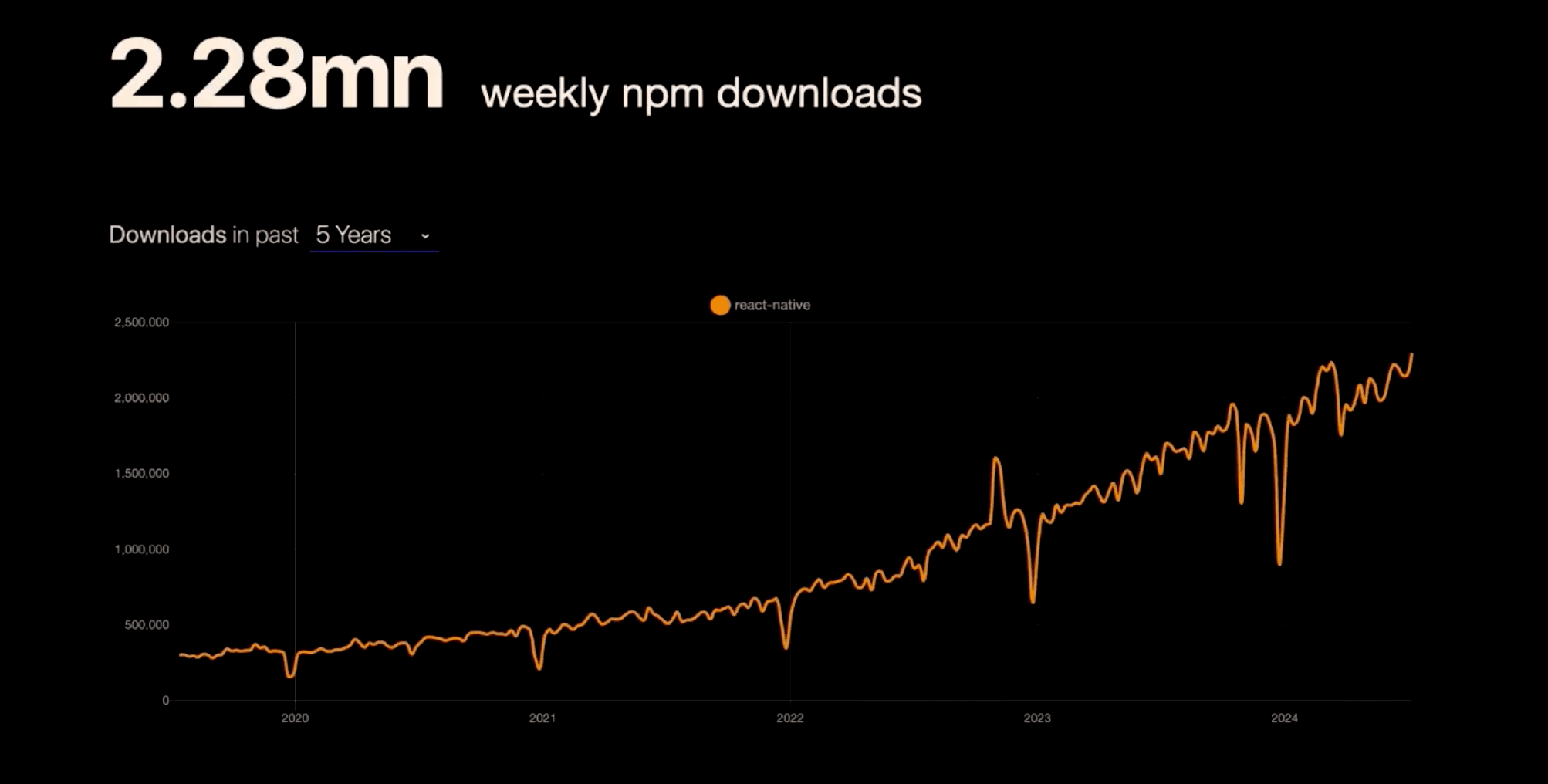
React Native’s progress has been nothing short of extraordinary. What began as a library to help developers build native mobile apps has become more profound. In 2020, we observed around 500K weekly NPM downloads—a significant milestone highlighting the growing interest in this technology. By 2022, that number had increased to 750K, signaling even greater adoption and trust in React Native. And today, we’re witnessing an astonishing 2.28 million weekly downloads. This isn’t just a passing trend; it’s a movement fundamentally reshaping the landscape of app development. The numbers alone speak volumes about the trust and reliance developers worldwide have placed on React Native.
React Native is No Longer Confined to Mobile, It’s everywhere, and Its Versatility is Astonishing
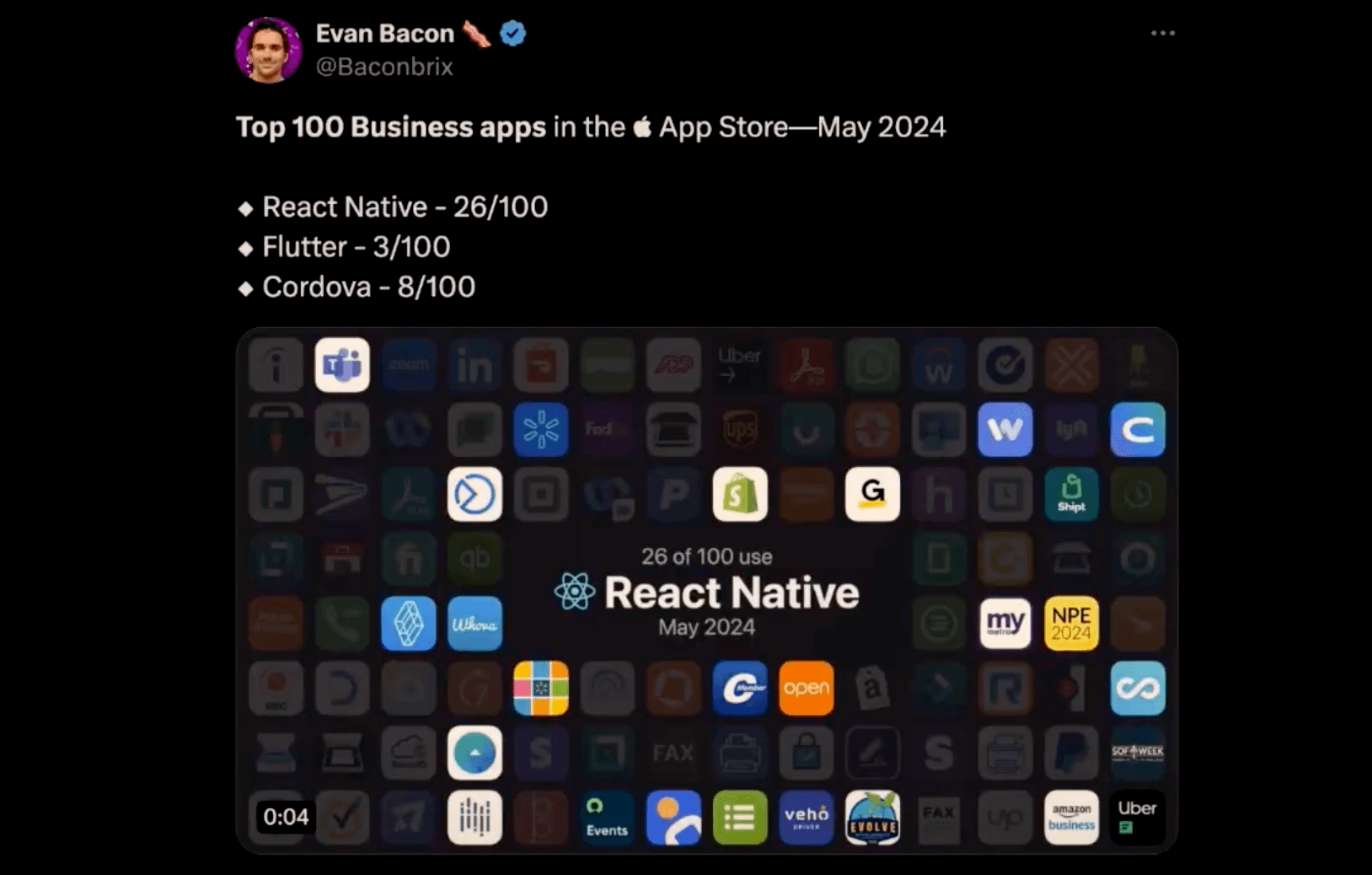
Consider this: out of the top 100 business apps in the App Store, 26% use React Native in some capacity. The technology has entered unexpected places, from Kindle devices to custom hardware. This demonstrates its power and adaptability, making it a cornerstone for developers across industries. The fact that such a significant portion of the top apps rely on React Native underscores its reliability and potential. It’s a testament to how a technology nurtured by a vibrant community can grow beyond its original scope and become indispensable in various sectors.
As React Native continues to evolve, frameworks like Expo have become essential to our toolkit. They provide a seamless experience whether you’re building for web or mobile, and this growth reflects the strength of our community. The community-driven approach has been key to React Native’s success—when the community thrives, technology thrives, and React Native is a perfect example of this dynamic. The collaborative spirit that has fueled this journey makes React Native not just a tool but a thriving ecosystem that benefits from continuous contributions and shared knowledge.
Every Contribution, Big or Small, Has a Ripple Effect Across the Global Developer Community
The beauty of open-source development is that it allows for a collective effort where every line of code has the potential to make a significant impact. Think about the work of Nishan, who recently added gradients to React Native’s core. This single contribution enhances the experience for millions of users worldwide. It’s a perfect example of how every line of code can make a difference. In the React Native community, these contributions don’t just improve the framework; they push the entire ecosystem forward, creating new opportunities for developers and users alike. This spirit of collaboration and continuous improvement has allowed React Native to flourish.
But React Native Isn’t Stopping at the Screen; We’re Now Entering New Territories, Such As AR and VR Experiences
The integration of Vision OS bindings and tools like WebGPU is expanding the possibilities of what can be done. Imagine building mobile apps with HTML or rendering 3D models across platforms with just a few lines of code. This is the future we’re collectively building—a future where technology and creativity merge seamlessly to create experiences we once only imagined. The potential of these tools to revolutionize how we interact with technology is immense, and we’re only just beginning to scratch the surface. The advancements in these areas are not just technological milestones; they represent the dawn of a new era in how we think about app development and user interaction.
Tools like CreateExpoStack and the newly announced React Native IDE are changing the game. They make development more intuitive and efficient, allowing us to focus on innovation rather than getting bogged down by technicalities. These tools are designed to streamline the development process, making it easier for developers to bring their ideas to life. As server-driven UI and universal approaches gain traction, React Native is being adopted across various industries, from Amazon to Tesla. This is about more than just building apps—creating ecosystems that thrive across multiple platforms, enabling businesses to scale their digital presence effortlessly. The ability to share code across platforms is not just a convenience; it’s a strategic advantage that can save time, reduce costs, and ensure consistency across different devices.
Of Course, With Great Power Comes Great Responsibility—and a Few Challenges

Debugging remains a significant pain point, and there’s always room for improvement in native code handling. But these challenges aren’t roadblocks; they’re opportunities. We find our greatest strengths in challenges, and React Native’s ongoing evolution is a testament to this. The community’s resilience and commitment to overcoming these hurdles make React Native a tool for the future. The challenges we face today will lead to the innovations of tomorrow, driving us to develop more robust and versatile solutions.
React Native is poised to continue empowering developers, bridging platforms, and fostering increased enterprise adoption. The vision is clear: write once, run anywhere. This isn’t just a catchy slogan; it’s becoming a reality for developers worldwide. Imagine a world where you can write your application once and seamlessly run it across all devices. This future isn’t just within reach—it’s already taking shape right before our eyes. The convenience and efficiency of this approach are set to revolutionize how we think about app development, making it easier than ever to deliver high-quality applications to users everywhere.
To Close—Let’s Take a Moment To Appreciate Some Incredible Work With React Native
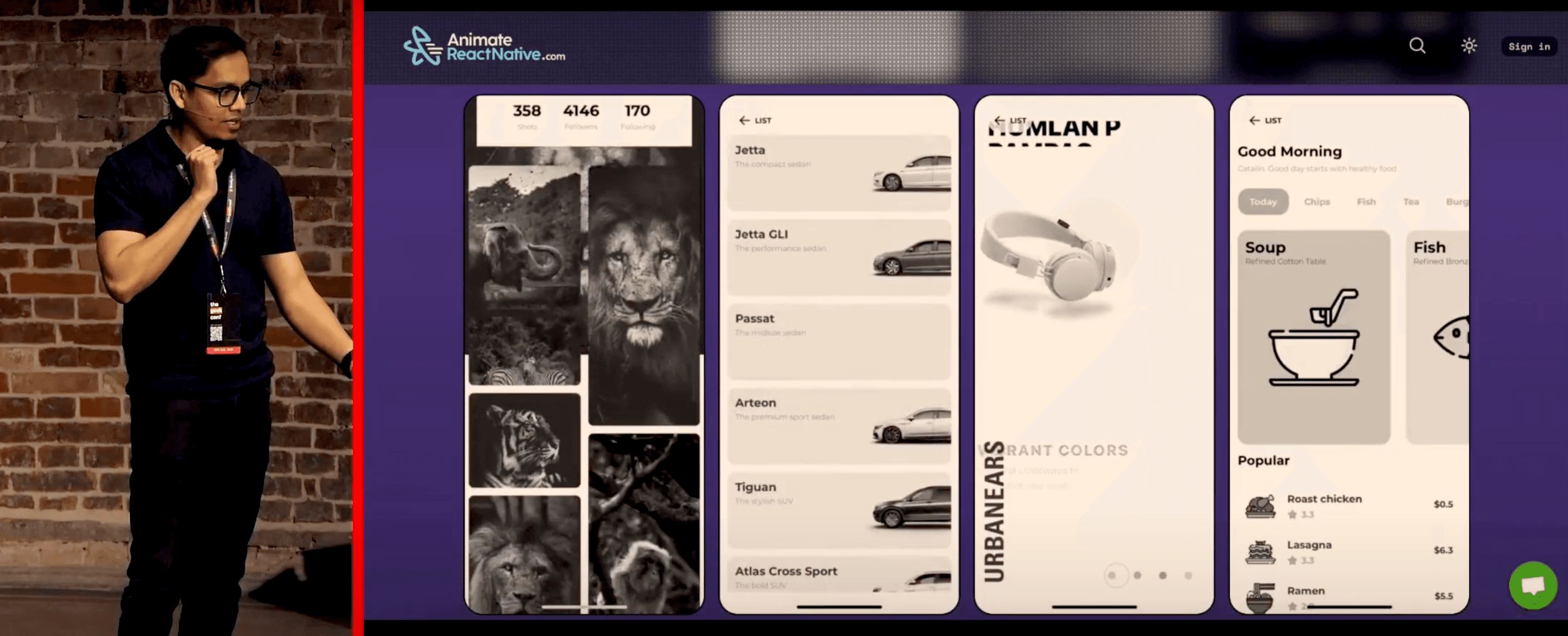
The animations created with React Native Reanimated and React Native Animated are spectacular. From parallax effects to gyroscope-controlled sliders, these examples demonstrate the high-quality, dynamic experiences that are now possible. This is just the beginning of what we can achieve. As the technology continues to evolve, so will the possibilities for creating even more immersive and engaging user experiences.
As we continue to innovate and collaborate, the possibilities with React Native are limitless. We are not just shaping technology; we're defining the future.
Check Out the Video here. ⬇️