

Running a business without a custom e-commerce platform today is like running a marathon without shoes—possible, but you'll never reach the finish line first. Think about the last time you encountered a cluttered, uninspiring website. Did you stay, or did you quickly leave for a platform that understood your needs and made the experience seamless? This is the difference a well-designed e-commerce app can make, and it’s why many businesses struggle to keep up with customer expectations.
As e-commerce sales are set to exceed $6 trillion globally by 2025, competition is fierce. It’s not only about revenue—it’s about delivering a personalized, fast, and seamless shopping experience that keeps customers coming back. Without this, your business risks losing sales to those offering a superior user experience.
At GeekyAnts, we build scalable, AI-powered e-commerce platforms that drive conversions, boost user retention, and increase repeat purchases. Our expertise helps businesses create innovative, user-friendly shopping experiences that exceed customer expectations, guiding you through the process of building a standout e-commerce app.
E-commerce Applications Market Overview and Trends
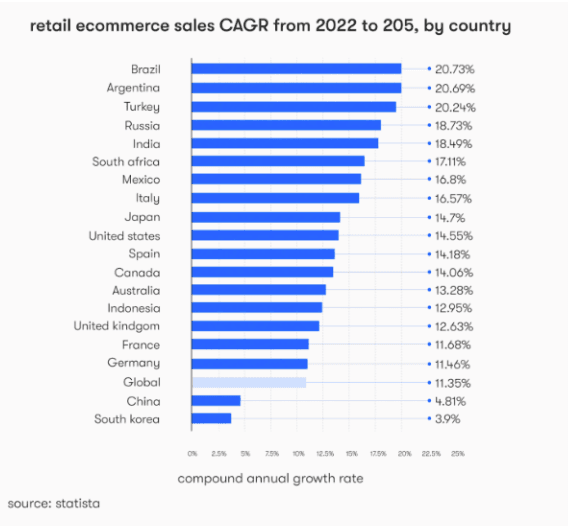
The e-commerce landscape is evolving rapidly, with global sales set to account for nearly 24.5% of total retail sales by 2025. Emerging markets like Brazil, Turkey, and India are driving growth, while established economies such as the U.S. and U.K. lead in mobile commerce and personalized shopping experiences.
Key Trends Shaping the E-commerce Market
Hyper-Personalization
AI is enabling retailers to deliver tailored shopping experiences, as demonstrated by brands like Glossier and Warby Parker, who have seen conversion rates increase by over 20% through AI-driven recommendations. At GeekyAnts, we integrate AI-powered recommendation engines that dynamically personalize experiences, driving higher user retention and increasing sales. Our AI-driven personalization module helped a client achieve a 32% increase in repeat purchases within six months.
Omnichannel Strategies
Leading brands are blending online and offline experiences to create seamless customer journeys. Warby Parker, for example, has successfully combined physical stores and mobile apps. GeekyAnts helps businesses leverage omnichannel strategies to ensure a cohesive experience across all touchpoints, keeping customers engaged at every step.
AR and VR Technology
IKEA’s use of augmented reality allows users to visualize products in their homes, enhancing decision-making. GeekyAnts has applied similar AR solutions, enabling users to virtually try on products or place them in their environments, addressing common hesitation points and improving purchase confidence.
Sustainability Focus
Ethical and eco-friendly e-commerce platforms are becoming increasingly important, especially in markets like the U.K., where shoppers are prioritizing sustainability. GeekyAnts works with brands to integrate sustainable practices into their apps, meeting consumer demand while enhancing the shopping experience.
For businesses looking to remain competitive, investing in e-commerce apps that align with these trends is essential. GeekyAnts is leading the charge, helping clients stay ahead by integrating the latest technologies to drive growth and innovation.
Why You Should Invest in eCommerce App Development
With over 6.92 billion smartphone users expected by 2025, mobile-first commerce is the future. eCommerce apps are crucial for businesses to stay competitive and relevant. Here’s why investing in one is a strategic move:
- Expanding Smartphone Usage: Mobile platforms will account for 75% of global eCommerce sales by 2025, giving businesses that prioritize mobile apps a significant edge in customer engagement.
- Revenue Growth: The eCommerce market is expected to exceed $7 trillion by 2025. A custom app offers personalized experiences that boost conversions and drive revenue.
- Changing Consumer Behavior: Post-COVID, online shopping has surged by 40%, with consumers demanding fast, seamless digital experiences.
- Enhanced Customer Loyalty: Custom apps with loyalty programs, push notifications, and AI recommendations help businesses retain customers and drive repeat purchases.
- Competitive Differentiation: A well-designed app with features like AR previews and personalized user journeys helps brands stand out in a crowded market.
Investing in a custom eCommerce app positions your business for future growth, innovation, and success in a digital economy.
Types of E-commerce Apps You Can Develop
E-commerce applications are flexible instruments designed to meet different market demands. Each type aligns with specific business models and user interactions, ensuring seamless transactions and experiences The four main categories of e-commerce apps that you could want to create are broken down as follows:
1. Business-to-Business (B2B) E-commerce Apps
B2B apps facilitate transactions between businesses, streamlining operations like supply chain management and bulk procurement. These platforms often target manufacturers, wholesalers, and distributors looking to enhance efficiency.
- Purpose: Simplify business processes, reduce transaction costs, and improve scalability.
- Popular Examples: Salesforce, Shopify Plus, and Alibaba.
- Key Use Case: A manufacturer using a B2B app to automate inventory restocking and connect directly with suppliers, saving time and reducing manual errors.
2. Business-to-Consumer (B2C) E-commerce Apps
B2C apps cater directly to consumers, allowing businesses to sell goods and services in a user-friendly and engaging format. These apps dominate the retail, entertainment, and service industries.
- Purpose: Deliver a seamless shopping experience, boost customer retention, and personalize recommendations.
- Popular Examples: Amazon, Shopify, and Walmart.
- Key Use Case: A retailer using AI-powered suggestions on a B2C app to increase cart size and improve user satisfaction.
3. Consumer-to-Consumer (C2C) E-commerce Apps
C2C platforms empower individuals to sell goods and services to other consumers, often through a third-party intermediary that facilitates transactions.
- Purpose: Provide a secure marketplace for peer-to-peer commerce.
- Popular Examples: eBay, Etsy, and AliExpress.
- Key Use Case: A small business owner listing handcrafted items on a C2C platform to reach a global audience without setting up an independent e-commerce store.
4. Consumer-to-Business (C2B) E-commerce Apps
In a C2B model, individual consumers sell products or services to businesses. This model is gaining traction in industries like freelancing, photography, and content creation.
- Purpose: Reverse the traditional B2C model by enabling consumers to monetize their skills or resources.
- Popular Examples: Shutterstock, Upwork, and Fiverr.
- Key Use Case: A graphic designer licensing stock images to multiple companies via a C2B platform.
E-commerce apps are changing the digital economy. They also give businesses chances to innovate and grow. Picking the right model is key. It helps align your app with your target audience and market goals.
Step-by-Step Guide to Building a Custom eCommerce App (For B2B and B2C) – Expert Insights from GeekyAnts
Developing a custom e-commerce app like Amazon, Walmart, and Shopify is a complex process that requires a strategic approach. From understanding your target audience to deploying a fully functional platform, every step plays a vital role in ensuring the app’s success. Here’s a detailed guide, inspired by industry best practices, to help you navigate the process:
Step 1: Perform Market Research
The foundation of any successful e-commerce app lies in understanding the market and your audience. Whether your target is B2B, B2C, or a hybrid, conducting detailed research ensures that your app aligns with user needs and market trends.
Key Activities:
- Identify Customer Needs: Analyze user pain points, preferences, and purchasing behaviors.
- Create Buyer Personas: Develop profiles of your ideal customers, covering demographics, purchasing habits, and values.
- Competitor Analysis: Study competitors to uncover their strengths, weaknesses, and USPs.
Real-Life Example:
Sephora’s app caters to millennials and Gen Z with innovative features like AR, enabling users to virtually try products. This approach not only addresses the uncertainty of online shopping but also elevates user engagement and trust.
By grounding your app in comprehensive market research, you can identify opportunities for differentiation and set a strong foundation for your e-commerce platform.
Step 2: Define Features and Functionalities
The features you include in your e-commerce app dictate its user appeal, functionality, and market competitiveness. A carefully planned feature set ensures your platform caters to user expectations, aligns with your business goals, and operates within your budget.
To outshine competitors, it is essential to balance basic must-have features with advanced functionalities. Below is a detailed breakdown of both categories.
Basic Features of a Marketplace App
These features are foundational for any e-commerce app and ensure seamless shopping experiences:
Feature | Description | Benefits |
Product Catalog | A searchable list of products with detailed descriptions, high-quality images, and prices. | Simplifies product discovery and boosts conversions. |
Shopping Cart | Allows users to add items to a cart, view total costs, and proceed to checkout. | Streamlines the purchasing process for users. |
Secure payment processing via credit/debit cards, PayPal, and other methods. | Builds trust and ensures convenient transactions. | |
Order Tracking | Enables users to track their orders from purchase to delivery in real-time. | Improves transparency and enhances user satisfaction. |
Customer Support | Provides support via email, chat, or phone for issue resolution. | Builds trust, fosters loyalty, and improves customer retention. |
Reviews and Ratings | Allows users to leave feedback and ratings for products or services. | Enhances credibility through social proof and influences purchasing decisions. |
Analytics | Tracks user behavior, sales trends, and other performance metrics. | Empower businesses to make data-driven decisions. |
Social Media Sharing | Enables users to share products on social platforms or shop via social media links. | Expand business reach and encourage social media-driven sales. |
Multi-Currency Support | Displays prices in various currencies and supports international transactions. | Increases global reach and reduces barriers for international customers. |
Advanced Features for a Competitive Edge
Incorporating these features elevates the user experience, sets your app apart, and drives customer engagement:
Feature | Description | Benefits |
Personalized Recommendations | AI-powered suggestions based on user preferences, browsing history, and purchase patterns. | Boosts customer satisfaction and drives repeat purchases. |
Allows users to virtually try on clothing, place furniture in their rooms, or visualize products before buying. | Enhances the shopping experience and reduces product returns. | |
Chatbots | AI-enabled chatbots offer instant customer support, answer queries, and suggest products. | Provides 24/7 support, improves engagement, and reduces customer service workload. |
One-Click Checkout | Lets users complete purchases without re-entering payment or shipping details. | Simplifies the checkout process and reduces cart abandonment rates. |
Voice Search | Lets users search for products using voice commands. | Improves accessibility and offers a hands-free shopping experience. |
Subscription Models | Allows users to subscribe to regularly purchased items and receive them on a schedule. | Encourages customer loyalty and ensures recurring revenue. |
Gamification Elements | Adds features like loyalty points, badges, and rewards for frequent purchases or referrals. | Boosts user engagement and incentivizes repeat purchases. |
Advanced Search Filters | Allows users to filter products by price, rating, brand, and more. | Speeds up the shopping experience and enhances user satisfaction. |
Push Notifications | Sends timely updates about discounts, abandoned carts, or new arrivals. | Increases user engagement and drives traffic back to the app. |
Multi-Language Support | Supports multiple languages for global audiences. | Increases user accessibility and widens the app’s reach. |
Apps like Amazon and Walmart leverage advanced AI algorithms for personalized recommendations, significantly increasing upselling opportunities. Meanwhile, Sephora uses AR technology to allow users to try products virtually, solving common e-commerce pain points like hesitation due to a lack of physical trials.
By blending essential and advanced features, your app can offer an unparalleled shopping experience. The right mix will enhance functionality, foster loyalty, and position your platform as a leader in the e-commerce space.
Step 3: Choosing the Right Tech Stack
The technology stack you choose is the backbone of your e-commerce app. It determines performance, scalability, security, and user experience, making it a critical decision for developers and business leaders alike. Whether you are building for B2B, B2C, or hybrid audiences, selecting the right tools and frameworks ensures your platform can meet user expectations and grow with your business needs.
A well-chosen tech stack streamlines development, optimizes app performance, and reduces long-term maintenance costs. For example, Shopify leverages Ruby on Rails for its backend to provide a scalable yet robust foundation for e-commerce functionality. Similarly, Amazon relies on AWS services to manage massive traffic efficiently.
Components of an Ideal Tech Stack for E-commerce Apps:
Component | Recommended Tools/Technologies | Purpose |
Frontend Framework | Builds the user interface for smooth navigation and an engaging experience. | |
Backend Framework | Node.js, Django, Ruby on Rails | Manages server-side logic and API integrations for real-time functionality. |
Database Management | MySQL, PostgreSQL, MongoDB | Stores and retrieves product information, user data, and transaction details efficiently. |
Payment Gateways | Stripe, PayPal, Razorpay | Enables secure and seamless payment processing. |
Cloud Services | AWS, Google Cloud, Microsoft Azure | Ensures scalability and handles traffic surges with robust hosting solutions. |
AI and Machine Learning | TensorFlow, PyTorch, OpenAI | Personalizes user experiences with product recommendations and dynamic pricing. |
Security Tools | SSL Certificates, OAuth, Firebase Authentication | Protects sensitive user data and ensures secure logins and transactions. |
Search Integration | Algolia, Elasticsearch | Provides fast, intuitive search experiences for users. |
Mobile App Frameworks | Builds cross-platform apps that run smoothly on iOS and Android devices. |
How to Choose the Right Tech Stack:
- Understand Your Business Model:
- If your target audience is B2C, focus on technologies like React and Firebase that prioritize speed and scalability.
- For B2B platforms, backend frameworks like Django or Node.js are better suited for handling complex workflows.
- Prioritize Scalability and Performance:
- Amazon uses AWS to handle millions of simultaneous transactions. Choose cloud services that can adapt as your business grows.
- Leverage AI and Analytics:
- Incorporating AI through TensorFlow or OpenAI can significantly boost engagement. For example, Sephora’s app uses AI for personalized recommendations.
- Ensure Security and Compliance:
- With increasing cyber threats, use tools like OAuth and SSL to secure transactions and comply with data regulations like GDPR.
Case Study: Building Shoppes – GeekyAnts’ Custom E-commerce App
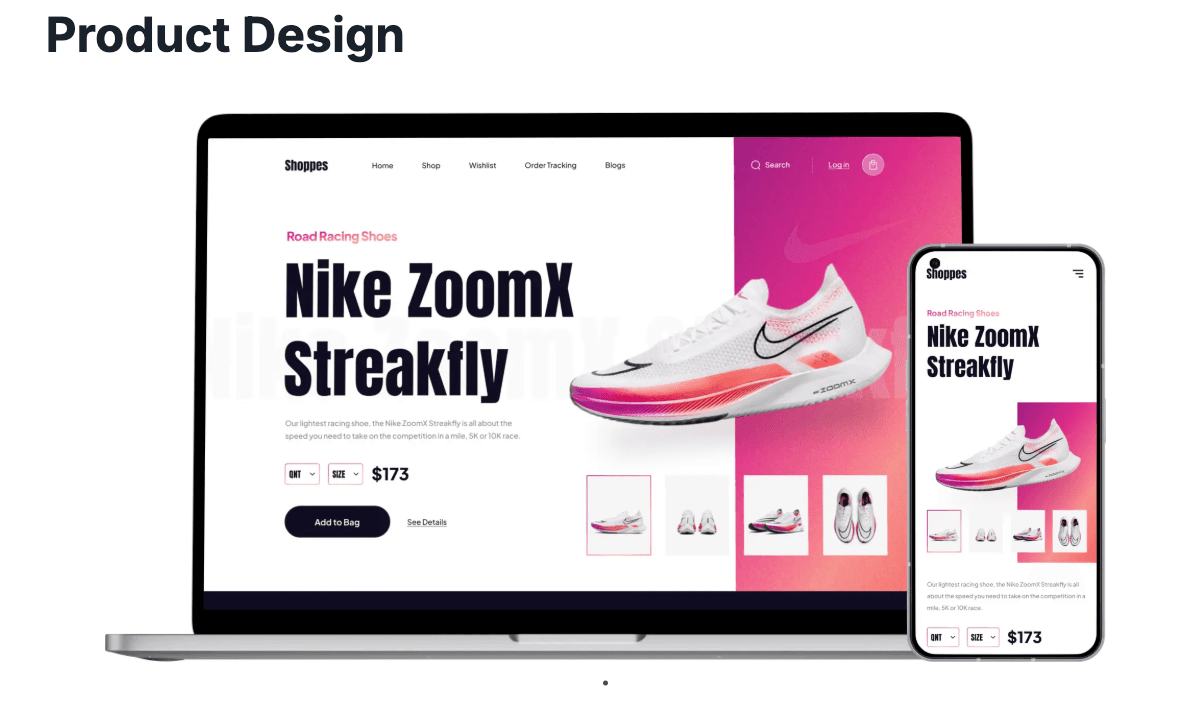
At GeekyAnts, we specialize in delivering scalable, high-performing e-commerce solutions that drive business growth. Shoppes, our fully customizable platform, showcases our ability to create digital solutions tailored to client goals and market demands.
We designed Shoppes to meet the needs of businesses from startups to enterprises, emphasizing flexibility, performance, and seamless user experiences. By using React for the front end and Node.js on the back end, we built a platform that ensures fast navigation and scalability to handle significant user loads.
Key Client Results:
- 32% Increase in Repeat Purchases
- 47% Reduction in Cart Abandonment
- 2.5x Faster Load Speeds
Shoppes’ modular architecture allows businesses to easily customize and scale their platform. With advanced features like multi-currency support, detailed analytics dashboards, and AI-powered personalization tools, we’ve enabled clients to expand globally and make data-driven decisions.
For enhanced user satisfaction, we integrated Algolia for precise product searches and Stripe for secure payment processing. These innovations, combined with Shoppes' flexibility, position it as a leader in the e-commerce space.
Shoppes is more than an app; it’s a foundation for businesses to innovate and thrive in a competitive market. Ready to build your e-commerce solution? Schedule a consultation with our experts today.
Step 4: Designing the UI/UX: A Strategic Advantage
A compelling UI/UX design is more than just visuals—it's a strategic tool that defines user satisfaction, engagement, and retention. With 94% of first impressions being design-related, the importance of a seamless, intuitive experience cannot be overstated. In an e-commerce world dominated by giants like Amazon, Walmart, Flipkart and Shopify a well-crafted, user-centric design is often the differentiator for emerging brands.
Core Principles of Effective UI/UX Design
- Simplicity and Clarity: Clean layouts and intuitive navigation enhance usability, reducing friction. Amazon’s one-click checkout is a prime example, of streamlining purchases and lowering cart abandonment.
- Personalization: Tailored dashboards and recommendations boost engagement. Netflix-style suggestions guide users to relevant products based on behavior, offering a personalized shopping experience.
- Mobile-First Approach: With 70% of e-commerce traffic from mobile devices, designing for smaller screens ensures accessibility and responsiveness, crucial for success in mobile-first markets like the U.K.
- Visual Hierarchy and Branding: Well-placed CTAs, consistent colours, and appealing typography build trust and engagement. Warby Parker combines strong branding with AR features for an immersive experience.
- Accessibility: Inclusive design—such as voice search and readable fonts—ensures usability across demographics. IKEA’s AR app allows users to visualize furniture placements, improving accessibility.
When we built Shoppes- a Custom e-Commerce app like Amazon, our mission was clear: to create an adaptable e-commerce platform that meets the evolving needs of businesses while delivering an exceptional user experience. Designed with a modular architecture, Shoppes allows businesses to customize features like personalized dashboards and real-time filtering, ensuring every interaction is seamless. By integrating AR-based product previews, we addressed a common user pain point—building confidence in online purchases. With multi-currency support and mobile-first optimization, Shoppes empowers businesses to expand globally while staying user-focused.
Learn how Shoppes redefines e-commerce solutions and discover the GeekyAnts difference.
Step 5: Develop the App — Building the Backbone of Your E-commerce Platform
The development phase is where your app’s blueprint turns into a functional, feature-rich reality. It encompasses frontend and backend coding, API integrations, and ensuring scalability, security, and seamless functionality across platforms.
Once the design phase is complete, developers begin writing clean, optimized code to bring your e-commerce web app to life. This includes building a responsive, user-friendly frontend and a robust backend that can handle real-time operations and heavy data loads. By using advanced programming languages like JavaScript, Python, Swift, Kotlin, or frameworks like React Native and Flutter, the development team ensures the app meets the highest standards of performance and scalability.
Technology Stack for E-commerce Web App Development
The technology stack for a scalable, secure, and high-performance e-commerce app includes essential components like Node.js, Django, and Ruby on Rails for backend development, and React, Angular, or Vue.js for frontend. For databases, MySQL and PostgreSQL handle structured data, while MongoDB is used for unstructured data. HTML5, CSS3, and JavaScript form the core web languages, with Bootstrap and Tailwind CSS for responsive design.
For hosting, AWS, Azure, and Google Cloud offer scalable cloud solutions. Payment gateways like Stripe, PayPal, and Razorpay ensure secure transactions. Postman and Swagger are used for API testing and documentation, while SSL Certificates provide encryption for data security. For mobile apps, React Native and Flutter enable cross-platform development, and Git tools facilitate version control and collaboration.
This stack ensures a robust, user-friendly, and future-proof e-commerce platform.
Seamless Collaboration and Communication
A successful development process requires efficient collaboration. Tools like Slack, Jira, and Trello facilitate real-time updates and task management, while a dedicated project manager acts as the primary point of contact to ensure smooth communication. Regular progress meetings help align the team’s efforts with project goals, ensuring transparency and accountability throughout.
Step 6: Test Rigorously — Ensuring Perfection Before Launch
The testing phase is where your e-commerce web app is refined, validated, and prepared to meet user expectations. It is a critical step in the development lifecycle, as even a minor bug or security flaw can lead to a poor user experience and harm your brand reputation. By rigorously testing every aspect of your app, you ensure that it performs flawlessly under real-world conditions.
The Importance of Comprehensive Testing
Testing isn’t just about finding bugs; it’s about ensuring your app is robust, secure, and user-friendly. From functionality to performance, every element must be evaluated to guarantee the app can handle diverse scenarios, such as high traffic during sales or complex multi-step transactions.
For example, Amazon’s seamless shopping experience is a result of continuous testing, ensuring that millions of users can browse, purchase, and track orders simultaneously without performance issues.
Types of Testing: Covering All Angles
A well-rounded testing strategy covers multiple dimensions of your app:
- Functional Testing: Verifies that every feature, from product search to payment processing, works as intended. For instance, ensure users can add items to the cart, apply coupons, and complete purchases seamlessly.
- Performance Testing: Measures the app’s speed and stability under varying conditions. For e-commerce apps, where even a one-second delay can reduce conversion rates by 7% (Google), performance is non-negotiable.
- Usability Testing: Assesses the app’s user interface and experience. By gathering feedback from real users, you can identify pain points, such as confusing navigation or lengthy checkout processes, and refine the design.
- Security Testing: Ensures the app complies with data protection regulations like GDPR or PCI-DSS. Test for vulnerabilities in payment gateways, login processes, and data storage to protect sensitive customer information.
- Compatibility Testing: Verifies that your app delivers a consistent experience across devices, browsers, and operating systems. A user on Chrome should have the same seamless experience as one on Safari or Firefox.
Testing Tools and Techniques
To conduct thorough testing, leverage industry-standard tools and practices:
- Selenium: Automates functional testing for web applications.
- Apache JMeter: Simulates high traffic and tests performance under load.
- BrowserStack: Tests compatibility across various browsers and devices.
- OWASP ZAP: Identifies security vulnerabilities in your app.
- Hotjar: Tracks user behavior to pinpoint usability issues.
For example, a leading retail app avoided major security breaches during its launch by conducting penetration testing using OWASP ZAP, ensuring compliance with PCI-DSS.
Collaboration for Quality Assurance
Testing thrives on collaboration between developers, designers, and product managers. Adopting a shift-left testing approach, where testing starts early, helps identify and address issues before they escalate. Developers run unit tests, while designers validate usability during prototyping. This integrated process improves quality and reduces costs and time spent on post-development fixes.
Step 7: Deploy the App — Launching with Confidence
Deployment is more than just pressing "go live"—it's about ensuring a smooth, scalable launch. Here’s how to do it effectively:
- Prepare the Deployment Environment: Set up a staging environment to replicate real-world conditions and run load tests to simulate high traffic.
- Choose the Right Hosting Solution: Opt for scalable cloud platforms like AWS or Google Cloud, and use a CDN to enhance page load speeds globally.
- Soft Launch for Controlled Rollout: Begin with a soft launch to a limited audience for real-user feedback and iterative improvements.
- Monitor and Optimize Performance: Use tools like New Relic and Sentry for real-time performance monitoring and error tracking.
- Backup and Rollback Plans: Maintain version control and disaster recovery plans to ensure quick recovery if issues arise.
- Communicate the Launch: Inform stakeholders and users through email campaigns, social media, or in-app notifications to build excitement.
By strategically deploying and monitoring the app, you ensure a smooth transition, enhance user trust, and set the stage for continuous growth.
Launching your app is just the beginning. To keep it performing at its best and retain customer trust, continuous monitoring and maintenance are key.
Step 8: Monitor and Maintain — The Secret to Staying Ahead
- Continuous Performance Monitoring: Use tools like Google Analytics, New Relic, and AppDynamics to track metrics, detect issues, and ensure uptime. Tools like Sentry help quickly resolve errors to minimize disruptions.
- Regular Updates and Enhancements: Stay relevant by fixing bugs, rolling out new features, and ensuring compatibility with the latest devices and OS updates.
- Strengthening Security and Compliance: Regular security audits, vulnerability testing, and data encryption protect customer data and ensure compliance with regulations like GDPR and CCPA.
- User Feedback as a Growth Catalyst: Collect feedback via tools like Hotjar and in-app surveys to refine your app based on user needs, improving satisfaction and loyalty.
- Preparing for Scalability: Ensure your app can handle growth by using cloud platforms, optimizing databases, and simulating peak traffic loads for stable performance.
Proactively maintaining and optimizing your app ensures it stays ahead of the competition, meeting and exceeding user expectations while protecting your brand reputation.
Must-Have Features for Your E-Commerce Application
Building a standout e-commerce app requires essential features that enhance usability, engagement, and functionality. Here’s a quick overview of the must-have features:
- Simple Sign-Up and Login: Enable seamless user authentication through email, phone, or social media.
- User-Friendly Interface: Ensure clean, intuitive navigation for effortless shopping.
- Real-Time Notifications: Keep users informed with updates on orders and promotions.
- Secure Payment Options: Offer safe and versatile payment methods to build trust.
- Search and Advanced Filters: Help users find products quickly with robust search and filters.
- Cart Management and Checkout: Simplify adding, editing, and purchasing items with an efficient checkout process.
- Reviews and Ratings: Allow users to make informed decisions with customer feedback.
- Personalization with AI: Boost sales with tailored recommendations based on user behavior.
- Gamification: Engage users through loyalty points, badges, and rewards.
- Integration with AR/VR: Enhance shopping experiences with virtual try-ons and real-world visualizations.
- IoT Integration: Automate orders and create smarter shopping experiences with IoT devices.
Role-Based Dashboards: Provide tailored dashboards for customers, sellers, and admins to streamline tasks.
E-commerce App Builder vs. Custom E-commerce App Development
After looking at what makes an e-commerce app great, it is time to think about how to make your idea a reality. Should you use a pre-made e-commerce app builder or go for custom app development? This choice affects your app's growth, features, and future.
Let's break down the differences to help you decide what is best for your business:
Comparison Table: App Builder vs. Custom E-commerce App Development
Factor | E-commerce App Builder | Custom E-commerce App Development |
Low initial investment, but recurring subscription fees. | Higher upfront costs, but no ongoing licensing fees. | |
Development Speed | Fast—can launch within days or weeks. | Time-intensive, often requiring months of development. |
Limited to pre-built templates and features. | Fully customizable to fit unique business needs. | |
Scalability | Difficult to scale for high traffic or advanced features. | Highly scalable to handle growth and complex functionalities. |
Technology Integration | Limited integration with cutting-edge technologies like AI or AR. | Seamlessly integrates advanced technologies for enhanced experiences. |
Brand Identity | Restricted to the app builder’s design framework. | Designed uniquely to reflect your brand’s personality. |
Data Ownership | Data is often stored and controlled by the app builder. | Full ownership and control of your data and infrastructure. |
Support & Maintenance | Relies on third-party support with limited control. | Dedicated maintenance and control tailored to your app’s requirements. |
Factors to Consider When Developing an E-commerce App
Creating a successful e-commerce app involves strategic planning and careful consideration of critical factors. Here’s what to prioritize:
- Data Security: Implement encryption, multi-factor authentication, and comply with regulations like GDPR to safeguard user data.
- Scalability: Use cloud infrastructure and modular architecture to ensure seamless performance during high traffic.
- Stability: Optimize app speed, fix bugs proactively, and enable offline functionality for a reliable user experience.
- User-Centric Design: Focus on responsive, accessible, and intuitive design to enhance usability.
- Seamless Integrations: Add secure payment gateways, analytics tools, and shipping APIs for a connected platform.
- Emerging Technologies: Leverage AI, AR/VR, and IoT for innovative and personalized shopping experiences.
- Compliance: Adhere to tax regulations, and privacy laws, and clearly define terms and conditions to avoid legal risks.
Focusing on these factors ensures a robust, user-friendly, and future-ready e-commerce platform.
Key Challenges You May Face When Developing E-commerce Apps
Developing an e-commerce app comes with its own set of challenges. Here are the key hurdles to watch out for:
- Data Security: Protecting user data from breaches and ensuring compliance with regulations like GDPR is critical.
- Scalability: Building an app that handles traffic surges during peak sales without downtime can be complex.
- Integration Issues: Seamlessly connecting APIs for payments, shipping, and analytics requires careful planning.
- Personalization: Crafting AI-driven, personalized experiences demands advanced algorithms and data handling.
- Cost Management: Balancing the budget for development, maintenance, and scaling is a constant challenge.
- Cross-Platform Compatibility: Ensuring consistent performance across devices and operating systems takes extra effort.
- User Retention: Keeping users engaged amidst fierce competition requires innovation and continuous updates.
How Much Does It Cost to Build a Fully Custom E-commerce Application?
The cost of building a fully custom e-commerce application depends on the complexity, features, and level of customization. Here’s a breakdown of typical costs:
App Type | Features | Estimated Cost |
Basic App | Basic UI, product catalog, cart, payment gateway | $10,000 – $30,000 |
Intermediate App | Advanced UI, multi-language support, analytics | $30,000 – $70,000 |
Advanced App | AI/ML, AR/VR, IoT integration, scalability focus | $70,000 – $200,000+ |
Key Cost Factors
- Feature Complexity: Adding advanced features like AR/VR or AI personalization increases costs.
- Design Customization: A highly tailored UI/UX can add significant development time and expenses.
- Scalability Requirements: Apps designed to handle large-scale operations require robust infrastructure, which increases costs.
For businesses that want to stand out, a custom app is a good investment. It offers long-term benefits, like scalability, better performance, and a unique brand identity.
Why is GeekyAnts the Perfect Partner to Build Your E-Commerce App?
At GeekyAnts, we build e-commerce apps that are scalable, secure, and focused on users. Our app, Shoppee, is fully customizable. It speeds up development and matches your brand. Shoppee includes product catalogs, secure payments, and cart management. This cuts down development time and costs.
We ensure smooth user experiences using React Native, Flutter, and Node.js. Our support covers everything from ideas to updates. We aim to exceed your expectations. GeekyAnts is more than a partner; we turn your vision into a leading e-commerce platform.
Conclusion: How Are AI and ML Transforming the Future of E-Commerce?
Building a custom e-commerce app requires planning—market research, key features, and the right technology. Focus on scalability, security, and a seamless user experience with features like easy navigation, secure payments, and personalized recommendations.
AI and ML are shaping the future of e-commerce. These technologies enable personalized shopping experiences, dynamic pricing, AI chatbots for support, and data-driven inventory optimization.
To stay ahead, businesses need a scalable platform. Partnering with experts like GeekyAnts ensures your app uses the latest technologies to meet evolving needs.
Ready to transform your e-commerce platform? Consult GeekyAnts today.
FAQ about eCommerce App Development
1. How long does it take to develop an eCommerce app?
The development timeline depends on the app's complexity and features:
App Type | Development Time |
Basic App | 3–6 months |
Intermediate App | 6–9 months |
Advanced App | 9–12+ months |
Factors like design customization, third-party integrations, and advanced features like AI or AR/VR can extend the timeline. A development partner like GeekyAnts can optimize this process while ensuring quality.
2. What essential technologies are required for the proper and adequate functioning of an eCommerce app?
A robust e-commerce app requires key technologies for smooth functionality. React Native/Flutter handle frontend development, while Node.js/Django manage backend operations. MySQL/MongoDB are used for database management. Stripe/PayPal ensure secure payment processing, and AWS/Google Cloud provide scalable cloud hosting. Google Analytics tracks user behavior and app performance. These technologies ensure scalability, security, and a seamless user experience.
3. What consumer categories should I focus on when building an e-commerce app?
Focus on the following consumer categories to maximize engagement:
- B2C (Business-to-Consumer): Retail shoppers looking for convenience and personalization.
- B2B (Business-to-Business): Wholesale buyers requiring features like bulk orders and multi-currency support.
- Hybrid Consumers: Both individual shoppers and businesses needing tailored experiences.
Understanding your target audience helps in designing the right features and user flows.
4. What are the latest trends in eCommerce app development?
Stay ahead of the competition by incorporating these trends:
- AI-Powered Recommendations: Boost sales through personalized shopping experiences.
- AR/VR Integration: Enable virtual try-ons and real-world product visualization.
- Voice Commerce: Integrate voice search and commands for hands-free shopping.
- Social Commerce: Add social media integrations for direct purchases.
- Sustainability Features: Highlight eco-friendly practices like carbon-neutral shipping.
5. What are the best tips for e-commerce app development?
To build a high-performing e-commerce app, follow these tips:
- Prioritize User Experience: Focus on intuitive design and smooth navigation.
- Ensure Scalability: Plan for traffic spikes during peak seasons.
- Incorporate Security Measures: Use encryption and comply with regulations like GDPR.
- Leverage Emerging Tech: Include AI, AR/VR, or IoT to enhance functionality.
- Test Rigorously: Identify and fix bugs before launch to ensure a seamless experience.
6. Why is e-commerce compliance crucial for online stores?
Compliance ensures trust, legal protection, and smooth operations. Key reasons include:
- Data Security: Regulations like GDPR and PCI-DSS protect sensitive customer information.
- Global Reach: Adhering to regional laws (e.g., CCPA in California) allows you to operate globally.
- Trust and Credibility: Compliance signals to customers that your platform is reliable and secure.
Non-compliance can lead to heavy fines and damage to your brand’s reputation.