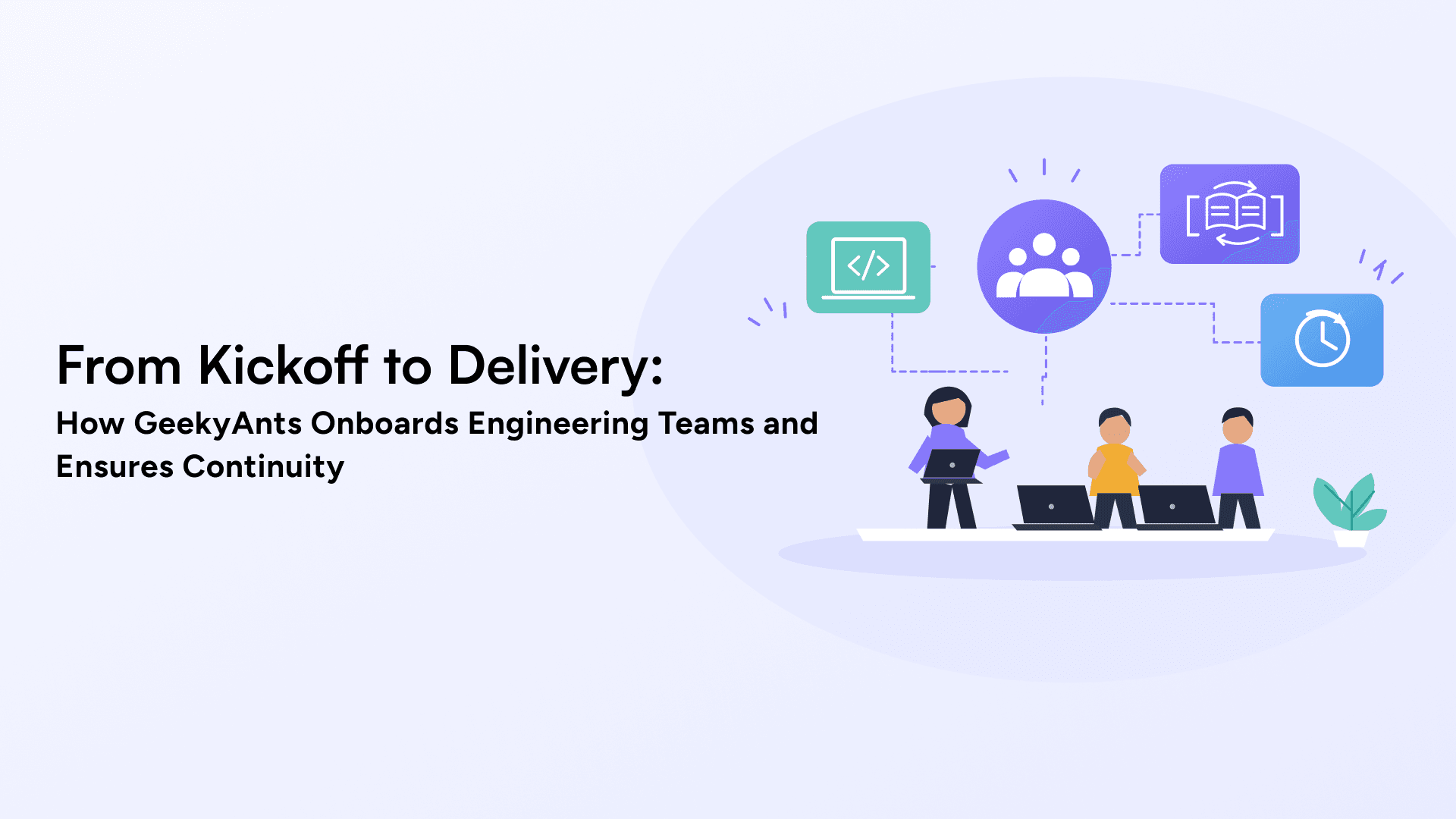


Bringing an engineering team into an existing product raises a practical question: how does the team gain enough context to start contributing without disrupting the work in progress? Access to the codebase is one part of the answer. Engineers also need to understand the product, architecture, dependencies, delivery process, security requirements, and the people involved in key decisions.
GeekyAnts addresses these areas through a structured onboarding process that starts after engagement confirmation. The process moves from the Sales-to-Account Management and Delivery handover to team finalization, internal knowledge transfer, client kickoff, access setup, product and technical knowledge transfer, and development. The same focus on knowledge transfer becomes important when an engineer leaves the project and another takes ownership.
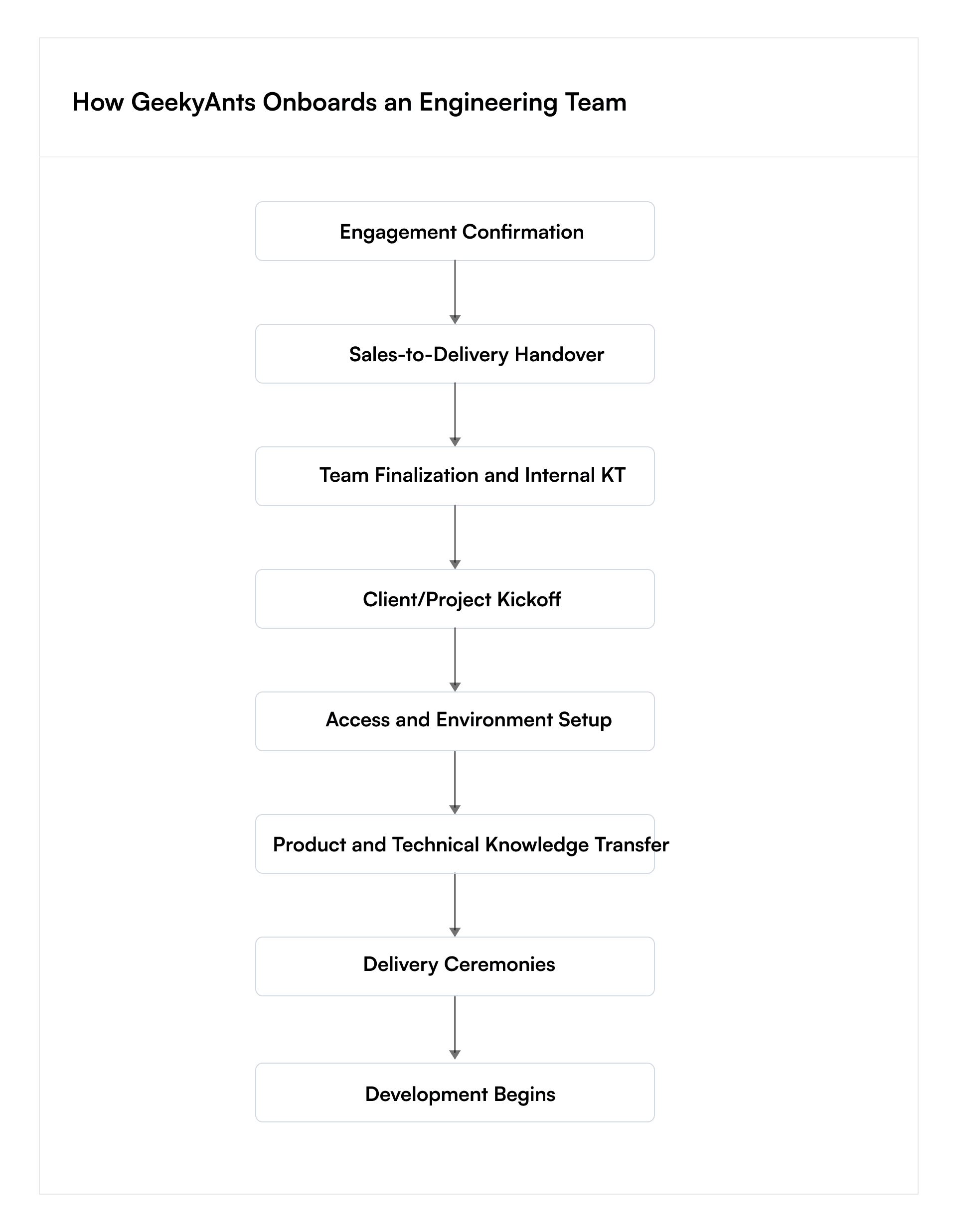
How Does an Engineering Team Ramp Up at GeekyAnts?
Once the team is finalized, GeekyAnts and the client align on the people involved in the engagement and how they will work together. This includes confirming points of contact, assigning responsibilities, setting up communication channels, and agreeing on the start date and working process.
Engineers also need access to the systems and tools used for the project. Depending on the engagement, this may include code repositories, cloud environments, virtual private networks (VPNs), project management tools, communication platforms, design assets, and documentation repositories.
The team also agrees on how delivery will be managed. This can cover project meetings, sprint planning, reviews, retrospectives, status reporting, and escalation contacts.
GeekyAnts does not apply a fixed ramp-up period to every engagement. A project with a clear scope and fewer dependencies may reach productive development within a few working days. A complex enterprise product or a domain-heavy engagement may need a longer knowledge-transfer period.
Several factors shape that timeline: project complexity, codebase maturity, domain knowledge, team size, and access dependencies. For this reason, access and administrative requirements can be started before the engagement or at its start. The team can then spend its ramp-up period understanding the product instead of waiting for the tools needed to work on it.
What Does Knowledge Transfer Cover?
A codebase can certainly show how a product has been implemented, but it does not contain every piece of information an incoming team might need.
Engineers may need to know why a feature follows a certain workflow, which systems it depends on, what security requirements apply, and which product changes are planned in the future. Without that context, understanding the code can still leave gaps in understanding the product.
Knowledge transfer at GeekyAnts can start with the business and product side: objectives, scope, requirements, user journeys, and roadmap. Technical discussions can cover architecture, the existing codebase, technology choices, coding standards, application programming interfaces (APIs), integrations, development and production environments, security requirements, and release processes.
The team also reviews existing documentation, the backlog, and known issues where these are part of the engagement. These provide a view of work in progress and problems that may affect development.
For an existing product, GeekyAnts may combine documentation with architecture and codebase walkthroughs, along with recorded sessions where the engagement permits them. New engineers may also spend time with existing team members to understand active work before taking responsibility for it.
How Does GeekyAnts Handle Engineer Replacement?
Team composition can change during an engagement. The main concern at that point is preserving the knowledge connected to the outgoing engineer’s work.
When circumstances allow, GeekyAnts identifies a replacement before the transition and plans an overlap period. The outgoing engineer can then transfer current responsibilities, pending work, dependencies, risks, access and tool information, and relevant stakeholder context.
The handover material depends on the role. It may contain a project or module overview, architecture documentation, current and pending tasks, known issues, technical debt, repository and environment information, release procedures, dependencies, project links, open blockers, and upcoming priorities.
An incoming engineer can also shadow the outgoing team member before taking independent ownership. This gives the new owner a chance to understand work that is already in motion and ask questions about issues that may not be clear from the documentation.
The objective is to transfer responsibility together with the information required to carry it.
How Is Continuity Planned Beyond a Single Replacement?
When an engineer needs to leave an engagement, GeekyAnts focuses on transferring both their responsibilities and the project knowledge connected to those responsibilities. Where possible, the replacement is identified before the transition so there is time for an overlap between the outgoing and incoming engineers.
The handover starts with the work the outgoing engineer owns. They take the incoming engineer through current and pending tasks, known issues, dependencies, open risks, and the priorities that need attention next. The discussion can also cover client expectations and stakeholder context so the incoming engineer understands how their work connects with the wider engagement.
Technical handover follows the needs of the role. This may include walking through the relevant module and architecture, locating the repositories and project documentation, explaining development and production environments, reviewing technical debt, and covering the deployment or release process.
During the overlap period, the incoming engineer can shadow work that is already in progress. This gives them a chance to see how the module is handled, understand the decisions behind current tasks, and raise questions with the outgoing engineer before ownership changes.
The handover combines written documentation, walkthroughs, and overlap instead of relying on a verbal transfer alone. By the time the incoming engineer takes ownership, they have the current work, supporting technical information, known risks, dependencies, and the project context required for the role.
Onboarding Creates the Foundation for Continuity
Engineering onboarding sets the working foundation for the engagement. The team needs access, product context, technical knowledge, clear responsibilities, and an agreed delivery process before it can take ownership of the work.
Those same elements support continuity when the team changes. Documentation preserves project information, knowledge-transfer sessions provide context, and planned overlap helps an incoming engineer understand active responsibilities before taking them on. For GeekyAnts, onboarding and continuity are connected parts of keeping engineering work transferable throughout an engagement.