

Key takeaways-
- The right partner aligns technology with business priorities, not just delivers code.
- Cost matters, but execution, compliance, and scalability determine real ROI.
- Strong partnerships are built on clarity, transparency, and long-term support.
The difference between scaling fast and falling behind in the U.S. market often comes down to a single decision — who builds your software. U.S. enterprises are racing to launch products faster, integrate emerging technologies, and deliver frictionless customer experiences. Yet the defining challenge is not availability of vendors, but selecting a partner capable of translating strategic ambition into measurable outcomes.
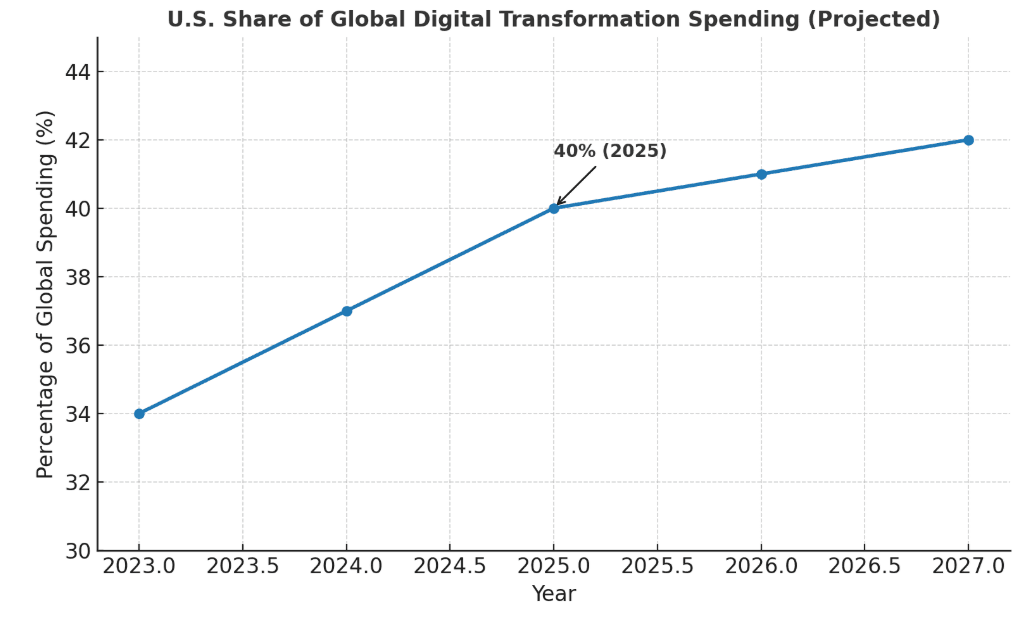
By 2025, the U.S. digital transformation market is projected to account for 40% of global technology spending, with enterprises across healthcare, fintech, and retail leading the surge. Amid this demand, companies face a crowded landscape of vendors offering everything from off-the-shelf development to full-scale product engineering. Selecting the right software development partner has become one of the most strategic investments for organizations aiming to balance innovation, compliance, and ROI.
This guide has been designed for decision-makers navigating that choice. It will unpack the essentials, from defining project strategy and comparing partner models to understanding cost dynamics, legal frameworks, and long-term collaboration practices. Along the way, we will explore risks to watch for, industry-specific considerations, and why trusted software development partners like GeekyAnts are helping U.S. businesses transform digital ambition into measurable outcomes.
What Is a Software Development Partner?
A software development partner is a long-term collaborator that combines technical expertise with strategic insight. Unlike transactional vendors, the role extends beyond writing code. It involves shaping product strategy, aligning technology with business objectives, and ensuring scalability after launch. The right partner functions as an extension of your team, bringing domain knowledge, proven frameworks, and a commitment to measurable outcomes.
Why Engage a Software Development Partner?
U.S. enterprises face immense pressure to deliver innovative digital solutions quickly, yet maintaining pace with AI, IoT, and ML trends while preserving operational integrity is challenging. Here are the strategic advantages of partnering with a seasoned software development collaborator:
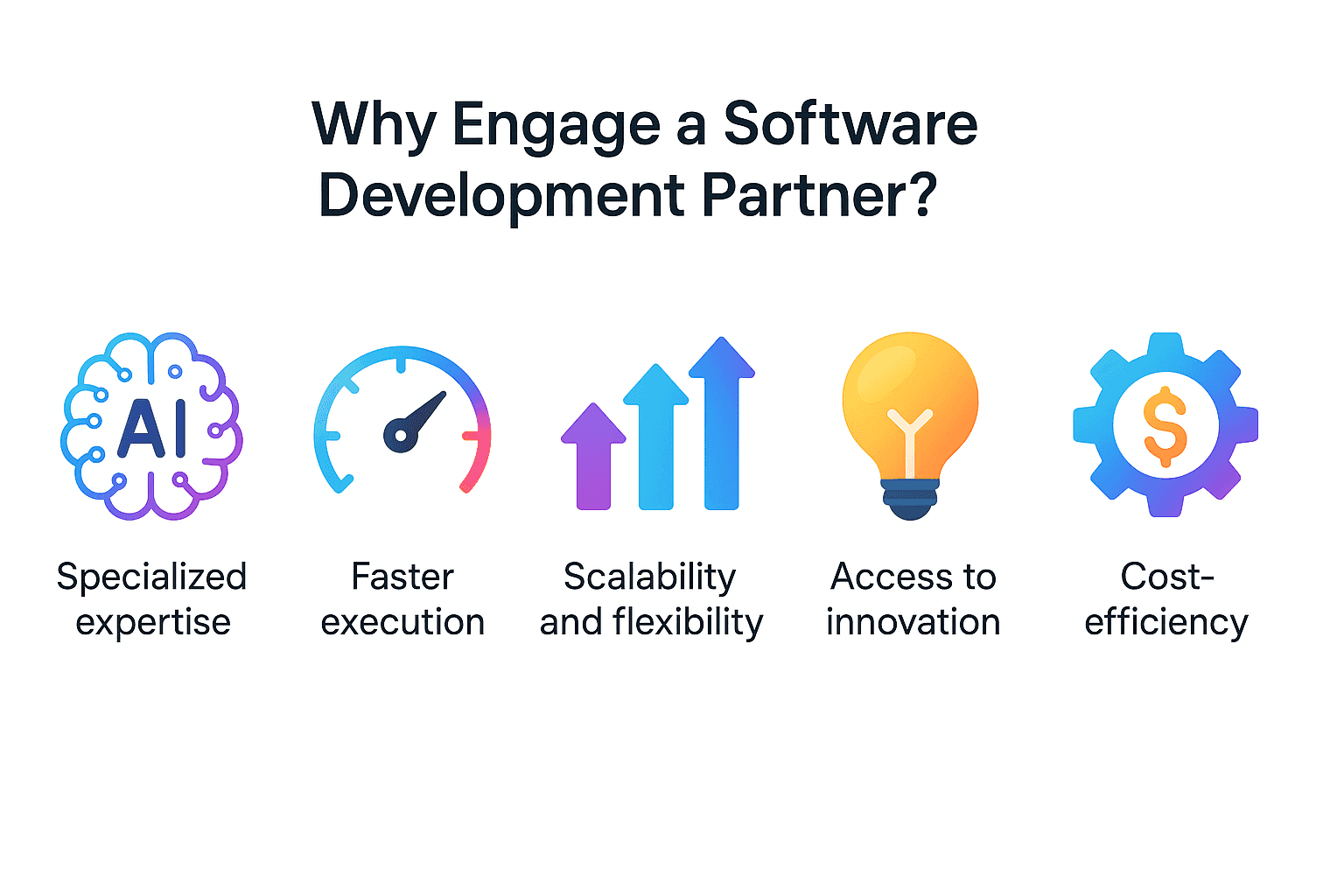
- Specialized expertise across emerging technologies: Partners bring advanced capabilities in AI/ML, IoT, cloud integration, and hyperautomation, helping you capitalize on industry trends with speed and precision.
- Faster execution and time-to-market: Leveraging proven methodologies and frameworks, a strategic partner accelerates delivery while minimizing risk of delays and giving your internal teams breathing room to focus on core initiatives.
- Scalability and flexibility: Whether pivoting features or expanding resources during peak demand, partners offer scalable delivery models, on-demand skills, dedicated teams, or co-engineering structures to align with dynamic business needs.
- Access to innovation and best practices: Trusted partners introduce state-of-the-art approaches—from GenAI pipelines to IoT-enabled ecosystems—ensuring your software solutions are not only built well but future-fit.
- Cost-efficiency with performance: Outsourced or co-engineered models unlock resource optimization, allowing you to leverage top-tier talent without the overhead of scaling in-house teams.
In the U.S. tech economy, enterprise growth is defined by execution, not by spend. More than $1.3 trillion will flow into digital transformation in 2025, yet fewer than half of initiatives will meet their strategic goals. The constraint is not capital—it is capability. The right development partner embeds speed, compliance, and scalability into every product cycle, turning investment into a durable competitive advantage.
 Kunal KumarChief Revenue Officer
Core Capabilities of a Strategic Product & Design Company
A strategic product and design company brings focused expertise in product strategy, user-centric design, and technical execution, all unified under one outcome-driven framework. They craft digital products that align with your business goals, blending front-end UX/UI design precision with backend resilience. Their services typically include:
- Product Strategy & Roadmapping: Defining value metrics, competitive differentiation, and scalable feature prioritization.
- User-Centered Design (UX/UI): Delivering intuitive interfaces that not only engage users but also align with brand identity and accessibility standards.
- Architectural Planning & Development Engineering: Establishing robust, scalable codebases using modern technologies—whether it's cloud-native, API-first, or microservices-led architectures—with embedded DevOps and quality engineering practices.
- Post-Launch Support & Evolution: Including performance optimization, iterative improvements, and governance frameworks that ensure the product continues to deliver business value as it scales.
A strategic product partner embeds innovation, efficiency, and alignment into the product lifecycle, driving impact from initial concept through scalable growth.
How to Hire the Right Software Development Company in the USA
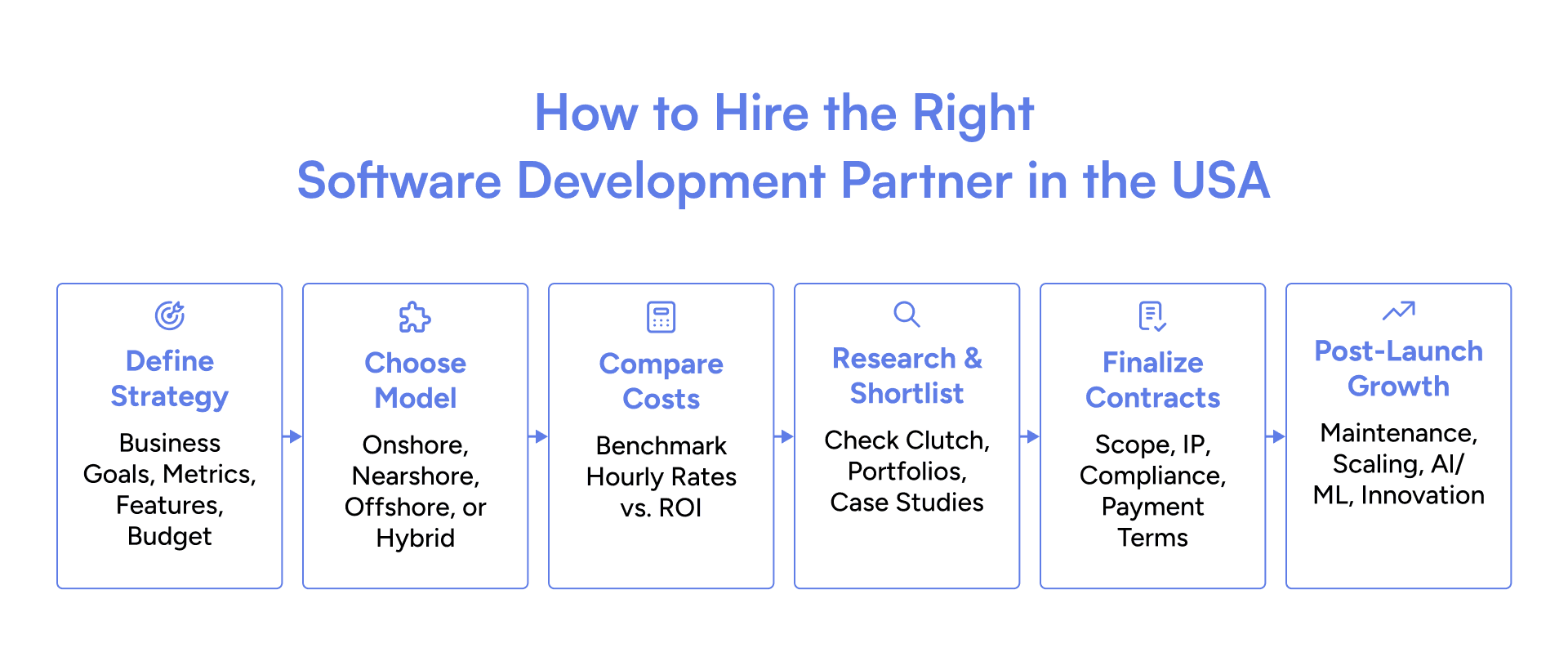
Choosing the right software development partner in the U.S. is not a single decision but a structured process. It requires clarity on business goals, awareness of engagement models, cost benchmarking, and due diligence at every stage of the relationship. Below is a step-by-step framework, built on GeekyAnts’ experience of delivering products for U.S. enterprises, that equips decision-makers with the insights needed to select a partner who delivers on innovation, compliance, and measurable ROI.
1. Defining Your Project & Strategy
Every successful partnership begins with a well-defined foundation. Before shortlisting candidates, organizations must:
- Clarify business objectives — Define the “why” behind the initiative: customer acquisition, operational efficiency, compliance, or expansion into new markets.
- Set success metrics — Determine how outcomes will be measured: time-to-market, cost efficiency, product adoption, or regulatory approval.
- Identify must-have features — Distinguish between core functionality and enhancements to avoid scope creep.
- Fix timelines and budget expectations — Establish realistic milestones and identify risk thresholds for delay or overspend.
Clear definition at this stage improves vendor alignment and reduces downstream risks. Research shows that projects with fully defined requirements at the outset are 2x more likely to hit deadlines and budget targets.
2. Understanding Partner Models
Not all engagements are created equal. The U.S. market offers several partner models, each suited to specific needs:
Onshore (U.S.-based)
Onshore (U.S.-based) development companies offer strong advantages, particularly around compliance with U.S. regulations, alignment in working hours, and cultural compatibility that makes collaboration smoother. These strengths often translate into faster decision-making, reduced communication gaps, and higher accountability in delivery. However, these benefits come at a premium: onshore teams typically command higher costs due to local labor rates, making them more suitable for organizations in regulated industries or projects where compliance and real-time collaboration outweigh budget considerations.
Nearshore / Hybrid
It involves working with teams in neighboring regions such as Latin America or combining U.S.-based oversight with offshore execution. Partnering with a Nearshore Software Development Company typically reduces costs compared to fully onshore arrangements while also minimizing time-zone differences, enabling smoother communication and quicker coordination. For many organizations, it strikes the right balance between affordability and accessibility, making it an attractive option for companies that want to maintain collaboration efficiency without absorbing the higher expenses of an exclusively U.S.-based team.
Offshore
These partnerships typically engage teams located in regions such as India or Eastern Europe, where labor costs are significantly lower. By working with an offshore software development company, organizations gain access to large pools of skilled talent and the ability to scale quickly at competitive rates. However, the model requires strong processes for communication, project management, and compliance to bridge time-zone differences and regulatory variations. For cost-sensitive projects or startups looking to accelerate delivery without inflating budgets, offshore remains a widely adopted strategy.
Dedicated Team / Staff Augmentation
Dedicated Team / Staff Augmentation provides companies with the flexibility to extend their internal capacity by adding full-time engineers or domain experts as an integrated unit. This model is particularly effective for organizations facing rapid growth or specialized technical requirements, as it enables immediate scaling without the overhead of recruiting, training, or retaining permanent staff. With the right partner, dedicated teams function as a seamless extension of in-house resources, ensuring alignment with business goals while delivering speed and agility.
Recommendation Framework: Choose onshore for highly regulated industries (healthcare, finance), hybrid for cost-conscious enterprises with compliance needs, and offshore for startups or scaleups requiring rapid delivery at lower cost.
Project Cost & Location Comparison
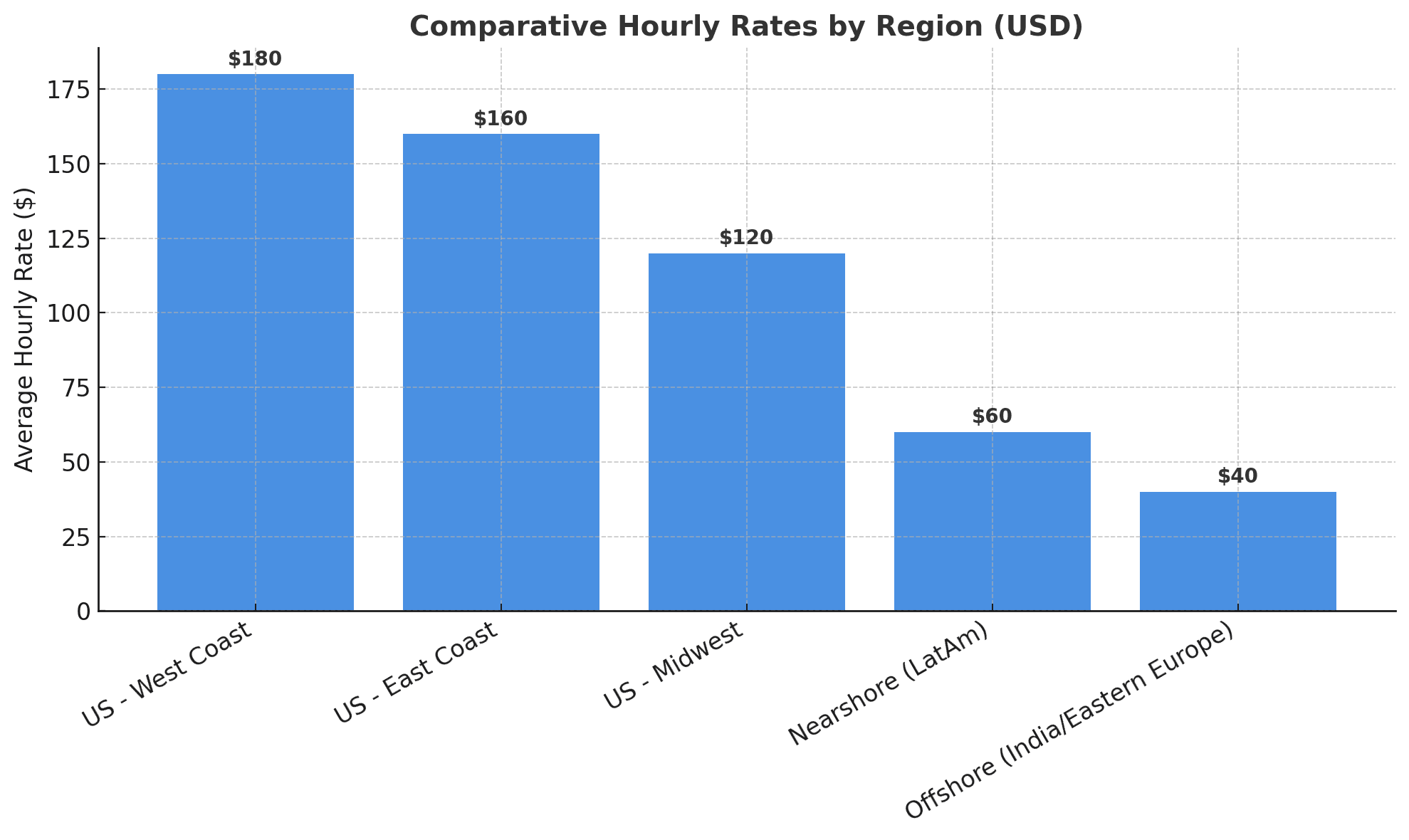
Costs vary significantly by region:
Region / Model | Hourly Rate Range (USD) | Notes |
|---|---|---|
U.S. Onshore | $100–$20 | Highest in hubs like San Francisco and New York; strongest alignment on compliance, time zones, and collaboration. |
Nearshore (Latin America) | $40–$70 | Cost-effective with smaller time-zone gaps; good balance of access and coordination speed. |
Offshore (India, Eastern Europe) | $25–$50 | Most affordable; large talent pools and fast scale-up; requires strong processes for communication and compliance. |
A realistic budget framework should weigh the total cost of ownership, not only hourly rates but also collaboration overhead, potential delays, and compliance risks.
In our experience working with U.S. enterprises, the cost difference between onshore and offshore teams often looks dramatic on paper—$150 per hour versus $40, for example, but the real question is value per dollar. A fintech client in New York initially engaged an offshore team to cut costs, but faced delays due to compliance gaps. When we structured a hybrid model, U.S. oversight with offshore engineering, the client reduced overall spend by 35% while meeting regulatory standards. This illustrates why cost should always be balanced against compliance, speed, and long-term ROI.
 Akilesh I
Research & Shortlisting Process
The shortlisting stage must be evidence-driven, not referral-driven. Recommended steps:
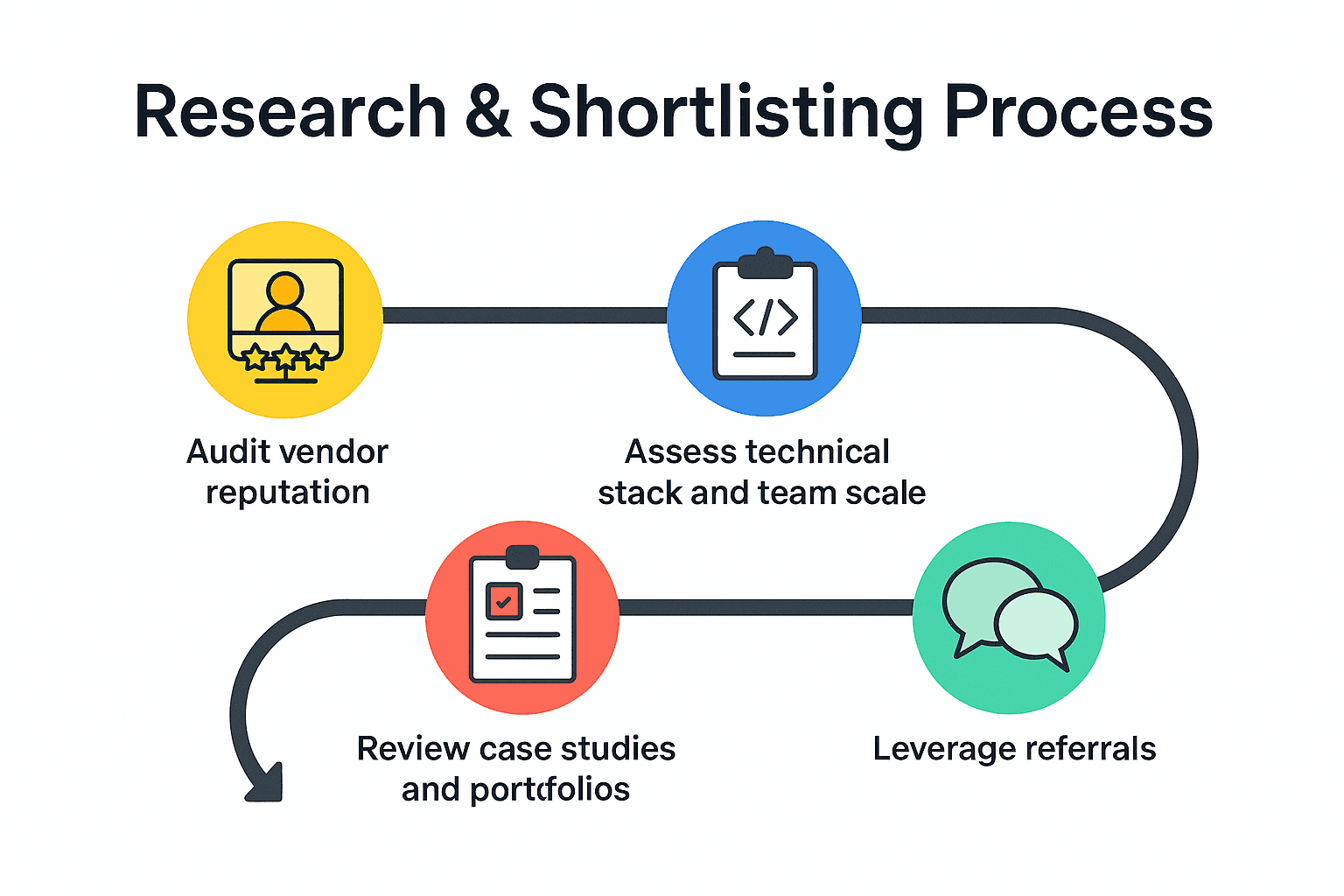
When shortlisting potential partners, it’s essential to move beyond marketing claims and focus on verifiable credibility. Start by auditing vendor reputation through independent platforms such as Clutch, GoodFirms, and Manifest, where ratings and reviews provide insight into performance. GeekyAnts’ Clutch profile, for example, demonstrates proven delivery across multiple domains. Equally important is a careful review of case studies and portfolios to confirm domain expertise; a fintech project requires deep knowledge of security protocols, while healthcare solutions demand HIPAA-compliant architectures. Alongside technical alignment, such as stack proficiency and the ability to scale teams, referrals can be useful, but they should always be validated with tangible evidence of successful delivery.
Interviewing Your Software Development Partner
Interviewing is where strategy meets reality. To move beyond marketing brochures, decision-makers should:
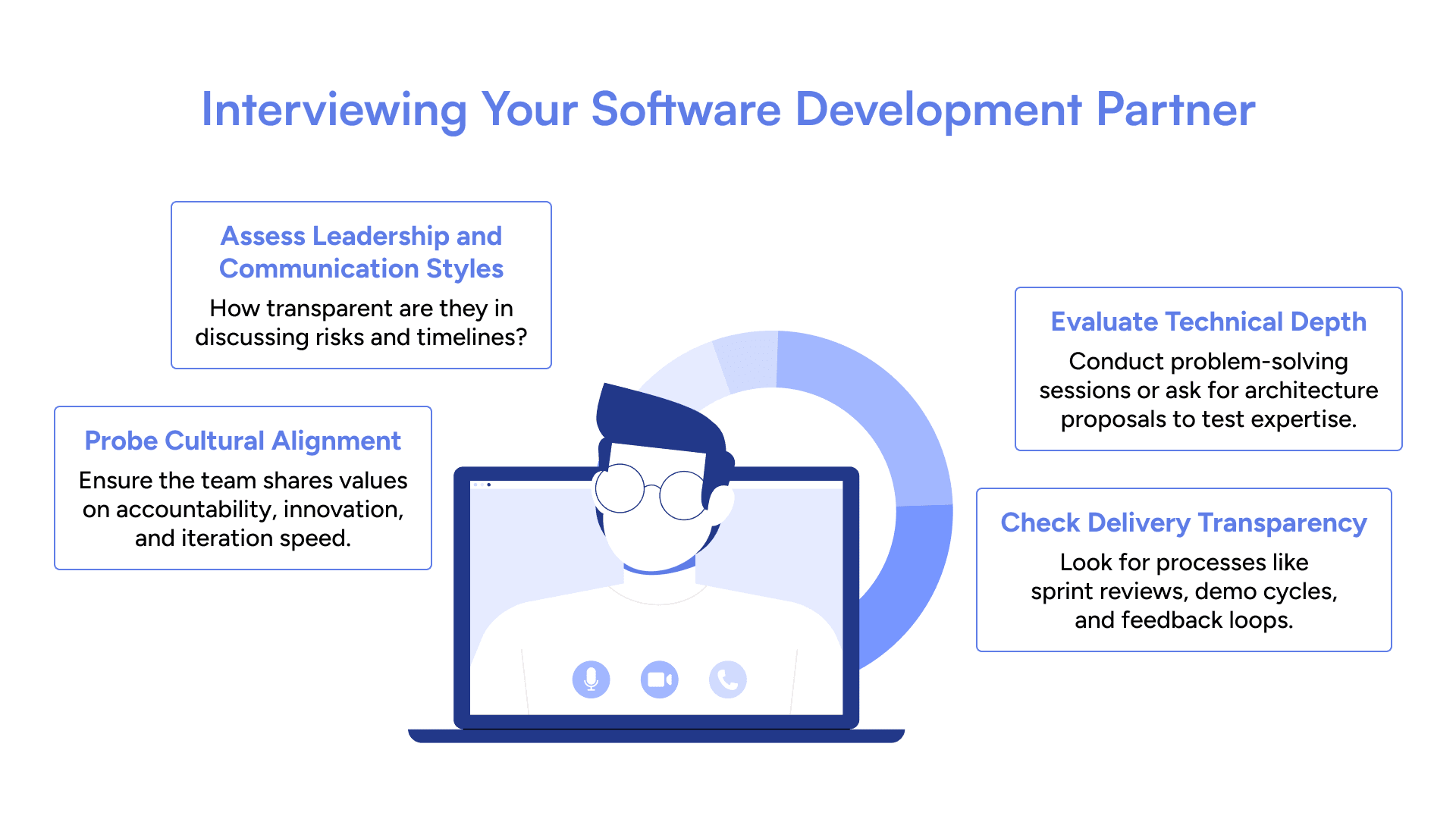
- Assess leadership and communication styles — How transparent are they in discussing risks and timelines?
- Evaluate technical depth — Conduct problem-solving sessions or ask for architecture proposals to test expertise.
- Probe cultural alignment — Ensure the team shares values on accountability, innovation, and iteration speed.
- Check delivery transparency — Request regular progress demos and milestone reports to verify alignment and avoid surprises.
A structured interview and diligence framework reduces the risk of “hidden gaps” surfacing mid-project.
Contracting & Legal Considerations
In the U.S. context, contracting is more than a formality; it is the foundation of a reliable partnership. Agreements must clearly define the scope of work and deliverables to prevent ambiguity as projects scale, while timelines and milestone-linked payment terms create accountability on both sides. Intellectual property ownership and non-disclosure agreements are non-negotiable, safeguarding proprietary technology and sensitive business information. Equally important are liability clauses and jurisdictional alignment, which ensure enforceability under U.S. legal standards. Getting these elements right not only mitigates risk but also builds the trust and transparency required for a long-term engagement.
Onboarding & Collaboration Practices
Successful engagements are defined in the first 90 days. Effective onboarding should include:
- Integration with internal teams (shared tools, processes, workflows).
- Communication protocols — Defined cadence for stand-ups, sprint reviews, and escalation paths.
- Knowledge transfer frameworks — Documentation, handover procedures, and shared repositories.
Strong onboarding eliminates friction and accelerates delivery.
Post-Launch Partnership & Scalability
A software development company's role does not end at launch; in many ways, it begins there. The most effective partners ensure continuity through ongoing maintenance, including bug fixes, security patches, and performance monitoring to keep products stable and secure. They also drive iterative growth by adding new features in response to market feedback, while offering the scalability to expand teams and integrate advanced technologies such as AI/ML pipelines and IoT frameworks as business needs evolve. By anchoring the relationship in metrics-driven engagement, through performance dashboards linked directly to business KPIs, partners transform a one-time launch into a sustained growth engine, ensuring long-term ROI rather than short-lived success.
Specialized Guidance by Industry
Every industry has unique compliance and innovation needs:
- Healthcare — HIPAA compliance, patient data security, interoperability standards (HL7, FHIR).
- Fintech — PCI-DSS compliance, fraud detection, blockchain-enabled security.
- E-commerce — Scalability for high-volume transactions, personalization engines, omnichannel integration.
- Enterprise SaaS — Multi-tenant architectures, API-first design, cloud optimization.
Partners with proven vertical expertise reduce regulatory risks and accelerate adoption curves.
In the U.S. market, selecting a development partner is less about vendor pricing and more about finding a team that can own outcomes. A good partner delivers software; the right partner delivers growth, compliance, and resilience at scale.
 Divya TripathiSales Head
Risks to Watch When Selecting the Right Software Development Company
Even the most promising engagements can fail if critical risks are overlooked. The first is misaligned expectations—choosing a software development partner without a clearly defined scope, success metrics, or communication protocols often leads to delays and cost overruns. Another is limited domain expertise; the right software development company must demonstrate proven experience in your industry, whether that’s HIPAA compliance in healthcare or PCI-DSS adherence in fintech. A third risk lies in vendor instability—partners without a track record of delivery, transparent governance, or financial resilience can jeopardize long-term outcomes. Finally, hidden cost structures and weak IP protection expose businesses to legal and operational vulnerabilities. Evaluating these risks upfront is essential to ensure you select a partner who is not only capable of building software but also committed to sustaining value over time.
When I look back at projects that went off-track, the failure rarely came from the technology itself. It came from misalignment, partners who did not understand regulatory nuance, underestimated integration complexity, or avoided hard conversations about scope. What I have learned is that the right software development partner is not the one who promises the fastest delivery; it’s the one who has the discipline to surface risks early, challenge assumptions, and still deliver outcomes that hold up years later.
Kunal KumarChief Revenue OfficerWhy Choose GeekyAnts as a Trusted Software Development Partner in the U.S.
Founded in 2006 and headquartered in Bengaluru, GeekyAnts is a product design and engineering studio that integrates AI-driven innovation with robust software engineering to deliver scalable, future-ready digital products. Beyond execution, the company has established itself as a global technology partner through its leadership in open-source initiatives (including NativeBase and Flutter contributions) and a co-creation model that emphasises collaboration, transparency, and long-term business impact.
Our Expertise at a Glance
- Proven Case Studies: Built HIPAA-compliant healthcare platforms, scalable fintech products, and next-gen SaaS applications.
- Global Experience: 19 years in product design & engineering with a strong U.S. delivery presence.
- Client Base: 300+ clients, ranging from Fortune 500s to high-growth startups.
- Success Rate: 95% project delivery success backed by Clutch ratings and referrals.
- Technology Edge: Deep expertise in AI/ML, IoT, React Native, and cloud-native development.
A trusted software development partner provides alignment, scalability, and measurable outcomes. GeekyAnts has helped U.S. enterprises launch compliant healthcare platforms, scale fintech products, and build SaaS solutions that continue to deliver value long after release. Speak to our experts today to explore how the right partnership can accelerate your next digital initiative.
Conclusion
Selecting the right software development partner in the U.S. is a strategic choice that defines how effectively organizations innovate, scale, and compete. The partner must align with business goals, demonstrate industry-specific expertise, and ensure compliance with evolving regulations. Beyond technical delivery, the right collaboration creates resilience, accelerates time-to-market, and supports continuous product evolution. For decision-makers, the key lies in treating this not as a vendor selection exercise but as an investment in long-term capability and sustainable digital advantage.
FAQs
1. How do you find a software development partner?
Begin by defining project goals, budget, and success metrics. Then, research vendors on platforms like Clutch or GoodFirms, review client testimonials, and examine case studies for domain expertise. Shortlist based on cultural fit, technical stack, and proven delivery in similar industries.
2. How much does a US-based development partner cost?
U.S. onshore rates typically range between $100–$200 per hour, with the highest costs in hubs like San Francisco and New York. Midwestern regions may be slightly lower. Always consider the total cost of ownership, including communication efficiency and compliance assurance, not just hourly rates.
3. What's the difference between onshore, nearshore, and offshore software development?
- Onshore: U.S.-based, strongest in compliance and collaboration, but most expensive.
- Nearshore: Teams in nearby regions like Latin America; lower cost with fewer time-zone challenges.
- Offshore: Teams in Asia or Eastern Europe; highly cost-efficient and scalable, but requires strong governance for communication and regulatory alignment.
4. What questions should you ask your potential software development partner?
Ask about domain-specific experience, sample case studies, and delivery methodologies. Check how they manage compliance, IP protection, and risk mitigation. It’s equally important to ask about post-launch support, scalability, and how success is measured.
5. What are the benefits of working with a software development partner?
The right partner provides access to specialized skills, accelerates product delivery, and allows internal teams to focus on core business. They bring structured processes, industry knowledge, and the flexibility to scale teams quickly while embedding best practices in compliance and security.
6. What are the common red flags to watch for when evaluating a software development company?
Red flags include vague contracts, lack of transparency in pricing, no clear post-launch support, and minimal experience in your domain. Overpromising on timelines or drastically undercutting costs are also signals of potential delivery risks.