
A payment system that slows access to care is a system in need of change. Despite the rise of digital transactions, healthcare payments remain fragmented, inefficient, and costly. Patients navigate delays, unclear billing, and insurance complexities, while providers deal with manual invoicing, claim disputes, and operational inefficiencies that strain financial workflows.
While industries like retail and banking have transitioned to seamless digital payments, healthcare lags. Fewer than 25% of providers have integrated mobile payments, even as 80% of patients prefer them.
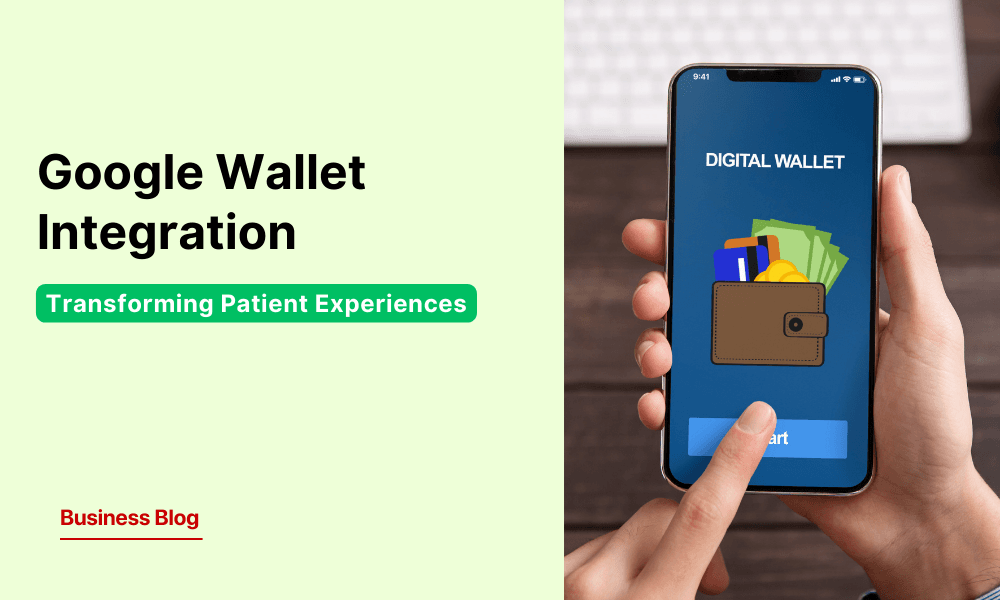
Google Wallet is more than a payment tool—it is a solution we have implemented to streamline billing, insurance verification, and patient check-ins. Through our experience, we have seen how it reduces administrative friction and enhances financial efficiency. This blog explores how it can transform healthcare transactions for providers and patients alike.
The Evolution of Digital Payments in Healthcare
Healthcare payments have long been burdened by manual invoicing, insurance verification, and multi-step approvals, creating inefficiencies that delay treatments, drive up administrative costs, and add unnecessary complexity for both patients and providers. While industries such as retail and travel have transitioned to instant, contactless transactions, healthcare remains largely dependent on outdated systems that slow financial workflows.
Over the past decade, mobile wallets, NFC-based check-ins, and automated billing systems have begun to reduce reliance on paper-based transactions. Yet, adoption has been slow, hindered by security concerns, regulatory complexities, and legacy infrastructure that limit seamless implementation.
Google Wallet is a scalable, HIPAA-compliant solution that addresses these challenges. It secures transactions through tokenization and integrates with existing hospital workflows, eliminating inefficiencies while enhancing payment security. By storing insurance details, payment preferences, and billing history in a single platform, Google Wallet streamlines financial interactions, reducing the need for manual paperwork and simplifying approvals.
Enhancing Patient Experience with Google Wallet
Faster Transactions and Automated Bill Management
Slow payment processing creates billing disputes, delays, and inefficiencies for both patients and providers. Traditional systems rely on manual approvals and reconciliations, making transactions cumbersome. Google Wallet eliminates these obstacles by enabling instant, contactless payments for consultations, tests, and prescriptions across hospitals, clinics, and telehealth platforms.
Beyond payments, automated billing simplifies financial management. Real-time reminders, co-payment facilitation, and bill-splitting options help patients stay on top of expenses while ensuring providers receive payments on time. This automation reduces manual intervention and improves revenue cycle efficiency.
Seamless Digital Insurance and Identity Verification
Insurance verification remains a major bottleneck in healthcare payments. Patients often deal with misplaced documents, outdated details, and claim delays. Google Wallet resolves this by enabling secure storage of insurance cards, Medicare/Medicaid details, and health memberships, eliminating the need for physical paperwork.
When integrated with hospital and telehealth systems, it allows instant insurance verification, reducing claim processing time and minimizing disputes. A telehealth provider using Google Wallet-based digital insurance storage improved claims processing speed by 30%, demonstrating its efficiency in reducing administrative overhead.
Optimized Patient Check-Ins and Appointment Management
Traditional check-in processes lead to long wait times, front-desk congestion, and inefficiencies in patient flow. Google Wallet enables one-tap identity verification, eliminating manual form submissions and expediting patient intake.
Hospitals and urgent care centers that have implemented mobile wallet-based check-ins report a 25% increase in patient throughput, demonstrating how digital solutions can optimize efficiency in high-demand environments.
Implementing Google Wallet in Healthcare Apps
While the benefits of Google Wallet are clear, effective implementation requires a structured approach that aligns with regulatory requirements and existing healthcare infrastructure.
Implementation Phase | Key Considerations |
Security & Compliance | Ensure HIPAA compliance, PCI-DSS adherence, and end-to-end encryption to protect financial transactions. |
Integration with EHR & Telehealth | Embed Google Wallet SDK into hospital apps, patient portals, and telehealth platforms for real-time billing and check-in management. |
Automation & AI Features | Implement AI-driven payment tracking, smart reminders, and predictive expense planning to enhance financial management for patients. |
A structured integration with Electronic Health Records (EHR) platforms such as Epic, Cerner, and Athenahealth ensures seamless financial data synchronization, reducing the administrative workload for healthcare providers.
A telehealth startup that adopted Google Wallet for automated billing and expense tracking reported a 30% increase in payment collection efficiency, underscoring its financial impact.
The Future of Digital Wallets in Healthcare
As healthcare moves towards automation-driven financial ecosystems, digital wallets will play a pivotal role in transforming transactions. Advancements in AI, blockchain, and IoT are reshaping payment infrastructures, making them more secure, efficient, and predictive. Google Wallet is set to evolve beyond payments and become an integral part of patient-centred financial management.
Three key trends will define its future impact:
- AI-Powered Financial Automation – Predictive analytics will drive real-time cost estimations, insurance verification, and personalized financial planning, enabling both patients and providers to expect medical expenses with greater accuracy.
- Blockchain-Based Smart Contracts – Secure, automated claims processing will replace manual insurance approvals, reducing administrative overhead and minimizing fraud risks.
- Wearable & IoT Integration – Payments will become biometrically linked, allowing smartwatches and health monitoring devices to trigger automated transactions for medical services, which will create seamless financial workflows.
By 2027, the digital healthcare payments market is set to surpass $15 billion (source: Market Research Future). This growth comes from the rising use of AI-powered automation and secure digital wallets. Healthcare providers adopting these innovations will offer smooth, tech-driven financial experiences that meet changing patient expectations.
Conclusion
The shift towards digital-first, automated payment systems is redefining financial operations in healthcare. Google Wallet streamlines billing, insurance verification, and patient transactions, reducing inefficiencies while improving security and accessibility. As AI-driven automation, blockchain, and IoT-powered payments reshape the industry, digital wallets will become central to seamless, patient-centric financial experiences. Healthcare providers that adopt these innovations will gain greater efficiency, transparency, and long-term scalability.
GeekyAnts helps healthcare providers integrate secure, AI-powered payment solutions—partner with us to future-proof your digital transactions.