

Editor’s Note: This blog distils key insights from a podcast discussion between Rakesh and Krupali, Senior UI/UX Designer at GeekyAnts, on the strategic nuances of brand evolution—whether a refined refresh or a complete rebrand. While the content has been structured for clarity and brevity, it remains true to the original discussion, preserving the depth and expertise shared in the session.
Branding is more than a visual identity—it is a strategic asset that defines perception, builds trust, and drives business growth. Companies that fail to evolve risk becoming irrelevant.
Research shows that consistent branding can increase revenue by up to 23% (Forbes). But as industries shift, businesses face a critical decision: refresh their brand to stay modern or rebrand entirely to align with a new direction.
Recent examples illustrate this evolution. Jaguar’s rebranding signalled its transition to an electric vehicle future, reinforcing innovation and sustainability. Meanwhile, OpenAI’s brand refresh refined its visual identity while preserving brand familiarity. Both approaches serve distinct purposes, but how does a company determine the right path?
This blog breaks down the key differences, decision factors, challenges, and strategies to help businesses navigate brand evolution with confidence.
Defining Brand Refresh and Rebranding
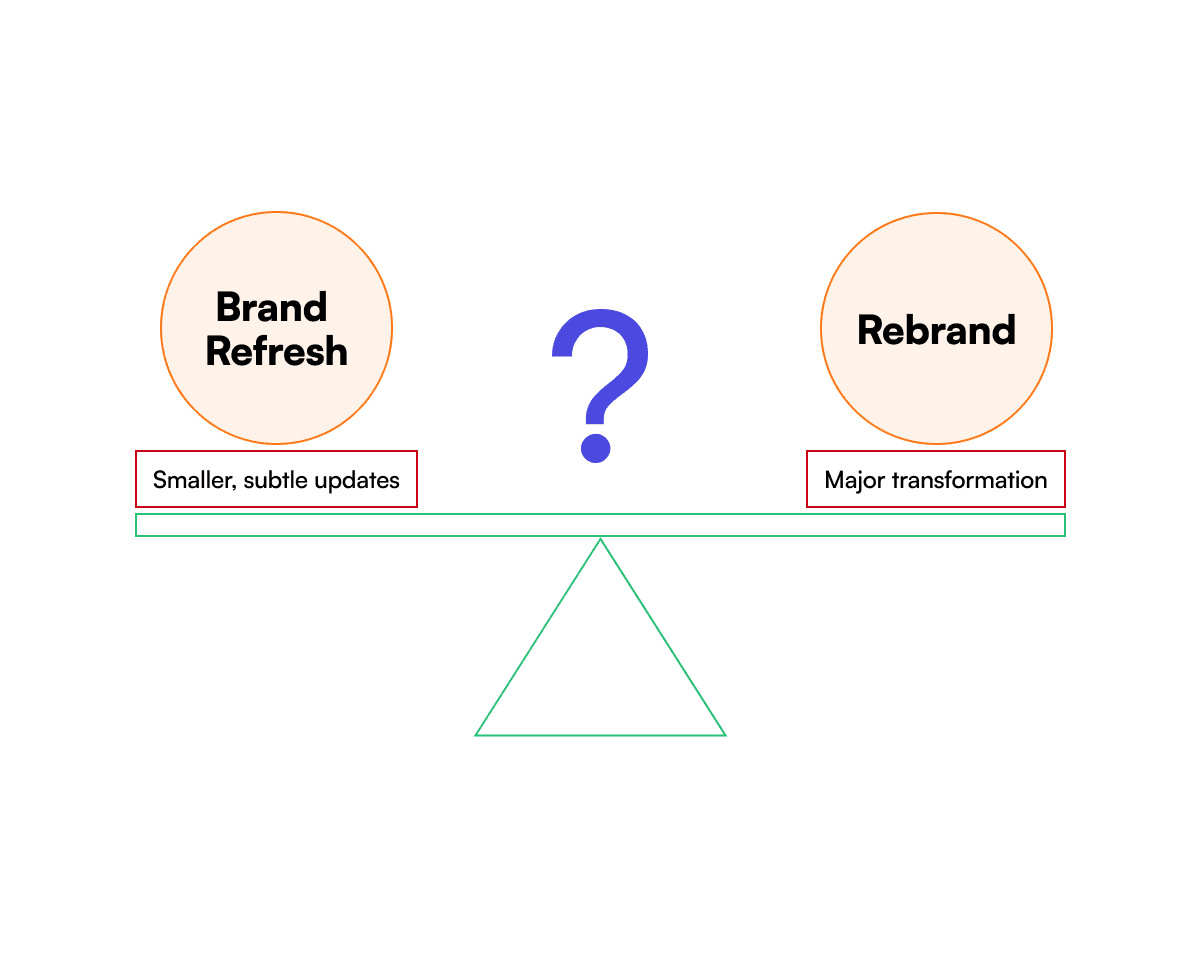
Brand evolution is a strategic decision. Some companies refine their identity to stay relevant, while others undergo a complete transformation to align with new business objectives. Understanding the distinction between a brand refresh and a rebrand is essential for making the right choice.
What is a Brand Refresh?
A brand refresh is an update that refines a company’s visual identity without altering its core positioning. It involves adjustments to typography, colour schemes, and logos to maintain relevance while preserving brand recognition. This approach ensures continuity while modernizing the brand’s appearance.
Example: OpenAI recently introduced a refined typeface, a more structured logo, and an updated design system. These changes maintained brand familiarity while enhancing clarity and cohesion across platforms.
What is Rebranding?
Rebranding is a fundamental shift that goes beyond visual updates. It redefines a company’s identity, including its messaging, positioning, and overall perception. Organizations pursue rebranding when they need to reflect a new strategic direction, enter a different market, or reposition after a decline in relevance.
Example: Jaguar’s 2024 rebrand aligned the company with the future of electric mobility. The transformation encompassed a redesigned logo, a shift in messaging, and a repositioning strategy that reinforced its commitment to innovation and sustainability.
Indicators for Choosing Between a Brand Refresh or a Rebrand
Choosing between a brand refresh and a rebrand depends on the extent of change needed to stay relevant and competitive.
When to Opt for a Brand Refresh
- Brand equity is strong, but the visuals feel outdated. Aesthetic updates enhance appeal without disrupting recognition.
- Market trends demand refinement. Minor adjustments keep the brand contemporary.
- User experience needs improvement. Design consistency strengthens engagement without altering identity.
When a Full Rebrand is Necessary
- A strategic shift requires a new identity. Changes in mission, audience, or market position demand a rebrand.
- Reputation or perception issues hinder growth. A fresh identity helps rebuild trust and reposition the brand.
- The brand no longer resonates with customers. A rebrand redefines messaging, design, and positioning for stronger impact.
A refresh refines, while a rebrand transforms. The right choice depends on business objectives and market positioning.
Case Studies: Brand Refresh vs. Rebranding in Action
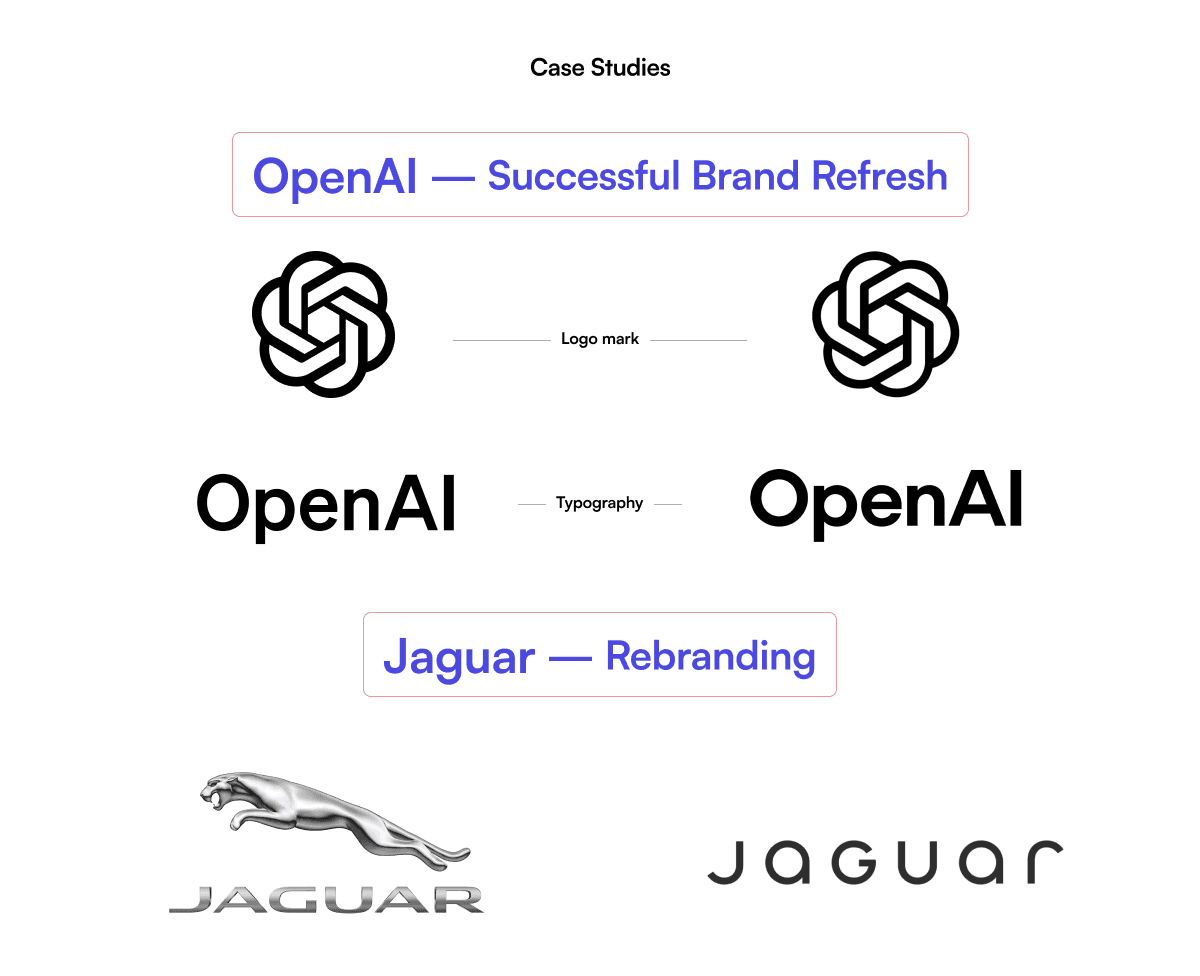
Understanding the difference between a brand refresh and a rebrand is best illustrated through real-world examples. While some companies refine their existing identity, others undertake a complete transformation to align with new business objectives.
Brand Refresh: OpenAI’s Visual Evolution (2025)
OpenAI’s 2025 refresh was a calibrated update designed to refine its brand while maintaining familiarity. Rather than overhauling its identity, OpenAI focused on precision and consistency, enhancing key design elements to reinforce its market presence.
- Typography refinement for improved readability and a more structured design.
- Logo adjustments that retained its recognizable form while enhancing clarity.
- Color and design system updates to create a more cohesive and modern aesthetic.
The refresh strengthened OpenAI’s visual presence without disrupting brand recognition. By refining rather than reinventing, OpenAI maintained credibility while keeping pace with industry expectations.
Complete Rebrand: Jaguar’s Market Transformation (2024)
Jaguar’s 2024 rebrand was not a cosmetic update—it was a strategic repositioning aimed at reshaping the brand’s identity for the electric vehicle market. The transformation was driven by a shift in industry focus, consumer expectations, and sustainability goals.
- New logo design reflecting a modern, forward-looking identity.
- Revised brand messaging aligning with Jaguar’s commitment to electric mobility.
- Market repositioning to transition from a legacy automaker to an innovator in EV technology.
Jaguar’s rebrand went beyond aesthetics—it was a business strategy designed to future-proof the company in a rapidly evolving industry. The overhaul repositioned Jaguar as a leader in sustainable mobility, ensuring long-term relevance in the automotive market.
Both OpenAI and Jaguar demonstrate how brand evolution serves distinct purposes—one refines, the other reinvents. The key is aligning branding decisions with business strategy, ensuring relevance without losing identity.
Brand Refresh vs. Rebranding: Key Differences
A brand refresh refines an existing identity, while a rebrand transforms it entirely to align with new business goals.
Comparison Table
Factor | Brand Refresh | Rebranding |
Objective | Modernize branding while retaining identity | Establish a new identity and market positioning |
Scope of Change | Updates to logo, colors, typography, and messaging | Complete overhaul of brand identity, strategy, and audience |
Impact on Identity | Maintains brand recognition | Reinvents brand perception |
Market Positioning | Aligns with trends without changing core focus | Signals a shift in vision, audience, or industry |
Risk Level | Low risk, but changes may be too subtle | Higher risk, potential customer alienation |
Time & Cost | Lower investment, faster execution | High investment, requires strategic rollout |
Customer Perception | Maintains trust and familiarity | Needs extensive re-engagement and repositioning |
Business Trigger | Needed when branding feels outdated but still relevant | Necessary for shifts in mission, mergers, or reputation recovery |
Execution Complexity | Straightforward updates | Requires deep market analysis and long-term strategy |
User Experience (UX) and Competitor Insights
Branding decisions directly impact how users engage with a product or service. Whether through a refresh or a complete rebrand, these changes shape navigation, usability, and overall customer perception. A well-executed update enhances familiarity and trust, while a mismanaged transition can disrupt user experience and create friction.
A Stanford University study found that 75% of consumers assess a brand’s credibility based on website design, reinforcing the importance of a seamless and intuitive experience. A brand’s identity isn’t just about recognition—it’s about how effortlessly users interact with it across touchpoints. Even subtle changes in typography, color schemes, or layouts must align with established expectations to ensure cohesion and usability.
Competitive insights reveal how brands navigate these challenges. Prismo Marketing emphasizes the role of consistency in brand refreshes, ensuring updates feel natural rather than abrupt. TwoThirty Media highlights how branding must be rooted in business objectives to maintain long-term relevance. Meanwhile, InkBot Design explores the connection between branding and consumer trust, showing how thoughtful execution fosters brand loyalty.
At its core, branding is a functional asset. Beyond aesthetics, it defines how users interact with, engage with, and build trust with a company. Whether refining an identity or repositioning entirely, the user experience should remain the foundation of every branding decision.
Conclusion
Brand evolution is a strategic necessity, not just a design update. The decision between a brand refresh and a complete rebrand should be guided by business objectives, market positioning, and long-term goals. A refresh helps maintain relevance without disrupting brand recognition, while a rebrand is essential for shifting direction, repositioning in the market, or rebuilding trust.
Regardless of the approach, branding should be intentional, user-focused, and aligned with business strategy. Companies that evolve strategically don’t just stay relevant—they shape the future of their industries.
Looking to refine or reinvent your brand? GeekyAnts helps businesses craft strategic, future-proof branding solutions that drive impact.