
Editor’s Note: This blog introduces CodeCaptain, an AI-powered code analysis and performance evaluation tool developed by Team BNM during Geekathon 2024. It provides comprehensive code health assessment, pull request risk analysis, user performance tracking, and commit insights, enabling developers to improve efficiency and maintain high-quality code. While the language has been refined for clarity, the content remains true to the original vision and enthusiasm of the team.
Team Composition: Vishal Singh, Sachin Singh, Shivam Pundir, Roshan Ojha, Devanshi Garg
Hello, everyone. I am Shivam from Team BNM.
At Geekathon 2024, our team developed CodeCaptain, a powerful code analysis and performance evaluation tool designed to help developers track code health, analyze pull requests, assess user contributions, and gain deep commit insights. By automating performance tracking and risk assessment, CodeCaptain simplifies codebase management and enhances collaboration for engineering teams.
How It Works
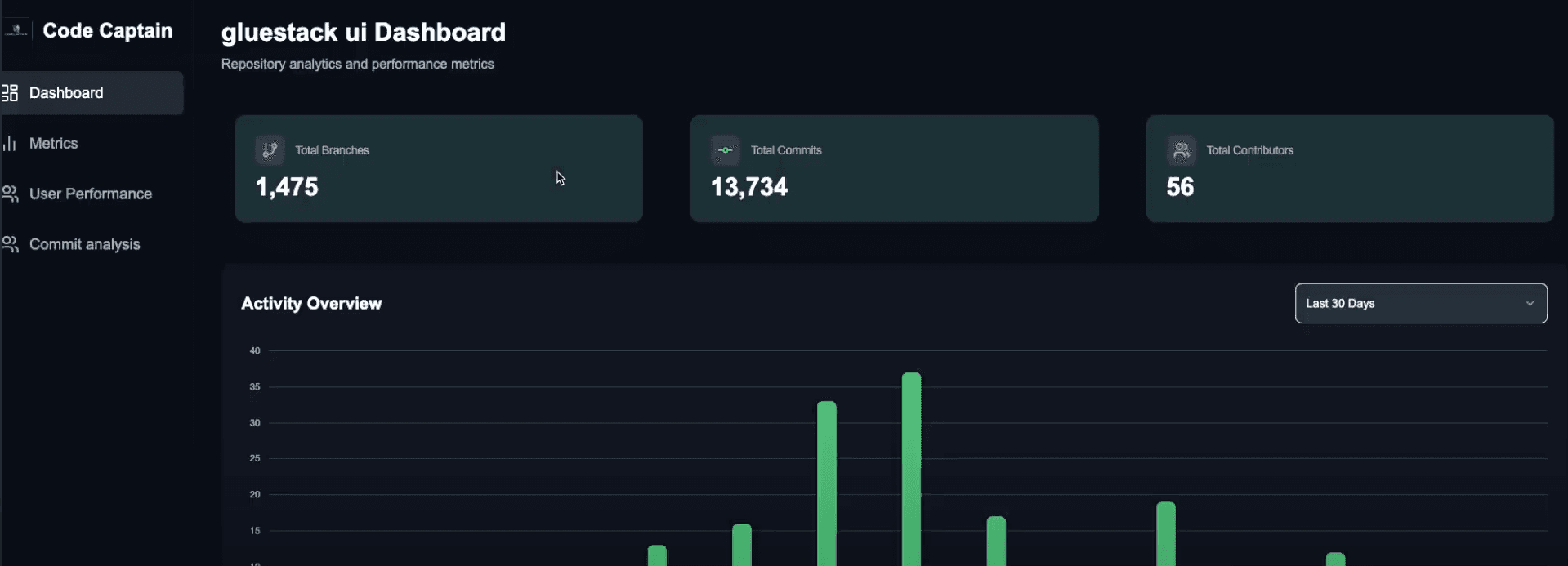
CodeCaptain integrates seamlessly with GlueStack UI, providing a dashboard that displays key metrics such as total branches, commits, and contributors. The activity overview visualizes commit trends over different periods, allowing users to track development consistency.
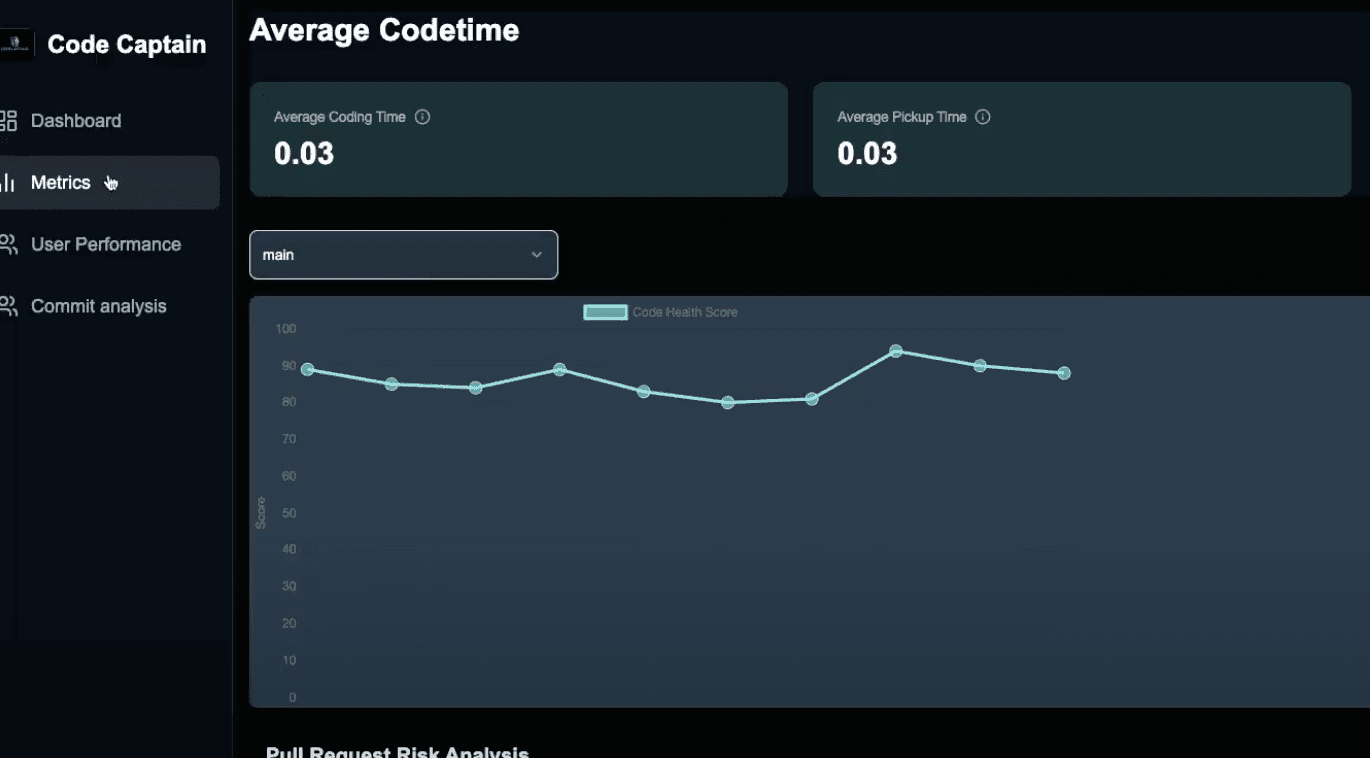
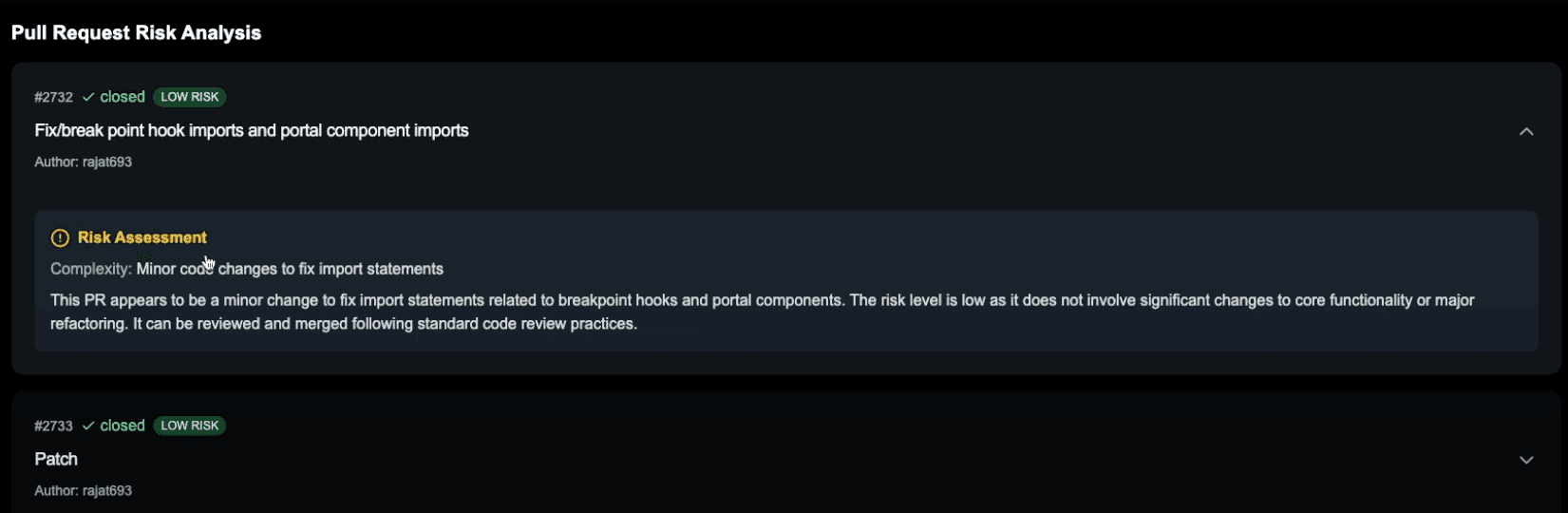
The metrics section evaluates code health scores and pulls request analysis. Users can review PR risk levels, categorized as low, medium, or high risk, ensuring developers can prioritize code improvements efficiently. (Screenshot of PR analysis screen to be added)
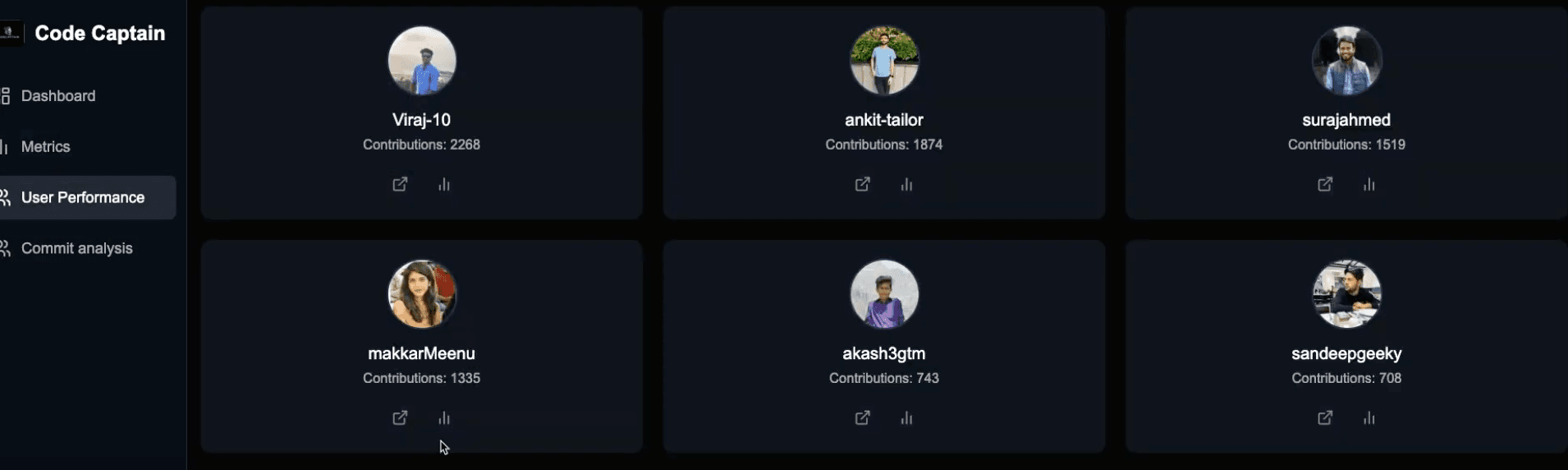
The user performance module ranks contributors based on their commit history and impact. By selecting a developer, users receive performance scores, strength analysis, areas for improvement, and a summary of contributions, offering valuable insights for individual and team growth.
Key Features
CodeCaptain offers comprehensive commit analysis, assessing code complexity, test coverage, coding standards, and review quality. To optimize AI efficiency, it processes commit comments in a streaming fashion, ensuring smooth and scalable analysis. The tool also tracks historical contributions and development patterns, helping teams monitor progress and maintain high coding standards.
Live Demonstration
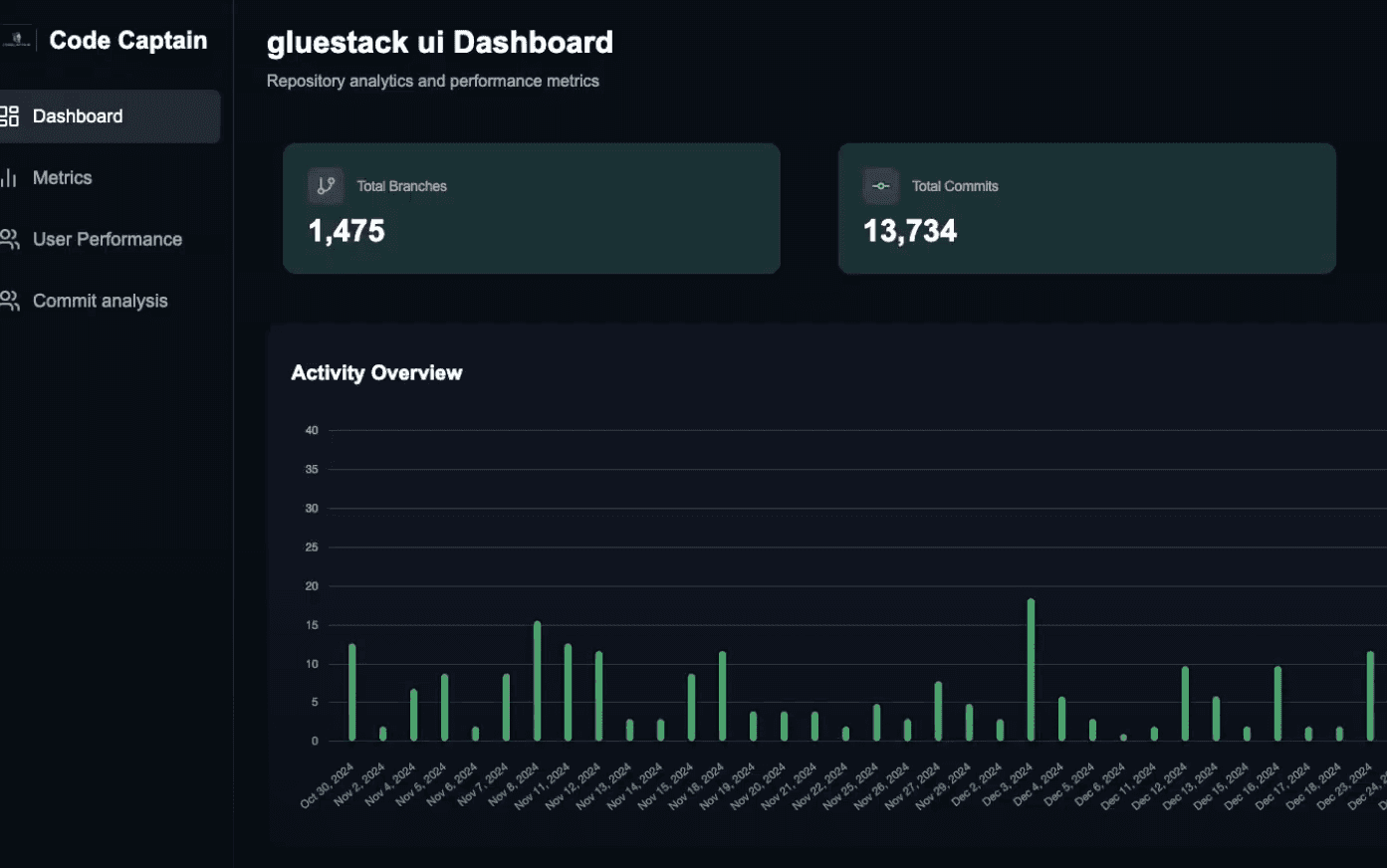
Users begin by logging into CodeCaptain's dashboard, where they can explore code health insights, contributor performance, and commit analytics. Developers can view risk assessments for pull requests, check contributor rankings, and analyze commit complexity in real-time.
For instance, selecting Viraj, the top contributor at GlueStack UI, generates a performance score and personalized feedback. Similarly, assessing Sanket Sahu, GeekyAnts’ CTO, provides insights into his contributions, strengths, and improvement areas.
Commit analysis is performed dynamically, considering multiple factors such as complexity, standards, and test coverage. The system ensures structured feedback by streaming commits in a controlled manner, preventing overload on the AI model.
Post-Hackathon Enhancements
Following Geekathon 2024, we enhanced CodeCaptain by transitioning from cloud-based AI to a local large language model (LLM), QUEN 2.5. This upgrade improved data privacy, control, and efficiency, making code analysis 2.5 to 3 times faster. By optimizing fine-tuning processes, the tool now analyzes larger codebases with greater accuracy, further strengthening its capabilities for development teams.
Why CodeCaptain Matters
Maintaining code quality and tracking developer performance is critical for any engineering team. CodeCaptain automates these processes, reducing manual effort and ensuring code consistency, better collaboration, and informed decision-making. Its AI-driven approach to risk assessment, user analysis, and commit tracking makes it a valuable tool for teams striving to improve software quality.
Final Thoughts
Building CodeCaptain during Geekathon 2024 was an incredible experience. Our goal was to create a developer-friendly tool that enhances code review, team performance tracking, and project insights. We are excited to continue refining it and expanding its features to further optimize the developer workflow.
A huge thank you to GeekyAnts for organizing this hackathon and providing us the platform to innovate.
Project GItHib link: https://git.geekyants.com/tanmayj/REST-Assured