

Key Takeaways
- What sits beneath an AI-generated prototype determines whether it can handle real users, real load, and real business demands.
- Pushing an AI-generated prototype into production without evaluation creates a cost that grows with every decision made on top of a weak foundation.
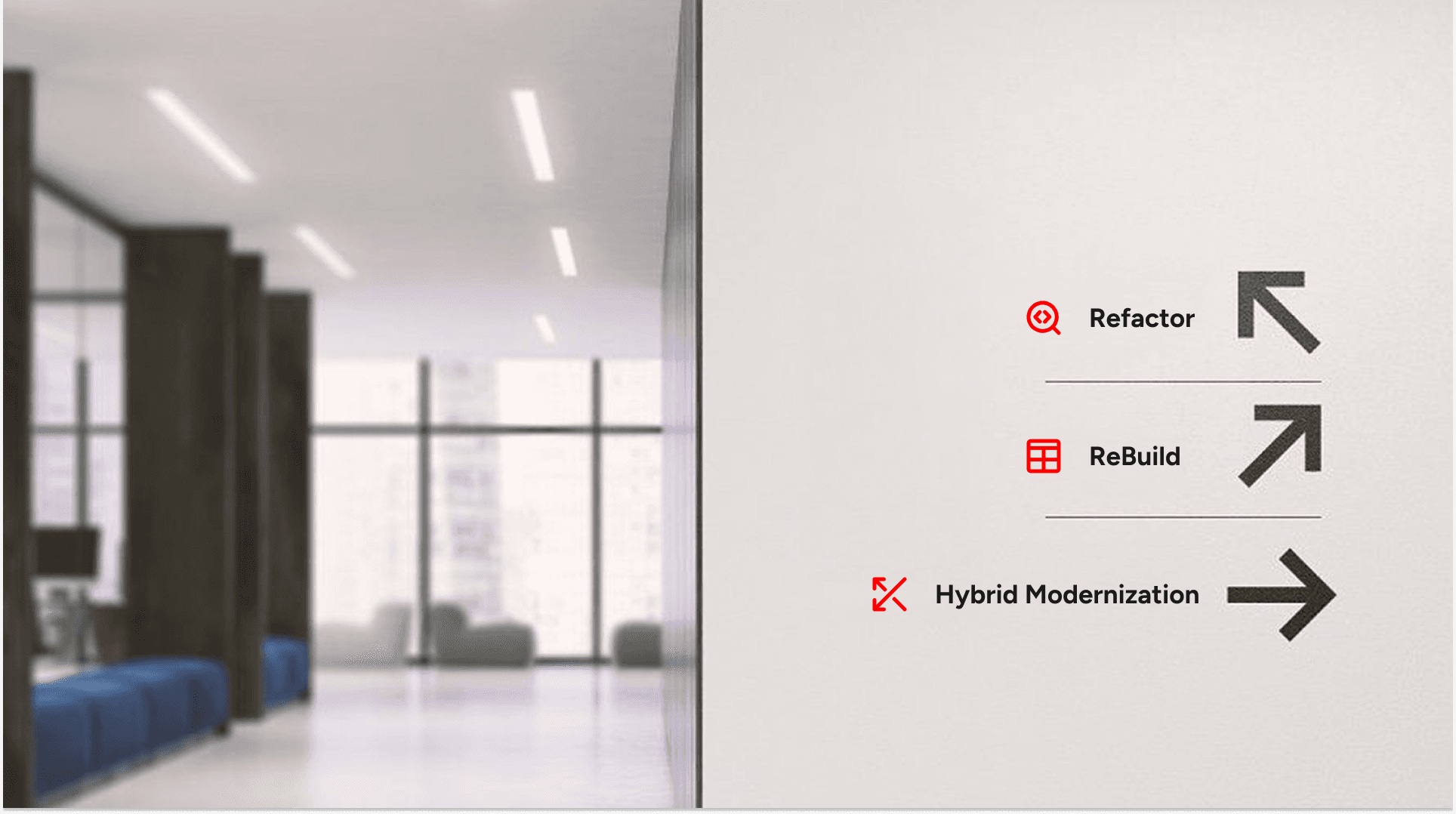
- Refactor, rebuild, and hybrid modernization are three different investment paths. Choosing the wrong one can directly affect budget, engineering velocity, enterprise readiness, and product growth.
- Leaders who assess their AI-generated prototype early and choose a clear path forward build a foundation their product, their team, and their business can grow on.
Every product leader knows the moment. The AI-generated prototype has cleared the demo. The business case has been approved. The stakeholders are aligned. And the pressure to move it into production is building by the day. That pressure is exactly where the risk begins.
Enterprise AI adoption is accelerating across every business function, from digital product development and internal operations to customer experience and workflow automation. AI-assisted development has given teams the ability to prototype faster than any previous generation of tools allowed. But production readiness has never been a function of build speed. It depends on the architecture, security model, test coverage, observability, governance, and platform maturity that sits beneath the product. And AI-generated prototypes are frequently missing all of these.
Rebuild vs Refactor: A Spec-Driven Strategy for Growth & Modernization
The numbers behind this problem are significant. Up to 80% of enterprise IT budgets are already consumed by keeping existing systems operational. Gartner research shows that poorly governed systems grow 15% more expensive to maintain each year. PwC finds that legacy technologies increase security vulnerabilities by 36%. Speed in the build phase and readiness in the production phase are not the same standard. Most organizations discover that gap only after they have already committed to scaling, and by that point, the hidden technical debt has already started shaping every decision the team makes.
This is the reality for the leaders managing AI-generated prototypes today:
- AI-generated prototypes are being used to accelerate MVPs, internal tools, and product workflows at a pace that has outrun architecture review cycles.
- Many prototypes reach business validation before the underlying structure, security model, test coverage, or scalability plan has been evaluated for production demands.
- Delaying the refactor, rebuild, or modernization decision does not hold the risk in place. It allows that risk to grow into a cost that slows roadmap execution, widens security exposure, and creates enterprise readiness gaps that become harder to close with every passing quarter.
- The organizations that move from prototype to production without derailing their roadmap are the ones that assess their foundation early and make a deliberate, informed choice about what comes next.
The question is not whether the prototype works. The question is whether the foundation beneath it is safe to build on, and if it is not, whether to refactor, rebuild, or take a hybrid modernization path. This blog provides a decision framework to answer that question.
I have seen teams spend three months trying to refactor a prototype that should have been rebuilt in week one. Nobody with decision-making authority looked at the foundation before the roadmap was built on top of it.
 Saurabh SahuChief Technology Officer (CTO)
In our experience working with AI-generated prototypes, teams without strong engineering foundations ship slower as their systems grow, not faster. That slowdown begins the moment the first feature is built on top of a structure that was never validated for production.
Why Do AI-Generated Prototypes Create a Different Rebuild vs. Refactor Problem Than Traditional Systems?
The rebuild vs. refactor conversation has existed in engineering and product organizations for decades. Traditional legacy systems accumulate debt over years of workarounds and pressure-driven shortcuts, and leadership usually has room to plan a response. AI-generated prototypes do not follow that pattern. They can become instant legacy systems on the day they are built.
Product Leaders managing AI-generated prototypes cannot rely on the same decision criteria that worked for legacy application modernization. The conditions are different, the timeline is compressed, and the risks are embedded from the start rather than accumulated over time. With a traditional system, technical debt has a history that engineers can trace and document. An AI-generated prototype has none of that. The debt it carries is distributed and invisible until the team tries to scale it.
That invisible debt surfaces across eight dimensions that determine whether a prototype is ready for production or headed toward a costly correction.
The speed of the build creates a false sense of completeness. Stakeholder confidence is in the demonstration, not in what sits beneath it.
The internal structure is inconsistent by nature. Different sections built using different conventions make every future change more expensive and more likely to introduce new problems.
Test coverage is absent from most builds. Without a validation strategy, teams have no reliable way to measure how the product behaves under pressure or when components interact unexpectedly.
Security is treated as a feature to be added rather than a structural requirement. Adding it after the fact surfaces additional structural problems throughout the product.
Ownership becomes unclear the moment the build phase ends. The people inheriting the product are walking into a structure with no map and no context.
Documentation is absent. Every engineering decision made after handover carries the added cost of reverse-engineering a product that was never explained.
Duplicated logic creates multiple points of failure that must be maintained separately, compounding the cost of every future change.
Logging, alerting, and error tracing are absent from most initial builds. Problems surface through customer complaints rather than early warnings that give teams time to respond.
Taken together, these gaps explain why AI-generated prototypes present a problem that no legacy modernization framework was built to solve. What exists is a demo that passed, a business case that cleared approval, and a product that was never designed to carry the demands of a production environment.
The Executive Decision Lens: AI-Generated Prototype Modernization
The rebuild vs. refactor decision for an AI-generated prototype is not a question that belongs to engineering teams. It is a business strategy decision with direct consequences on:
- Product roadmap and budget allocation.
- Enterprise readiness.
- Long-term platform trajectory.
Choosing the wrong path—refactoring when a rebuild is needed, or vice versa—wastes months of capacity and consumes unnecessary budget. Both outcomes are expensive, but both are preventable when leadership applies the right decision criteria.
The Four Strategic Questions
For leaders managing AI-generated prototypes, the decision starts by answering these four questions, categorized by their impact on the business:
1. Scalability & Growth
Can this prototype support the next 12 to 24 months of product growth?
If the current structure cannot handle the user volume, data scale, and feature complexity the roadmap demands, it has not been validated for production.
2. Risk & Compliance
Can the current structure pass security, scalability, and compliance reviews?
A prototype that cannot pass these reviews is not a production-grade product, regardless of how well it performed in a demonstration.
3. Financial Efficiency
Will improving what exists cost less than replacing it over the next roadmap cycle?
This considers the total cost of slower releases, higher defect rates, and engineering time consumed by maintaining a product never built for scale.
4. Strategic Alignment
Is the prototype aligned with the future platform strategy?
A product that cannot connect with existing enterprise systems, data platforms, or the infrastructure the business depends on is not worth building on.
Decision Framework: Choosing Your Path
The answer to the questions above points toward one of three investment paths:
Decision Dimension | Refactor | Rebuild | Hybrid Modernization |
|---|---|---|---|
Primary Driver | Structure is sound but needs improvement | Structure cannot support what the business needs next | Some parts work, others need replacement |
Investment profile | Lower upfront cost, faster return | Higher upfront cost, longer return timeline | Phased investment tied to module priority |
Roadmap impact | Minimal disruption, improvement runs alongside delivery | Significant disruption, requires dedicated migration planning | Moderate impact, phased delivery reduces disruption |
Time to production readiness | 6 to 18 months | 12 to 36 months | Varies based on scope and priority |
Best suited for | Prototypes with a sound structure and localized gaps | Prototypes where the structure blocks the next stage of growth | Prototypes with mixed quality across modules |
A prototype built in days may have cleared business validation. It has not cleared the security, scalability, governance, and integration requirements that production deployment and enterprise sales cycles demand. Every week without a clear path forward is a week of compounding exposure. The executive lens for AI prototype modernization adds three considerations traditional frameworks leave out: how much of the current structure was designed for the demonstration rather than a live product, what the compounding cost of building on an unvalidated structure is, and whether the prototype aligns with the digital platform strategy the business is building toward. The right path is the one that gives the business a platform built for what comes next, with a cost structure that leadership can plan around.
When Refactoring an AI-Generated Prototype Is the Right Business Decision
Refactoring is not the default response when an AI-generated prototype shows gaps. It is a deliberate business decision that applies under specific conditions. When those conditions are present, refactoring delivers improvement without the cost, disruption, and timeline that a full rebuild demands. When they are not, refactoring delays a more necessary correction.
Four Conditions That Make Refactoring the Right Path
- The current structure does not block the next stage of product growth. When the structure can support the roadmap with targeted improvements, refactoring addresses what is wrong without discarding what works.
- The business logic has been validated by real users. When a prototype has cleared user testing or proven workflow value, refactoring preserves that learning while improving the quality around it.
- The problems are contained to specific areas. When debt is localized rather than distributed across the entire product, refactoring delivers targeted improvement without the cost of full replacement.
- Security and scalability risks can be addressed without a structural overhaul. When risks are specific and limited to defined areas, they can be closed through refactoring without the investment and timeline a rebuild requires.
AI-Specific Refactoring Signals to Watch For
- Prompt-generated duplication creates multiple versions of the same logic across the product, compounding maintenance overhead with every change. Refactoring consolidates that duplication without replacing the product.
- Inconsistent code style means every engineer spends additional time interpreting conventions that change from one section to the next. Standardizing the frontend structure makes the product accessible to any engineer, not just those who built it.
- Missing tests leave the team with no reliable way to measure how the product behaves under real conditions. Improving test coverage through refactoring gives the team that confidence without requiring a rebuild.
- Weak maintainability driven by unclear boundaries and undocumented decisions means every future change carries a higher risk of introducing new problems. Hardening APIs, removing duplicated logic, replacing unstable libraries, and improving observability addresses that risk within the existing structure.
What a Refactoring Effort Covers in Practice
A refactoring effort for an AI-generated prototype covers the following in practice:
- Cleaning up AI-generated components that solve the same problem in inconsistent ways across the product
- Standardizing the frontend structure so that changes in one area do not create unpredictable results in another
- Hardening APIs that connect the product to external systems and internal data flows
- Improving test coverage across defined workflows
- Replacing unstable libraries before they create production risk
- Improving performance and observability so the product can be monitored and maintained after deployment
- Removing duplicated logic that creates multiple points of failure across the product
Refactoring an AI-generated prototype is the right decision when the structure has enough integrity to build on, the debt is contained enough to address without replacing what works, and the business needs to maintain delivery momentum while the improvement happens. When those conditions are absent, a different path is required.
When Rebuilding an AI-Generated Prototype Is the Safer Strategic Choice
Rebuilding is not a failure. For many AI-generated prototypes, it is the most strategic decision a product leader can make. When the gap between what AI tools produce and what a production-grade platform requires is too wide to close, refactoring does not solve the problem. It preserves it.
The issue is not how long the product has existed. It is whether the product was built with the structural integrity that production deployment and long-term roadmap execution demand. A prototype completed last month can require a full rebuild because the decisions made during generation were never designed to carry the weight of a real product. Leaders who do not recognize this discover it through failed enterprise reviews, blocked integrations, and a product that takes longer to change with every passing quarter.
The Product Cannot Support Production Scale
Performance, reliability, modularity, data design, and cloud infrastructure requirements of a production environment set a standard that AI-generated prototypes are not built to meet. These prototypes are designed to demonstrate capability within controlled conditions, not to handle the volume, concurrent demand, and reliability expectations of enterprise deployment. When the product itself is the ceiling on what the business can deliver, improving individual components within it does not raise that ceiling. It only delays the point at which the limitation surfaces from a planning discussion into a business problem.
Security and Access Controls Were Treated as an Addition, Not a Requirement
AI-generated prototypes reach business validation with access controls, data handling, and authentication designed around the shortest available path rather than enterprise deployment requirements. Correcting that after the fact requires re-examining decisions embedded throughout the product, surfacing additional problems that make the correction more expensive than rebuilding. When compliance teams or enterprise buyers demand a security posture the current product cannot support, rebuilding carries less long-term risk and lower total cost.
The Data Model Cannot Support Future Business Workflows
The data model inside an AI-generated prototype is built for the demonstration, not for the business workflows that will run on top of it after deployment. When correcting the data model requires dismantling the product built on top of it, rebuilding costs less across the full roadmap cycle than attempting to retrofit a structure that was never designed for production demands.
The Product Is Too Inconsistent to Maintain
Unclear boundaries, fragile dependencies, and duplicated business logic create a maintenance burden that grows with every change. Engineers spend more time interpreting the product than advancing it, and every update carries risk because the impact of modifying one area on another cannot be determined with confidence. When every new feature requires as much correction as it does development, the product is not worth preserving.
Enterprise Integrations Require a Purpose-Built Foundation
Connecting a product to CRM systems, ERP platforms, data infrastructure, identity management systems, analytics tools, cloud infrastructure, and customer-facing APIs requires a foundation built with those connections in mind. AI-generated prototypes are not structured around enterprise integration requirements. When the integration demands of the business roadmap exceed what the current product can accommodate, rebuilding provides the foundation those connections require rather than forcing every new integration to compensate for a product that was never designed to support them.
Four Conditions That Make Rebuilding the Right Decision
- Rebuild when refactoring would preserve a product that cannot support the next stage of growth regardless of the improvements made to it.
- Rebuild when every new feature requires more correction than development to reach a production-ready state.
- Rebuild when enterprise-grade security, observability, and scalability require changes that cannot be made within the current product.
- Rebuild when the prototype was built to validate a concept and the business has now committed to making it the product.
A rebuild demands planning, stakeholder alignment, and a clear migration strategy. But for AI-generated prototypes where the current product is incompatible with what the business needs to build next, rebuilding is not the costly option. Continuing to build on a product that was never designed for production is.
Hybrid Modernization for AI-Generated Prototypes: When Neither Path Alone Is Enough
Not every AI-generated prototype falls into a clean refactor or rebuild decision. Many sit in a middle space where some sections have genuine value worth preserving and others carry structural problems that targeted improvement cannot resolve. For these prototypes, hybrid modernization is not a compromise. It is the most precise path available.
Hybrid modernization treats different sections as separate decisions. What works gets kept. What can be improved gets refactored. What cannot support production gets rebuilt. What serves a commodity function gets replaced with a managed service. This approach carries less disruption than a full rebuild and delivers more structural improvement than pure refactoring.
Different sections of the same prototype can have different levels of structural integrity depending on how they were generated and with what level of oversight. A hybrid path respects that unevenness rather than applying a uniform response to a non-uniform problem. This is what makes hybrid modernization the most relevant path for AI-generated prototype rescue and productionization.
How Hybrid Modernization Works in Practice
Validated product workflows are kept intact. When specific workflows have been tested by real users and proven to deliver business value, the hybrid path preserves them rather than discarding them, maintaining continuity while the surrounding structure is addressed section by section.
Unstable modules are rebuilt rather than patched. When a section carries structural problems that refactoring cannot resolve, it is rebuilt in isolation while the rest of the product continues to operate, containing the cost and disruption to the area that requires it.
Reusable components are refactored rather than replaced. When a component serves its function but needs improvement in quality or maintainability, refactoring delivers that improvement without the cost of replacement.
Platform standards are introduced section by section rather than all at once. Hybrid modernization introduces enterprise-grade standards as each module is addressed, reducing the risk of large-scale disruption through a planned, phased sequence.
Strangler-pattern thinking guides the order of the work. The hybrid path identifies the highest-risk or highest-value modules first and addresses them in priority order, while the existing product continues to operate.
The Hybrid Modernization Decision Table
Product Element | Recommended Action |
|---|---|
Validated workflows with proven business value | Keep |
Components with sound structure but inconsistent quality | Refactor |
Modules with structural problems that block production | Rebuild |
Commodity functions that do not require custom development | Replace with a managed service |
Why Hybrid Modernization Fits AI-Generated Prototypes
AI generation does not produce uniform output. It produces sections of varying quality, consistency, and structural integrity depending on the conditions under which each section was generated. A full rebuild treats all of that output as unusable. Pure refactoring treats all of it as salvageable. Neither position reflects the reality of what most AI-generated prototypes actually contain.
Hybrid modernization gives product and engineering leaders a way to assess each section of the prototype on its own merits and apply the right response to each one. The result is a path that preserves the business value the prototype has already generated, addresses the structural problems that would block enterprise deployment, and delivers improvement in a phased sequence the business can plan around and the team can execute without stopping delivery.
The AI Prototype Readiness Scorecard: Know Your Path Before You Commit
The first thing I do when I see an AI-generated prototype is check the data model. In my experience, that one layer tells me everything I need to know about whether the team was built for the demo or built for the business. I have yet to see a prototype with a poorly designed data model that did not require a rebuild within six months of hitting production.
 Konakanchi Venkata Suresh BabuPrincipal Technical Consultant.
Choosing between refactoring, rebuilding, or hybrid modernization without an objective assessment of the current product is one of the most expensive decisions an organization can make. The wrong path chosen without evidence costs more than the modernization effort itself, in delayed roadmap execution, failed enterprise reviews, and engineering capacity spent on a product that was never ready for what the business needed it to do.
The AI Prototype Readiness Scorecard gives product and engineering leaders a structured, evidence-based way to assess where their AI-generated prototype stands across the eleven dimensions that determine production readiness. Each dimension is scored on a scale of 1 to 5, where 1 represents a critical gap and 5 represents a production-ready standard. The total score points toward the right path forward.
This scorecard is built to be completed collaboratively by engineering, product, and security stakeholders who are closest to the product. It is designed to be downloaded, used in architecture reviews, and shared with leadership as the basis for a path-forward decision.
How to Score
Evaluate each dimension using the criteria in the table. Assign a score from 1 to 4 for each. Add all eleven scores to reach a total. Use the decision guidance below the scorecard to identify the recommended path for your AI-generated prototype.
Dimension | What to Evaluate | 1 | 2 | 3 | 4 |
|---|---|---|---|---|---|
Architecture Quality | Does the current structure support the product roadmap without a structural overhaul? | No discernible structure | Major structural gaps | Partially sound with significant gaps | Sound with minor gaps |
Code Quality | Is the product consistent, readable, and free of duplicated logic across sections? | Highly inconsistent throughout | Inconsistent in most areas | Mixed quality across sections | Mostly consistent with minor issues |
Security | Were security requirements embedded from the start or added after the build? | No security controls in place | Minimal controls with major gaps | Basic controls with significant gaps | Adequate controls with minor gaps |
Scalability | Can the product handle the user volume, data scale, and concurrent demand the roadmap requires? | Cannot scale beyond demo conditions | Significant scaling limitations | Moderate scaling capacity with gaps | Scales with minor limitations |
Data Model | Was the data model designed for future business workflows or for the demonstration? | Built for demo only | Major gaps in data design | Partially supports future workflows | Supports most workflows with minor gaps |
Integration Readiness | Can the product connect to CRM systems, ERP platforms, data infrastructure, and customer-facing APIs without structural changes? | No integration capability | Major integration barriers | Limited integration with significant work required | Integrates with minor adjustments |
Testing | Does the product have defined test coverage across core workflows? | No tests in place | Minimal tests covering few workflows | Partial coverage with significant gaps | Good coverage with minor gaps |
Observability | Can the team monitor performance, trace errors, and respond to issues in a live | No monitoring in place | Minimal monitoring with major gaps | Basic monitoring with significant | Adequate monitoring with minor gaps |
Documentation | Is there a clear record of structural decisions, component boundaries, and workflow logic? | No documentation exists | Minimal documentation with major gaps | Partial documentation with significant gaps | Adequate documentation with minor gaps |
Team Maintainability | Can any qualified engineer work within the product without depending on the original build team? | Dependent on original team | High dependency with major knowledge gaps | Moderate dependency with some knowledge transfer | Low dependency with minor knowledge gaps |
Product Roadmap Alignment | Does the current product structure support the features and integrations planned for the next 12 to 24 months? | No alignment with roadmap | Significant misalignment | Partial alignment with major gaps | Mostly aligned with minor gaps |
Total Score | Recommended Path | What It Means |
|---|---|---|
40 and above | Refactor | The product has a sound enough structure to improve through targeted work. Focus remediation efforts on the dimensions with the lowest scores. |
25 to 39 | Hybrid Modernization | Some sections of the product are worth preserving. Others require rebuilding. Use the individual dimension scores to identify which modules fall into each category. |
Below 25 | Rebuild Assessment Needed | The product carries gaps across too many dimensions for targeted improvement to close. A rebuild assessment will determine the right scope and sequence. |
Decision Guidance
Reading Your Score
The total score points toward a path. The individual dimension scores identify where to focus first.
A total score of 35 with critical gaps in Security and Scalability calls for a different response than a total score of 35 distributed across Documentation and Code Quality. Gaps in Security, Scalability, and Architecture Quality carry higher business consequences and should be weighted accordingly in the final path decision.
Leaders who use this scorecard in an architecture review, shared across engineering, product, and executive stakeholders, leave with a documented basis for their modernization decision rather than a preference. That documentation matters when the decision requires board-level approval, stakeholder alignment, or external investment.
Technical Debt Signals in AI-Generated Prototypes: What to Look for Before You Scale
Technical debt in AI-generated prototypes does not accumulate over years of deferred decisions. It is generated alongside the product itself, prioritizing working demonstrations over structural soundness. The signals are not symptoms of neglect. They are symptoms of generation, and recognizing them before a scaling decision is made is what separates a productive modernization effort from a costly correction made under pressure.
Six signals indicate the presence of technical debt in an AI-generated prototype.
1. Repeated Business Logic Across the Product
AI generation solves problems in the context of each prompt rather than the product as a whole. The result is the same business problem solved in multiple ways across the product. When the business rule changes, every version must be located and updated independently, raising the cost of every future change.
2. Inconsistent Patterns Across the Product Structure
A product built through AI generation without a defined structural plan will have mismatched component structures, inconsistent API patterns, and varying naming conventions. Every engineer working within it must relearn the conventions of each section rather than applying a consistent understanding across the whole. The business cost is slower development, higher defect rates, and a product that becomes harder to work within as it grows.
3. Missing Test Coverage With No Validation Baseline
AI generation produces code, not confidence. Without a deliberate test strategy, the product enters production with no reliable way to measure how it behaves under real conditions or when changes in one area affect behavior in another.
4. Poor Documentation and Unclear Ownership
When the build phase ends, what remains is a product with no record of why structural decisions were made or how components are intended to interact. Onboarding a new engineer means reverse-engineering decisions that were never recorded, creating slower onboarding, higher knowledge risk, and institutional gaps with every personnel change.
5. Security and Dependency Risks Built Into the Product
AI generation takes the path of least resistance, producing products with outdated libraries, weak input validation, and missing access controls. For organizations pursuing enterprise sales cycles or regulated industry deployments, these gaps are not manageable risks. They are blockers.
6. Observability Gaps That Make the Product Unmanageable in Production
AI-generated prototypes reach production without logs, metrics, traces, or alerting in place. Problems surface through customer complaints rather than early warnings, creating a business risk that grows with every user added.
Identifying these six signals before a scaling decision gives leadership the information needed to choose the right path forward. Ignoring them transfers the cost into every feature, every integration, and every enterprise conversation that follows.
The rebuild vs. refactor decision is a financial decision. The initial build cost is the smallest number in the equation. The cost of productionizing an AI-generated prototype, through refactoring, rebuilding, or doing nothing, is where the real financial exposure sits.
Understanding that exposure requires evaluating five cost categories that together determine the true ROI of each path forward.
The Cost of Refactoring an AI-Generated Prototype
Refactoring requires engineering effort directed at cleanup, testing, performance improvement, documentation, and security hardening. This investment is phased, predictable, and can run alongside feature delivery without halting the roadmap. The risk is underestimating the scope, as problems in one area are often connected to decisions made in another.
The Cost of Rebuilding an AI-Generated Prototype
Rebuilding requires investment in new structural design, data migration, quality assurance, and roadmap adjustment.
The Cost of Doing Nothing
Deferring the decision is the compounding cost of slower releases, higher defect rates, growing security exposure, and rising infrastructure costs. Organizations that defer this decision do not avoid the cost. They pay it in a form that is harder to measure and harder to recover from.
The Cost of Delayed Enterprise Readiness
For organizations pursuing enterprise customers, the cost of a prototype that cannot pass security reviews or compliance assessments is measured in lost deals and stalled sales cycles. Every quarter spent deferring the productionization decision is a quarter of enterprise revenue the business cannot access.
The Opportunity Cost
Engineering teams maintaining a fragile prototype are not building the features and platform capabilities that differentiate the product. This opportunity cost compounds across every sprint and every roadmap cycle where the team is managing the product rather than advancing it.
ROI Comparison Table
The Real Cost of Rebuilding vs. Refactoring an AI-Generated Prototype: A Business and ROI Framework
Cost Area | Refactor Impact | Rebuild Impact | Hidden Risk |
|---|---|---|---|
Engineering Velocity | Moderate improvement as cleanup reduces maintenance burden | High improvement after rebuild is complete | Slow roadmap during transition if scope is underestimated |
Scalability | Limited by current structure if foundation has major gaps | Stronger long-term scalability built into new structure | User growth bottlenecks if scaling decision is deferred |
Security | Closes known gaps within current structure | Establishes a new security foundation from the start | Enterprise sales risk if gaps remain unaddressed |
Maintainability | Improves current product for the existing team | Resets the structural foundation for long-term maintainability | Team productivity loss during transition period |
Opportunity Cost | Lower, improvement runs alongside delivery | Higher during rebuild, lower after completion | Competitive disadvantage if decision is deferred |
The ROI Formula
ROI = ((Total Benefits - Total Costs) / Total Costs) x 100
Break-Even Point = Total Investment / Annual Net Benefits
Refactoring typically reaches break-even within 12 to 18 months when the scope is well-defined. A rebuild typically reaches break-even within 24 to 36 months but produces a platform with long-term advantages that a refactored version cannot match. The right financial decision is the one whose total cost across the full roadmap cycle produces the stronger return for the business.
Every quarter we talk to founders and product leaders who lost an enterprise deal because their prototype could not pass a security review or failed during a compliance assessment, and in every case, the product worked in the demo but was never built to the standard enterprise buyers hold vendors to. That gap between a working prototype and an enterprise-ready platform is where revenue is won or lost.
 Kunal KumarChief Revenue Officer
Most enterprise deals do not fail because the product lacks features. They fail because the prototype behind it was never built to the standard enterprise buyers hold vendors to. Security reviews, compliance assessments, and integration requirements surface gaps that no demo can hide, and by the time they do, the sales cycle has already moved against you.
Team, Governance, and Platform Readiness: The Decision Factors Most Leaders Overlook
The rebuild vs. refactor conversation almost always begins and ends with the product. What rarely enters that conversation is whether the team and platform surrounding the product are ready to support it, regardless of which path is chosen.
Google's DORA research confirms that AI amplifies existing team and platform conditions rather than correcting them. McKinsey's research on AI high performers adds that the organizations extracting the most value from AI have redesigned workflows and placed senior leadership ownership behind every AI initiative from the start.
Five dimensions of operating model maturity determine whether the team and platform are ready to support an AI-generated prototype through modernization and into production.
Ownership Model
Without a defined ownership model, every system modernization decision carries ambiguity that slows progress and increases the risk of gaps being missed.
Engineering Standards
Code review, testing, release management, and documentation standards must be defined before modernization begins, not after.
Security and Governance
Security, compliance, and data privacy must shape the modernization plan from the start. Organizations that treat governance as a final step consistently find it becomes the most expensive one.
Platform Readiness
Platform readiness must be assessed before the modernization path is chosen, not after the work is complete.
Support Readiness
The team responsible for managing the product after deployment must be able to identify and resolve issues without depending on whoever generated the prototype.
A structurally sound product delivered by a team without ownership clarity, engineering standards, or platform alignment will not perform in production differently than the prototype it replaced.
Why GeekyAnts Is the Right Partner for AI Prototype Modernization
When a founder comes to us with an AI-generated prototype, the first question we ask is not what they built but what they need it to do in the next 12 months. That question changes everything. It shifts the conversation from the demo to the business, and nine times out of ten, that is when the real gap between what exists and what is needed becomes visible for the first time.
Kunal KumarChief Revenue OfficerGeekyAnts has worked with over 550 organizations across more than two decades, and the pattern is consistent: the organizations that move from prototype to production without major setbacks are the ones that assess their foundation before committing to a scaling decision, not after the first enterprise review forces their hand.
Most organizations that reach the prototype-to-production decision already know what the problem is. What they need is a partner who can assess what exists, identify what the path forward requires, and execute that path without disrupting the roadmap.
GeekyAnts has worked with over 550 organizations across more than two decades to bridge that gap. The work begins with an honest assessment of architecture quality, security posture, infrastructure gaps, and roadmap alignment, producing a prioritized plan that tells leadership what is solid, what carries risk, and what needs to change.
From that starting point, GeekyAnts works across six areas: AI architecture assessment, production-grade AI workflows, prototype-to-platform modernization, technical debt evaluation, scalability and maintainability review, and AI pods for organizations that need dedicated engineering capacity without the overhead of internal hiring.
The goal is the same across all of it: helping organizations move from AI ambition to shipped outcomes, with the evaluation, guardrails, and governance that turn a working prototype into a platform the business can rely on.
Conclusion
The decision to refactor, rebuild, or modernize an AI-generated prototype is a business decision with consequences that extend across the product roadmap, the engineering budget, and the organization's ability to compete in the markets it is building toward.
AI-generated prototypes have changed how fast teams can move from idea to validation. What they have not changed is the standard a product must meet before it can carry real business demand. That standard requires deliberate evaluation, a clear path forward, and the right partner to execute it.
The framework in this blog gives leaders the criteria to make that decision with evidence rather than assumption. The next step is applying it.
Sources & Citation:
- https://www.mckinsey.com/capabilities/quantumblack/our-insights/the-state-of-ai
- https://cloud.google.com/resources/content/2025-dora-ai-assisted-software-development-report
- https://dora.dev/research/2024/dora-report/
- https://www.pwc.com/gx/en/news-room/press-releases/2024/pwc-2025-global-digital-trust-insights.html
- https://www.gartner.com/en/infrastructure-and-it-operations-leaders/topics/technical-debt