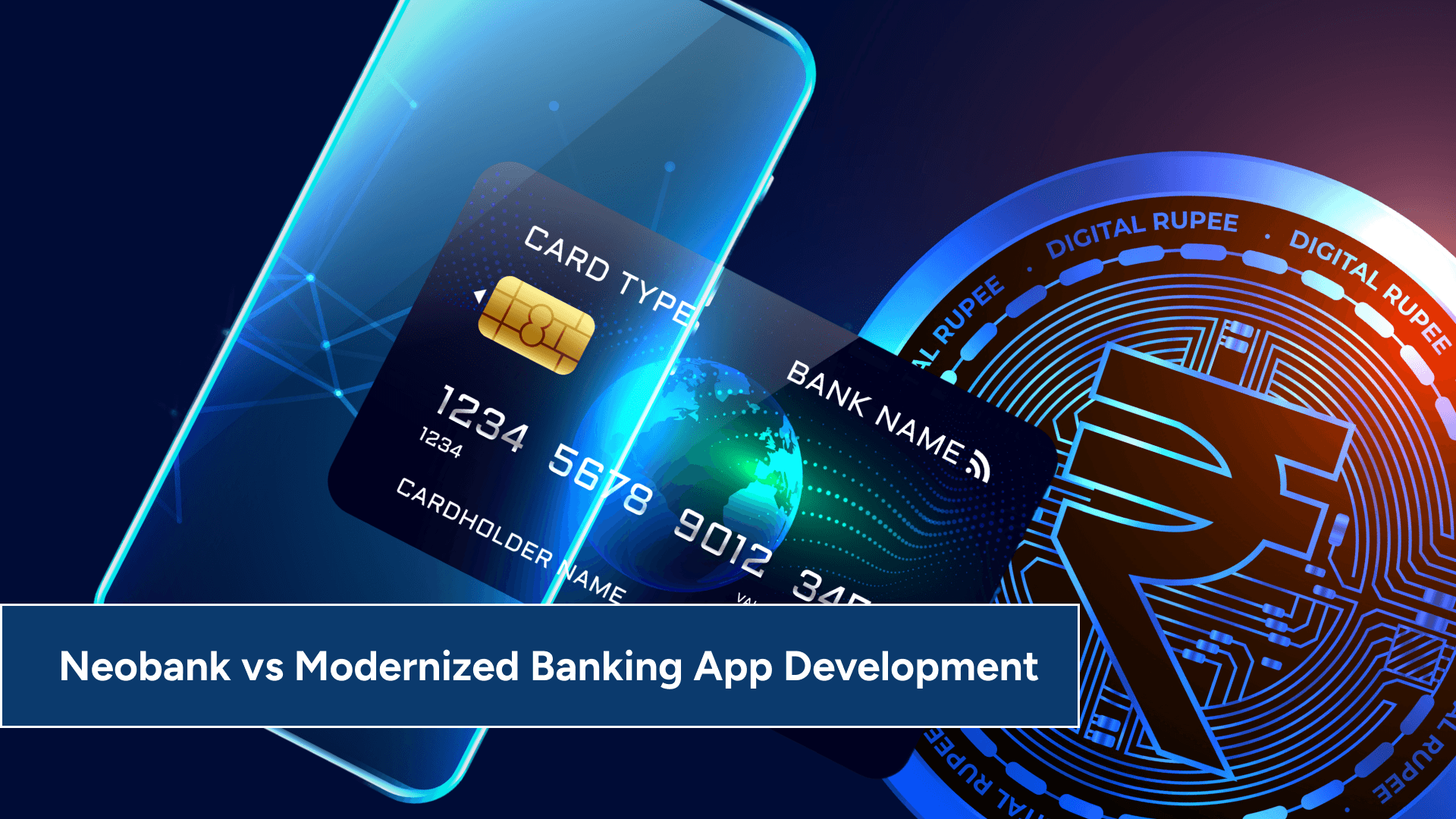


- The infrastructure gap between neobanks and modernized banking apps determines how fast AI features reach production and what they cost to build and maintain.
- AI ROI in U.S. banking is decided by data infrastructure quality, compliance alignment, and deployment architecture, regardless of which model the institution builds on.
- FFIEC guidelines, PCI-DSS, SOC 2, and fair lending laws create specific, non-negotiable obligations around how AI models are trained, monitored, and documented before deployment.
- The U.S. neobanking market is growing at a rate that penalizes delayed infrastructure decisions, and the cost of inaction compounds with each year.
How Is AI Reshaping the Economics of U.S. Banking in 2026?
U.S. banks are under pressure to deploy AI at scale, and the infrastructure decisions they make now will determine how much of that investment pays off. Grand View Research valued the global neobanking market at $66.82 billion in 2022, with a compound annual growth rate of 54.8% projected through 2030. The U.S. market alone sat at $11.2 billion in 2021 and is on pace to cross $100 billion before this decade closes.
Gartner projected that 30% of banks with assets exceeding $1 billion would roll out Banking-as-a-Service offerings by the end of 2024 to open up new revenue streams. That projection has played out, and the pressure on bank executives and founders has only grown since, with most weighing whether to build an AI-first neobank from the ground up or modernize an existing banking application.
Traditional banks built their infrastructure with one goal in mind: keeping operations stable. The data systems, compliance workflows, and customer-facing tools that came out of that era were never meant to handle real-time AI models. Bringing them up to speed means putting money into data restructuring, compliance realignment, and foundational rebuilding, all of which push back timelines and cut into return on investment.
AI is also changing the economics of customer acquisition and retention. Predictive models now determine which customers are likely to churn, which products fit their financial profile, and where fraud risk is highest. Banks that cannot deploy these models at scale are operating with a structural disadvantage.
This blog examines both paths across infrastructure readiness, ROI potential, compliance exposure, and development cost, giving decision-makers at U.S. banking institutions a clear framework for evaluating which model fits their growth goals.
How Do Neobanks and Modernized Banking Apps Differ in AI Readiness?
The architectural differences between neobanks and modernized banking apps shape every decision that follows, from infrastructure costs to how fast AI features reach customers. Before getting into ROI or infrastructure readiness, it helps to understand what each model actually is.
Neobanks
Neobanks are financial service providers with no physical branches. They deliver banking services through mobile apps and web platforms, and they do not hold a banking license. To offer regulated services to their customers, they work under partnership agreements with FDIC-insured institutions. This structure gives them the freedom to build on modern infrastructure from day one, without the accumulated constraints of decades-old operational frameworks.
Their business models span both B2C and B2B. Chime, Varo, and Dave have grown their customer bases by offering fee-free banking, early direct deposit, and AI-driven financial tools. On the B2B side, neobanks run as Banking-as-a-Service providers, giving other businesses the ability to embed financial products within their own platforms.
Modernized Banking Apps
Modernized banking apps are the digital arms of traditional, licensed banks. Ally Bank, Capital One, and Wells Fargo have each put significant investment into rebuilding what customers see and interact with, while keeping their existing regulatory standing and core banking infrastructure in place. They operate under full banking licenses, which provide a higher baseline of customer trust.
The core challenge for these institutions is that data systems and operational processes built decades ago place a ceiling on what their AI programs can deliver. That gap between ambition and execution is where the ROI conversation becomes consequential.
When you look at the banking sector over the last two or three years, the division between institutions is stark. The teams leading the market made heavy infrastructure commitments back when their peers preached caution. AI accelerated customer expectations at a pace that caught conservative players off guard. From a revenue and growth perspective, that technical gap is not theoretical because we see it translate into lopsided acquisition numbers, slipping retention, and stagnant product revenue with every single launch cycle.
 Kunal KumarChief Revenue Officer
What are the Key Differences Between Neobanks and Modernized Banking Apps Development?
A neobank gives you a cleaner starting point. The architecture, integrations, and operating model can all be shaped together from the beginning. A modernized banking app has to sit on top of older core systems, batch processes, risk rules, and customer records that were never built for the pace of digital change. The mistake most institutions make is assuming the new application alone will resolve that. You can rebuild the customer interface, but if the payments layer, fraud checks, and customer data are still fragmented underneath, every product decision becomes slower and more expensive than it should be. The real work is in the backend, and that is what most institutions underestimate going in.
 Jani Hardik SanjayProduct Owner I
Ownership and Licensing
The most fundamental difference between the two models lies at the regulatory level. Neobanks do not hold a banking license. They partner with FDIC-insured institutions to deliver licensed services to their customers, which keeps their compliance overhead low but introduces a dependency on their partner bank's regulatory standing. Chime, for example, operates through partnership agreements with The Bancorp Bank and Stride Bank.
Modernized banking apps operate under the full banking license of their parent institution. They carry the full weight of federal and state regulatory requirements, but they own their compliance infrastructure outright and answer to no third-party partner for it.
Technology Stack
Neobanks run on modern, cloud-based infrastructure built to handle speed and scale. Their systems move through product updates, third-party integrations, and high transaction volumes without the drag that comes with older architecture.
Modernized banking apps are working with a different set of constraints. Their core systems were built to be reliable, not flexible, and adding new technology on top of them takes considerable integration work. How fast these institutions can ship new capabilities depends directly on how much of that underlying infrastructure has been updated.
AI Infrastructure Readiness
For executives weighing long-term ROI, this is where the difference between the two models hits hardest. Neobanks run on API-first architecture, cloud-native environments, and event-driven systems. Their storage infrastructure covers vector databases and AI orchestration layers, which means multiple AI tools can run across the platform at the same time. Chime handled more than 50 million member service interactions with AI assisting in the majority of cases, because its infrastructure was built to support AI deployment from the start.
Modernized banks that have not updated their core systems lack the data pipelines and processing capacity that AI tools require. Building AI features on top of outdated systems delivers weak results and pushes rebuilding costs higher with each year that passes.
Data Accessibility and AI Training Potential
A neobank's AI model is built on data that has been captured and structured from day one. Every customer interaction feeds into a unified profile, giving the model a clean, consistent foundation that drives accurate credit decisions, customer behavioral analytics, and financial intelligence that reflects current activity.
For modernized banking apps, data consolidation is the AI project. The tools and models are secondary decisions that cannot deliver meaningful results until the underlying data has been restructured. Institutions that recognize this early avoid the cost of deploying AI features that underperform and need to be rebuilt once the data work catches up.
AI-Powered Customer Experience
Neobanks have the infrastructure to deliver banking experiences that anticipate customer needs, from onboarding flows that reduce drop-off to retention systems that act on behavioral signals before a customer disengages.
Modernized banking apps that have completed their data infrastructure work are positioned to deploy the same capabilities. Those that have not will find that AI tools produce inconsistent results, which affects customer experience and, over time, retention rates.
Operational Automation and Efficiency
AI-driven fraud detection, automated compliance workflows, underwriting automation, and intelligent risk scoring deliver their strongest returns when the infrastructure processing the data behind them was built with real-time decision-making in mind. Institutions that have that foundation in place are using these tools to drive down fraud losses, cut compliance overhead, and reduce underwriting timelines in ways that show up directly in their cost structures.
Which Banking Model Generates Better Long-Term AI ROI?
For bank executives, the ROI question is not simply about which model costs less to build, but also which model pulls more value from AI over a three to five-year period. That depends on the revenue AI makes possible and the operational costs AI brings down.
AI Revenue Opportunities
Neobanks can move faster on embedded finance because their infrastructure handles third-party integrations without requiring a rebuild. AI-driven wealth management tools, lending decisions, and personalized insurance partnerships can be layered directly into the customer experience. Subscription banking models, where customers pay a monthly fee for premium AI-powered financial guidance, are also within reach because the underlying data and delivery systems are in place.
Modernized banking apps hold an advantage in the scale and depth of their existing customer relationships. Institutions like Capital One and Ally Bank have years of transaction history that, once properly structured, can support highly accurate AI-driven wealth management and lending products. Their challenge is that monetizing that data requires infrastructure investment before the revenue opportunity becomes accessible.
AI Cost Reduction Areas
Both models stand to reduce costs through AI, but the baseline and timeline differ. Neobanks enter with lower operational costs and no branch infrastructure to maintain. AI-powered support operations, fraud prevention systems, and underwriting automation compound those savings from an already lean cost base.
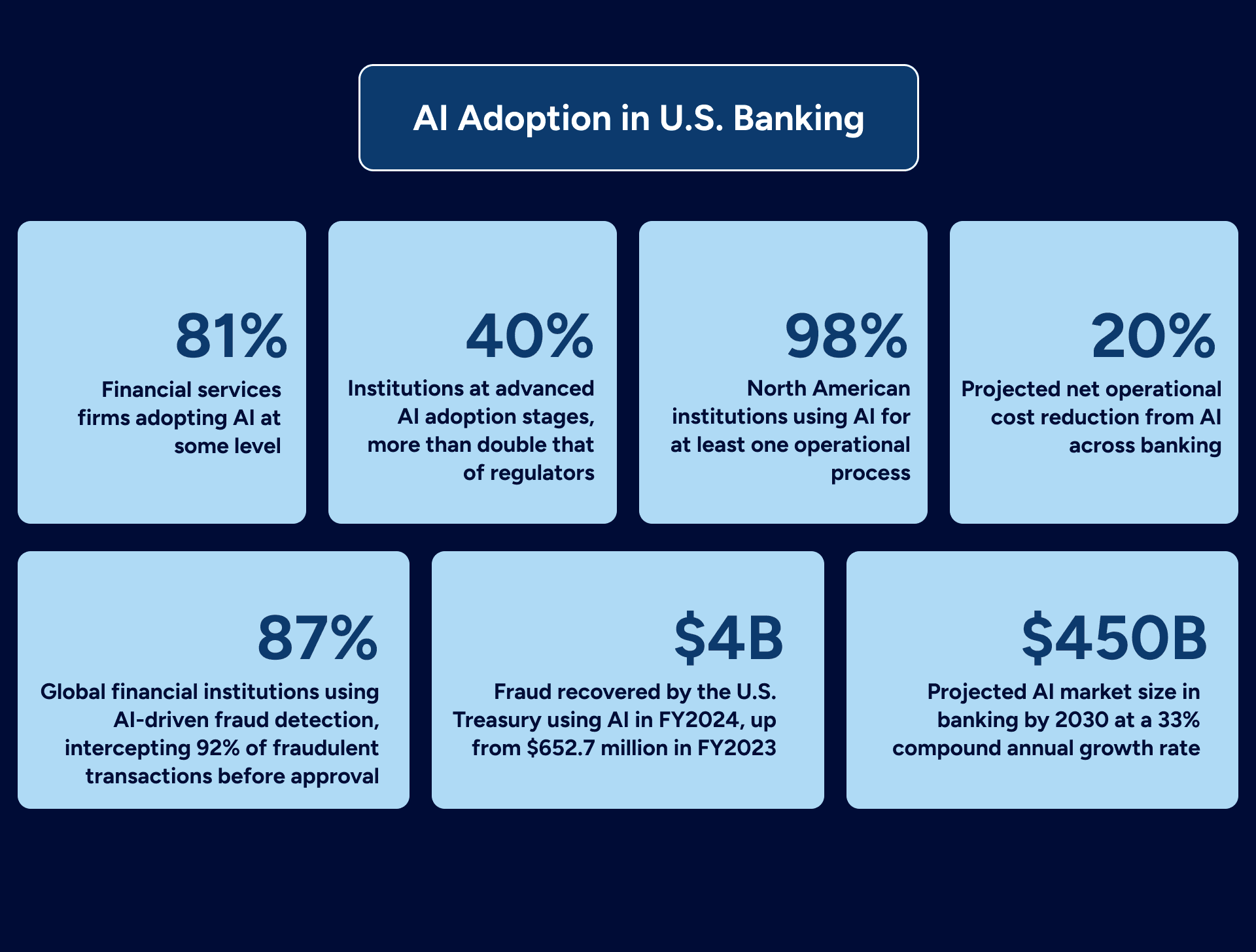
Modernized banking apps carry higher operational costs, but the ROI from AI cost reduction can be substantial precisely because of that higher baseline. Automating compliance workflows, reducing branch dependency through digital service migration, and deploying AI in underwriting can produce significant savings at scale. McKinsey estimates that AI-driven automation in banking could reduce operational costs by up to 20% across front and back-office functions.
ROI Comparison Table
Metric | Neobank | Modernized Banking App |
|---|---|---|
AI deployment speed | Fast – infrastructure built for AI integration | Slower – depends on the degree of modernization |
AI infrastructure cost | Lower – cloud-native from inception | Higher – requires retrofit investment |
Customer data maturity | High from launch – unified, structured data | Variable – depends on data normalization progress |
Personalization capability | High – real-time behavioral data available immediately | Moderate to high – improves as data infrastructure matures |
Fraud detection efficiency | High – real-time processing built in | Moderate – improves with system modernization |
AI operational savings | Compounds from a lower cost base | High absolute savings due to a larger cost base |
AI governance readiness | Moderate – newer institutions building frameworks | Higher – established compliance and audit structures |
Long-term scalability | High–cloud infrastructure scales with demand | High – once core systems are modernized |
How Do You Build for AI in Neobank and Modernized Banking App Development?
Neobank Development
For institutions building a neobank from the ground up, the process moves through market research and opportunity identification, compliance planning and banking partner selection, UI/UX design, core banking integration, backend development, testing, and launch. At each of these stages, there are AI-specific decisions that determine whether the product can scale or stalls at a basic feature set.
AI-first architecture planning:
The decisions made at the start of development around data storage, service communication, and third-party integration determine whether AI features can be added as the product grows or require a full rebuild to accommodate. Getting this right at the design phase eliminates the most expensive category of post-launch engineering work.
Cloud-native AI stack:
The underlying cloud infrastructure needs to be selected with AI workloads in mind. Processing capacity, storage architecture, and the systems that move code from development to production all affect how AI models perform under real transaction volumes.
Real-time analytics pipelines:
Neobanks generate behavioral data across every customer interaction. Building the systems to capture, process, and act on that data in real time is a development requirement that needs to be scoped before the build begins.
ML operations readiness:
The systems that manage AI model deployment, monitoring, and retraining need to be part of the initial build. Institutions that treat this as a later-stage addition face the cost of rebuilding core data workflows when their models begin to drift or underperform in production.
AI experimentation infrastructure:
Before a neobank can scale AI features, it needs the ability to test them in controlled environments against real customer data. Building this capability into the product from the start reduces the time between concept and live deployment.
Challenges:
Securing a banking partner for FDIC coverage, acquiring customers in a market with established competitors, and building trust with users who have no prior relationship with the institution.
Estimated development cost:
$40,000 to $250,000, depending on feature scope, chosen technology stack, and the geographic location of the development partner. A neobank build carries higher upfront costs because the product, technology, compliance setup, operations, and partner agreements are all being built from the ground up. The final number depends on how much of the banking infrastructure already exists and how much needs to be built from scratch.
Modernized Banking App Development
For institutions modernizing an existing platform, the process begins with a legacy system assessment, followed by a digital transformation strategy, UI/UX redesign, API integrations, testing, and deployment. The AI-specific considerations at each stage center on what the existing infrastructure can support and where the gaps create the highest risk to deployment timelines.
Legacy AI integration challenges:
Older core banking systems were built for stability rather than AI compatibility. Identifying which systems need to be replaced, bridged, or restructured before AI deployment is the first and most consequential technical decision in any modernization project.
Data modernization:
Fragmented customer data stored across disconnected systems needs to be consolidated and restructured before it can support AI model training. The quality of this work directly determines the accuracy of every AI-driven output the platform produces.
API enablement:
Modernized banking apps need to expose core banking functions through structured interfaces that AI tools and third-party services can connect to. The presence of this layer is what allows AI features to draw on live banking data and deliver results that are relevant to the customer's actual financial activity.
AI middleware layers:
In cases where the integration complexity between AI tools and legacy infrastructure is high, middleware layers can bridge the two without a full system replacement. The design of these layers affects both the performance of AI features and the long-term maintainability of the platform.
Core banking modernization:
Where the underlying core banking system lacks the data processing or integration capacity that AI deployment requires, phased or full core replacement becomes a prerequisite. This is the highest-cost and highest-risk element of any modernization program.
Challenges:
Maintaining live banking services throughout the modernization process, managing the organizational change required to shift teams from legacy workflows to new systems, and ensuring security compliance does not lapse during transition.
Estimated development cost:
Costs vary based on the scope of legacy system replacement, the number of third-party integrations, and the degree of AI infrastructure build required. A modernized banking app can look more affordable at the planning stage, but integration complexity, security requirements, and rollout scope push costs higher once the work is underway. Institutions that invest in thorough design and integration planning at the start reduce the risk of expensive rework in later stages.
What Does AI Risk and Compliance Look Like for U.S. Banking Institutions
AI Governance and Model Explainability
U.S. banking regulators, including the OCC, FDIC, and Federal Reserve, have issued joint guidance requiring financial institutions to maintain oversight and control over AI models used in credit decisions, fraud detection, and customer-facing operations. This means that every AI model deployed in a banking context needs a documented owner, a defined scope, and a clear record of how it was trained and what data it uses.
Explainability is a specific regulatory requirement in lending. Under the Equal Credit Opportunity Act, institutions must be able to provide applicants with specific reasons when a credit application is declined. AI models that produce outputs without traceable reasoning create direct regulatory exposure that affects both the institution and the customers it serves.
When banks deploy AI in credit or fraud decisions, the governance question is not whether the model works. It is whether the bank can trust, explain, and control it in a regulated environment. For credit decisions, the bank needs to know what data drove the outcome and how to explain it to a regulator, auditor, or customer who challenges it. For fraud, speed matters, but an overly aggressive model generates false positives that affect genuine customers at scale. A sound setup includes defined thresholds, escalation paths, manual review processes, independent model validation, and a clear audit trail. Regardless of how the model performs, the bank retains full accountability for every decision it produces.
AI Regulatory Readiness in U.S. Banking
Both neobanks and modernized banking apps operate within the same federal regulatory environment, but their readiness levels differ.
Licensing:
Neobanks operating under partner bank arrangements are subject to the compliance obligations of their FDIC-insured partner, which means their AI tools must meet the partner's internal risk standards in addition to federal requirements. Institutions with a full banking charter carry that compliance burden directly.
PCI-DSS:
Any AI tool that processes, stores, or transmits payment card data must meet Payment Card Industry Data Security Standards. This applies to fraud detection models, transaction monitoring systems, and any AI feature that touches payment data.
SOC 2:
AI platforms and third-party vendors used in banking operations must demonstrate SOC 2 compliance, confirming that their systems meet standards for security, availability, and data confidentiality.
FFIEC guidelines:
The Federal Financial Institutions Examination Council requires institutions to validate, monitor, and document AI models used in risk-related decisions, with clear records of model performance and any corrective actions taken.
The frameworks that surface most in U.S. banking projects go beyond the core security standards. GLBA governs customer data protection, BSA/AML covers identity verification, transaction monitoring, and suspicious activity handling, and ECOA, with Regulation B, becomes critical when AI is involved in credit approvals and fairness determinations. For platforms handling secure financial data sharing, FDX has grown in relevance. ADA also comes into scope for institutions building accessible digital experiences, and it is a compliance area that AI product teams tend to underestimate until it creates a problem.
Jani Hardik SanjayProduct Owner IData Privacy Challenges for AI Banking
AI models in banking depend on customer data, and the legal obligations around that data have expanded as state-level privacy legislation has moved faster than federal standards.
Data ownership:
Under the California Consumer Privacy Act and similar state-level laws, customers have the right to know how their financial data is used and to request its deletion. AI models trained on customer data need to be built within documented permission structures that account for these rights.
Data residency:
Federal and state regulations may require that customer financial data be stored and processed within U.S. borders. AI platforms that route data through international infrastructure create exposure under both federal banking regulations and applicable state privacy laws.
Third-party AI vendor risk:
When banks deploy AI tools built by external vendors, the data sharing agreements governing those tools need to be reviewed for compliance with Gramm-Leach-Bliley Act requirements around the protection of customer financial information.
Responsible AI:
The Consumer Financial Protection Bureau published guidance in 2023 warning institutions that AI tools affecting credit access must be able to produce specific, accurate reasons for adverse decisions. Institutions without documented bias detection and correction processes face enforcement risk under existing fair lending laws.
The banks that handle data privacy well treat it as an operational discipline rather than a documentation exercise. They maintain clear visibility into what data they hold, who can access it, where it moves, and how it is protected at every stage. That visibility is what allows them to stay ahead of both federal and state privacy requirements as the regulatory landscape continues to shift.
Jani Hardik SanjayProduct Owner IWhen Should a Bank Build an AI-First Neobank or Modernize Existing Infrastructure?
The right path depends on a set of organizational and market conditions that vary by institution. The following criteria offer a practical framework for that decision.
Build a neobank when:
- The institution has the budget to absorb the costs of regulatory partnership, customer acquisition, and infrastructure build without an existing revenue base to draw from.
- The target customer demographic is younger and digital-first, with no prior relationship with the institution.
- Speed to market is a priority, and the institution has no existing systems that need to be accounted for in the build.
- The innovation goal is to launch a new financial product or enter a market segment where the existing brand carries no advantage.
- Regulatory flexibility is available, and the institution can operate under a partner bank license rather than pursuing a full banking charter.
Modernize existing infrastructure when:
- The institution holds an existing banking license and an established customer base that represents a retention and revenue growth opportunity.
- Legacy system maturity is high enough that modernization is an incremental process rather than a full rebuild.
- AI readiness assessments show that data infrastructure can be restructured without replacing core banking systems.
- The innovation goal is to improve margins, reduce operational costs, and deepen existing customer relationships.
- Regulatory flexibility is limited, and the institution needs to maintain its current compliance posture throughout the transition.
How Are Neobanks and Modernized Banks Delivering Results With AI?
Both neobanks and modernized banking apps are generating measurable returns from AI, but the use cases where each model performs strongest reflect their underlying infrastructure differences.
AI Fraud Detection
Chime deployed real-time transaction monitoring that flags suspicious activity before a transaction is processed, analyzing spending patterns across its account base and blocking fraudulent transactions without manual review.
Predictive Credit Scoring
Varo uses AI models that assess creditworthiness using behavioral data beyond traditional credit history, including spending patterns and income consistency, extending credit to customers who would not qualify under conventional scoring models.
Intelligent Savings Recommendations
Chime's automatic savings feature analyzes income and spending patterns and moves money into savings at intervals that reflect each customer's financial behavior rather than a fixed schedule.
AI Customer Support Agents
Capital One's AI assistant, Eno, handles a broad range of customer interactions, from fraud alerts to balance inquiries, without human intervention, reducing support costs while maintaining resolution rates comparable to live agent performance.
Personalized Financial Wellness
Current uses AI to deliver personalized financial insights to its customers, including spending breakdowns and savings goals tied to individual financial behavior.
AI Underwriting
Ally Bank uses AI-driven underwriting models that process loan applications with greater consistency than manual review, reducing approval times and improving the accuracy of risk assessment.
Transaction Anomaly Detection
JPMorgan Chase deploys AI models that identify unusual account behavior, such as atypical transaction locations or sudden changes in spending volume, and flags them for review before customers report an issue.
AI-Driven Financial Insights
Wells Fargo's digital banking platform delivers AI-generated spending summaries and financial forecasts within the app, drawing on transaction history to surface insights that were previously only available through a financial advisor.
Autonomous Finance Assistants
Dave uses an AI-powered cash advance feature that predicts when a customer is at risk of overdraft and offers a short-term advance before the customer reaches a zero balance, reducing overdraft fees without requiring the customer to request help.
How Do U.S. Banking Leaders Build a Compliant and High-ROI AI Banking Strategy?
The right AI strategy for a U.S. banking institution is shaped by its regulatory environment, existing infrastructure, and growth objectives. The recommendations below are structured to give decision-makers a starting point that accounts for all three.
When AI Modernization Is the Right Choice
Institutions with an established customer base, an existing banking license, and data infrastructure that can be restructured without a full system replacement will generate stronger returns from modernization than from building a neobank from scratch. The presence of years of transaction data is an asset that a new neobank cannot replicate quickly.
Balancing Compliance and Innovation
U.S. banking institutions operate under FFIEC guidelines, PCI-DSS requirements, and state-level regulations that do not pause for digital transformation. The most effective approach is to build compliance requirements into the architecture of new AI systems from the start. Institutions that do this avoid the cost and delay of compliance remediation after a product has already been built and tested.
Key Go-to-Market Considerations
- Define the customer segment the AI product serves before making infrastructure decisions, because the target demographic determines the required data model and delivery channel.
- Establish data governance policies before deploying AI tools, as regulators are increasing scrutiny of how AI models use customer data in lending and credit decisions.
- Vendor selection should be based on demonstrated experience within U.S. financial regulations. The evaluation criteria should cover audit-ready data flow design, AI tool integration with existing banking infrastructure, documentation of AI-driven decision logic, and compliance control maintenance through to live production.
AI Governance Checklist
- Establish clear ownership of AI model outputs within the organization.
- Document the data sources and training methodology behind every AI model used in customer-facing decisions.
- Build audit trails for AI-driven credit, fraud, and compliance decisions.
- Schedule regular model performance reviews to identify drift or bias before they affect customers.
Compliance-First Architecture and Security Checklist
- Confirm that all data storage and processing meet SOC 2 and PCI-DSS requirements before AI deployment begins.
- Ensure customer data used in AI model training is anonymized and consent-compliant under applicable U.S. privacy laws.
- Conduct third-party security assessments of any AI tools integrated into core banking workflows.
- Maintain clear data residency documentation to satisfy federal and state regulatory requirements.
What Makes GeekyAnts the Right Partner for AI Banking Product Development?
Most of the clients we work with come in knowing what they want to build but uncertain about whether their current setup can support it. We have delivered some of our most complex projects inside heavily regulated environments, and what those projects have in common is that compliance was built into the design from the beginning. Getting that part right early is what determines whether a product holds its value after launch.
Kunal KumarChief Revenue OfficerGeekyAnts is an AI-powered mobile banking app development company with over 550 engagements across banking, fintech, and enterprise infrastructure since 2006. For banking institutions evaluating either path, the engineering partner's experience in regulated environments directly determines how quickly a product reaches compliance-ready production.
When one of India's largest private sector banks, ranked among the ten most valuable banks globally, faced a regulatory mandate to migrate its entire digital infrastructure to a sovereign domain, GeekyAnts delivered the transition with zero customer disruption and 100% compliance adherence. The migration covered over 100 partner integrations and was executed during a peak festive transaction period where any downtime carried direct revenue and regulatory consequences. That kind of execution is what compliance-first engineering looks like in practice.
The same principles apply across every engagement. GeekyAnts designs banking systems with AI deployment as a foundational requirement, building data pipelines, processing capacity, and integration layers that reduce time to production. For institutions modernizing existing infrastructure, GeekyAnts has direct experience connecting AI tools to older operational systems while maintaining compliance and minimizing disruption to live services. Cloud-native banking systems, real-time analytics platforms, AI-powered customer experience, and secure fintech modernization are part of a single end-to-end delivery model that GeekyAnts brings to every banking engagement. Banking institutions that have faced the cost of a compliance gap surfacing late in a product build understand the value of a partner who owns both the engineering and the regulatory accountability across the entire engagement.

The choice between building a neobank and modernizing an existing banking application comes down to three variables: where the institution's infrastructure stands today, how quickly it can meet the compliance requirements of AI deployment, and which model generates stronger returns over a three-to-five year horizon.
Neobanks offer speed, infrastructure flexibility, and a lower barrier to AI deployment, with the trade-off of building customer trust and regulatory standing from the ground up. Modernized banking apps bring the advantage of existing customer relationships and licensed standing, with investment in data infrastructure and compliance alignment determining how much of that advantage AI can unlock.
Global neobank transaction values are projected to grow from $6.37 trillion in 2024 to $10.44 trillion by 2028. The institutions that capture the largest share of that growth will be the ones that treat infrastructure readiness, regulatory compliance, and AI deployment as a single connected program with shared ownership and a defined timeline.
The Future of AI Banking: Where Do We Go From Here?
Sources and Citations
https://www.grandviewresearch.com/industry-analysis/neobanking-market