
Editor’s Note: This blog captures the AI Rookies’ hackathon showcase, featuring their project ‘Technology Trend Analyzer’—an AI-powered tool designed to track and analyze the latest technology trends. Led by Parth and developed by a team of five, this innovative solution empowers users by automating trend identification, content generation, and market insights. The following sections reflect the team’s firsthand insights into their development journey and key technological implementations.
Team Members: Apoorva Sahu, Varun Sahu, Sidharth Pansari, Sourav Sarkar, and Parth
AI-based Technology Trend Analyzer designed to simplify tracking, analyzing, and leveraging technology trends.
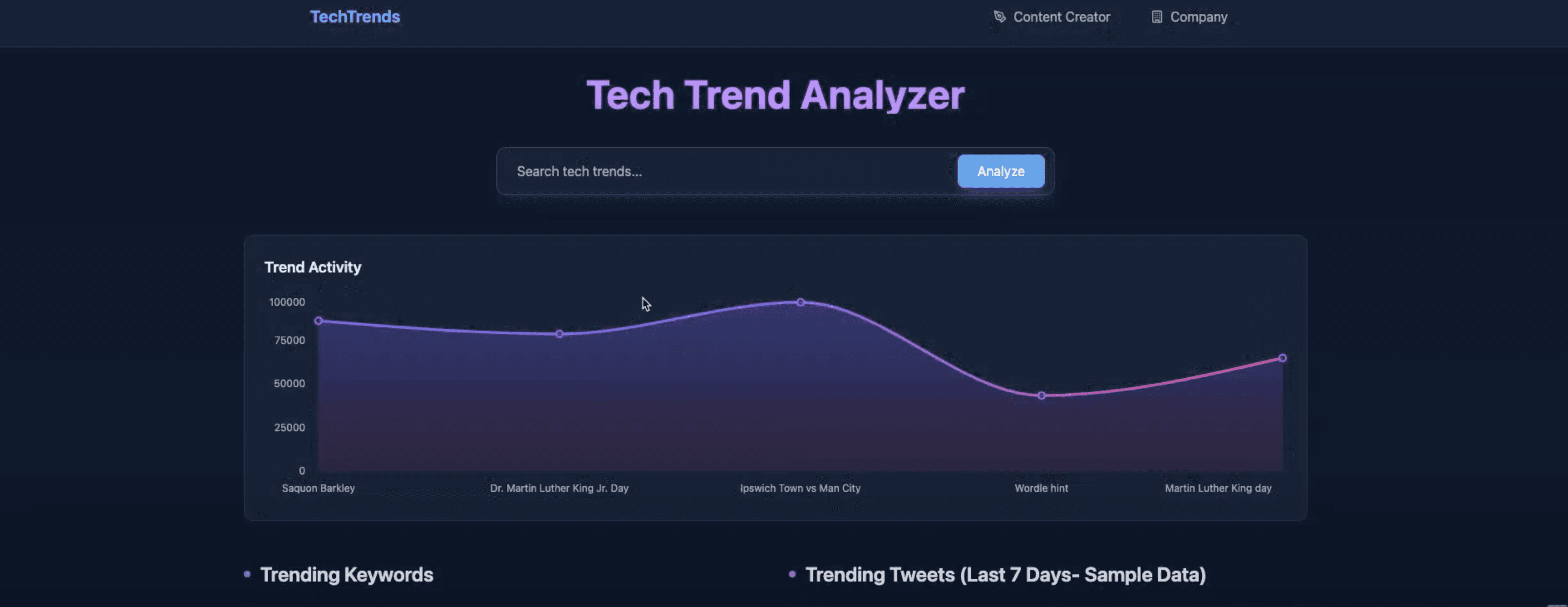
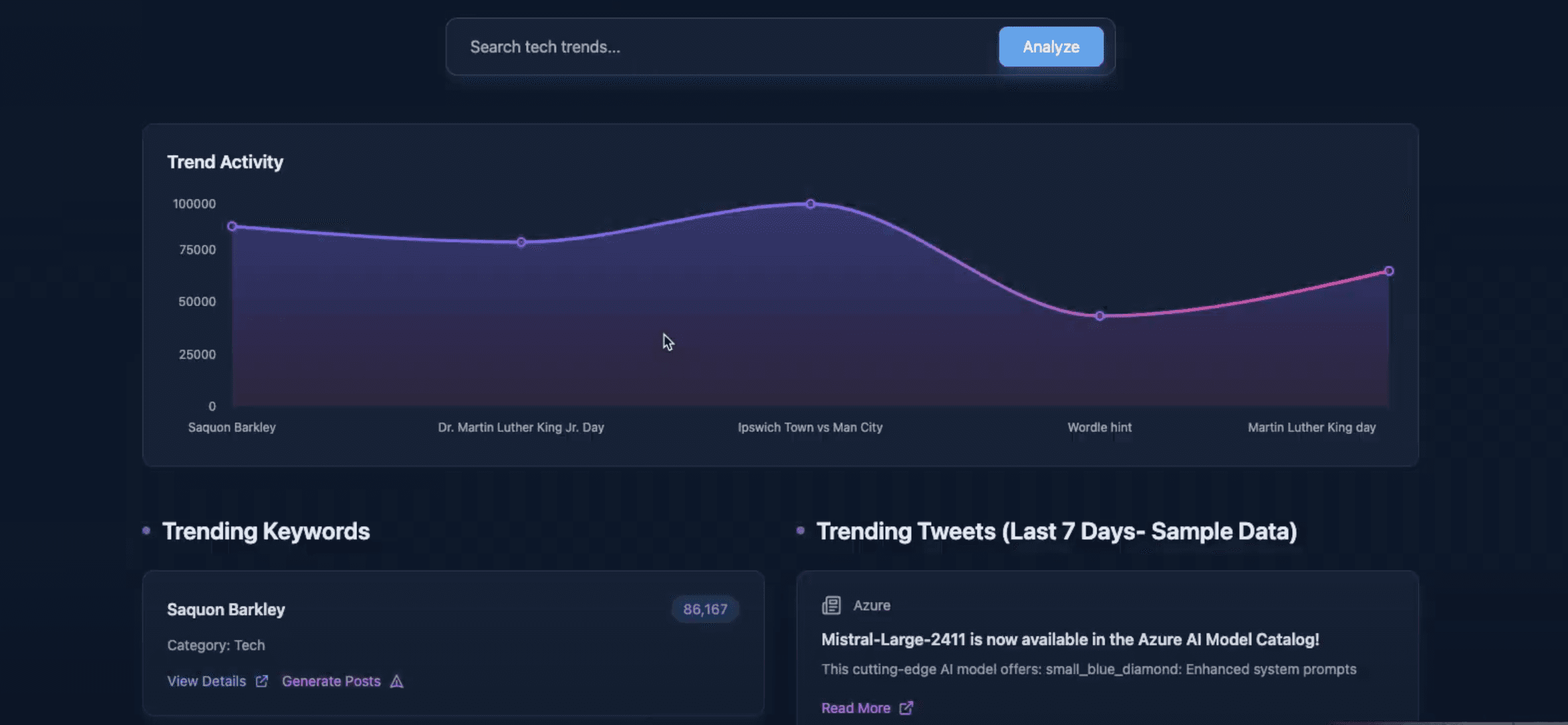
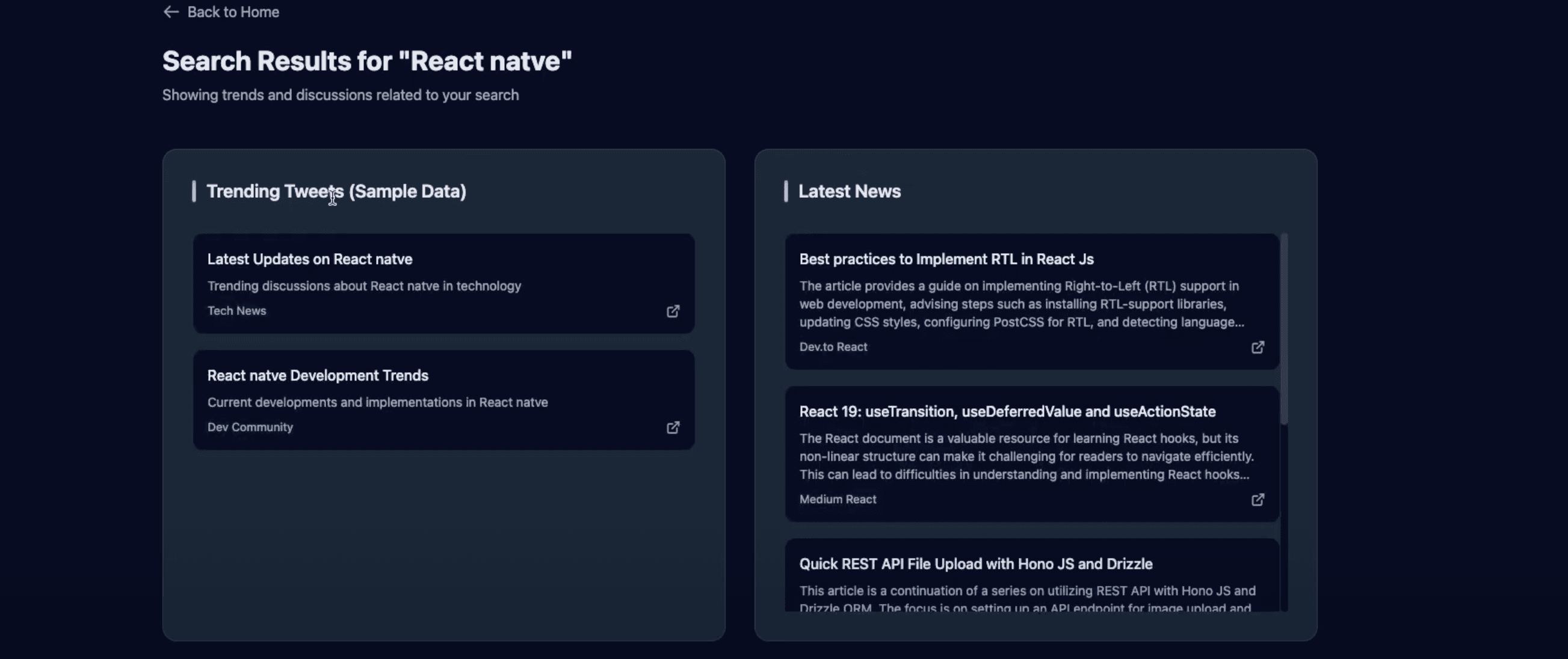
Our project acts as a powerful AI-backed tool that fetches and organizes trending topics from Twitter and Google Trends, offering businesses, content creators, and enterprises deep insights into what’s currently shaping the industry. The home screen provides users with a snapshot of the most trending keywords over the past week. A search field allows users to enter a keyword and instantly access real-time trending topics, eliminating the need to open multiple tabs and manually check different sources. The system fetches trending tweets, news, blogs, and videos related to the entered keyword, making research much more efficient.
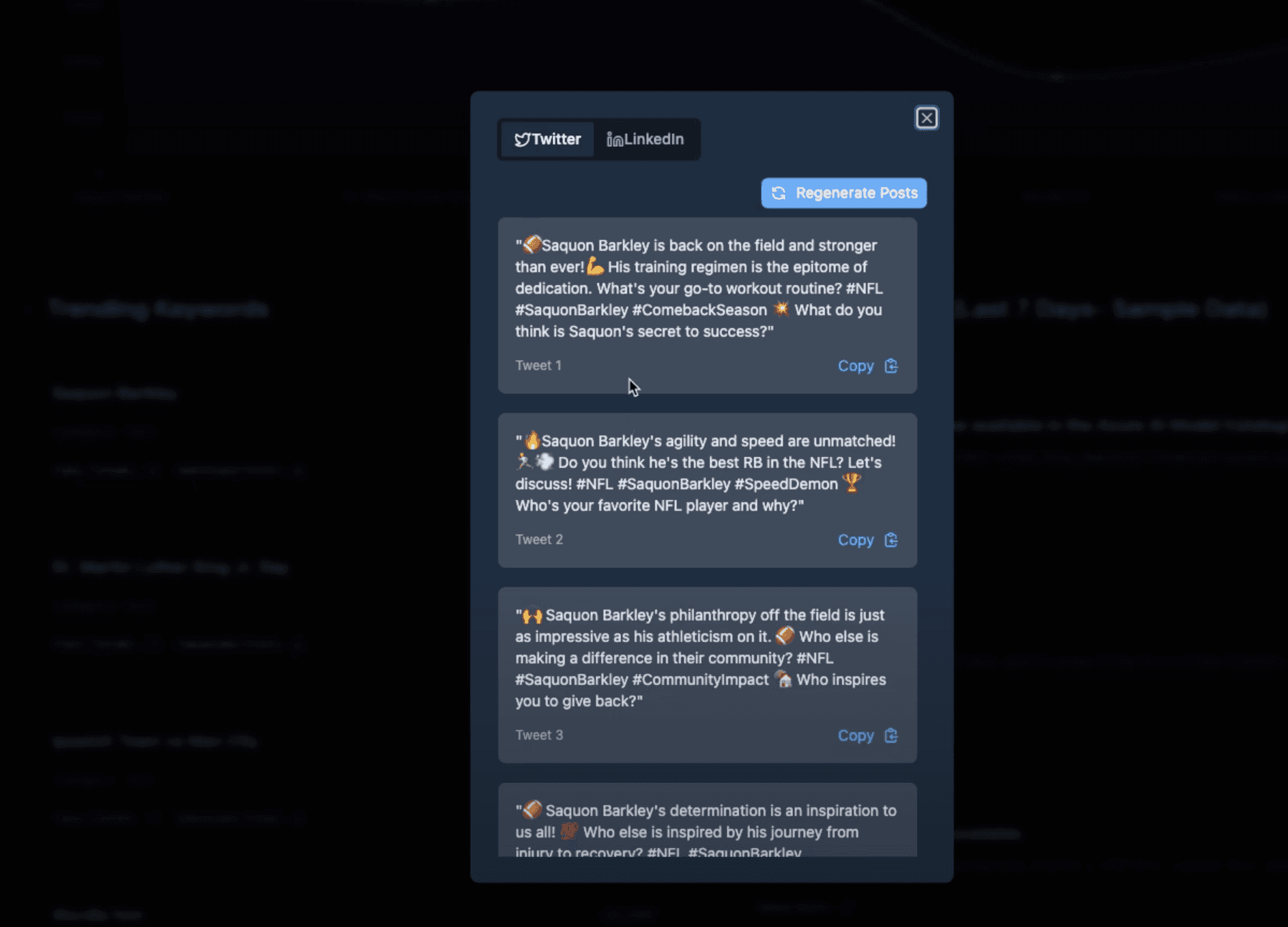
One of the standout features is the AI-powered content generation tool. Suppose a user finds a particular trend interesting and wants to share it on social media. The system can instantly generate Twitter and LinkedIn posts tailored to that topic. Users can copy, edit, or even regenerate posts if they need a different version, making content sharing effortless and dynamic.
Apart from trend analysis, this tool is also designed to assist content creators. Often, creators struggle to determine whether their blog post, video, or other content will gain traction online.
Our system eliminates this guesswork by analyzing internet-wide data, market competition, and user engagement levels. For instance, if someone is considering creating content on ‘React Native vs Flutter,’ our tool will not only assess its popularity but also suggest ideal content formats such as a tutorial, a blog post, or a webinar. Additionally, it provides a structured breakdown of content recommendations, including estimated difficulty, key talking points, and even SEO tips to maximize reach and engagement.
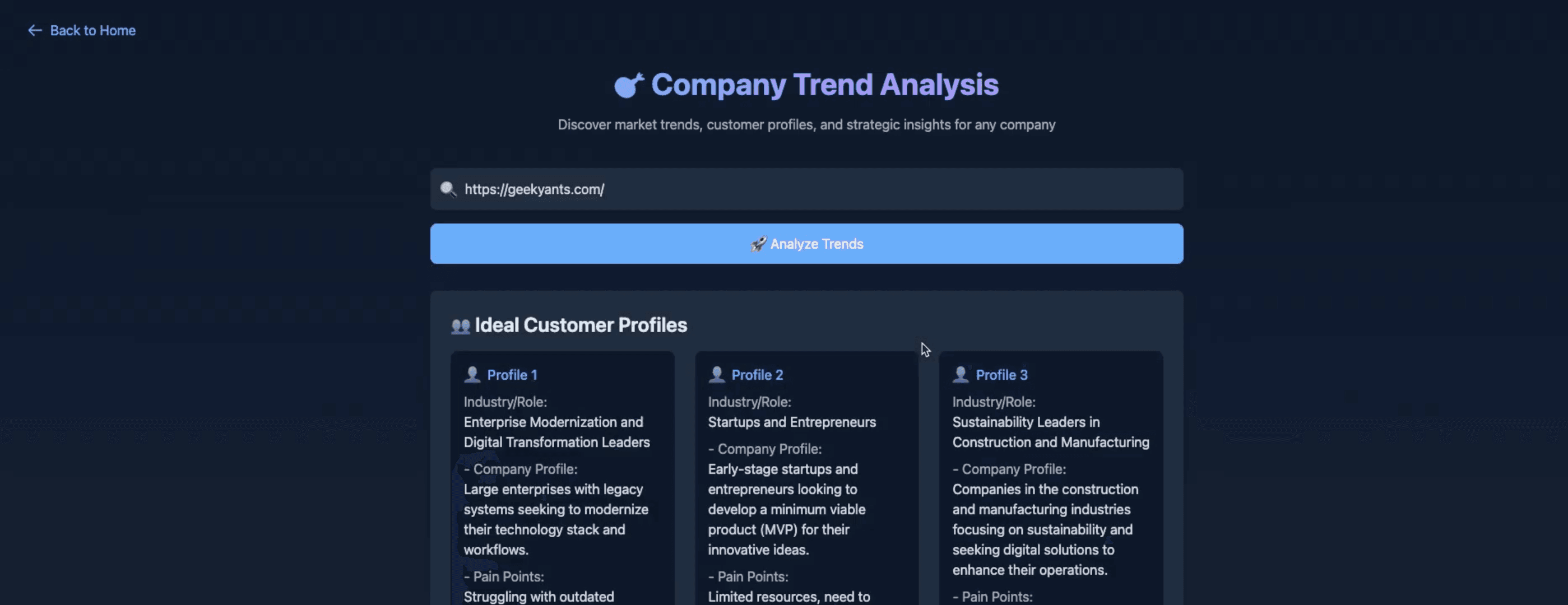
Beyond aiding individual creators, the Technology Trend Analyzer also serves as a powerful tool for businesses. Companies can use it to gain valuable insights into their target audiences by analyzing industry trends and identifying ideal customer profiles. By gathering data from various sources such as LinkedIn, company websites, and social media platforms, the system compiles a comprehensive customer persona based on market needs and user behaviors. This allows businesses to refine their strategies and optimize their outreach.
For building this tool, we relied on a robust tech stack. Our backend is powered by Python, while the frontend leverages React.js and Tailwind CSS for a seamless user experience. SQLite is used for local data storage, and we integrated Meta’s Vector Database for cloud-based storage solutions. To ensure the AI-driven analysis and content recommendations are accurate and valuable, we employed OpenAI API to process and structure data insights effectively.
Final Thoughts
From conceptualizing the problem to developing a fully functional prototype, we honed our technical skills and worked as a cohesive unit. AI Rookies is proud of what we achieved, and we look forward to enhancing our project even further in the future.
GitHub link for the project: https://git.geekyants.com/geeky-trends/backend