

Key Takeaways
- Smart contracts power businesses with code-driven agreements that trigger actions the moment conditions are met, removing middlemen and delays.
- Blockchain smart contracts cut costs, speed up transactions, and deliver trust through automation, security, and transparency.
- Building smart contracts brings challenges—security risks, gas fees, scalability issues, compliance gaps, and upgrade hurdles require expert handling.
- A smart contract works by encoding business rules in code, deploying to a blockchain, and executing transactions automatically when conditions are met.
When a business runs on contracts, trust should not be manual.
A single missed clause or delayed approval can unravel multimillion-dollar deals. Traditional contract management is slow, error-prone, and reactive. Smart contracts flip the model—automating trust by encoding agreements into tamper-proof code. No middlemen. No delays. No room for ambiguity.
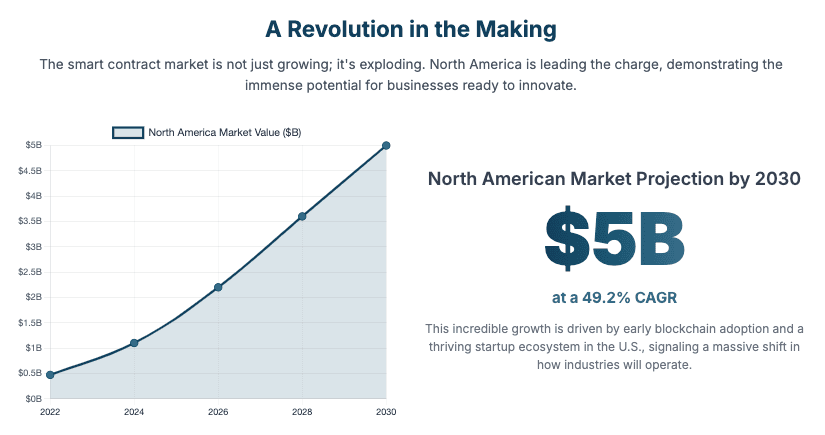
The smart contract market has already passed 684 million dollars in 2022 and is racing toward 73 billion by 2030. The smartest leaders see the opportunity to build operations that run faster, safer, and at scale, powered by systems that deliver trust by design.
But technology is only part of the story. The code does not care about legal gaps. The blockchain does not fix a flawed strategy. Smart contracts force you to ask the right questions before you launch: Does this logic protect us? Are we ready for full transparency? Can we build a foundation that holds when the stakes are high?
Those who get it right will outpace the competition. They offer businesses a way to build systems that run with fairness, security, and transparency at their core. The challenge lies in getting it right. The reward lies in building processes that strengthen your business every time they execute.
What Are Smart Contracts and How Do They Work?
Every business leader knows the cost of broken promises — missed deadlines, delayed payments, and disputes that erode trust. Smart contracts solve this.
These are self-executing programs on the blockchain that turn business rules into code: “Release payment when shipment arrives.” “Transfer ownership when funds are clear.” Once deployed, the contract enforces itself—automatically, transparently, and without intermediaries.
The result? Faster execution. Lower costs. Fewer disputes. Smart contracts embed trust into the system, making them indispensable for high-stakes transactions.
How Do Smart Contracts Work?
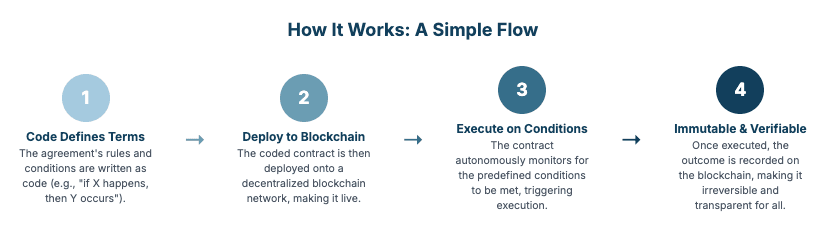
Smart contracts work because they remove doubt from every step. Here is what makes that possible:
- Code defines the terms:
Write your business rules as code using languages like Solidity, Vyper, or Rust. This code defines the rules and actions (e.g., “release payment if condition X is true”). It is akin to a digital agreement specifying all conditions and outcomes. - Deploy to the blockchain:
Upload the contract to a blockchain network, such as Ethereum. The network locks the code into place and gives it a unique address. The contract goes live. - Execute when conditions are met:
The contract monitors the blockchain. When conditions match, it triggers the action instantly—no manual steps, no delays.
Immutable and verifiable:
The contract’s code cannot change once deployed. Every action writes to the blockchain’s ledger. Anyone can verify what happened. The network’s consensus confirms each step, blocking fraud and manipulation.
Why Businesses Are Embracing Smart Contracts
Smart contracts fix what slows businesses down. They replace friction with clarity. They move transactions at the speed of logic. They lock in security with code, not promises. This is not about chasing trends. This is about solving real problems where they start.
Across the U.S., businesses see the shift. From supply chains to finance, from insurance to logistics, smart contracts cut out the middle steps that waste time and money. They build trust where it matters most: in the code that runs the deal.
Here is why smart contracts work for serious businesses:
- Cost Reduction
Smart contracts remove the middle layers that drive up costs. No brokers. No escrow agents. No unnecessary legal fees for routine tasks. Every transaction happens directly between parties. That means lower fees. That means leaner operations.
- Speed and Efficiency
Walmart reduced food traceability time from 7 days to 2.2 seconds with blockchain smart contracts, speeding up recalls and cutting waste. As what used to take days now happens in seconds. Payments, settlements, and claims. Smart contracts move these with automation. Just clean, direct execution that keeps the business moving.
- Enhanced Security
Smart contracts do what you say—every time. The code lives on the blockchain, tamper-proof and locked. No one can change it. No one can cheat it. Fraud risk drops. Unauthorized changes become nearly impossible. De Beers put this into action by using smart contracts to create tamper-proof tracking of diamonds, preventing fraud and verifying authenticity.
- Transparency and Trust
Every action is recorded on the blockchain. Everyone sees the same data. No hidden changes or any cooked books. The ledger tells the story, and this clarity builds trust between partners.
- Reliability
Smart contracts run without pause, without any weekends or missed steps. They execute exactly as written, every time. Operations keep moving. That reliability removes the fear of delays or mistakes.
- Customization
Smart contracts fit your business. They handle complex logic and respond to real scenarios. No one-size-fits-all boilerplate. Every agreement runs as you want it to, without manual oversight. Slock.it proved this by automating rental agreements with smart contracts, removing disputes and streamlining access control.
These advantages explain why many organizations are leveraging smart contracts to streamline processes and gain a competitive edge. From enhanced trust to cost savings, the value proposition is compelling for forward-thinking companies.
The Critical Role of Blockchain in Enabling Smart Contracts
Every leader asks the same question when it comes to smart contracts: can I trust the technology? The answer starts with the foundation beneath it—blockchain. Without blockchain, smart contracts are nothing more than code. With blockchain, they become unbreakable agreements that drive real business outcomes.
Blockchain gives smart contracts the power to operate without middlemen, delays, or loopholes. It turns code into commitment. Here is how it works—and why it matters to every business that values speed, trust, and security.
- Decentralization clears the roadblocks.
Smart contracts run across a network of computers, not on a single server. No one entity controls them. The network enforces the contract’s rules. This means no central point of failure, no gatekeepers slowing you down, and no one person who can change the outcome.
- Immutability locks in the deal.
Once deployed, a smart contract’s code cannot be changed—neither by you, nor by your partner. This gives you peace of mind. The agreement stays as written. Fraud gets no entry point.
- Transparency keeps everyone honest.
Every interaction lives on the blockchain, whether it is an action, payment, or trigger, visible and verifiable by all involved. There are no hidden edits, no backdoor changes. This shared view cuts disputes at the root.
- Consensus protects the outcome.
The network validates every action through a collective agreement of nodes. Even if bad actors exist, the contract executes the right result. This is trust built into the system—in math and design.
- Cryptography shields access.
Public and private keys make sure that only the right parties can trigger contract actions. There is no single point that an attacker can target. The system holds strong because the network holds strong.
Public or private blockchain? The choice shapes the contract.
Public chains like Ethereum provide unmatched decentralization and security. Ideal for open systems where anyone can verify the work. Private chains like Hyperledger offer speed and control for enterprises that need privacy and tight governance. Both have their place. The right choice depends on what you value more—openness or control.
Real-World Use Cases of Smart Contracts
You want solutions that work, scale, and build trust where it matters. Smart contracts deliver exactly that. Across industries, these agreements in code are fixing what slows companies down. They remove delays, cut costs, and build confidence into every transaction.
Here is how smart contracts are driving real impact in the field.
- Finance and Banking
Smart contracts are changing how money moves. In lending, they release funds as soon as collateral checks out—no manager, no paperwork, no waiting. In insurance, they pay claims once conditions are met. This ends the endless back-and-forth and gets customers what they are owed. AXA showed this in action through Fizzy, where smart contracts automated flight delay insurance payouts and eliminated manual claims processing. The result is fairness, speed, and fewer disputes
- Supply Chain and Logistics
Smart contracts bring supply chains out of the dark. Every delivery checkpoint updates the blockchain. As soon as a shipment lands, payment clears—no invoices, no chasing signatures. Fraud falls because everyone sees the same data. Goods stay visible. Delays drop. When an IoT sensor confirms delivery, a smart contract pays the shipper. The process moves because the contract makes sure of it.
- Healthcare
Healthcare needs privacy, accuracy, and speed. Smart contracts protect patient records, keep access in the right hands, and secure critical data like prescription tracking. The MediLedger Network shows this in action—using blockchain smart contracts to ensure tamper-proof tracking of prescription drugs and cutting counterfeit risks. When a patient gets care, the provider files the claim and moves the payment. The process earns trust from patients, providers, and insurers because it works as promised.
- Real estate
Smart contracts clean up the risk, paperwork, and delays in real estate. Funds stay in the contract until the buyer pays. Then the title updates automatically without any middleman. Rentals work the same way—automated rent payments, security deposits returned as soon as conditions are met. The contract enforces the deal, not someone’s word.
- Gaming and NFTs
Smart contracts also protect what players own. Axie Infinity proves this by using smart contracts to manage player-owned NFT assets and automate play-to-earn token distribution. Skins, weapons, and tokens—each item stays secure and provable on the blockchain. Players trade peer-to-peer with no risk of fraud. The game sets the rules. The contract makes sure the rules are followed.
- Voting and Governance
Smart contracts offer a tamper-proof method for digital voting systems. Aragon DAO platforms demonstrate this by automating governance decisions for decentralized organizations, with smart contracts recording and enforcing votes. Each vote is recorded on the blockchain, where it stays tamper-proof. Voter eligibility checks happen in real time. Tallying starts the moment polls close. Every participant sees the same result, and trust in the process grows.
- Insurance
Beyond automating claim payouts in health or auto insurance, smart contracts are used for parametric insurance products. For example, a crop insurance policy can be written as a smart contract that automatically pays the farmer if an official weather feed shows less than X amount of rain occurred in the season. This removes the claims filing process altogether – the payout triggers as soon as the condition (drought) is verified on-chain. It increases trust that claims will be honored and reduces administrative costs for insurers.
These examples only scratch the surface. Virtually any industry involving contracts, transactions, or record-keeping can find a use for smart contracts – from government (e.g., land registries) to energy (peer-to-peer power trading). The common thread is that smart contracts introduce efficiency, cut out unnecessary intermediaries, and provide a transparent and secure way to enforce agreements.
Smart Contract Development Process - Step by Step
Developing a smart contract involves a multi-stage process to ensure the final contract is secure, functional, and aligned with business requirements. Below is a step-by-step guide through the typical smart contract development lifecycle.
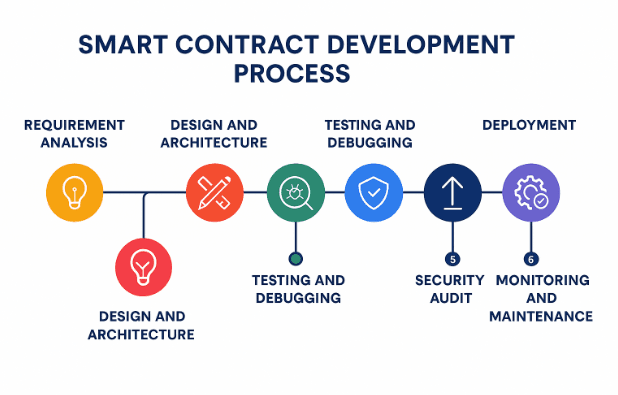
STEP 1- Requirement Analysis
Timeline- 1–2 weeks
Everything starts with purpose. What will the contract achieve? Who will it serve? What problem will it solve? This step brings together stakeholders and developers to define the scope, rules, and risks. Every party’s role is clear. The contract’s logic matches business goals. For real estate, this means deposits, title transfers, and escrow conditions are mapped out in detail. For insurance, it means claims triggers are defined down to the data source. Clarity at this stage avoids confusion later.
STEP 2- Design and Architecture
Timeline- 1–2 weeks
Now the plan takes shape. The team chooses the blockchain platform—Ethereum, Polygon, Hyperledger, or another—based on cost, speed, and security. They map contract functions and data flows. They sketch diagrams, draft pseudo-code, and flag risks. The design answers key questions: Will the contract need upgrades? Will it interact with off-chain data? Will it support high-volume transactions? A strong architecture prevents cracks when real assets are on the line.
STEP 3- Development (Coding)
Timeline- 2–4 weeks
With the blueprint ready, the team writes the code. Solidity for Ethereum, Rust for Solana, Go for Hyperledger—each line reflects the agreed logic. The team uses trusted libraries, modular patterns, and best practices. No shortcuts. No guesswork. Every function is tested as it is built. The goal is clean, efficient, secure code that does exactly what the business needs—no more, no less.
STEP 4- Testing and Debugging
Timeline- 2–3 weeks
Code without testing invites risk. The team runs unit tests, integration tests, and stress tests using tools like Hardhat, Truffle, or Remix. They simulate edge cases. They flood the contract with transactions. They try to break it, so no one else can. Bugs are fixed fast. Logic is refined. Every path through the contract is proven sound before moving on.
STEP 5- Security Audit
Timeline- 1–2 weeks
Smart contracts handle value. They face real threats. That means security comes first. Experts review the code line by line. They test for reentrancy attacks, overflow errors, access control gaps. They use tools like Slither or MythX. They spot what others might miss. Vulnerabilities are closed before the contract sees the blockchain. Some teams run bug bounties to invite outside scrutiny. The goal is the same: no hidden weaknesses, no unwelcome surprises.
STEP 6 - Deployment
Timeline- 1 week
When the contract clears its audits, it is time to go live. The team deploys it to the chosen network, watching gas fees and network load to control costs. A testnet deployment comes first—one last check under live conditions. Then the mainnet deployment makes the contract official. Addresses are shared, the initial setup is completed, and the contract starts work. Every transaction it handles from this point forward follows the logic frozen in its code.
STEP 7- Monitoring and Maintenance
Timeline- Ongoing
Deployment is not the finish line. It is the start of stewardship. The team monitors transactions, watches for anomalies, and tracks gas usage. If upgrades are needed, they follow the upgrade plan built into the design. If new features are required, they are added through linked contracts. The team stays accountable. The contract stays reliable. The business stays protected.
Each step – from careful planning to thorough testing and monitoring – is critical to success, since errors in smart contracts can be costly. This structured approach ensures the final smart contract is reliable, secure, and effective in automating the intended business operation.
Essential Tools and Frameworks for Smart Contract Development
Building smart contracts requires specialized tools and frameworks. Below are some essential ones developers typically use.
Tool / Framework | What It Does | Why It Matters |
Solidity | Programming language for writing smart contracts on Ethereum and EVM-compatible blockchains. | Essential for creating smart contract logic; widely supported and battle-tested. |
Remix IDE | Browser-based environment for writing, compiling, deploying, and debugging Solidity code. | Great for quick prototyping, learning, and debugging small contracts without local setup. |
Truffle Suite | Complete development framework for building, testing, and deploying smart contracts. | Helps structure projects, run automated tests, and manage deployments across networks. |
Hardhat | Flexible development environment and local Ethereum network with advanced debugging and automation plugins. | Ideal for custom workflows, deep debugging, and powerful scripting during development. |
Ganache | Personal local blockchain for simulating a blockchain network on your machine. | Lets you test smart contracts safely, control the environment, and speed up development cycles. |
OpenZeppelin Libraries | Audited, secure smart contract templates and modules (e.g., ERC-20, ERC-721, access control). | Reduces security risks and development time by using proven, trusted code components. |
VS Code + Solidity Extensions | Code editor with Solidity plugins for highlighting, linting, and autocompletion. | Boosts productivity, reduces errors, and helps manage large smart contract codebases. |
MythX / Slither / Echidna | Automated security analysis tools for scanning smart contracts for vulnerabilities. | Strengthens security, identifies risks early, and ensures contracts are safe before deployment. |
Mocha / Chai | JavaScript testing libraries used to write unit and integration tests with Truffle or Hardhat. | Ensures smart contract functions behave as expected under different scenarios. |
Challenges of Smart Contract Development
Smart contracts also come with challenges that no team can afford to overlook. These challenges are complex and demand instant and smart solutions.
Let us break down where things go wrong—and how the right approach keeps you ahead.
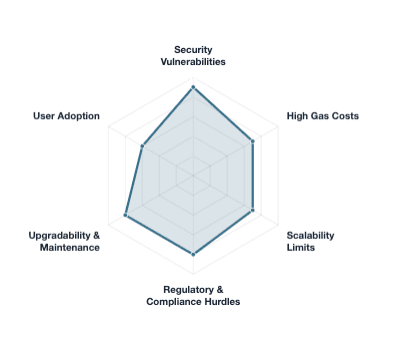
1. Security Vulnerabilities: The Unforgiving Nature of Blockchain
Once you deploy a smart contract, it stays on the blockchain for all to see. If there is a bug, attackers will find it. If there is a flaw, they will exploit it. The DAO hack taught the world that. Reentrancy, integer overflows—these are not rare mistakes. Some risks come with the territory. One missed detail can drain funds, breach data, or damage trust forever.
Solution:
Security starts at the first line of code. Teams need to follow strict coding standards. They need independent audits. Tools like Slither and MythX catch what humans miss. Bug bounties invite white-hat hackers to test the system before attackers do. The contract’s logic must be clear, controlled, and built to withstand real-world threats.
2. High Gas Costs: The Hidden Price of Complexity
Every action on a blockchain costs gas. The more complex the contract, the higher the fee. On busy networks like Ethereum, fees spike when demand surges. Businesses feel the pinch. A contract that looked cost-effective in testing can turn expensive in production. The automation savings can disappear under high transaction costs.
Solution:
Efficient code matters. Smart developers minimize on-chain storage and computation. They choose platforms carefully—sometimes Layer-2 networks or blockchains with lower fees. The contract stays lean. The cost stays under control.
3. Scalability Limits: When Throughput Slows Growth
Blockchains like Ethereum can handle only a limited number of transactions per second. When demand rises, networks clog. Transactions slow down. Fees rise. A contract that works as a pilot may struggle at scale.
Solution:
Scalability is part of the design, not an afterthought. Teams choose algorithms that handle load. They integrate Layer-2 solutions or sidechains to boost throughput. They plan for the future so that growth does not break the system.
4. Regulatory and Compliance Hurdles: The Law Is Catching Up
Smart contracts cross borders, industries, and legal systems. But laws move slower than technology. What happens when code does something unintended? What if compliance checks like KYC are missing? How do you prove the contract is binding?
Solution:
Regulatory strategy is as important as technical strategy. Contracts need built-in compliance logic. Legal experts review them. Teams are built with jurisdiction in mind. The contract must serve business goals without creating legal risk.
5. Upgradability and Maintenance: Code That Stays Locked
Software needs updates. Business needs change. But smart contracts, by design, are hard to change once live. One flaw or new requirement can mean trouble if the contract cannot adapt.
Solution:
Smart teams build upgrade paths from the start. Proxy patterns, governance modules, and well-defined controls let contracts evolve without losing integrity. Plans for change protect the future without weakening the promise of immutability.
6. User Adoption: Complexity Kills Trust
The technology excites teams. But users see the friction. Managing wallets, paying gas fees, trusting code with their assets—it is not simple. When the interface confuses or the experience fails, adoption stalls.
Solution:
The smart contract is only half the product. The other half is the experience. Teams must build clear, safe, user-friendly layers that hide blockchain complexity. They must educate users, guide them, and support them. Trust grows when the technology feels simple.
Best Practices for Building Smart Contracts That Stand Up to Real-World Pressure
The code you write today will stay on the blockchain for the world to see—and for attackers to target. If you want contracts that earn trust and perform under pressure, you need discipline from the first line of code to the last audit check.
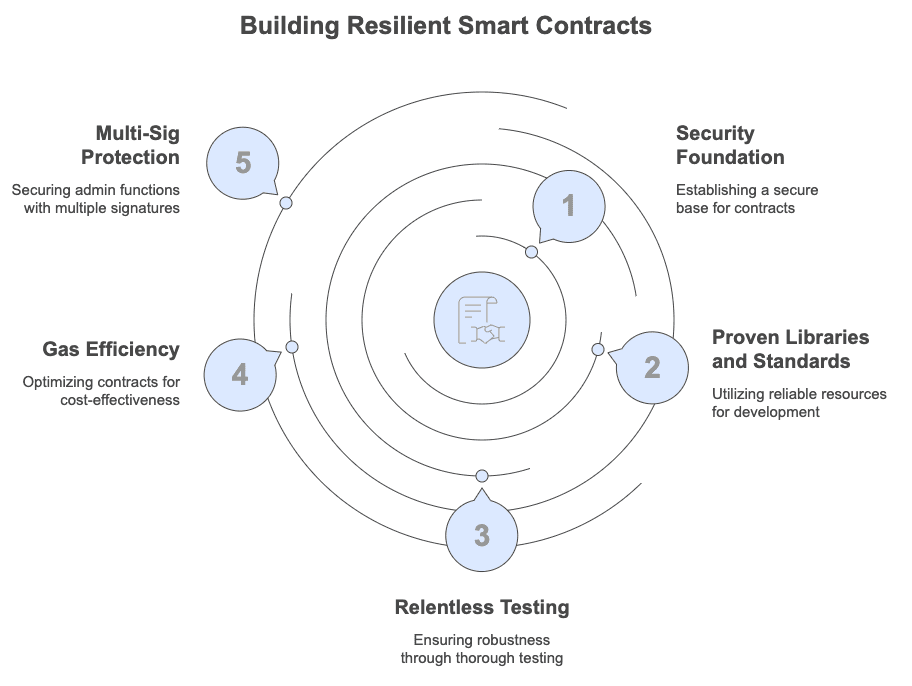
Here is how serious teams build smart contracts that work when it counts.
- Start with Security as the Foundation
Security is the core. Every input must be checked—sizes, ranges, formats. No shortcuts. Access control must be tight—no hidden paths to admin powers. Patterns like checks-effects-interactions stop reentrancy. Tools like MythX and Slither reveal hidden risks before attackers do. A contract must be built as if the worst actor is watching—because one always is.
- Rely on Proven Libraries and Standards
Building from scratch wastes time and invites error. OpenZeppelin libraries give you audited ERC-20s, ERC-721s, access controls, and safe math. Standards make your contracts interoperable and battle-tested. Always lock library versions. Do not let your code shift under you. Trust code that has been through the fire.
- Test Relentlessly in Every Scenario
Smart contracts fail where testing stops. Test every function. Test the paths no user should take. What happens at the edge—large numbers, out-of-order actions, recursive calls? Use Truffle, Hardhat, fuzzers—whatever it takes. Test on local chains, testnets, and do not stop until you have broken it in every way you can think of. Let failure happen in testing, not in production.
- Write for Gas Efficiency
Every transaction burns gas. Every wasted compute cycle costs your users. Minimize storage writes. Avoid unbounded loops. Use efficient data structures. Cache where you can. Tools like Hardhat gas reporters show where you bleed gas. A contract that costs too much to use will not gain adoption.
- Protect Admin Functions with Multi-Sig
One key should never control major powers. Upgrades, pausing, fund transfers—these need multi-signature control or DAO governance. Protect critical actions with layers of approval. The goal is clear: no single point of failure, no easy target for attackers.
By adhering to these best practices, you significantly increase the likelihood that your smart contract will be secure and function reliably. This not only protects your project but also builds trust with users and partners, as they can see that industry-recommended approaches were followed to minimize risks.
Why GeekyAnts for Smart Contract Development?
At GeekyAnts, we bring deep blockchain expertise to every project, blending technical precision with real-world business understanding. From DeFi platforms to enterprise-grade private ledgers, we deliver smart contract solutions that are secure, efficient, and future-ready. Our team goes beyond writing code—we help you unlock blockchain’s full potential.
Our Strengths in Blockchain and Smart Contracts
We have delivered high-impact smart contract solutions across industries, offering:
- Proven Blockchain Expertise
Our team builds on Ethereum, Binance Smart Chain, Polygon, Solana, and Hyperledger. We help you choose the right platform, whether you need a public chain’s reach or a private ledger’s control.
- Comprehensive Development Services
We handle the full development journey: consulting, architecture, coding, testing, audits, and deployment. Our focus is always on aligning smart contracts with your business goals.
- Security and Quality First
We bake security into the process. Every contract undergoes deep audits, uses trusted libraries like OpenZeppelin, and applies best practices like multi-sig for admin functions. Rigorous testnet testing ensures your contract is robust before it goes live.
- Performance and Scalability
We optimize for gas efficiency, throughput, and smooth user experience. We leverage Layer-2 solutions and scalable designs that grow with your business.
- Integrated User Experience
Our smart contracts come with frontend integration. We design dashboards, wallets, and apps that let users interact with blockchain technology seamlessly.
- Ongoing Support and Innovation
Our support doesn’t stop at deployment. We help you monitor, maintain, and enhance your contracts, keeping you ahead with features like cross-chain support or DeFi integrations.
There is still time to get ahead—let’s build smart contracts that work for you.
Seize the Smart Contract Edge
Smart Contract replaces slow, manual steps with code that moves value, enforces rules, and builds trust. No middlemen. No waiting. No hidden errors. From finance to supply chains to real estate, smart contracts cut costs, speed transactions, and unlock new digital opportunities.
Yes, challenges like security and compliance remain. But the tools to solve them are here—and getting stronger every day. The companies that act now will not play catch-up later. They will lead. Smart contracts will drive the next wave of commerce and automation. There is still time to get ahead. The choice is clear: stay with systems built for the past, or build with technology designed for what comes next.
FAQs About Smart Contract Development
1. How much does it cost to develop a smart contract?
The cost depends on complexity. A simple token contract may cost $500–$2,000. Complex dApps with audits can range from $5,000 to $50,000+. Always budget for testing and audits to avoid costly errors.
2. What are the typical costs for deploying a smart contract?
Deployment costs = blockchain gas fees. On Ethereum, simple contracts might cost $10–$100 during low congestion; complex contracts or peak times can cost more. BNB Chain or Polygon are far cheaper, often under $1.
3. How long does it take to build and launch a smart contract?
Simple contracts can be built in days; professional delivery with testing takes 1–2 weeks. Complex smart contract systems (DeFi, NFT marketplaces) often take 4–8 weeks, including audits.
4. Which blockchain is best for smart contracts?
Ethereum leads for ecosystem support and standards. BNB Chain and Polygon offer lower fees. Solana is fast and cost-effective for high-volume apps. Private chains like Hyperledger suit enterprise use.
5. Do I need coding skills to create a smart contract?
Yes, coding (e.g., Solidity for Ethereum) is required for anything beyond basic templates. For secure, efficient contracts, hire experts or invest time in learning.
6. Can smart contracts be changed after deployment?
Most are immutable. Upgrades require special patterns (e.g., proxy contracts). Plan for upgradability early—without it, deployed logic stays permanent.
7. How can I ensure my smart contract is secure?
Follow best practices: use audited libraries (e.g., OpenZeppelin), extensive testing, professional audits, and multi-sig controls for admin functions. Keep code simple and monitor post-launch.