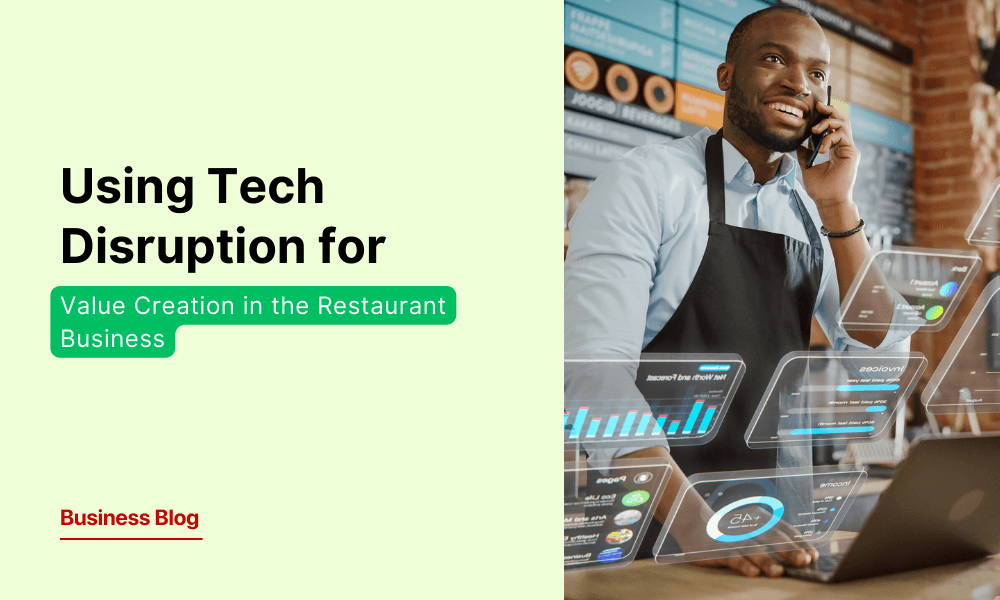

As customer preferences evolve and technological innovations accelerate, the restaurant industry finds itself at a pivotal crossroads. The pandemic magnified this shift, with food delivery platforms like DoorDash and Zomato experiencing an unprecedented 25% growth, fundamentally reshaping consumer interactions. This rapid evolution has not only introduced new opportunities but also exposed vulnerabilities in traditional business models, from operational inefficiencies to unsustainable cost structures.
Amid these challenges lies an unprecedented opportunity. By strategically adopting technology, restaurants can unlock transformative value: streamlining operations, delivering personalized experiences, diversifying revenue streams, and advancing sustainability. This article delves into how disruptive technologies are reshaping the industry, with compelling real-world examples and actionable strategies illuminating the path forward.
The Current State of Tech Disruption in Restaurants
The restaurant industry is undergoing a seismic shift, with technology fundamentally redefining operations and customer engagement. According to Allied Market Research, the global restaurant technology market is projected to reach $342 billion by 2027, driven by increasing demand for automation, personalization, and efficiency. This rapid growth underscores a stark reality: adaptation is no longer optional but critical to survival.
Consider McDonald’s, a global leader in innovation. By deploying AI-powered tools from Dynamic Yield, the brand customizes drive-thru menus in real time based on variables such as weather, traffic, and time of day. This strategic approach has increased customer satisfaction while boosting average order values by 6–8%, as reported by industry studies. Similarly, Starbucks has revolutionized loyalty programs by harnessing advanced analytics and AI, achieving a 7% increase in customer retention while reducing inventory waste.
Even smaller chains are embracing digital transformation. Sweetgreen, for instance, integrates technology at every level, using predictive analytics to forecast demand and app-based systems to personalize customer recommendations. These real-world examples emphasize a pivotal truth: digital transformation is not just an advantage but a necessity in an industry increasingly shaped by seamless, tech-driven experiences.
Key Areas of Value Creation
Operational Efficiency: Streamlining Costs and Processes
The restaurant industry has long grappled with inefficiencies, from labour shortages to rising operational costs. Addressing these challenges requires bold innovation. Spyce, a Boston-based pioneer, has redefined efficiency with fully robotic kitchens that prepare meals to precise standards. By automating repetitive tasks, Spyce reduced operational costs by 15%, as cited by the National Restaurant Association. This shift not only enhances productivity but also enables teams to focus on customer-facing roles, demonstrating that operational efficiency is no longer a distant ambition but an achievable standard.
Enhancing Customer Experience: Meeting Evolving Expectations
In an age where personalization is paramount, generic dining experiences fail to meet rising customer expectations. Starbucks, for example, has transformed customer engagement by leveraging AI to tailor its loyalty rewards and recommend menu items based on individual preferences. This initiative has resulted in a significant boost in app-based orders and a 7% rise in retention rates, setting a new standard for the industry.
Furthermore, the pandemic accelerated the adoption of QR-code menus and self-service options, ensuring safety while enhancing convenience. These innovations have redefined how diners interact with restaurants, making frictionless service a cornerstone of modern dining experiences.
Revenue Growth and Diversification: Expanding Opportunities
As dine-in revenue stagnates, innovative models like cloud kitchens are reshaping the industry. Rebel Foods, an India-based disruptor, operates over 45 virtual brands across 10 countries, leveraging data analytics to identify high-demand areas and optimize delivery routes. This tech-driven approach has minimized real estate costs and propelled the company to a valuation exceeding $1 billion. The success of Rebel Foods highlights how restaurants can embrace scalable models to meet evolving consumer preferences while enhancing profitability.
Sustainability: Building Long-Term Value
Sustainability has become a defining metric of customer loyalty. Yet, many restaurants struggle with food waste and supply chain transparency. Enter technologies like Winnow, whose AI-powered tools analyze waste patterns to reduce kitchen waste by 50%. Similarly, blockchain is enabling transparency in sourcing. A European restaurant chain that implemented blockchain to certify ingredient origins reported a 15% increase in customer trust—a clear testament to the value of ethical practices.
Overcoming Barriers to Adoption
Despite its potential, adopting technology is often fraught with challenges. High implementation costs, limited technical expertise, and cultural resistance frequently deter progress. However, solutions are within reach. Sweetgreen, a fast-casual brand, overcame these hurdles by forming strategic partnerships with technology providers and rolling out new systems incrementally. By prioritizing staff training and customer education, the chain fostered a culture of innovation that became a competitive edge.
For others, focusing on high-impact areas like automating inventory management or enhancing digital ordering systems can deliver immediate results while building momentum for broader transformation. The key lies in balancing ambition with practicality, proving that gradual adoption can lead to enduring change.
The Future of Tech in Restaurants
The restaurant industry is on the brink of a technological renaissance. Domino’s, for example, is reshaping delivery with autonomous vehicles through its partnership with Nuro, achieving a 15% reduction in delivery times. Meanwhile, McDonald’s uses predictive analytics to optimize supply chains, cutting food waste by over 20%.
Automation is taking center stage in kitchens, with Miso Robotics’ “Flippy” revolutionizing food preparation. Chains like White Castle report 30% reductions in kitchen labor costs and improved consistency. Beyond automation, immersive technologies like augmented reality (AR) are enabling diners to visualize meals before ordering, while virtual reality (VR) redefines experiential dining.
As sustainability gains prominence, blockchain and AI-driven waste management systems are addressing environmental concerns. Restaurants adopting these innovations are setting new benchmarks for accountability and efficiency.
By 2030, these technologies will not only redefine dining but also create seamless, engaging, and sustainable experiences. Restaurants that embrace this change will shape the industry’s future, setting the standards for innovation and customer satisfaction.
Conclusion
The restaurant industry’s future is not defined by challenges but by its response to them. Technology offers a transformative path forward delivering operational excellence, enhancing customer experiences, and meeting sustainability goals. Those who strategically leverage these innovations today will lead the industry into a future defined by seamless, tech-enabled dining experiences that align with evolving consumer expectations.