

Editor’s Note: This article was originally written by Prince Kumar Thakur and published in February 2025. It was revised and updated by Shivangi Agarwal in August, 2026 to include current technologies, implementation practices, industry requirements, and examples. The technical content was reviewed by Shubham Srivastava, Tech Lead-I.
Key Takeaways
- AI recruitment apps can automate screening, candidate ranking, interview scheduling, and communication.
- NLP and predictive analytics support contextual candidate matching and data-informed hiring decisions.
- A scalable platform requires secure integrations, reliable data infrastructure, testing, and continuous model monitoring.
- Development costs depend on AI complexity, features, integrations, data preparation, and long-term maintenance.
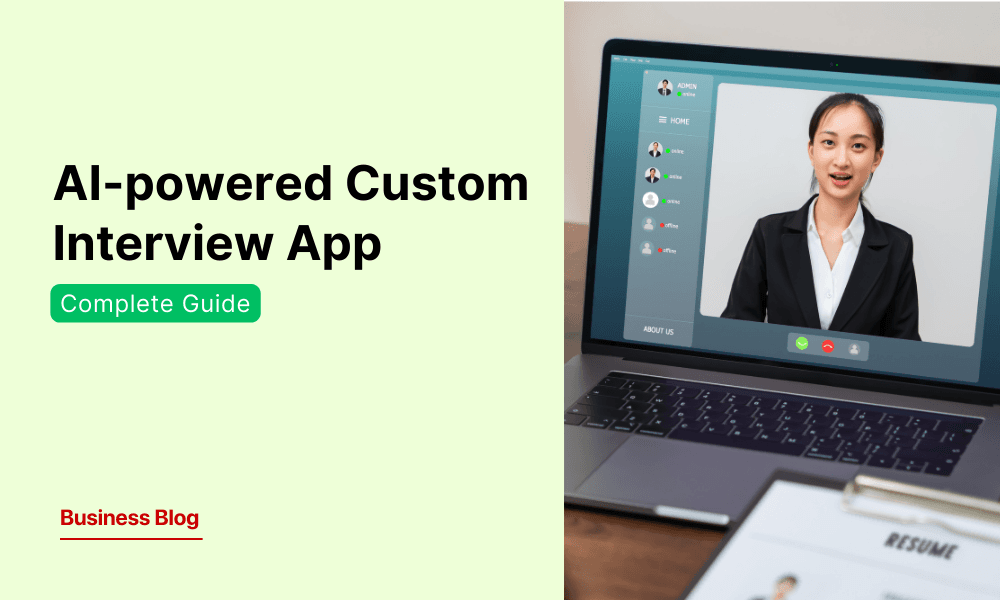
Building an AI-powered recruitment app is like constructing a digital headhunter that never sleeps—efficient, precise, and capable of analyzing talent faster than any human recruiter. From screening hundreds of resumes in seconds to predicting candidate success based on data, AI is fundamentally changing the way companies approach hiring.
The global recruitment technology market is booming. According to Future Market Insights, the demand for interview scheduling software alone is projected to reach $1.1 billion in 2025 to $17.1 billion by 2035, at a 31.6% CAGR. This growth highlights a broader trend: the increasing adoption of automated, AI-driven solutions to address hiring inefficiencies. Organizations worldwide are recognizing the value of leveraging artificial intelligence to streamline recruitment processes, reduce costs, and enhance candidate experiences.
This guide is your complete roadmap to building an AI recruitment app. It is useful for entrepreneurs aiming to innovate or companies wanting to streamline hiring. You will find practical tips, proven methods, and a clear process. We cover market trends, profitability, essential features, and development.
With LinkedIn, ZipRecruiter, and Indeed leading in innovation, now is the perfect time to invest in AI recruitment tech. Let's see how you can create an AI hiring app that not only meets but exceeds industry standards.
Key Market Takeaways for AI Recruitment Apps
AI-powered recruitment and interview apps are transforming recruitment. They boost efficiency, cut costs, and enhance candidate experiences. Here are key insights:
Market Growth: The recruitment software market is projected to reach $7.48 billion by 2034, with North America leading adoption- Fortune Business Insights
Top Competitors: LinkedIn, Indeed, and ZipRecruiter lead the market with AI-powered candidate sourcing, matching, screening, and recruiter outreach.
Investment Surge: HR software start-ups raised $1.9 billion by September 2025, nearly matching the total funding secured throughout 2024- Crunchbase News
Widespread Adoption: In 2025, 51% of organisations used AI in recruitment for screening, candidate searches, job descriptions, and applicant communication- SHRM
These trends show that AI recruitment apps can significantly enhance recruitment. They offer a competitive edge, reduce costs, and enhance hiring quality.
Are AI-Based Hiring & Interview Apps Profitable?
The profitability of AI-based Interview apps is driving their rapid adoption across industries. These apps automate complex, time-consuming tasks. They help companies cut recruitment costs and improve hiring outcomes.
Traditional recruitment processes are resource-intensive, requiring significant time and manpower. AI-powered hiring apps reduce these costs by automating resume screening, candidate ranking, and even interview scheduling. For instance, companies using AI tools report a 30% reduction in recruitment costs on average.
Improved Time-to-Hire
These apps accelerate the hiring process, enabling businesses to fill roles faster. Faster time-to-hire not only minimizes productivity losses but also saves costs associated with extended vacancies.
Enhanced Quality of Hires
Predictive analytics and machine learning algorithms help identify candidates who are more likely to succeed in a role, reducing turnover rates and saving costs associated with frequent rehiring.
Monetization Opportunities
Many platforms, like ZipRecruiter, generate additional revenue streams by offering premium features such as advanced analytics, targeted job postings, and subscription-based services for recruiters and job seekers.
AI recruitment and interview apps offer more than cost savings. They also boost employee satisfaction and retention, leading to greater profits. Companies like LinkedIn and ZipRecruiter showcase this success. Thus, the profit potential is evident and strong.
Different Types of Recruitment Applications
Recruitment applications come in various forms, each tailored to specific hiring needs and challenges. Here is a quick look at the primary types:
1. Job Board Apps
Platforms like Indeed and Monster act as centralized hubs where employers and job seekers meet. They simplify job posting and offer a searchable database of opportunities.
2. Integrated HR Management Apps
Solutions like BambooHR extend beyond recruitment, offering tools for payroll, employee performance tracking, and onboarding to streamline end-to-end HR functions.
3. Niche-Specific Recruitment Apps
Designed for specialized industries or talent pools, apps like AngelList for startups ensure a more targeted hiring approach.
4. Recruitment CRM Systems
Focusing on relationship-building, these systems help recruiters nurture and engage with top talent, ensuring a steady pipeline of qualified candidates.
5. Applicant Tracking Systems (ATS)
Popular for streamlining workflows, ATS solutions like Workday automate application screening, candidate tracking, and status updates for greater hiring efficiency.
Choosing the right type depends on your organization’s goals. Whether you aim to broaden your reach with job boards or build long-term talent pipelines using CRMs, these applications can be customized to meet diverse recruitment needs effectively.
How to Develop a Fully Custom AI-Based Recruitment and Interview App
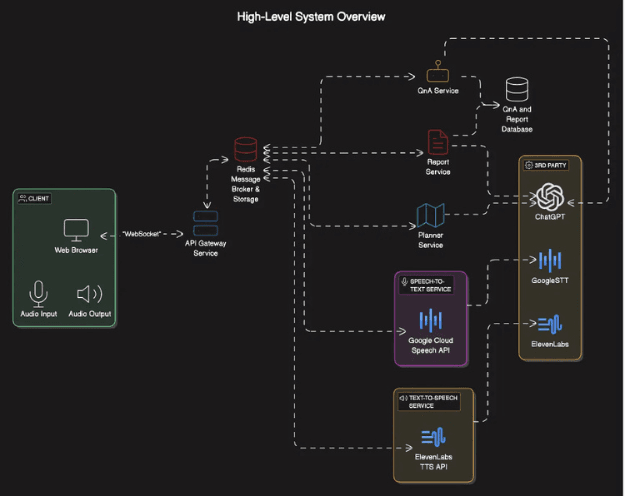
Developing a custom AI-powered interview and recruitment app requires a strategic approach, blending advanced technology, user-centric design, and business needs seamlessly. At GeekyAnts, we leverage our deep expertise to guide you through each stage of the development process, ensuring your app not only meets but exceeds industry expectations.
In this step-by-step guide, we’ll explore how to build an AI-based recruitment and interview app that optimizes hiring efficiency, enhances user experience, and drives business growth.
Step 1: Define Core Challenges
The first step in building a successful AI interview app is identifying the specific pain points in the recruitment process. These could include slow resume screening, poor candidate-job matching, or inefficient scheduling. By leveraging AI, these challenges can be addressed directly. AI-driven solutions, like predictive analytics, can speed up hiring cycles, improve match accuracy, and reduce manual involvement in the initial stages.
Step 2: Implement Key Features
A robust AI-powered interview app must include essential features that solve these challenges. These features not only streamline the recruitment process but also provide a seamless, user-friendly experience:
- Speech-to-Text & Text-to-Speech: Real-time transcription powered by Google Cloud Speech API and ElevenLabs TTS API ensures candidates can interact via voice, making the process more intuitive and dynamic.
- AI-Powered Resume Parsing & Candidate Ranking: The app should use AI to parse resumes and rank candidates based on their skills, experience, and relevance to the job, reducing the manual workload for recruiters and improving candidate-job matching.
- Smart Scheduling: Automated interview scheduling syncs with recruiters' calendars, simplifying the scheduling process and ensuring efficient use of time.
- Interactive Q&A Service: With NLP capabilities, the app should provide an AI-driven question-and-answer interface, mimicking a real interview experience. This feature allows for dynamic candidate interactions, providing relevant questions based on the applicant's profile and responses.
Step 3: Seamless Integration
For the app to operate smoothly, it must integrate critical backend services that facilitate real-time communication, data exchange, and storage:
- API Gateway: Acts as the entry point for all client-side interactions, ensuring secure and efficient routing of requests to the appropriate backend services.
- Message Broker & Storage: Utilize a Redis Message Broker to manage communication between services in real-time. This ensures that data is processed quickly and remains consistent across the system, even during high-volume periods.
Step 4: Advanced AI Integration
The backbone of an AI-powered recruitment app lies in its AI capabilities. Incorporating Natural Language Processing (NLP) and predictive analytics will significantly improve the matching process and enhance the efficiency of the candidate hiring process:
- AI-Driven Resume Matching: Use NLP to match candidates to jobs not just based on keywords but on the context and relevance of their skills and experience.
- Predictive Analytics for Smarter Decisions: By analyzing historical data, machine learning models can predict the success of candidates, optimizing the hiring process. This data-driven approach ensures better decision-making and helps identify the most suitable candidates.
- Automated Chatbots: AI-driven chatbots can be used for initial screenings, answering candidate questions, and assisting with interview scheduling, further improving efficiency.
Step 5: Testing & Optimization
Once the core features are in place, rigorous testing is essential to ensure the app’s scalability, security, and user-friendliness. Testing should focus on:
- Scalability: Simulate high traffic to ensure the app performs well during peak usage times, such as mass hiring seasons or high-volume job postings.
- Security: Implement strong data protection measures to ensure the privacy and security of candidate information, complying with relevant regulations such as GDPR.
- Usability: Gather feedback from early users to refine the app’s user interface and ensure the experience is intuitive and efficient for both recruiters and candidates.
Step 6: Launch and Scale
After testing and refinement, launch the app with a solid go-to-market strategy. Key selling points to highlight include the app’s ability to speed up the candidate hiring and recruitment process, improve the quality of candidate matching, and enhance recruiter decision-making through AI-driven insights. Effective marketing strategies include SEO, paid advertising, and industry partnerships to attract users and establish the app as a valuable tool for recruitment.
Step 7: Monitor, Update, and Improve
Once the app is live, continuous monitoring and updates are critical. Track key metrics like user engagement, time-to-hire, and candidate quality. Regular updates to the AI models based on new data will ensure the app continues to evolve with changing recruitment trends and user needs.
At GeekyAnts, we have worked on innovative platforms like hiroscope.ai, which exemplify the possibilities of AI-powered recruitment apps. By focusing on solving real-world hiring challenges and integrating cutting-edge technology, we have delivered solutions that transform recruitment processes for businesses globally.
By following these steps and leveraging the right expertise, you can build a fully custom AI interview and recruitment app that not only meets industry standards but also sets new benchmarks for innovation and efficiency.
Essential Features to Include in Your AI-Powered Interview & Recruitment App Development!
Developing a fully custom AI interview and recruitment app requires thoughtful design and essential features to meet the needs of both recruiters and candidates. Here are the must-haves:
- Resume Parsing & Filtering: Automates the process of extracting and evaluating key information, saving time and improving accuracy.
- Candidate Ranking System: Uses machine learning to prioritize candidates based on job-fit scores and predictive analytics.
- Automated Scheduling: Enables real-time interview scheduling synced with calendars, minimizing back-and-forth.
- Dashboards & Analytics: Offers actionable insights into hiring metrics like time-to-fill and candidate engagement.
- Applicant Tracking System (ATS): Centralizes applications and tracks progress, enhancing team collaboration.
- Communication Tools: Includes chatbots for instant candidate updates and real-time engagement.
Additional Features for a Competitive Edge
To outshine competitors, consider these advanced features:
- Video Interviewing Integration: Provides seamless remote interviews with AI-enhanced feedback.
- AI Skill Assessments: Evaluate candidate skills through intelligent pre-screening tools.
- HR System Integration: Ensures smooth data flow between recruitment and other HR functions.
- Predictive Insights: Leverages data analytics to forecast hiring outcomes and improve decision-making.
These features ensure scalability, efficiency, and a superior user experience, making your app a standout solution in the recruitment landscape. A balanced mix of essential and advanced functionalities will meet industry needs while exceeding user expectations.
Why is AI Essential for Modern Recruitment Apps?
The recruitment field has become more complex. Challenges include high application numbers and fierce talent competition. Basic recruitment and interview apps can manage simple tasks. However, they lack the intelligence needed to adapt to changing hiring needs. This is where AI steps in as a game changer. AI-powered interview and recruitment apps transform the hiring process by offering:
- Precision in Candidate Matching: By analyzing vast datasets, AI identifies candidates with the highest probability of success for a role, ensuring that recruiters focus only on the most qualified talent.
- Automation of Repetitive Tasks: Tasks like resume screening, scheduling interviews, and sending updates are streamlined, freeing recruiters to focus on strategic decisions.
- Advanced Data Insights: With predictive analytics, recruiters can forecast hiring trends, measure the success of job postings, and address process inefficiencies effectively.
- Personalized Candidate Engagement: AI chatbots provide instant communication, ensuring candidates feel valued while keeping them updated throughout the hiring journey.
Some Successful AI-Based Hiring Applications in the Market and Their Business Models
The success of AI-powered recruitment apps hinges on innovative features and effective business models. Here are the key players and their strategies:
- LinkedIn: Uses AI in tools like "LinkedIn Recruiter" to suggest candidates based on behavior and job descriptions. Its revenue model combines premium subscriptions, job postings, and targeted ads.
- Indeed: Leverages AI to rank job postings and optimize recommendations. Its pay-per-click model allows employers to pay only for applications received, making it cost-effective.
- ZipRecruiter: AI matches candidates to jobs based on skills and preferences. Its subscription-based pricing offers flexibility and scalability for businesses.
- ApplyUp: Simplifies recruitment with AI-driven matching and real-time updates. Its freemium model encourages adoption, offering premium features for advanced users.
These platforms show how AI-driven recruitment apps streamline hiring, improve candidate quality, and boost recruiter productivity. By adopting proven models, new apps can stand out in the competitive market.
How We Built hiroscope.ai - An AI-Based Interview Platform and Topgeek
At GeekyAnts, innovation drives everything we do. Our flagship project, hiroscope.ai, is an AI-powered interview platform that transforms recruitment. Using advanced AI and predictive analytics, hiroscope.ai efficiently matches candidates to roles, analyzing factors such as experience, skills, and cultural fit.
We didn’t just build it for others—we use it ourselves. By integrating hiroscope.ai into our hiring process, we have streamlined recruitment, reduced bias, and significantly cut down on time-to-hire. This firsthand experience has deepened our understanding of how AI can improve hiring decisions and efficiency.
Why Choose GeekyAnts for Custom AI-Powered Interview & Recruitment App Development?
When it comes to custom AI-powered interview and recruitment app solutions, GeekyAnts is the partner of choice. We have deep AI expertise and a proven track record. We build powerful, scalable apps like Topgeek. It is an AI recruitment platform that uses machine learning to match candidates to jobs.
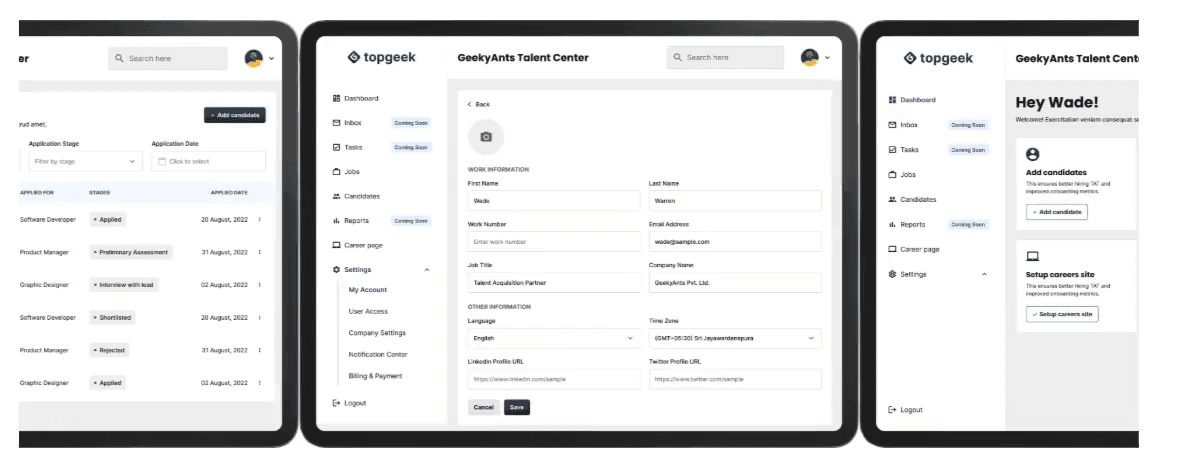
Our solutions are end-to-end, from development to support, ensuring that your app evolves with your needs. We don’t just build apps—we use them. Our success with hiroscope.ai and Topgeek.io proves our commitment to creating Fully custom AI app solutions that drive results.
How Much Does It Cost to Develop an AI-Based Interview App?
Developing an AI-powered recruitment app is a strategic investment that streamlines hiring, with costs varying based on AI complexity, features, and customization needs. The total cost depends on the development stages, from initial research to ongoing maintenance. Below, we break down cost estimates for each key stage to give you a clearer understanding of where your investment goes.
Estimated Cost Breakdown for Developing an AI-Based interview and Recruitment App
Development Area | Tasks Involved | Cost Range |
Research and Planning | Market Analysis, AI Algorithm Selection, Feature Prioritization | $1,000 – $5,000+ |
Front-End Development | UI/UX Design, Responsive Design, Mobile and Desktop Optimization | $5,000 – $15,000+ |
Back-End Development | AI Integration, Database Design, API Development | $10,000 – $25,000+ |
Core App Features | Job Posting, Candidate Search, Resume Parsing, Job Matching, ATS, Dashboards, Messaging | $10,000 – $30,000+ |
Testing and Quality Assurance | Functional Testing, Performance Testing, Security Testing, UAT | $5,000 – $15,000+ |
UI/UX Refinement | Iterative Design Based on User Feedback | $2,000 – $5,000+ |
Total Estimated Cost | Total development cost for an AI-based hiring app | $10,000 – $100,000+ |
Key Factors Affecting Development Cost:
- AI Algorithm Complexity: Advanced AI features add to the development cost due to the resources needed for accurate predictions and data processing.
- Data Quality and Quantity: High-quality data ensures better AI performance but requires extra time and effort for collection and cleaning.
- Continuous Improvement: Ongoing updates, feature additions, and algorithm refinement contribute to long-term costs.
- Ethical Considerations: Implementing fairness and transparency measures in AI adds to the development complexity and cost.
Conclusion
AI-powered recruitment apps can make hiring workflows faster, more connected, and easier to scale. Long-term success, however, depends on reliable data, responsible automation, continuous monitoring, and a platform designed around the needs of recruiters and candidates.
Ready to build a custom AI recruitment app? GeekyAnts can create a solution tailored to your business needs.