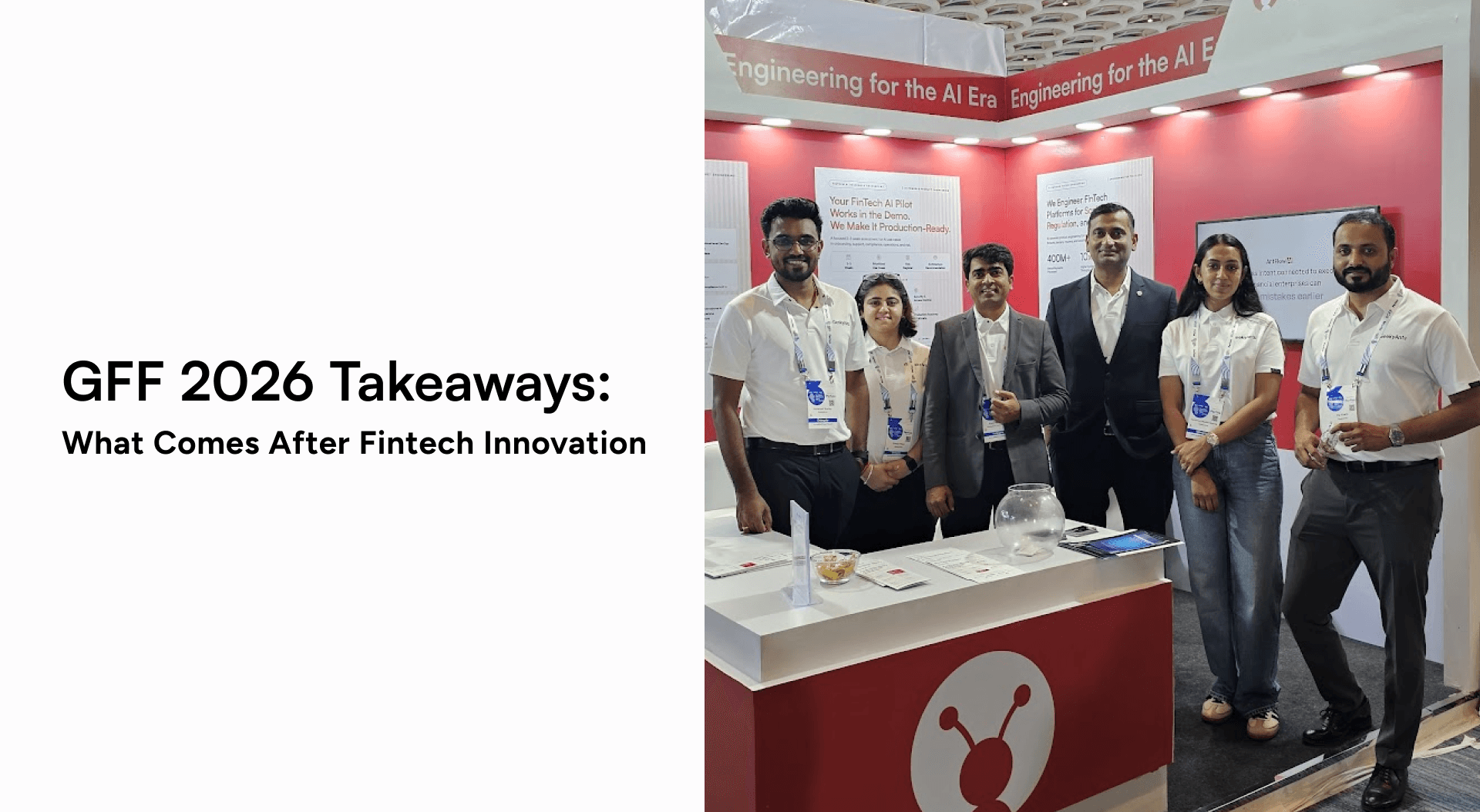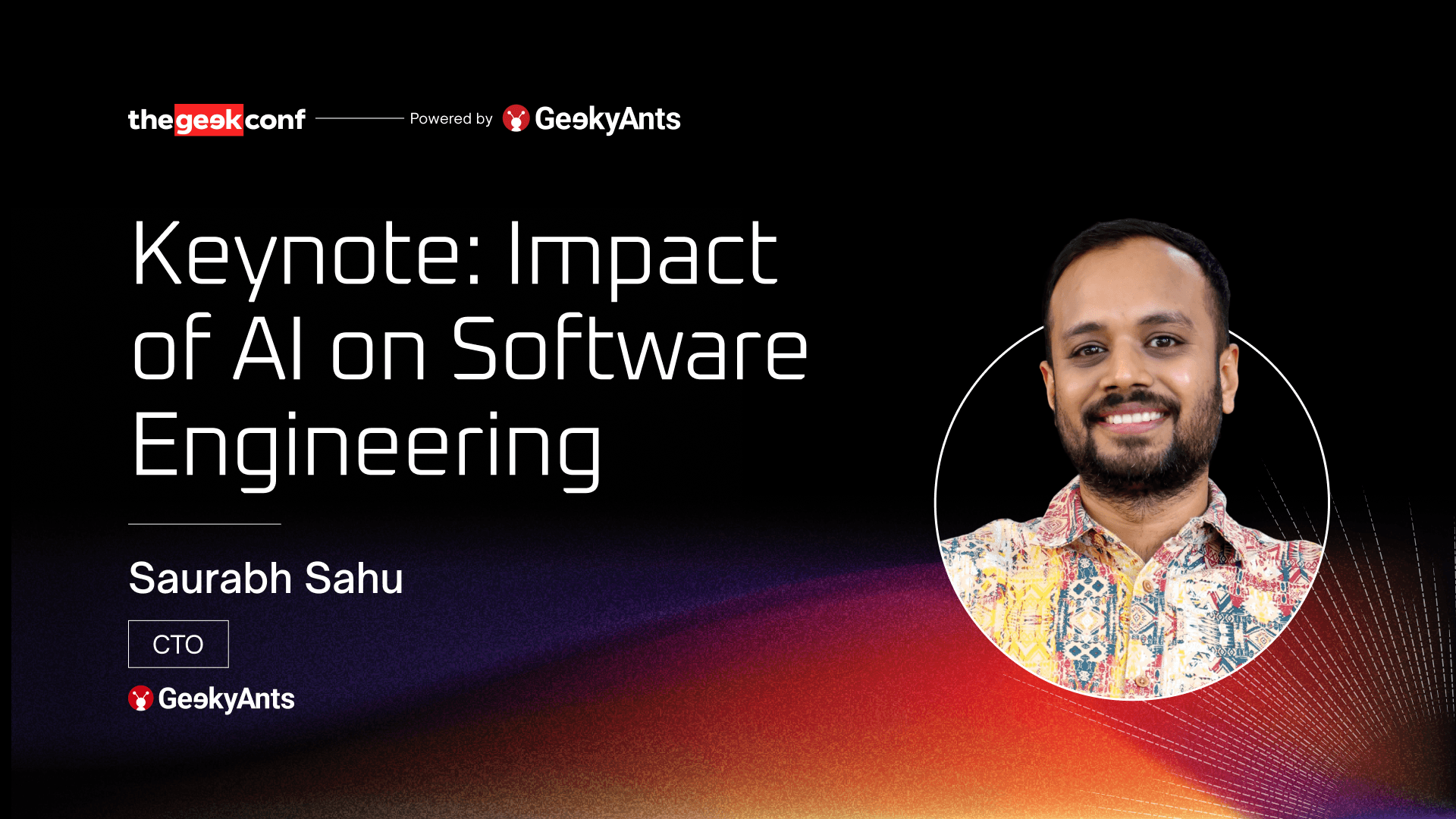

Editor’s Note: This blog post is adapted from a keynote delivered at thegeekconf 2025 by Saurabh Sahu, CTO at GeekyAnts. Saurabh utilizes real-world data from 150 developers to dissect the Job Paradox of the AI era. His session explores why massive code generation has not eliminated the need for engineers, but has instead shifted the value of the role from syntax to system architecture.
The 7 Billion Line Reality
Work will be optional. In the next 5 to 10 years, software engineering will be over. We won't need engineers to write code anymore. You have likely heard these sorts of discussions lately. I certainly have. When I started preparing for this talk, I decided to move past opinions and look directly at the data.
In November, we analyzed the output of 150 developers at GeekyAnts using Cursor, an AI code tool. The numbers were staggering. Over that single month, this group generated around 7 billion lines of code. That averages out to 4 million lines per day.
The total investment for this output was 2,700 USD. To put that in perspective, that is roughly 250,000 USD. The volume of code produced for that price is equivalent to 50 tech leads writing code full-time. When my CFO asks about the ROI of this investment, the answer is a staggering 50x return.
Looking at those numbers, it is natural to conclude that software engineering is finished. If AI can generate that much code for the price of one or two senior developers, why would we need an entire engineering floor?
The December Hiring Paradox
That conclusion feels solid until it is met by the reality of December hiring needs. Even with that 50x ROI in code generation, my requirements for December included hiring 45 new engineers. We needed Java developers, tech leads, React Native experts, and LLM engineers.
This mirrors a confusing trend in the wider market. We see headlines about TCS or Oracle laying off thousands of employees, often attributed to AI replacement. Yet, at the same time, the IT sector is expected to grow by 20%, and the demand for specialized DevOps and software engineers is higher than ever.
How can both of these things be true? AI does the work, so what are these engineers actually doing?
I recall a client who came to us with a product he had built almost entirely with AI. He was amazed at what he had created, but he was stuck on two or three final issues. He told me a line I will never forget: "I am fixing two issues, but AI is generating two new issues for me."
The 70/30 Flip
AI is exceptionally good at boilerplate, repetitive patterns, and API integrations. It can handle about 70% of the standard pull request problems. However, the remaining 30% is where the actual value of an engineer lives. This includes architecture decisions, security strategies, and complex system design.
The game has totally flipped. In the pre-AI era, an engineer spent 70% of their time completing functions and writing code, with maybe 30% spent on planning. Today, an engineer must spend 70% of their time thinking and planning the system, leaving the remaining 30% for directing the AI to execute the code.
The quality of what AI builds for you depends entirely on your depth of knowledge. You must be able to challenge the AI and validate what it generates. Companies are laying off individuals who cannot conceptualize system-wide architectures, while simultaneously hiring those who can design and orchestrate them. AI does not make bad engineers good; it makes good engineers exceptional.
Shrinking the Gap
The most exciting part of this shift is how AI has shrunk the gap between an idea and its execution. A project that once required a full engineering team and six months of development now only needs a few engineers and a much shorter timeline.
This change will lead to more startups, more experiments, and more innovation. That increased activity will create even more demand for engineers who can execute well alongside AI. The question was never about whether you would be replaced. The question is whether you will choose to evolve into the architect this new era requires.