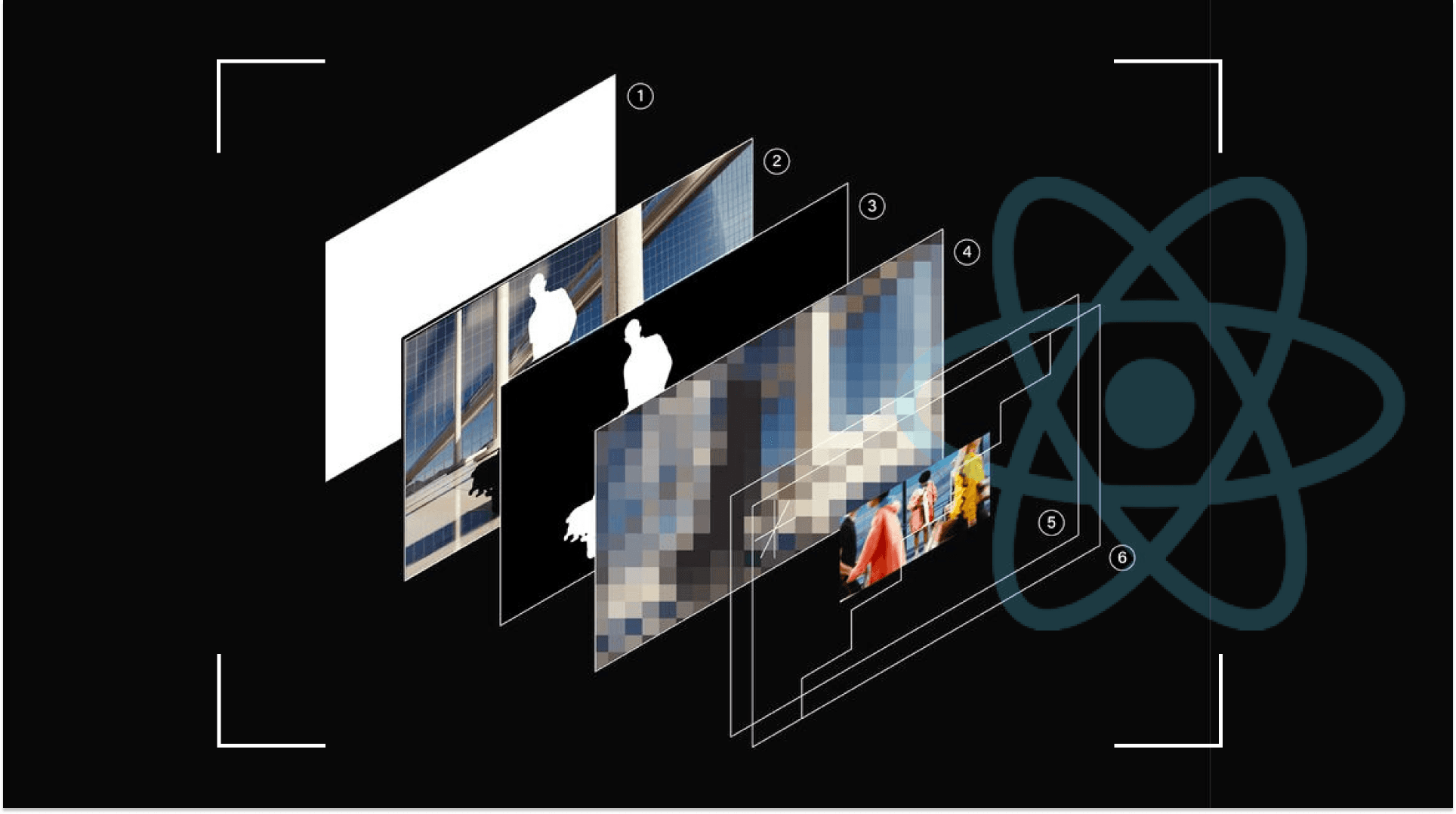


Build a production-ready, gesture-driven image cropper from scratch — supporting circular profile crops, rectangular cover crops, draggable windows, resizable corners, and pixel-perfect coordinate mapping back to the original image.
Introduction
In modern mobile applications, image handling is a core experience. Whether uploading a profile picture or setting a cover image, users expect precision, control, and real-time feedback.
While third-party libraries exist, they often introduce heavy dependencies or limit customization. In this article, we’ll build a fully custom, gesture-driven image cropper using React Native and expo-image-manipulator — supporting both circular profile crops and rectangular cover crops.
Why expo-image-manipulator?
expo-image-manipulator provides a native bridge for performing image transformations efficiently. All operations — crop, resize, rotate, flip — execute on the native thread, which means they don't block the JS runtime and scale well even on lower-end Android devices.
Compared to pure JS image-processing approaches, the native execution path avoids decoding the full bitmap into a JS array buffer, which can easily exhaust memory on high-resolution photos. The library also handles format conversion (JPEG, PNG, WEBP) and compression in a single pass, so you aren't writing a cropped image to disk and then re-encoding it for upload — the final manipulateAsync call produces the upload-ready file directly.
The package ships two API styles. The legacy imperative API (manipulateAsync) applies a list of transforms in a single async call — ideal for a one-shot crop like ours. The newer context-based API (useImageManipulator / ImageManipulator.manipulate) enables chainable, background-threaded transforms and shines when you need to compose many operations interactively without writing intermediate files to disk. We'll use the imperative API throughout this post.
Installation & Setup
Install via the Expo CLI so the correct native version is automatically matched to your SDK:
npx expo install expo-image-manipulatornpx pod-installFor a bare React Native project (without Expo Go), also run the iOS pod install:
No additional permissions are required. The manipulator operates entirely on local file URIs produced by your image picker — it never touches the camera roll or network directly.
expo-image-manipulator API Overview
We'll use the imperative API — it's perfectly suited to a one-shot crop operation.
Core Function
ImageManipulator.manipulateAsync(
  uri,        // local file URI or base64 data URI
  actions,    // array of transformation objects
  saveOptions // format, compress, base64
)
It returns a Promise<ImageResult> which resolves to:
Field | Type | Description |
|---|---|---|
url | string | Local URI to the new file (cached) |
width | number | Width of the output image in pixels |
height | number | Height of the output image in pixels |
base64 | string? | Base64 payload if base64: true was passed |
Action key | Parameters | What it does |
|---|---|---|
crop | originX, originY, width, height | Crops a rectangular region (in original image pixels) |
resize | width, height | Scales the image; omit one dimension to keep ratio |
rotate | degrees | Clockwise rotation |
flip | "horizontal" | "vertical" | Mirror along an axis |
extent | originX, originY, width, height, backgroundColor | Canvas resize with optional padding fill |
Available Actions
Save Options
Option | Type | Default | Description |
|---|---|---|---|
format | SaveFormat | JPEG | JPEG, PNG, or WEBP |
compress | 0.0 – 1.0 | 1.0 | 1 = highest quality, 0 = maximum compression |
base64 | boolean | false | Include raw base64 in the result |
Component Architecture
The <ImageCrop> component lives inside an action sheet and owns three pieces of state that together describe the current crop selection:
- containerSize — measured width and height of the image container, captured via onLayout
- cropPosition — the top-left corner of the crop window in container-space coordinates ({ x, y })
- windowDimensions — the current width and height of the crop window in container space
All crop math operates in container space first, then gets converted to original image pixel space at the moment the user taps Crop. This separation keeps gesture handling fast and stateless — no expensive native calls happen during a drag.

Props
interface ImageCropProps {
  showCropper:        boolean;
  handleClose:        () => void;
  selectedUploadType: 'profile' | 'cover';
  uploadFunction:     (data: ImageManipulator.ImageResult) => void;
  tempImage:          string;  // local URI from image picker
}
On mount, two effects run in sequence: the first sets windowDimensions based on the upload type (square for profile, wide rectangle for cover), and the second centers the crop window inside the container once both sizes are known.
// Profile: square up to 200 px. Cover: full width × 150 px.
useEffect(() => {
  if (containerSize.width > 0) {
    if (selectedUploadType === 'profile') {
      const size = Math.min(containerSize.width, 200);
      setWindowDimensions({ width: size, height: size });
    } else {
      setWindowDimensions({ width: containerSize.width, height: 150 });
    }
  }
}, [containerSize, selectedUploadType]);

// Center the window once both sizes are known
useEffect(() => {
  if (containerSize.width > 0 && windowDimensions.width > 0) {
    setCropPosition({
      x: (containerSize.width  - windowDimensions.width)  / 2,
      y: (containerSize.height - windowDimensions.height) / 2,
    });
  }
}, [containerSize, windowDimensions]);
Building The Drag & Resize System
Dragging the crop window
The crop window is a positioned View sitting absolutely on top of the image. A PanResponder attached to its inner area tracks the gesture delta (dx, dy) and updates cropPosition, clamping it so the window never exits the container boundary.
One subtle requirement: the pan responder must not activate when the touch originates inside one of the 20 px corner zones — otherwise the drag and resize responders fire simultaneously and produce jittery, conflicting movement. We check touch coordinates in onStartShouldSetPanResponder and return false for corner touches.
const panResponder = useMemo(() =>
  PanResponder.create({
    onStartShouldSetPanResponder: (evt) => {
      const { locationX: x, locationY: y } = evt.nativeEvent;
      const cs = 20;
      const inCorner =
        (x <= cs || x >= windowDimensions.width  - cs) &&
        (y <= cs || y >= windowDimensions.height - cs);
      return !inCorner;
    },
    onMoveShouldSetPanResponder: (evt) => {
      // Mirrors onStartShouldSetPanResponder — keeps both predicates in sync
      const { locationX: x, locationY: y } = evt.nativeEvent;
      const cs = 20;
      return !(
        (x <= cs || x >= windowDimensions.width  - cs) &&
        (y <= cs || y >= windowDimensions.height - cs)
      );
    },
    onPanResponderMove: (_, { dx, dy }) => {
      setCropPosition({
        x: Math.max(0, Math.min(
          cropPosition.x + dx,
          containerSize.width - windowDimensions.width
        )),
        y: Math.max(0, Math.min(
          cropPosition.y + dy,
          containerSize.height - windowDimensions.height
        )),
      });
    },
  }),
  [containerSize, cropPosition, windowDimensions]
);
Why useMemo matters here
The pan responder captures cropPosition and windowDimensions in its closure at creation time. Without useMemo, a new responder is created on every render, but the gesture system holds a reference to the original — meaning your move handler reads stale state and the crop window drifts noticeably during a fast drag. Wrapping in useMemo with the correct dependency array ensures the responder is always reading current values.
Resizing with corner handles
Each of the four corner handles has its own PanResponder, created by a factory function. The geometry differs per corner: dragging bottom-right simply extends width and height, while dragging top-left must simultaneously shrink the window and shift its origin so the opposite corner stays anchored in place.
const createCornerPanResponder = (
  corner: 'topLeft' | 'topRight' | 'bottomLeft' | 'bottomRight'
) => PanResponder.create({
  onStartShouldSetPanResponder: () => true,
  onPanResponderMove: (_, { dx, dy }) => {
    let newW = windowDimensions.width;
    let newH = windowDimensions.height;
    let newX = cropPosition.x;
    let newY = cropPosition.y;
    switch (corner) {
      case 'bottomRight':
        newW = Math.max(minDimensions.width,  windowDimensions.width  + dx);
        newH = isProfile ? newW : Math.max(minDimensions.height, windowDimensions.height + dy);
        break;
      case 'topLeft':
        newW = Math.max(minDimensions.width,  windowDimensions.width  - dx);
        newH = isProfile ? newW : Math.max(minDimensions.height, windowDimensions.height - dy);
        newX = cropPosition.x - (newW - windowDimensions.width);
        newY = cropPosition.y - (newH - windowDimensions.height);
        break;
      case 'topRight':
        newW = Math.max(minDimensions.width,  windowDimensions.width  + dx);
        newH = isProfile ? newW : Math.max(minDimensions.height, windowDimensions.height - dy);
        newY = cropPosition.y + (windowDimensions.height - newH);
        break;
      case 'bottomLeft':
        newW = Math.max(minDimensions.width,  windowDimensions.width  - dx);
        newH = isProfile ? newW : Math.max(minDimensions.height, windowDimensions.height + dy);
        newX = cropPosition.x - (newW - windowDimensions.width);
        break;
    }
    // Commit only if the new geometry fits entirely within the container
    if (
      newX >= 0 && newY >= 0 &&
      newX + newW <= containerSize.width &&
      newY + newH <= containerSize.height
    ) {
      setWindowDimensions({ width: newW, height: newH });
      setCropPosition({ x: newX, y: newY });
    }
  },
});
For profile mode, height is always forced equal to width (newH = newW) regardless of which corner is dragged, preserving a perfect 1:1 aspect ratio at every resize step. Cover mode allows independent width and height resizing, subject to configurable minimum dimensions.
Coordinate Mapping: Display → Original Pixels
This is the most critical — and most commonly misunderstood — part of building a custom cropper. Your crop window lives in container space (screen pixels inside the View), but manipulateAsync expects coordinates in original image pixel space. The two are not the same.
When an image is rendered with contentFit="cover", React Native scales it so the shorter dimension fills the container exactly — and the longer dimension overflows and is clipped. This means part of the image is hidden off-screen, and any crop coordinate you compute from container space will be offset by exactly that hidden amount unless you correct for it.
The conversion has five steps:
Step 1 — Get the original image dimensions. Call manipulateAsync with an empty actions array. This is a lightweight metadata read with no transformation cost.
const imageInfo = await ImageManipulator.manipulateAsync(
  tempImage, [], { compress: 1 }
);
Step 2 — Determine the displayed dimensions. Compare aspect ratios to find which axis is the constraining one.
const imgAR       = imageInfo.width / imageInfo.height;
const containerAR = containerSize.width / containerSize.height;
let displayedW, displayedH;
if (imgAR > containerAR) {
  // Image is wider than container — height fills, width overflows left/right
  displayedH = containerSize.height;
  displayedW = containerSize.height * imgAR;
} else {
  // Image is taller than container — width fills, height overflows top/bottom
  displayedW = containerSize.width;
  displayedH = containerSize.width / imgAR;
}
Step 3 — Compute the overflow offset. The image is centered inside the container, so the hidden portion is split equally on both sides.
const offsetX = (displayedW - containerSize.width)  / 2;  // 0 when image is taller
const offsetY = (displayedH - containerSize.height) / 2;  // 0 when image is wider
Step 4 — Compute scale factors between the original image and the displayed image.
const scaleX = imageInfo.width  / displayedW;
const scaleY = imageInfo.height / displayedH;
Step 5 — Convert UI coordinates to image coordinates.
const actualCropX = Math.round((cropPosition.x + offsetX) * scaleX);
const actualCropY = Math.round((cropPosition.y + offsetY) * scaleY);
Executing The Crop — Profile & Cover
Profile Photo (square, resized to 200 x 200)
For a profile photo, we want a square crop. We clamp the crop size so it never requests pixels beyond the image boundary, then chain a resize to normalise all uploads to 200 × 200 regardless of how large the user's original photo was.
const actualCropSize = Math.round(windowDimensions.width * scaleX);
const finalSize = Math.min(
  actualCropSize,
  imageInfo.width  - actualCropX,
  imageInfo.height - actualCropY,
);
const croppedImage = await ImageManipulator.manipulateAsync(
  tempImage,
  [
    { crop: {
        originX: actualCropX, originY: actualCropY,
        width:   finalSize,   height:  finalSize,
    }},
    { resize: { width: 200, height: 200 }},
  ],
  { compress: 1, format: ImageManipulator.SaveFormat.JPEG }
);
uploadFunction(croppedImage);
Cover photo (rectangular)
The cover crop uses independent width and height scale factors and clamps each dimension separately so neither ever exceeds the remaining pixels after the crop origin.
const actualCropW = Math.min(
  Math.round(windowDimensions.width  * scaleX),
  imageInfo.width  - actualCropX,
);
const actualCropH = Math.min(
  Math.round(windowDimensions.height * scaleY),
  imageInfo.height - actualCropY,
);


const croppedImage = await ImageManipulator.manipulateAsync(
  tempImage,
  [{ crop: {
      originX: actualCropX, originY: actualCropY,
      width:   actualCropW,  height:  actualCropH,
  }}],
  { compress: 1, format: ImageManipulator.SaveFormat.JPEG }
);
uploadFunction(croppedImage);
The Darkened Overlay Cutout
Rather than a single semi-transparent layer with a punched-out hole (which requires SVG clip-paths or canvas rendering), we use four darkened Views — one for each side of the crop window. Their positions and sizes are derived directly from cropPosition and windowDimensions, so they update in real time as the user drags or resizes without any additional state.
{/* Top — spans full width, height = distance from top to crop window */}
<View style={{ position: 'absolute', top: 0, left: 0, right: 0,
  height: cropPosition.y, backgroundColor: 'rgba(0,0,0,0.5)' }} />
{/* Bottom — starts where the crop window ends */}
<View style={{ position: 'absolute', bottom: 0, left: 0, right: 0,
  height: containerSize.height - (cropPosition.y + windowDimensions.height),
  backgroundColor: 'rgba(0,0,0,0.5)' }} />
{/* Left — only spans the crop window's row to avoid double-darkening corners */}
<View style={{ position: 'absolute', top: cropPosition.y, left: 0,
  width: cropPosition.x, height: windowDimensions.height,
  backgroundColor: 'rgba(0,0,0,0.5)' }} />
{/* Right — mirrors left */}
<View style={{ position: 'absolute', top: cropPosition.y, right: 0,
  width: containerSize.width - (cropPosition.x + windowDimensions.width),
  height: windowDimensions.height,
  backgroundColor: 'rgba(0,0,0,0.5)' }} />
Inside the crop window, the border style switches between a full-radius dashed circle (borderRadius: 999, borderStyle: 'dashed') for profile mode and a plain solid rectangle for cover mode. A rule-of-thirds grid is drawn with four thin Views at 33% and 66% positions, giving users a professional alignment guide without any additional library.
Usage
import { ImageCrop } from './ImageCrop';


const MyScreen = () => {
  const [showCropper, setShowCropper] = useState(false);
  const [pickedImage,  setPickedImage]  = useState<string | null>(null);
  const handleUpload = (result: ImageManipulator.ImageResult) => {
    uploadToServer(result.uri);
    setShowCropper(false);
  };
  return (
    <>
      {/* ... rest of your screen ... */}
      {pickedImage &&
        <ImageCrop
          showCropper={showCropper}
          handleClose={() => setShowCropper(false)}
          selectedUploadType="profile"
          tempImage={pickedImage}
          uploadFunction={handleUpload}
        />
      }
    </>
  );
};
UX Enhancements
- Grid lines (rule of thirds)
- Corner handles for resizing
- Loading overlay during processing
- Auto-centered crop window
- Dynamic resizing based on container
Performance Considerations
- Avoid repeated manipulateAsync calls
- Use useMemo for gesture handlers
- Perform crop only on user confirmation
- Use compression wisely (0.8–1)
Advanced Extensions
- Pinch-to-zoom support
- Rotation & flipping controls
- Circular live preview
- Cloud upload integration (S3/Firebase)
- Combined zoom + crop gestures
Summary & Key Takeaways
Building a custom image cropper in React Native gives you full control over UX, performance, and flexibility.
Key learnings:
- expo-image-manipulator handles heavy image processing natively
- PanResponder is sufficient for complex gesture interactions
- Coordinate mapping is the backbone of accurate cropping
- Overlay-based masking provides a clean UI without extra dependencies
- Supporting multiple crop modes requires thoughtful architecture
This approach is particularly valuable for applications handling user-generated content, where performance, flexibility, and consistent media output directly impact user experience and scalability.
Special thanks to Deepanshu Goyal for architectural guidance and review.