

Key Takeaways of AI in Drug Discovery for U.S. Biopharma Startups
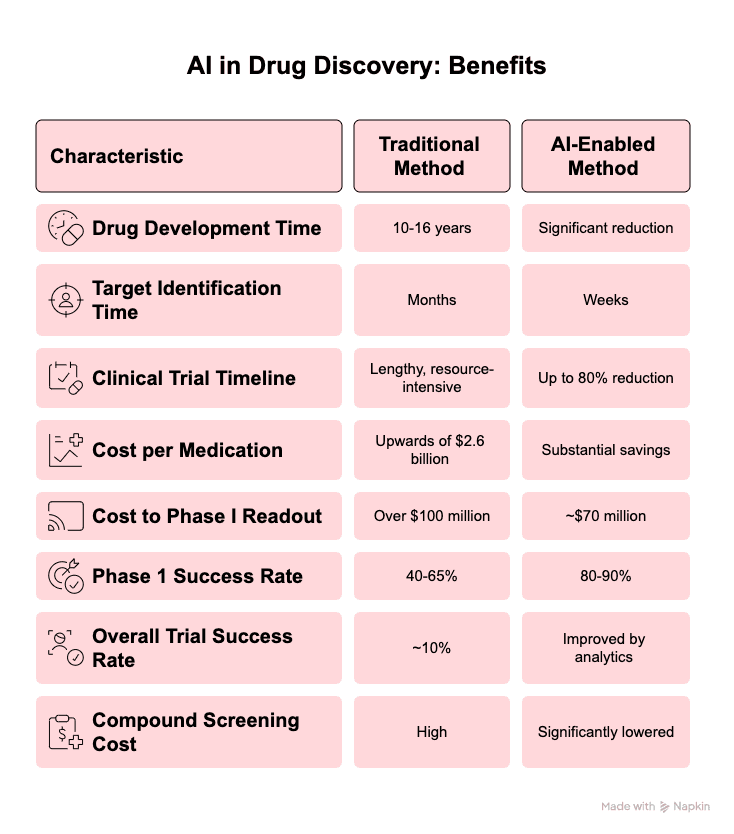
- Faster Drug Discovery: AI cuts R&D timelines from years to months—e.g., DSP-1181 discovered in 12 months vs. traditional 4–5 years.
- Lower R&D Costs: AI reduces early-stage drug development costs by up to 40% through virtual screening and predictive analytics.
- Higher Trial Success Rates: AI boosts Phase 1 clinical success to 80–90%, compared to the industry average of 40–65%.
- Market Growth Potential: The U.S. AI drug discovery market is set to grow from $2.61B (2024) to $6.93B (2034) at 10.26% CAGR.
- Advanced AI Tech Stacks: Startups use TensorFlow, PyTorch, JAX, and Vertex AI to build scalable, compliant drug discovery platforms.
GeekyAnts for AI-Driven Platforms: We help biopharma build secure, scalable AI tools—from molecular modeling to clinical data platforms.
How U.S. Biopharma Startups Can Leverage AI in Drug Discovery
Drug discovery has long been a grueling marathon. Slow, expensive, and riddled with late-stage failures, the traditional process consumed vast resources. Now, AI transforms this reality at every stage, from identifying targets to designing clinical trials. The biopharma industry operates on a slow, regulated clock.
AI, however, advances at an unprecedented pace, solving problems once deemed intractable. This widening gap presents a stark choice: embrace AI or lose ground. AI-driven innovation is no longer a competitive advantage; it is essential for survival.
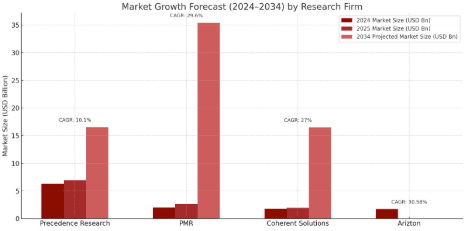
We will delve into the technology's impact, the market's explosive growth, and the future of medicine. McKinsey sees $110B/year in unlocked value. The global AI drug discovery market? Doubling to $35.4B by 2034. The era of data-powered drug development is here.
Why Biopharma Startups in the U.S. Are Uniquely Positioned?
Over 55% of global biotech funding in 2023 flowed to the U.S. This was not a coincidence. It was infrastructure at work.
Top-tier research from MIT, Harvard, Stanford, and UCSF supplied IP into startup pipelines. Founders stayed close to discovery and closer to clinical action. Firms like Flagship and ARCH broughtring capital, but also mentorship, trial planning, and regulatory strategy.
Cities like Boston and San Francisco are now providinge ready lab space, AI-rich conferences, and partnerships with Moderna, Genentech, and Gilead. Startups launch with science, scale with structure, and grow where every input multiplies.
This is the U.S. edge: a system built for breakthroughs.
The Current Landscape of AI in U.S. Biopharma
These numbers vary for a reason. AI in drug development is still early, where each breakthrough resets the curve. Models improve. Data grows. Costs shift. The trend remains: upward, fast, and uneven.
The U.S. leads not by scale alone, but by speed of adoption. Established biopharma companies already use AI to predict targets, filter compounds, and cut early-stage failures. Startups follow with sharper tools and focused pipelines. North America holds 56.18% of global market share, and the gap is widening.
Venture capital, public grants, and pharma alliances all flow into AI-first platforms. AI proves its value at every stage—screening, optimization, and trial simulation. For founders, this means one thing: the next opportunity does not wait for stability. It rewards precision, speed, and execution.
It is the start of a shift, where the U.S. defines how fast and intelligently drugs are built.
Key Players Reshaping AI Drug Discovery in the U.S.
When capital, research, and AI intersect, the leading players in biopharma are investing aggressively, forming partnerships, and building pipelines that push AI from theory into production.
Pfizer: Fast-Tracking Drug Development with AI
- In 2023, Pfizer committed 100 million dollars to an AI genomics partnership with Tempus, strengthening its position at the intersection of genomics and machine learning.
- Pfizer used AI to accelerate the development of a Paxlovid variant, reducing design timelines from the usual 12–18 months to just 6 months.
Johnson & Johnson (Janssen): Scaling AI Across Clinical Trials
- By 2024, Janssen launched over 120 active AI projects across multiple pipelines.
- Its proprietary Trials360.ai platform uses AI for patient recruitment, clinical trial optimization, and predictive analytics, reshaping trial efficiency at scale.
Merck & Co.: Targeting Oncology with AI Partnerships
- Merck partnered with TwoXAR, now Aria Pharmaceuticals, to apply AI algorithms that identify novel oncology drug targets.
- This collaboration allows Merck to uncover new therapeutic candidates in highly complex oncology pathways.
Roche: Leading the AI Readiness Race
- Roche topped Statista’s 2023 “AI Readiness Index” among global pharmaceutical giants.
- The company acquired AI startup Owkin for 1.1 billion dollars in 2023, expanding its deep learning capabilities across clinical research and real-world data analytics.
U.S. Biopharma Startups Leading the AI Charge
While big pharma scales AI across massive pipelines, U.S. biopharma startups are driving breakthrough innovation with laser-sharp focus. Their agility and deep specialization position them as AI-first disruptors.
Recursion Pharmaceuticals: High-Content Imaging at Unmatched Scale
- Based in Salt Lake City, Recursion raised 200 million dollars in Series D funding in 2024 to advance AI-first small molecule discovery.
- The company generates and analyzes over 1 million compound images every week using machine learning-powered high-content imaging.
- Recursion cut preclinical attrition by 50 percent between 2021 and 2023, proving AI’s ability to sharpen early-stage decision-making.
Genesis Therapeutics: Generative Chemistry Meets Speed
- Based in South San Francisco, Genesis raised 50 million dollars in Series C funding in 2024 to expand its generative AI chemistry platform.
- Genesis partners with Amgen and Baxter on rare disease targets, strengthening its market position.
- In a landmark 2024 study, Genesis moved three novel molecules into IND submission within 12 months.
Insilico Medicine: Redefining Discovery Timelines
- Operating from La Jolla, Insilico raised 255 million dollars in 2024 to grow its U.S. presence.
- Its AI platform accelerated discovery timelines by 75 percent for a fibrosis drug candidate, showcasing significant R&D cost savings.
Benchling: Streamlining R&D Workflows with AI-Powered Informatics
- Based in San Francisco, Benchling’s AI-enabled R&D informatics platform now supports over 200 biopharma companies across the U.S.
- In 2024, it launched Benchling AI Assistant, which cuts protocol writing time by 60 percent, improving speed and consistency in lab operations.
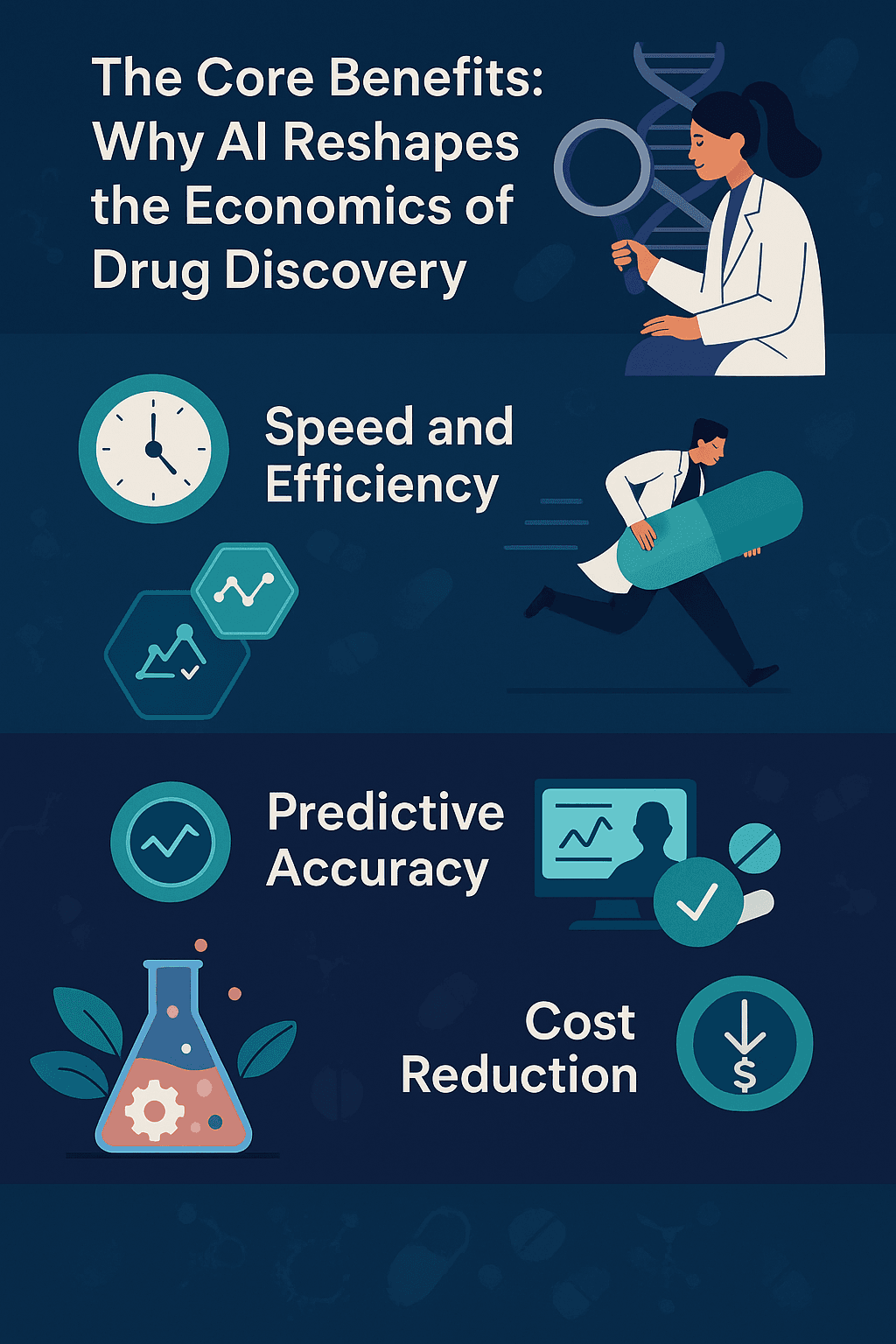
The Core Benefits: Why AI Reshapes the Economics of Drug Discovery
AI rebuilds the foundation of how biopharma companies develop, test, and commercialize new drugs. In an industry where time, cost, and failure rates define success, AI delivers advantages that touch every part of the discovery pipeline. Startups that deploy AI strategically increase success rates, reduce burn rates, and attract capital that fuels long-term growth.
The following sections break down where AI delivers its most decisive edge:
1. Speed and Efficiency: Cutting Years into Months
Imagine compressing four years of molecular exploration into twelve months. That is exactly what happened with DSP-1181, the world’s first AI-designed molecule from Exscientia. And they are not alone—Recursion Pharmaceuticals took a drug from concept to IND-ready in 18 months. In a world where time kills momentum, that kind of speed is more than an edge—it is a lifeline. Especially for startups where the next funding round depends on the next breakthrough.
2. Predictive Accuracy: Raising the Odds of Success
And then there is cost. Drug development bleeds money—$2.6 billion on average per drug. But AI systems like Genesis Therapeutics’ GEMS platform can simulate billions of compound interactions digitally, slashing time and spend. No more months of benchwork to eliminate dead-end candidates. AI does it in hours. And when your platform also handles predictive manufacturing and inventory optimization? You are saving downstream too, not just in R&D, but to commercial launch.
3. Cost Reduction: Unlocking Capital Efficiency
Developing a single drug can cost more than $2.6 billion. The waste is not just in failures—it is in the time lost validating what should have been ruled out early.
AI cuts upstream costs by filtering weak molecules before the lab even gets involved. Genesis Therapeutics’ GEMS platform uses in-silico screening to eliminate low-potential compounds without spending months in assays.
Costs drop further downstream. Smarter manufacturing, real-time logistics, and predictive inventory planning reduce operational bloat. For companies racing the clock—and their competitors—this efficiency is strategic.
AI transforms drug discovery into a leaner, faster, and more precise engine, reshaping the future of biopharma.
Startups at the Frontline: How U.S. Innovators Are Redefining AI Drug Discovery
Big pharma scales AI. Startups sharpen it. Across the U.S., a new class of biopharma startups turns AI into clinical reality, attacking drug discovery’s toughest challenges with precision.
Recursion Pharmaceuticals: Turning Biology into Data
Recursion combines AI with high-throughput imaging to map how cells respond to thousands of compounds. This allows fast identification of new therapeutic candidates. Its predictive modeling sharpens patient recruitment by analyzing real-world data. In 2025, Recursion cut three programs to rein in cash burn, proving that even with AI, discipline and focus drive survival.
Genesis Therapeutics: Designing Molecules with Generative AI
Genesis uses its GEMS platform to predict drug-target interactions and design novel small molecules. In 2025, it partnered with Incyte, securing 30 million dollars upfront and nearly 300 million in milestones. Genesis shows how generative AI and smart partnerships accelerate drug design and deal flow.
Atomwise: AI-Powered Target Discovery
Atomwise’s AtomNet™ screens billions of compounds through structure-based deep learning, identifying drug candidates missed by traditional methods. With over 775 collaborations, Atomwise proves AI’s ability to scale discovery pipelines while improving early-stage precision.
Schrödinger: Simulating Molecules Before They Exist
Schrödinger merges physics-based simulations with AI to model molecular behavior at the atomic level. Its predictive models reduce costly lab trial-and-error, optimizing structures before synthesis and improving the odds of clinical success.
PathAI: Faster, Sharper Cancer Diagnostics
PathAI applies machine learning to pathology, helping oncologists detect tumors and biomarkers faster and more accurately. Its precision accelerates diagnosis and treatment decisions, improving patient outcomes while reducing diagnostic delays.
Xaira Therapeutics: Generating Proteins from Scratch
Xaira, launched in 2024 with 1 billion dollars, uses generative AI models like RFdiffusion to design proteins and antibodies that target diseases resistant to conventional drugs. Xaira’s platform opens new therapeutic frontiers in oncology, immunology, and rare diseases.
The Common Thread
These startups move with one principle: focus sharpens AI’s edge. Whether predicting molecules, simulating proteins, streamlining trials, or improving diagnostics, they apply AI as the engine behind their business models. That precision draws capital, accelerates breakthroughs, and builds clear paths to scale.
Implementing AI in Drug Discovery: A Step-by-Step Guide to Accelerating Innovation
The drug discovery process is broken. Timelines stretch 10 to 15 years. Costs soar beyond $2.6 billion per successful drug. Failure rates hover at 90 percent. So, when deployed strategically, AI rewrites every phase of drug development, slashing time, reducing risk, and reshaping the economics of drug pipelines.
Here is how biopharma startups and pharma leaders are putting AI to work –
Step 1: Start with a Precise Scientific Problem
Duration: 1–2 weeks
AI performs best with a focused problem. Start with a clearly defined biological target or unmet medical need. Successful examples like AlphaFold show how target-specific AI can unlock breakthroughs in protein structure prediction. Clarity at this stage shapes the entire pipeline downstream.
Step 2: Build a High-Integrity Data Foundation
Duration: 3–4 weeks
AI learns from data. Poor data leads to poor predictions. Use structured public datasets (e.g., Protein Data Bank, DrugBank), but prioritize validation and diversity. Adopt FAIR principles and ensure ethical safeguards like de-identification and bias monitoring.
AI should help clean and curate it, improving over time.
Step 3: Assemble a Cross-Functional Core Team
Duration: 1–2 weeks
AI in pharma is not a solo act. It requires collaboration between data scientists, bioinformaticians, clinicians, and regulatory specialists. Teams that understand both biology and machine learning are essential to turning model output into clinical insight.
Step 4: Choose the Right AI Technology Stack
Duration: 2–3 weeks
Not all AI is created equal.
- Use machine learning for trial optimization and toxicity prediction.
- Use deep learning for structural modeling.
- Use generative AI to create novel compounds.
- Use NLP to extract insights from literature.
Cloud platforms like AWS HealthLake and Google Vertex AI offer scalable infrastructure. Focus on transparency, auditability, and explainability from day one.
Step 5: Validate Models with Real-World Data
Training AI on historical data is only the beginning. Validation requires real-world clinical data to confirm accuracy, fairness, and performance. Regulatory bodies like the FDA now demand model development documentation under a risk-based framework. Diversity, bias detection, and traceability are mandatory.
Step 6: Monitor, Adapt, and Maintain Human Oversight
Duration: Ongoing
AI evolves as data shifts. Set up systems to detect drift, monitor accuracy, and feed expert feedback into the loop. Human review is not optional—it is foundational to scientific and regulatory integrity.
Step 7: Integrate with CROs and Clinical Development Partners
Duration: 3–5 weeks
AI shortens trial cycles. It automates patient recruitment, predicts dropout risk, and adjusts protocols in real time. CROs that embed AI into trial design and logistics become strategic partners, not just contractors.
Step 8: Build for Compliance from Day One
Duration: 2–3 weeks
AI adoption in drug development must comply with evolving global frameworks. From model transparency to data traceability, every step must be documented. Explainable AI (XAI) is now a regulatory expectation, not a bonus.
Step 9: Leverage Strategic Partnerships
Duration: Ongoing
No company can build AI drug discovery platforms alone. Innovation in drug discovery is accelerated through partnerships. Collaborate with academic labs, technology vendors, CROs, and cloud platforms. Success stories like Sumitomo’s DSP-1181 and Pfizer’s AWS-powered COVID-19 workflow prove the value of ecosystem-driven innovation.
Step 10: Build a Scalable Commercialization Path
Duration: 3–4 weeks
AI does not stop at the lab. It supports precision manufacturing, supply chain optimization, and real-time pricing strategies. Companies that embed AI across R&D and go-to-market operations will lead in speed, efficiency, and ROI.
The Future Is Already Here
From target identification to manufacturing to market access, AI is shrinking drug discovery timelines, cutting costs by up to 40 percent, and dramatically improving clinical success rates. The companies that master AI integration, while managing compliance, ethics, and partnerships, will likely lead the next generation of biopharma innovation.
The time to act is now.
Regulatory and Compliance Considerations for AI in Biopharma
The biopharmaceutical industry stands at a critical intersection of innovation and regulation. Artificial Intelligence (AI) offers powerful capabilities across drug development, but regulatory bodies like the U.S. Food and Drug Administration (FDA) maintain a sharp focus on safety, efficacy, and quality. Companies must navigate these guidelines with precision to harness AI’s full potential while remaining fully compliant.
FDA's Position on AI in Drug Development
In January 2025, the FDA released a pivotal draft guidance: Considerations for the Use of Artificial Intelligence To Support Regulatory Decision-Making for Drug and Biological Products. This guidance outlines the agency’s expectations for AI models that influence participant safety, study reliability, or drug quality. The FDA draws a clear boundary, leaving AI applications in early-stage discovery or operational efficiency largely outside this framework unless they directly impact these critical areas.
The FDA’s risk-based credibility assessment framework drives its evaluation process. It requires developers to:
- Define the regulatory question.
- Clarify Context of Use (COU).
- Assess model risk.
- Validate rigorously per COU.
Early-stage AI escapes heavy scrutiny—unless safety is involved—allowing innovation while protecting integrity.
Patient Privacy: HIPAA and CCPA in AI Model Development
AI models thrive on clinical and patient datasets, but privacy laws raise the stakes. HIPAA governs the handling of Protected Health Information (PHI), applying de-identification as a standard requirement. Developers choose between two main approaches:
- Safe Harbor: Removes 18 identifiers but reduces data richness.
- Expert Determination: Uses statistical analysis to preserve data utility while ensuring compliance.
Meanwhile, the California Consumer Privacy Act (CCPA) grants users the right to access, delete, or restrict use of their data. Though not healthcare-specific, CCPA affects all AI systems processing personal information.
Startups prefer Expert Determination, which balances data quality with legal compliance. However, navigating this requires both statistical and legal expertise.
Data Integrity and Auditability: Building Trust in AI
AI must not only work—it must be traceable. Regulators now look beyond breaches and into algorithmic fairness, explainability, and bias. CCPA mandates routine risk assessments for data practices involving personal information.
To align with this, biopharma developers adopt Explainable AI (XAI). These models provide auditable, human-readable decisions that build trust with regulators, clinicians, and patients alike.
Transparent AI has become a prerequisite for scalable, ethical innovation.
How U.S. Startups Are Successfully Leveraging AI: Real-World Case Studies
Leveraged AI & Next.js to Transform Healthcare Website Performance
A leading diagnostic network struggled online. With over 1,200 centers, it faced slow load times, poor mobile responsiveness, and declining SEO. Backend updates made the experience unstable. Patients left before engaging.
GeekyAnts rebuilt the site from the core. Using AI-led UX audits, real-time insights, and predictive backlog planning, we structured a system that loads fast and performs across screens. Next.js with server-side generation improved SEO. TailwindCSS and React Native ensured the design matched the development.
Results: 100/100 Lighthouse score, 0.7s load times, and a platform ready to scale patient experience.
AI-Powered Drug Discovery Model
Molecular binding is a critical yet failure-prone step in drug discovery. Genesis Therapeutics addressed this by building GEMS, an AI platform that simulates molecular interactions and predicts binding precision.
By screening billions of compounds in silico, GEMS accelerated R&D, eliminated weak candidates early, and prioritized viable ones for trials.
Results: Faster timelines, higher hit rates, and over $300M in funding, including a $30M+ deal with Incyte—validating GEMS as a scalable AI asset.
Technical Infrastructure and Tools Powering AI in Biopharma
The surge of AI in drug discovery depends not on algorithms alone, but on a robust technical backbone. Biopharma organizations must engineer scalable AI platforms, sophisticated data architectures, and agile integration layers that extract actionable insights from complex biological data while preserving operational resilience. This convergence of computation, data science, and life sciences shapes the next frontier of drug development.
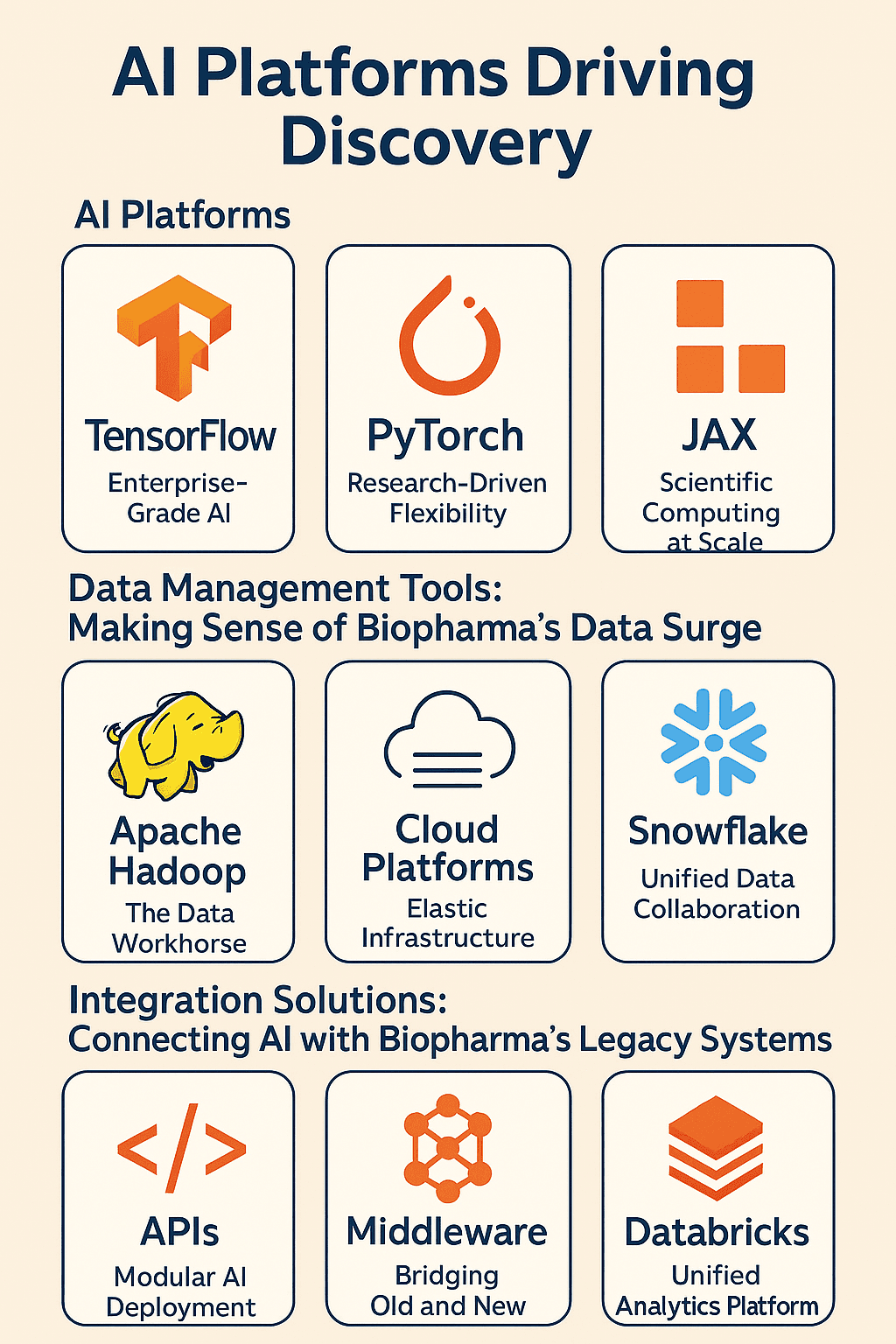
AI Platforms Driving Discovery
The AI framework defines the speed and precision of drug discovery. TensorFlow and PyTorch lead the field, while specialized platforms expand biopharma’s AI arsenal.
TensorFlow: Enterprise-Grade AI
Google introduced TensorFlow in 2015. Its static graph-based computation maximizes CPU and GPU performance, essential for processing genomic sequences, proteomics, and advanced neural networks. TensorFlow deploys across desktops, cloud clusters, and on-premise systems, ensuring reproducibility and stability for regulated environments. Keras simplifies neural network building for diverse teams. TensorBoard visualizes model diagnostics, enabling hypothesis validation in complex systems.
PyTorch: Research-Driven Flexibility
Meta AI launched PyTorch in 2016. Its dynamic computation graphs enable researchers to modify models during experiments, ideal for evolving early-stage drug discovery. Deep Python integration makes it accessible to bioinformaticians and data scientists. TorchVision supports medical imaging; TorchText handles scientific literature mining. Genentech applies PyTorch in oncology to model disease mechanisms with precision.
JAX: Scientific Computing at Scale
Google’s JAX merges NumPy syntax with GPU-accelerated differentiation. JAX supports advanced pharmacokinetic modeling, molecular simulations, and systems biology. AI-native startups use JAX for protein folding and drug-protein binding studies, gaining high-performance scientific computing.
Biopharma leaders adopt hybrid stacks—combining TensorFlow’s production power, PyTorch’s research agility, and tools like JAX, DeepChem, and NVIDIA Clara for specialized acceleration.
Data Management Tools: Making Sense of Biopharma's Data Surge
AI-powered drug discovery produces enormous volumes of genomic, proteomic, EHR, clinical trial, and real-world evidence data. Specialized platforms transform these silos into AI-ready pipelines.
Apache Hadoop: The Data Workhorse
Hadoop provides distributed storage and parallel processing across clusters. Its fault-tolerant design manages petabytes of structured and semi-structured data from genomic studies, proteomics, and clinical trials, supporting batch processing and longitudinal analysis.
Cloud Platforms: Elastic Infrastructure
AWS, Google Cloud, and Microsoft Azure deliver HIPAA-compliant cloud solutions built for healthcare AI. Elastic storage, GPU compute, and integrated analytics pipelines unlock real-world data, imaging, and global clinical trial registries.
- AWS HealthLake structures clinical data with FHIR standards for longitudinal patient modeling.
- Google Cloud Vertex AI manages full AI pipelines, from training to deployment.
- Azure Synapse unifies data engineering, analytics, and machine learning for enterprise life sciences.
Snowflake: Unified Data Collaboration
Snowflake separates compute and storage to enable secure, multi-tenant data sharing across CROs, academic partners, and regulatory bodies. Its architecture simplifies real-time integration of biomedical data with strong governance controls.
Databricks: Unified Analytics Platform
Databricks merges data lakes and warehouses with its lakehouse architecture. MLflow powers reproducible AI model development across clinical trials, genomics, and pharmacovigilance.
Integration Solutions: Connecting AI with Biopharma’s Legacy Systems
Most biopharma IT environments rely on rigid legacy systems built for compliance. AI integration demands architectures that extend functionality without destabilizing core systems.
APIs: Modular AI Deployment
RESTful APIs separate AI logic into independent microservices that connect with legacy platforms. This approach protects core systems while enabling advanced analytics, predictive modeling, and real-time decision support.
Middleware: Bridging Old and New
Middleware translates data and protocols between disconnected systems. It enables secure, bidirectional data flow without altering legacy code, allowing AI models to work alongside validated clinical platforms.
The “build around, not through” approach allows biopharma companies to adopt AI incrementally, reduce operational risk, and expand AI maturity without disrupting mission-critical operations.
Challenges and How to Overcome Them
AI offers transformative possibilities in drug discovery, but significant challenges remain. Startups must navigate these obstacles with precision to unlock their full potential.
Aspect | Challenge | Solution |
High Costs and Long Timelines | AI infrastructure, specialized talent, and large-scale data preparation demand high upfront investment. The capital intensity remains significant, even with AI efficiencies. | Strategic partnerships secure early funding, validate technology, and open commercialization pathways. Narrow, high-impact AI use cases with clear ROI attract investment and enable scalable growth. |
High Failure Rates | Despite improved predictions, many candidates fail in clinical trials due to efficacy gaps or safety concerns. Incomplete, inconsistent, or biased datasets often limit AI performance. | Strong data pipelines, diverse data sources, and bias mitigation improve model reliability. Real-world evidence, digital twin simulations, and clinical oversight increase predictive accuracy and maintain ethical integrity. |
Data Quality and Integration | Biopharma data is often fragmented, siloed, and incomplete, making integration across structured and unstructured sources highly complex. | Cloud-native infrastructure, modern data engineering, and robust governance streamline data integration. Collaborations with specialized providers supply curated, harmonized datasets for scalable AI deployment. |
Talent Gap and Cross-Functional Expertise | AI solutions demand combined expertise in drug development, computational biology, cloud systems, and machine learning, while qualified talent remains limited. | Internal upskilling, cross-disciplinary collaboration, and strategic external partnerships build hybrid expertise without overextending internal teams. |
Regulatory Hurdles and Ethical Concerns | Strict data privacy laws, regulatory evidence requirements, and AI transparency obligations create significant regulatory friction. | Early engagement with regulators establishes validation frameworks. De-identification processes, explainable AI frameworks, and strong governance ensure compliance, transparency, and responsible AI deployment. |
Intellectual Property (IP) Risks | AI’s role introduces complexity in inventorship claims, licensing, and IP protections. Overstating AI contributions may weaken patent eligibility. | Early IP strategy aligns AI innovation with patent law. Documented human-AI contributions and carefully structured agreements secure both software and therapeutic IP rights. |
How GeekyAnts Helps Biopharma Navigate AI Complexity
At GeekyAnts, we bring deep, hands-on experience in building AI-powered platforms tailored for the complexities of biotech and pharmaceutical innovation. From molecule prediction to clinical decision support, we engineer end-to-end systems that scale, comply, and deliver.
AI in drug discovery is not generic. It requires architecture that handles genomic data, adapts to regulatory needs, and integrates seamlessly with research pipelines. That is what we build.
Our Work in Biopharma AI
We partner with biotech teams to deliver highly specialized platforms that support real-world drug discovery challenges:
- Custom AI Model Development – Purpose-built deep learning systems for molecular simulations, structure prediction, and compound screening using TensorFlow, PyTorch, JAX, and Vertex AI.
- Genomic and Clinical Data Analytics – Pipelines built to ingest, normalize, and analyze complex datasets from EHRs, omics platforms, and trial management systems.
- AI-Powered Research Portals – Secure, cloud-native tools that connect data scientists, clinicians, and regulatory teams in a unified R&D environment.
Each solution is built for auditability, explainability, and rapid iteration, meeting both product and compliance goals.
Built for Science. Engineered for Scale.
We do not offer templates. We co-develop platforms alongside biopharma partners, whether you’re building an internal discovery engine or a market-facing diagnostic AI product. Our expertise in AI model lifecycle, platform architecture, and data governance helps teams move from idea to infrastructure without the complexity.
Ready to accelerate your next breakthrough? Let’s build it together.
The Path Forward for AI-Driven Biopharma Startups
In a nutshell, the AI drug discovery market is growing fast, with multi-billion-dollar projections by 2030. Startups that adopt early, execute precisely, and build strategically will gain first-mover advantage through shorter timelines, lower costs, and higher success rates.
Thorough readiness assessments must evaluate capabilities, data infrastructure, and talent gaps. Partnerships with technology providers and pharmaceutical companies are essential to scale innovation, reduce risk, and navigate regulation. Drug discovery now stands on data and AI. Collaboration unlocks its full potential and delivers new therapies.
FAQ’s
How much can AI reduce drug discovery timelines?
AI can significantly slash R&D timelines, reducing target identification from months to weeks. AI-enabled clinical trial processes have demonstrated up to an 80% reduction in timelines, and the discovery phase for an AI-designed drug can be as short as 12 months, compared to 4-5 years traditionally.
What is the projected market size for AI in drug discovery in the U.S.?
The U.S. AI in drug discovery market size reached USD 2.61 billion in 2024 and is projected to expand to approximately USD 6.93 billion by 2034, growing at a CAGR of 10.26% from 2025.
How does AI improve clinical trial success rates?
AI-discovered drugs in Phase 1 clinical trials have shown success rates of 80-90%, significantly higher than the traditional 40-65%. AI models can predict trial outcomes with over 70% accuracy, helping prioritize promising candidates and redesign trials to avoid potential pitfalls.
What are the main regulatory considerations for AI in drug development in the U.S.?
The FDA's draft guidance emphasizes a risk-based approach, focusing on AI's impact on drug safety, effectiveness, and quality. Key considerations include ensuring data quality, maintaining human oversight, and engaging early with the FDA. Compliance with patient privacy laws like HIPAA and CCPA is also crucial.
Which U.S. startups are leading the way in AI drug discovery?
Notable U.S. innovators include Recursion Pharmaceuticals, Genesis Therapeutics, Atomwise, Schrödinger, PathAI, and Xaira Therapeutics.