
Editor’s Note: This blog introduces CodeLens, an AI-powered code analysis tool developed during Hackathon 2024 by TechTitans. It provides centralized project analytics, AI-driven insights, and real-time code tracking, helping team leads efficiently monitor development progress. While the text has been refined for clarity and impact, it remains true to the energy, passion, and authenticity of the original moment.
Team Members: Rhea Dhingra, Ujjwal Agarwal, Jabjot Suri, Pranava Vasthi, Aman Fungire
During Hackathon 2024, our team developed CodeLens, an AI-driven code analysis and project tracking tool aimed at solving a common challenge faced by team leaders: gaining clear visibility into project progress and team contributions. With multiple developers working on a project, tracking insights like technologies used, commit frequency, contributions, and repository health becomes cumbersome. CodeLens provides a centralized dashboard that offers analytics, AI-driven insights, and repository monitoring to streamline project oversight.
How it works
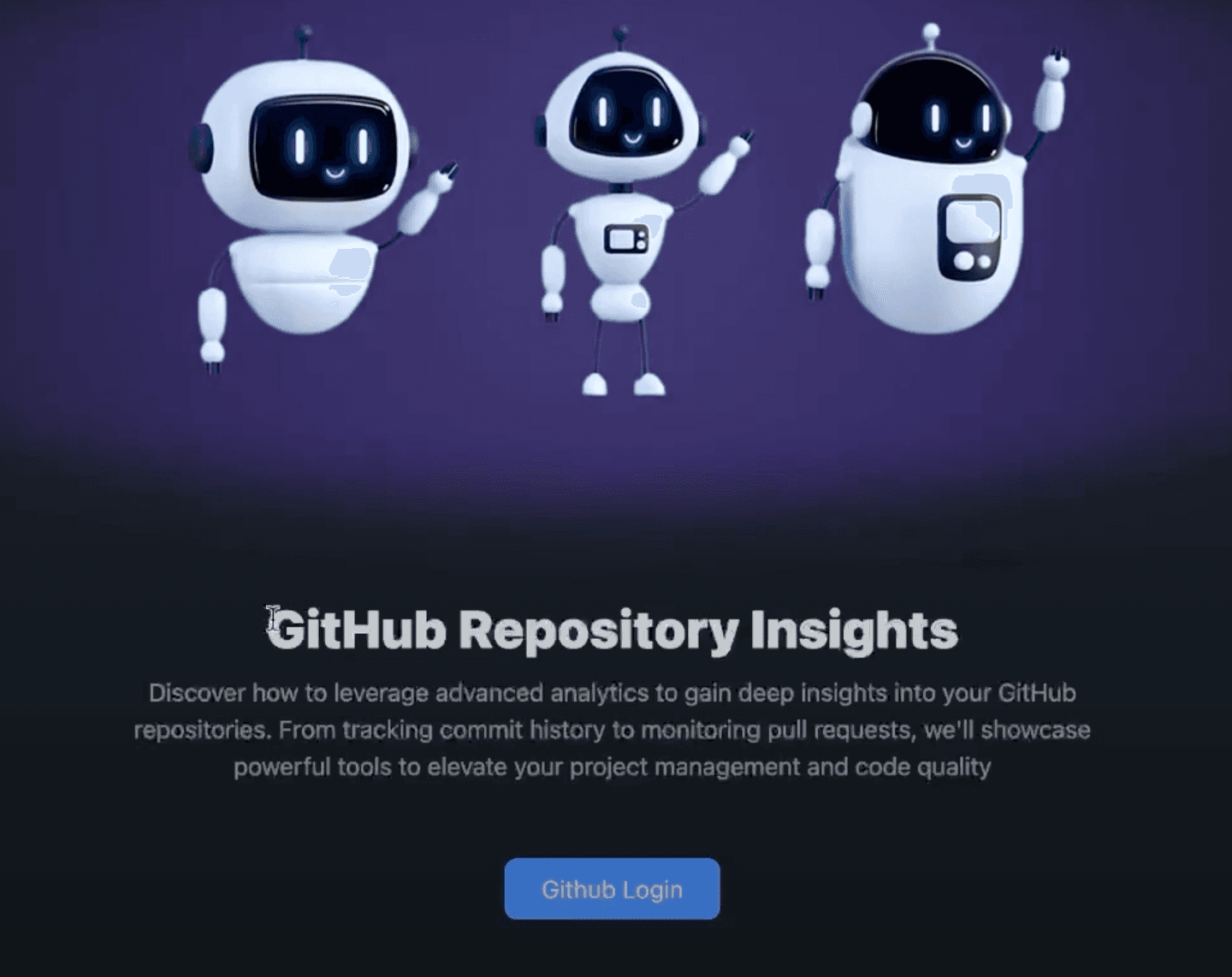
CodeLens connects directly with GitHub, allowing users to log in and access all their repositories in a structured dashboard. Once a user selects a repository, AI analyzes the codebase to extract critical insights, including commit history, project activity, top contributors, and pull request monitoring.
The AI-powered analysis engine breaks down the codebase into structured data, tracking elements such as code structure, complexity patterns, development activity, and potential improvements. This ensures that project leads gain a comprehensive overview of repository health without manually reviewing every file.
Key Features
CodeLens offers a centralized dashboard that consolidates repository metrics, commit tracking, pull request monitoring, and AI-driven insights. It includes GitHub authentication with Firebase Auth, providing seamless repository access. The platform utilizes React.js for frontend development and Python with FastAPI for backend processing, leveraging ChatGPT with LangChain for deep code analysis. The AI system analyzes code structure, commit patterns, and developer activity, identifying trends and areas for improvement. By embedding code into a vector database using OpenAI embeddings, CodeLens enables fast, intelligent code retrieval for analysis and recommendations.
Live Demonstration
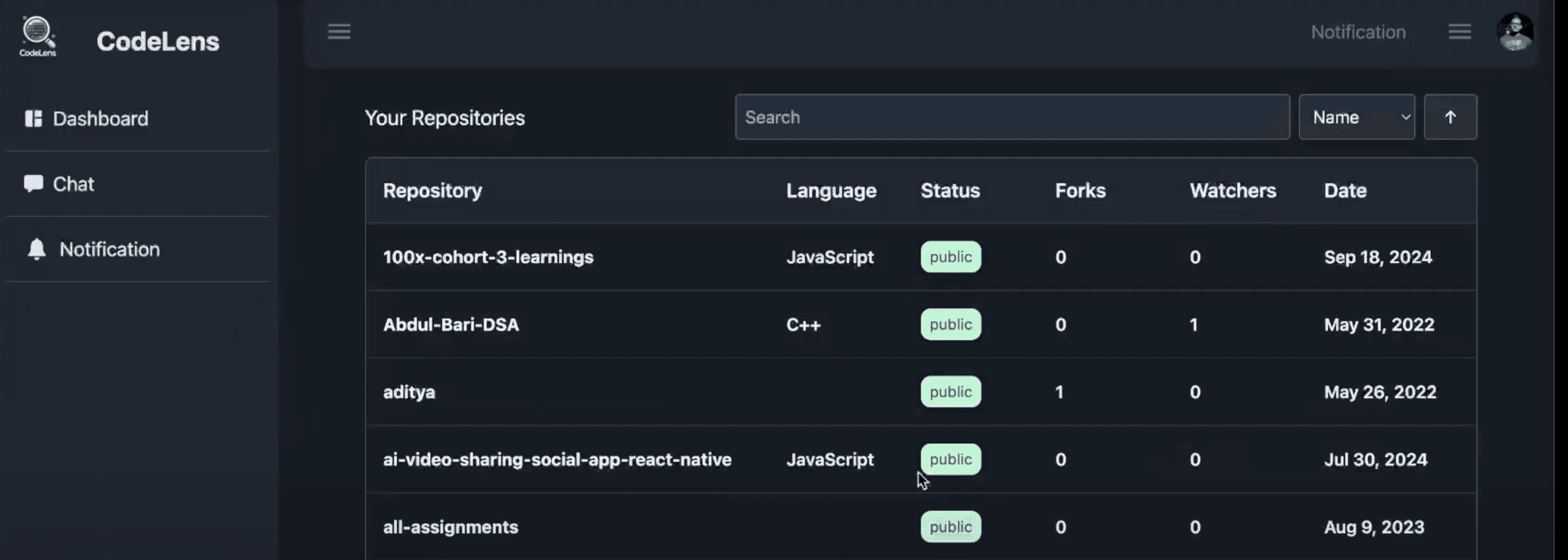
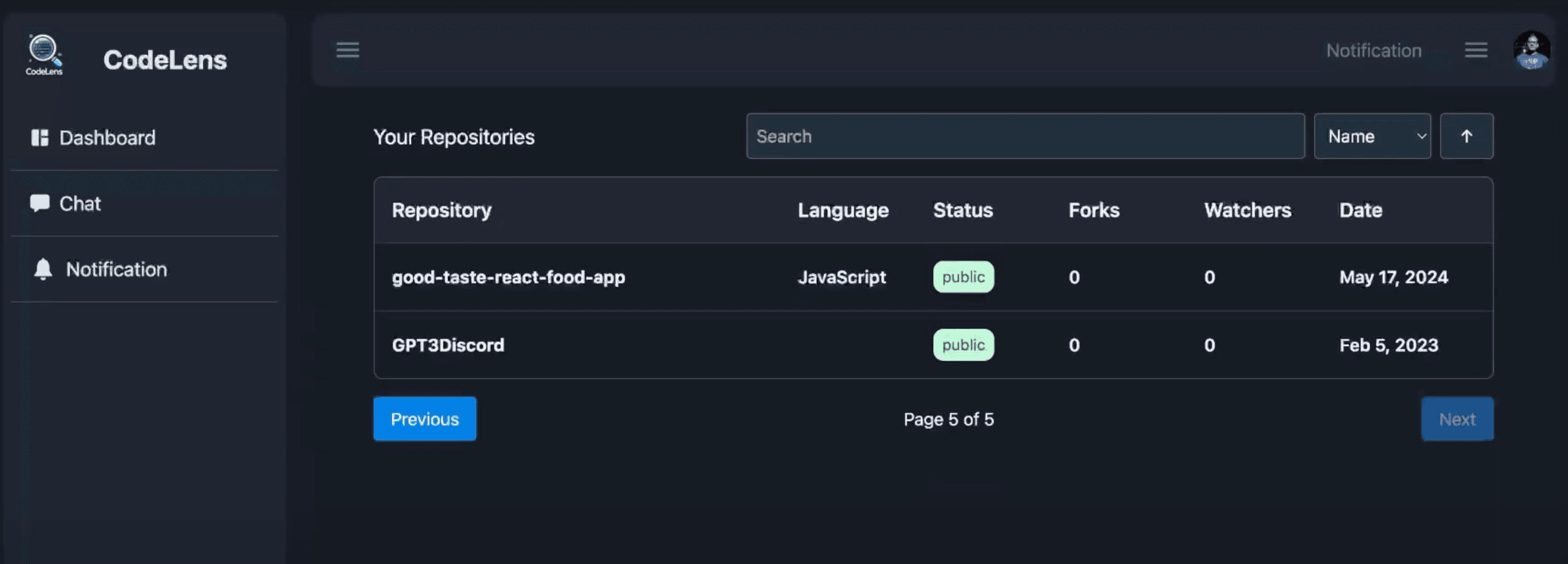
Upon logging in via GitHub authentication, users access a dashboard displaying all repositories. The interface lists repository names, programming languages, privacy settings, and key statistics like forks, watchers, and creation dates. Selecting a repository triggers real-time AI analysis, generating insights into project activity and code health.
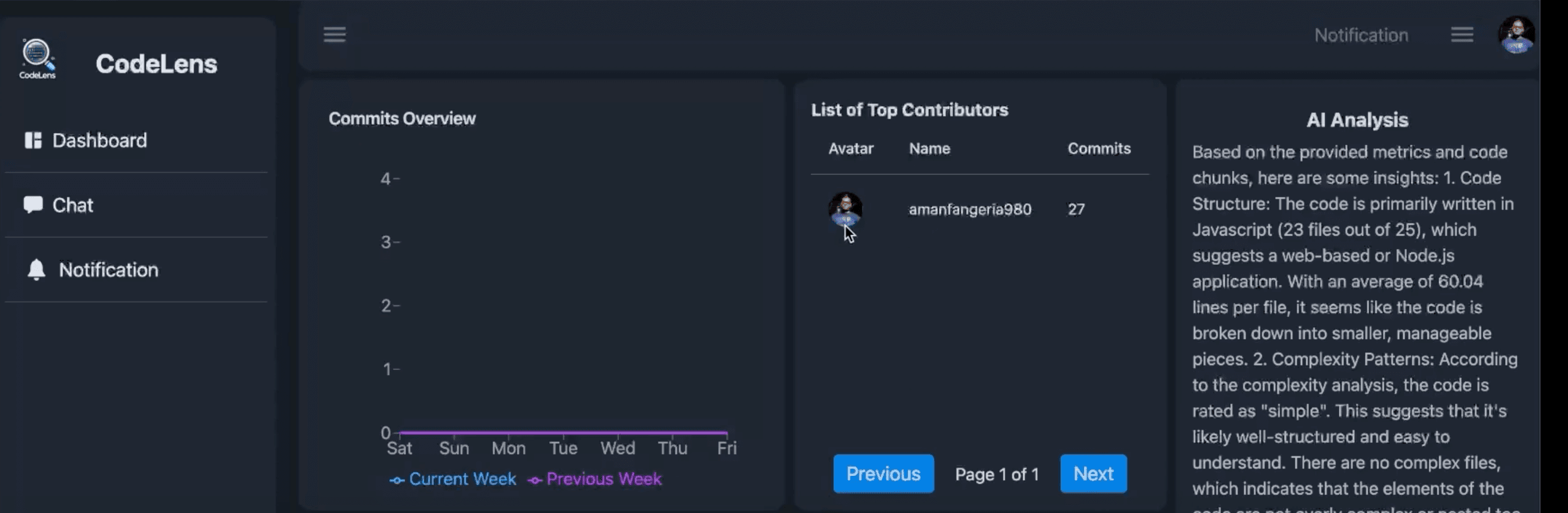
The commit history graph visualizes commit trends, showing the frequency and consistency of contributions. The top contributors section highlights individual team members, displaying their commitment counts and contribution levels. The pull request monitoring feature provides an overview of open, merged, and pending pull requests, allowing leads to track progress seamlessly.
The AI-powered code analysis module processes the codebase using LangChain and OpenAI embeddings, breaking it into chunks for efficient processing. The system identifies patterns, assesses code health, and suggests improvements, offering insights such as code complexity, modified files, and best practices for optimization.
Why CodeLens Matters
For team leads and project managers, CodeLens provides a data-driven approach to project monitoring, eliminating the need for manual code reviews. By offering real-time AI-powered insights, it enhances visibility into team contributions, project structure, and repository activity. This helps developers optimize workflows, track performance, and maintain code quality effectively.
Final Thoughts
Developing CodeLens during Hackathon 2024 was an exciting challenge. Our goal was to empower team leads with an intelligent project analytics tool, making code monitoring effortless and efficient. We plan to refine its UI, expand its analysis scope, and integrate more detailed visualizations in the future.
GitHub link for the project: https://github.com/Riya-dhingra3/Geekathon_Techtitans_frontend.