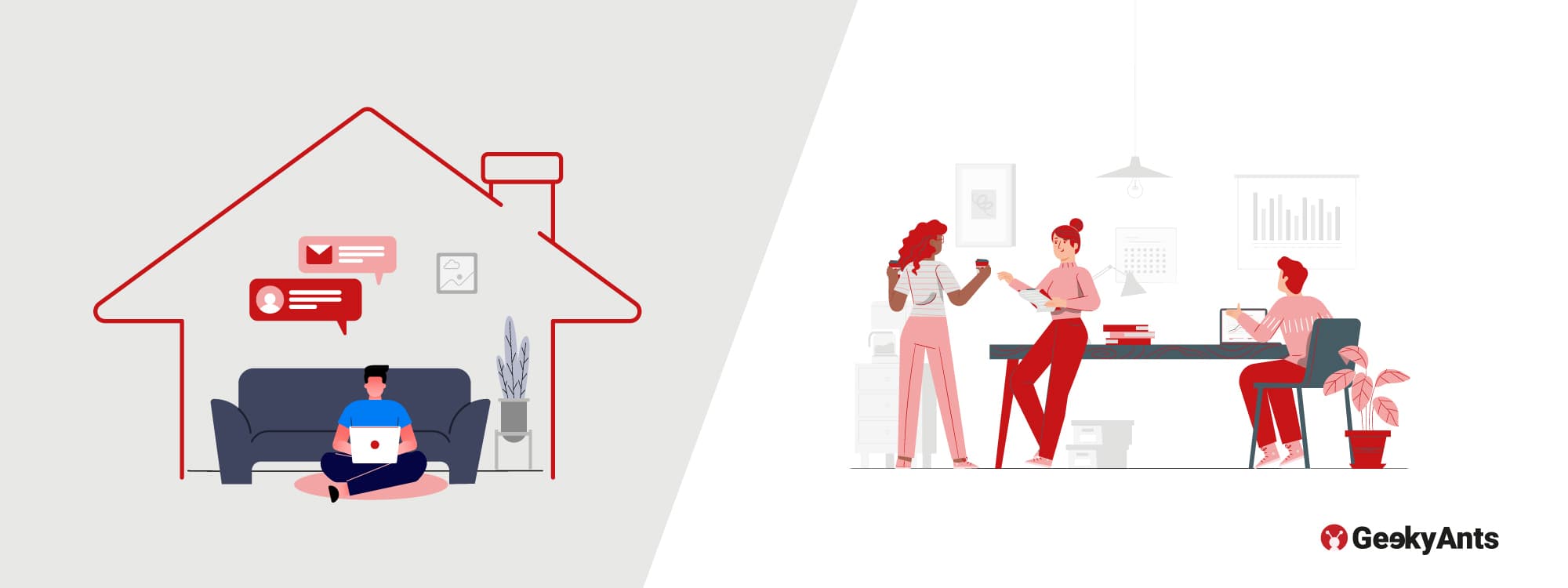

There are those who grumble about working from home – how it takes away from interaction and collaboration, but then there are others who have had a great experience. We have worked from home for almost two years, in this time we have seen how our lives have become more flexible and at the same time more confined. Being confined to our homes has taken away many of the opportunities for meeting each other, discussing, exploring and collaborating. Now that things are settling down and life is returning to normalcy, we'd like to welcome you all back to the office.
We are one of the many teams who have moved to work from home during the COVID-19 pandemic. After seeing our team in action throughout this period, we feel confident reopening our office. We have realized that there is a difference in the collaboration that occurs when you are working in person versus through a remote environment such as when working from home.
How does working from home affect you negatively?
Working from home can be an attractive option for many people. The flexibility of working from home can help you achieve a better work-life balance. You can work in your pajamas and it might even save you some commuting costs. But don’t be fooled into thinking that there are no negatives: when you work from home, you may find yourself isolated from other people and distractions may prevent you from performing at your best.
The ability to collaborate and work with others in person has been lost over time and now it’s time to bring it back!
To get back to normal, we have a few changes in store. Firstly, we are reopening our office space and plan to have everyone collaborate in person again. Most people will tell you that their dream is to work from home, or in an office. But can you really have it all? We asked our employees for their thoughts on this matter and got some very interesting responses...
Can you have it all through the hybrid model?
When you work in a hybrid model, you have the best of both worlds: the autonomy and flexibility of working remotely and the social, cultural, and collaboration benefits of in-person contact. For instance, you could work from home three days a week and spend two in the office. This kind of arrangement allows you to retain the flexibility you've enjoyed when working from home, while still having those vital face-to-face connections with colleagues that are so important for collaboration and wellbeing.
A re-imagined back-to-work future
With people coming back to work, the time is right to reinvent that age-old structure called ‘the office’. With gradual reopening underway, we are navigating the journey back into the office. We know you were longing for the comfort and familiarity of your home office. We're just getting started on this journey, so bear with us while we reemerge and meet you where you are. To accommodate all of your needs, we have adopted a hybrid model that allows both flexible remote working and more traditional on-site time, depending on the needs of the project or team.