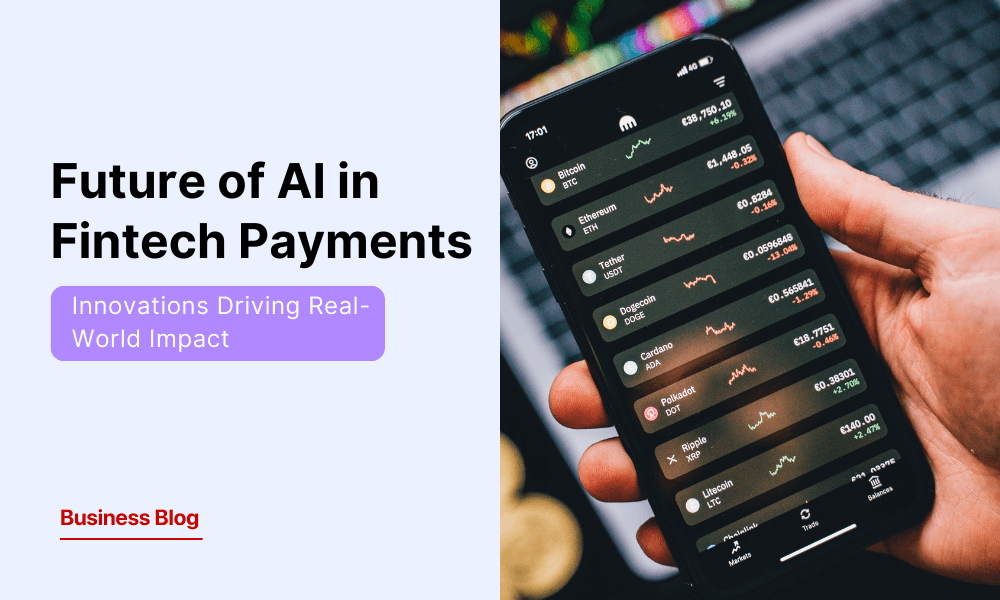

The fintech industry is undergoing a significant transformation, and artificial intelligence is at the heart of this shift. Artificial intelligence is redefining the way fintech payments work, solving challenges that were once considered unsolvable.
By detecting fraud in real-time, streamlining global transactions, and delivering highly personalized financial solutions, AI is transforming payments into something smarter, faster, and more secure. This shift is not just about improving efficiency but about reimagining what payments can achieve in a world driven by data and connectivity.
From fraud detection to personalized financial services, AI is making fintech payments smarter, faster, and more customer-focused. But where does the real potential lie, and how are these innovations being applied in the real world? Let us explore.
Predicting Trends with AI-Powered Analytics to Make Payment Processes Smarter
AI is revolutionizing the way payment data is used, particularly through predictive analytics. By analyzing historical data and current trends, AI systems can predict transaction patterns, optimize payment routing, and even anticipate potential system failures.
For instance, businesses can leverage AI to plan for peak transaction times, ensuring they allocate resources efficiently to avoid delays or downtime. Similarly, payment gateways use AI to identify and resolve real-time transaction bottlenecks, creating a smoother experience for merchants and customers.
How AI is Preventing Payment Fraud in Real Time
Fraud is one of the biggest challenges in the payments sector. The sheer volume of transactions makes it nearly impossible to detect fraudulent activities using traditional methods. This is where AI proves invaluable.
Machine learning models analyze thousands of transactions every second, identifying unusual patterns that might indicate fraud. These systems adapt and evolve, learning from each incident to prevent future attacks. Unlike static rule-based systems, AI-powered fraud detection tools grow smarter with time, making it harder for fraudsters to outsmart them.
Real-world examples include credit card providers that block suspicious transactions within milliseconds or payment platforms that flag inconsistencies before a transaction is completed.
How Personalization is Becoming the Norm in Payments
In the age of customization, consumers expect personalized financial experiences. AI enables payment systems to understand individual preferences and tailor services accordingly. From recommending payment plans to suggesting credit options, AI-driven personalization is making payments more user-centric.
Digital wallets, for example, use AI to provide personalized spending insights. These insights help users track expenses, save efficiently, and manage finances better. Such tools do not just meet customer expectations but exceed them by offering proactive financial solutions.
AI is Changing the Game for Frictionless International Transactions
Delays and high costs have traditionally plagued cross-border payments. AI is addressing these challenges by streamlining the process.
AI algorithms process real-time data to identify the fastest and most cost-effective payment routes, reducing delays and transaction fees. Moreover, AI ensures compliance with international regulations by automating checks, making cross-border transactions more reliable and transparent.
Companies like Wise, previously known as TransferWise, are using AI to transform how international transactions are handled. By leveraging advanced algorithms, Wise streamlines currency conversion processes, ensuring users get the most competitive exchange rates in real-time.
This approach allows businesses and individuals to send and receive money across borders almost as effortlessly as they would within the same country, making global payments faster, more reliable, and significantly more affordable.
Practical Applications of Voice-Activated Payments
The adoption of voice technology in payments is growing rapidly, thanks to AI-powered voice assistants like Siri, Alexa, and Google Assistant. Voice-activated payments allow users to make purchases, check balances, or even pay bills using simple voice commands.
This innovation is not only about convenience but also about accessibility. Voice payments are opening financial systems to users with disabilities or those who prefer hands-free interaction. Businesses are increasingly integrating voice technology into their payment platforms, recognizing its potential to create inclusive, user-friendly systems.
The Challenges That Stand in the Way of Unlocking the Full Potential of AI in Payments
While the benefits of AI in fintech payments are undeniable, challenges remain. Data privacy and security are significant concerns, as payment systems rely on sensitive user information. Fintech companies must implement robust encryption and compliance measures to protect customer data.
Another challenge lies in the potential biases of AI algorithms. If not built on diverse datasets, these systems can unintentionally discriminate against certain user groups. Ethical AI practices, including transparent training data and continuous audits, are essential to address these risks.
Closing Thoughts
The future of AI in fintech payments goes beyond technological advancements. It is about changing the way payments are made, secured, and personalized in an increasingly digital world. From smarter fraud detection to seamless cross-border transactions and predictive analytics, AI is reshaping payments in ways that make them faster, safer, and more customer-friendly. Challenges like data privacy and algorithm bias are real but manageable. With innovation and ethical practices leading the way, the potential for AI to revolutionize fintech payments is limitless.
To get a deeper understanding of how AI can be used for your fintech business, talk to our experts today — Schedule a Call