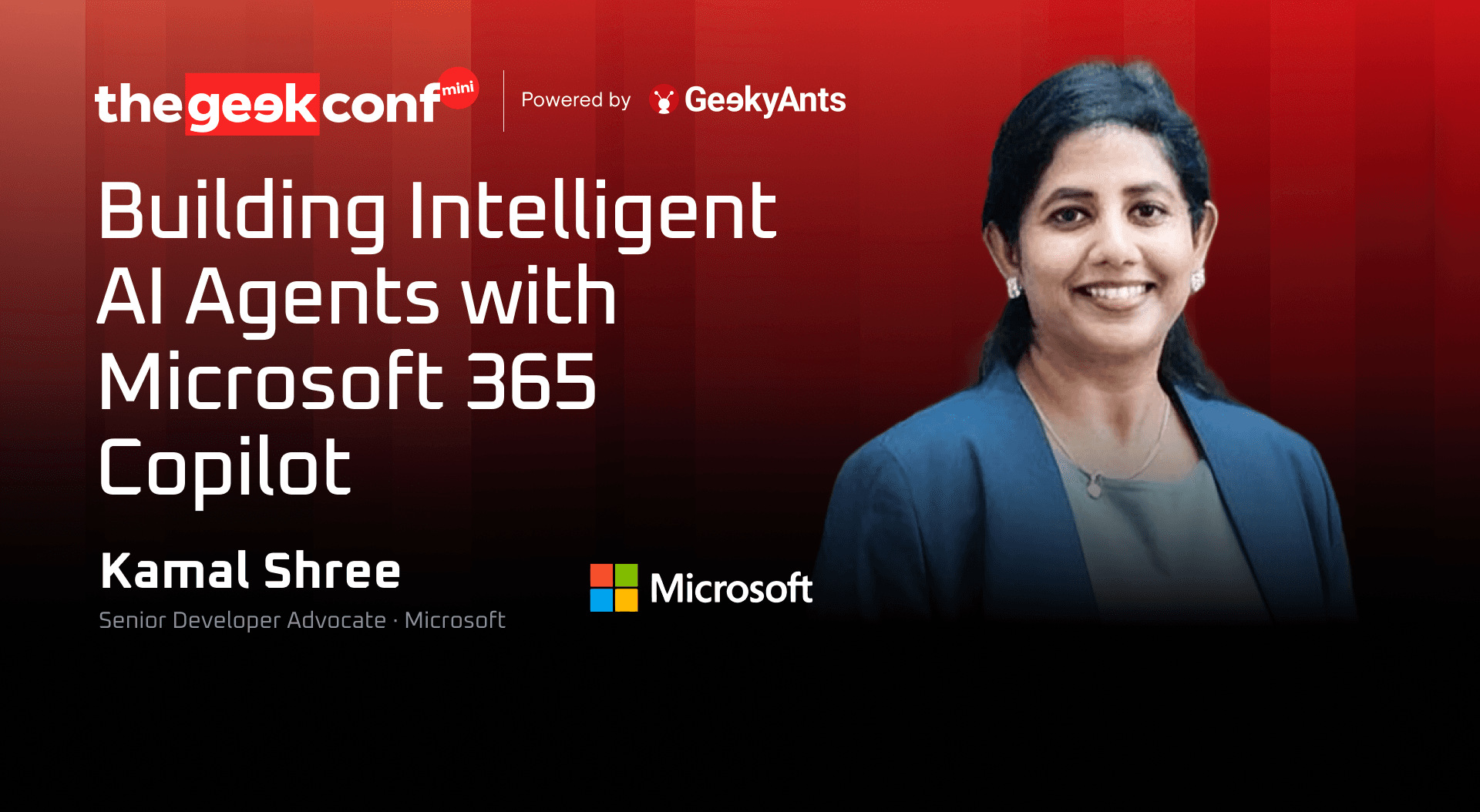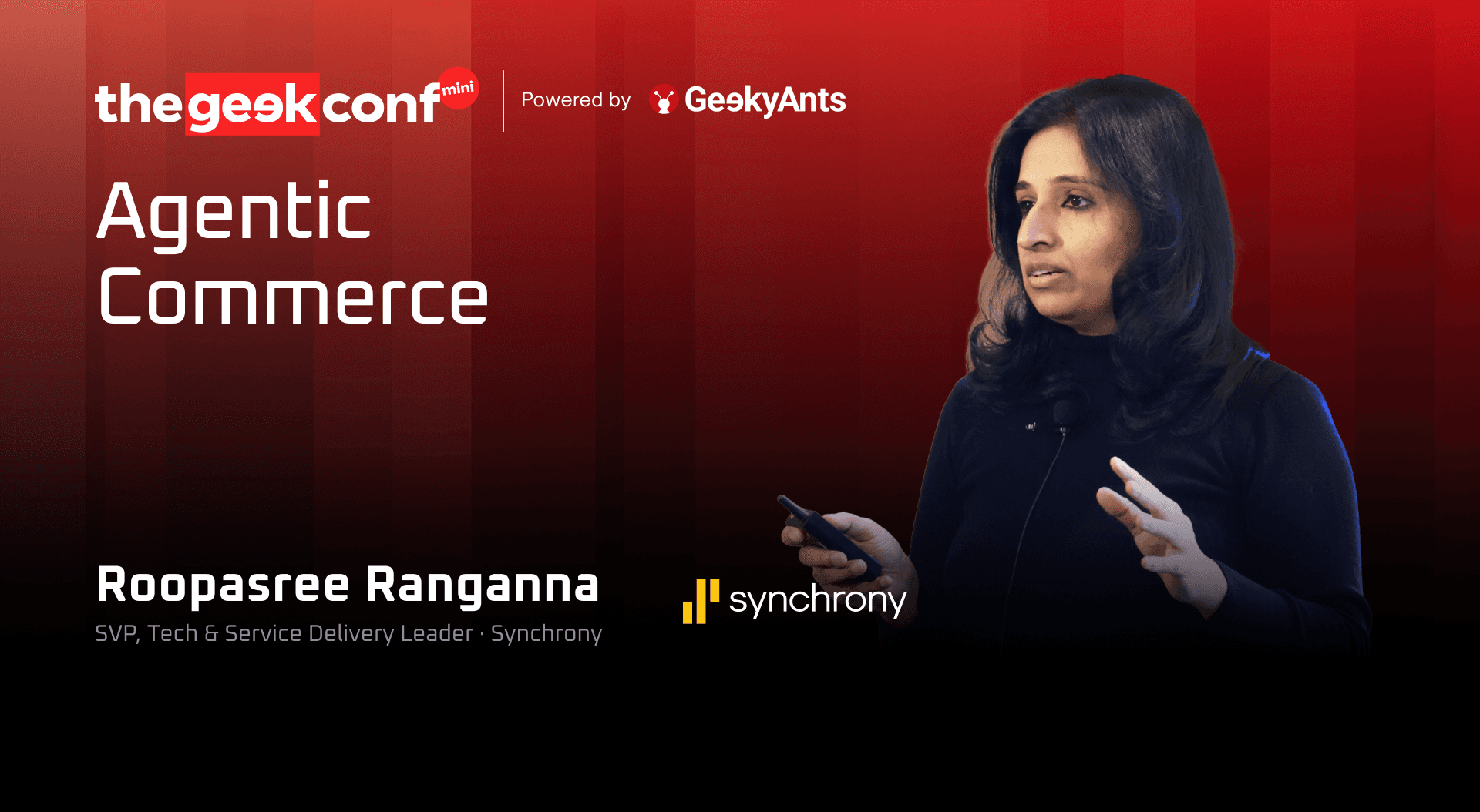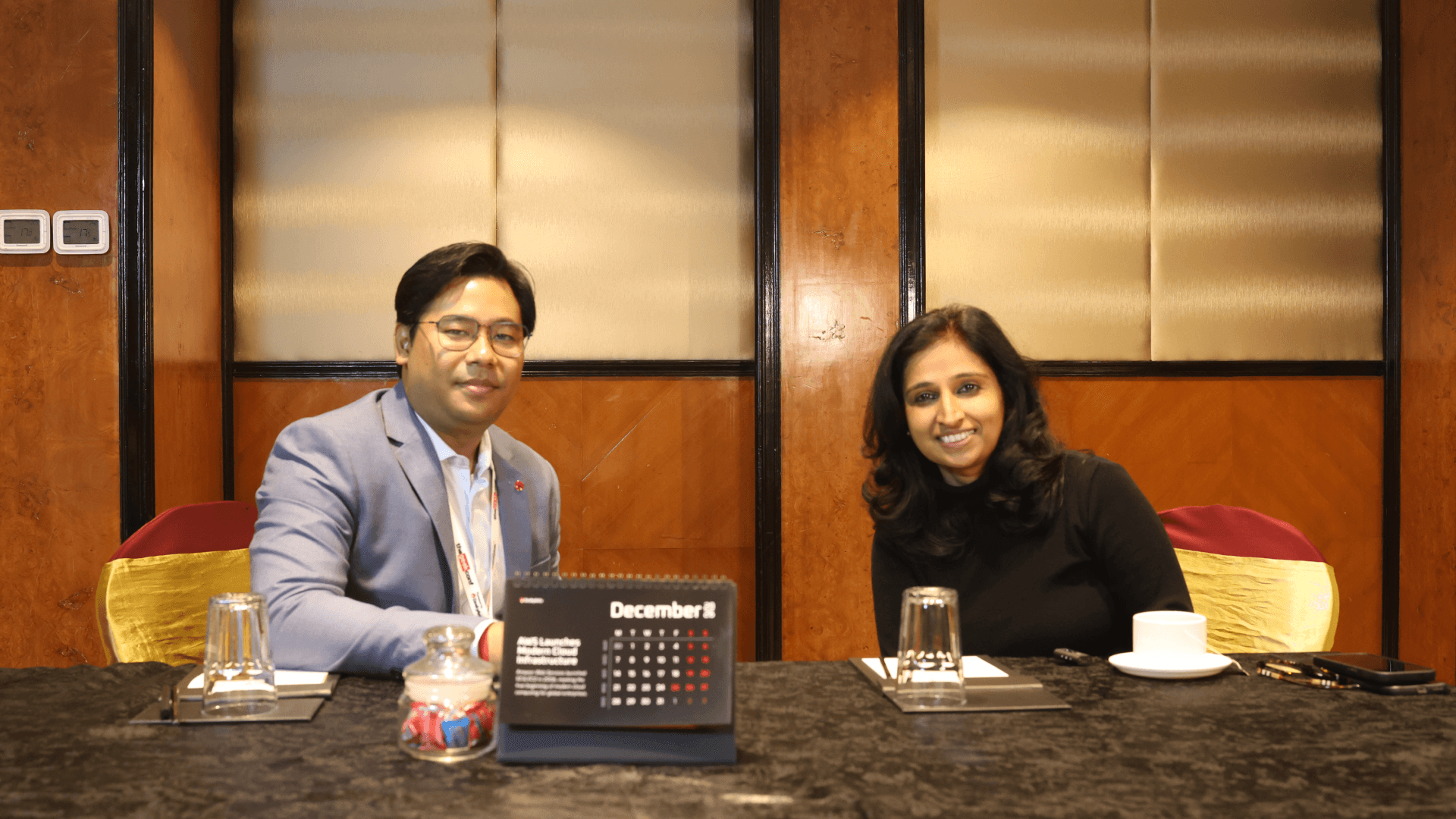

Editor’s Note: At thegeekconf 2025, Roopasree Ranganna, VP of Engineering at Synchrony, sat down with Rakesh Ningthoujam, Head of Growth Marketing at GeekyAnts, to discuss the importance of computer science fundamentals. As developers rush to build with AI, Roopasree argues that understanding how systems actually work—not just how to use them—is more critical than ever. From why surface-level knowledge creates technical debt to how organizations can foster genuine innovation, she makes the case that despite rapidly changing tools, foundational engineering skills remain essential.
RN (Rakesh Ningthoujam): Thank you for taking the time. I was struck by your emphasis on technical foundations during your talk. You mentioned your work with academic curriculums; what do you find problematic in how colleges are currently approaching computer science and AI education?
RR (Roopasree Ranganna): There is a specific pressure on institutions to ensure students are immediately viable in the labor market. In an attempt to entice students with job-ready skills, many colleges are developing "AI-first" curriculums that inadvertently strip away the fundamental blocks of engineering. When I began my career twenty years ago, we focused on the basic layers of the OSI model, which provided a mental framework that I still apply to every new technological shift today. Without those building blocks, we are introducing a workforce with only superficial knowledge.
RN: What are the specific risks if these architectural building blocks, like the OSI model, are removed in favor of purely modern tools?
RR: The primary risk is that we create professionals who cannot fix systems when they fail. For example, a student might understand public or hybrid cloud models, but they may not comprehend the physical reality of a data center or the mechanics of storage, compute, and networking that allow AI to function efficiently. You can write a program, but you cannot extract its full advantage or solve deep architectural issues without understanding what is happening under the hood.
RN: How do we maintain that understanding of core engineering principles while still staying innovative enough to survive in a competitive market?
RR: It requires a commitment to continuous learning at both the academic and corporate levels. If an organization only wants a workforce that can perform a specific task, superficial training may suffice. However, to build a generation that can stand the test of time, we must train them in the core principles of hardware, software, and information security. Even someone like Elon Musk primarily discusses fundamentals when he speaks about the development of SpaceX or autonomous vehicles. We must use the latest tools to stay relevant, but those tools only have meaning because of the fundamentals that made them possible.
RN: This suggests a shift from being "doers" to becoming "thinkers" who understand the process. When you are scaling an organization to thousands of people, how do you maintain that culture of innovation without it becoming a separate, bureaucratic program?
RR: We have to be practical about scale; you are not going to have an organization comprised of 100% thinkers. It is acceptable to have 20% to 30% of the staff acting as thinkers while the rest focus on executing standard operating procedures and finishing tasks. The mistake many companies make is treating innovation as a separate entity or a specific program. When innovation is a separate pillar, it takes away the thinking capacity of the people doing the regular work. Instead, we must integrate it into the DNA of the daily conversation. Innovation is not always a disruption; it is simply finding a more efficient way or a different technological approach to a regular task.
RN: Having witnessed twenty-five years of progress, you have seen several hype cycles. Does the current era of massive AI usage feel familiar to you?
RR: It follows the same pattern as previous cycles, such as the emergence of cloud computing. I remember being at EMC when we wondered how designations like System Administrator would evolve into roles like Cloud Architect. Now, we see similar shifts with the arrival of Prompt Engineers and AI Architects. While some technologies like blockchain or crypto may not have reached their envisioned potential in every organization, AI is different because it is an integral part of automating insight and software development lifecycles.
RN: To close, how would you summarize the current state of the industry?
RR: I would call it a turning point. Every ten or fifteen years, the landscape reaches a threshold where it changes significantly before sustaining itself and eventually moving toward the next cycle, perhaps in quantum engineering. We are at that point where the landscape is changing, but the fundamentals will remain the constant that carries us through.