
Design and development misalignment is not a process hiccup—it is a product risk. When design intent is lost during handoff, what reaches production often falls short of user expectations. One misstep in interpretation can lead to inconsistent UI, redundant iterations, and delayed launches.
According to a Forbes Council article, misalignment between design and development teams can increase development time by up to 30%—driving up costs and stalling product momentum.
This blog unpacks the root causes of this disconnect and shares real-world solutions, frameworks, and tools used by high-performing teams to close the gap and deliver better, faster outcomes.
What is Causing the Disconnect?
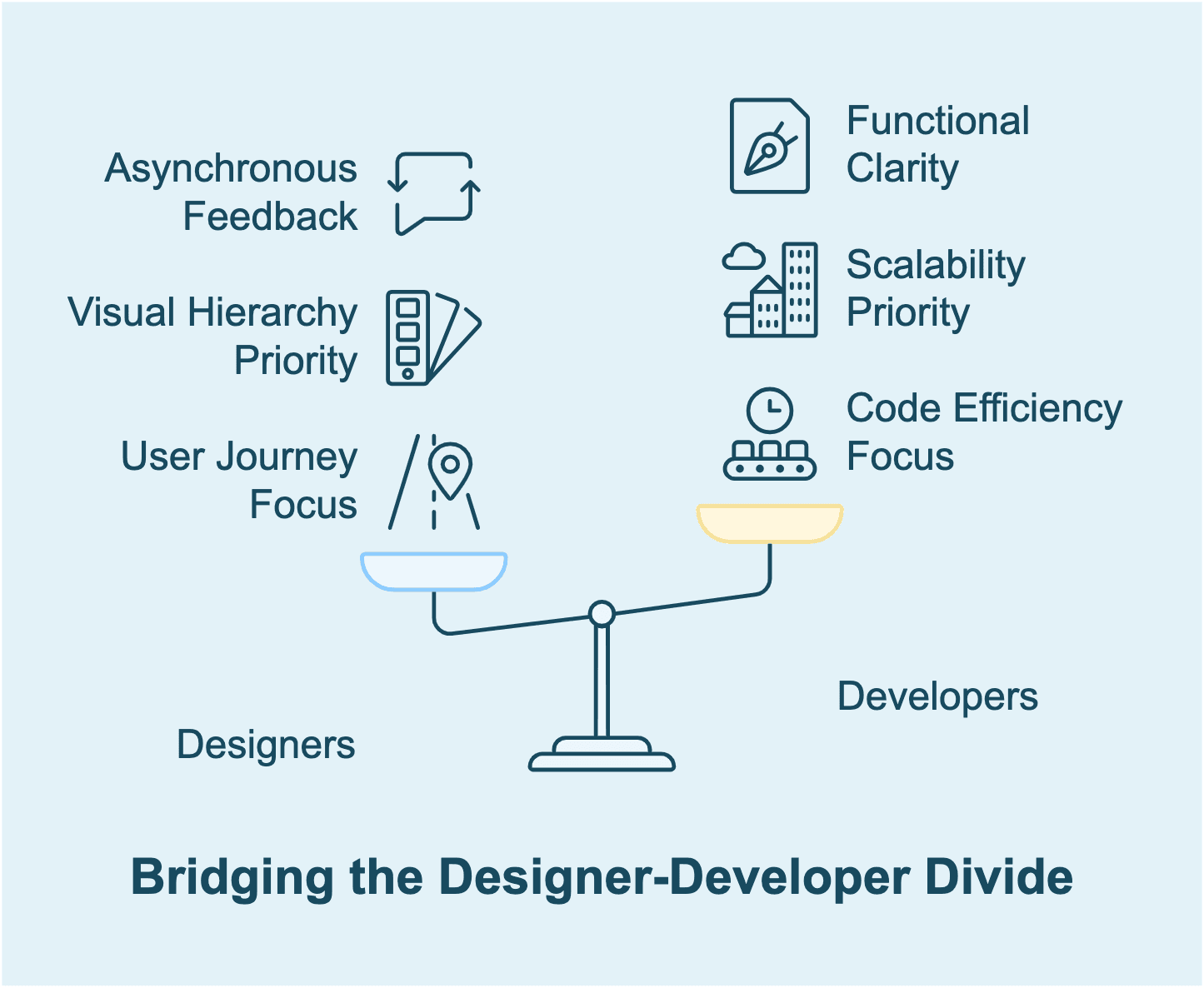
While both designers and developers share the goal of building great products, they often operate in silos. Differences in language, tools, and priorities create a fragmented workflow.
Designers think in terms of user journeys, interaction, and visual hierarchy. Developers prioritize scalability, code efficiency, and performance. Without a shared system or unified language, handoffs turn into translation problems.
Specs can become outdated by the time they reach engineering. Design files may lack functional clarity. Tools may not sync, and feedback loops are often asynchronous or incomplete. Cultural gaps only deepen the divide — UX vs. logic, aesthetics vs. efficiency.
When collaboration is treated as a one-way transaction, alignment becomes reactive, not proactive.
Real-World Fixes: What Leading Teams Are Doing Right
High-performing teams are not treating the design-dev gap as an inconvenience—they are solving it with intent and structure.
At Airbnb, the team built a shared visual language with a strong design system. This system links design intent to front-end code. The change brought consistency to components and less confusion during implementation.
IBM spread Design Thinking across departments. They made collaboration a key part of every product phase. Designers and developers now work together to create, test, and improve—keeping everything aligned from idea to delivery.
In education, a redesign by the Design Society showed that involving developers early and co-creating in real-time cut down on rework and greatly enhanced usability.
These teams demonstrate that closing gaps isn’t just about adding people. It’s about creating smarter workflows, a shared language, and joint ownership of results.
Frameworks & Practices That Help Close the Gap
Solving the disconnect starts with systemizing collaboration—not improvising it. Leading teams are adopting frameworks that operationalize alignment across disciplines.
- Design tokens: A shared set of variables (like colors, spacing, and typography) that translate design styles directly into code—ensuring visual consistency and easier updates.
- DesignOps: A practice that optimizes tooling, workflows, and collaboration rituals to streamline design delivery and handoff processes.
- Agile with embedded designers: Including designers in sprint planning and iterative reviews creates faster feedback loops and reduces late-stage design drift.
- Component libraries and shared design systems: When both design and dev pull from the same source, UIs stay consistent and maintainable.
These frameworks are not heavy lifts—they are sustainable foundations for collaboration at scale.
Tools That Support Seamless Collaboration
The right tools reduce friction between design and code, making collaboration intuitive rather than forced.
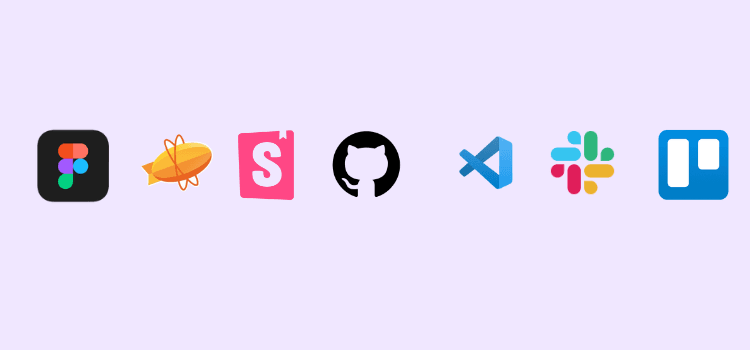
- Figma enables real-time collaboration, allowing designers and developers to review and comment in the same space.
- Zeplin offers precise specs, assets, and style guides, minimizing guesswork at handoff.
- Storybook provides a live component library where developers can preview and document UI components.
- GitHub + VS Code helps sync updates between design files and front-end codebases.
Slack and Trello support async updates, team rituals, and visibility into shared workflows.
When tools talk to each other, teams stop interpreting and start building together.
Beyond Tools: Fixing Culture for Real Collaboration
The tools are only part of the solution. Lasting change requires addressing the cultural dynamics between design and engineering teams.
- Align KPIs across roles so that both teams are accountable for product quality and speed—not just their isolated contributions.
- Run joint rituals like pair sessions, design-dev standups, and internal reviews.
- Encourage a shared product mindset where design isn't seen as static specs, and development isn’t reduced to implementation.
- Document working styles and feedback loops through design sprints, async reviews, and team onboarding guides.
Ultimately, strong collaboration is less about tools—and more about trust, empathy, and shared intent.
Conclusion: Design-Dev Alignment is Not Optional
When design and development align, products ship faster, teams iterate better, and user experiences stay consistent. The disconnect is not about tools—it is about shared language, integrated workflows, and mutual accountability. Leading teams are bridging this gap with systems, not silos.
The path forward does not require a complete overhaul—it starts with one aligned process, one shared system, or one collaborative ritual.
Talk to our experts at GeekyAnts to streamline your designer-developer workflow with scalable solutions tailored for modern product teams.