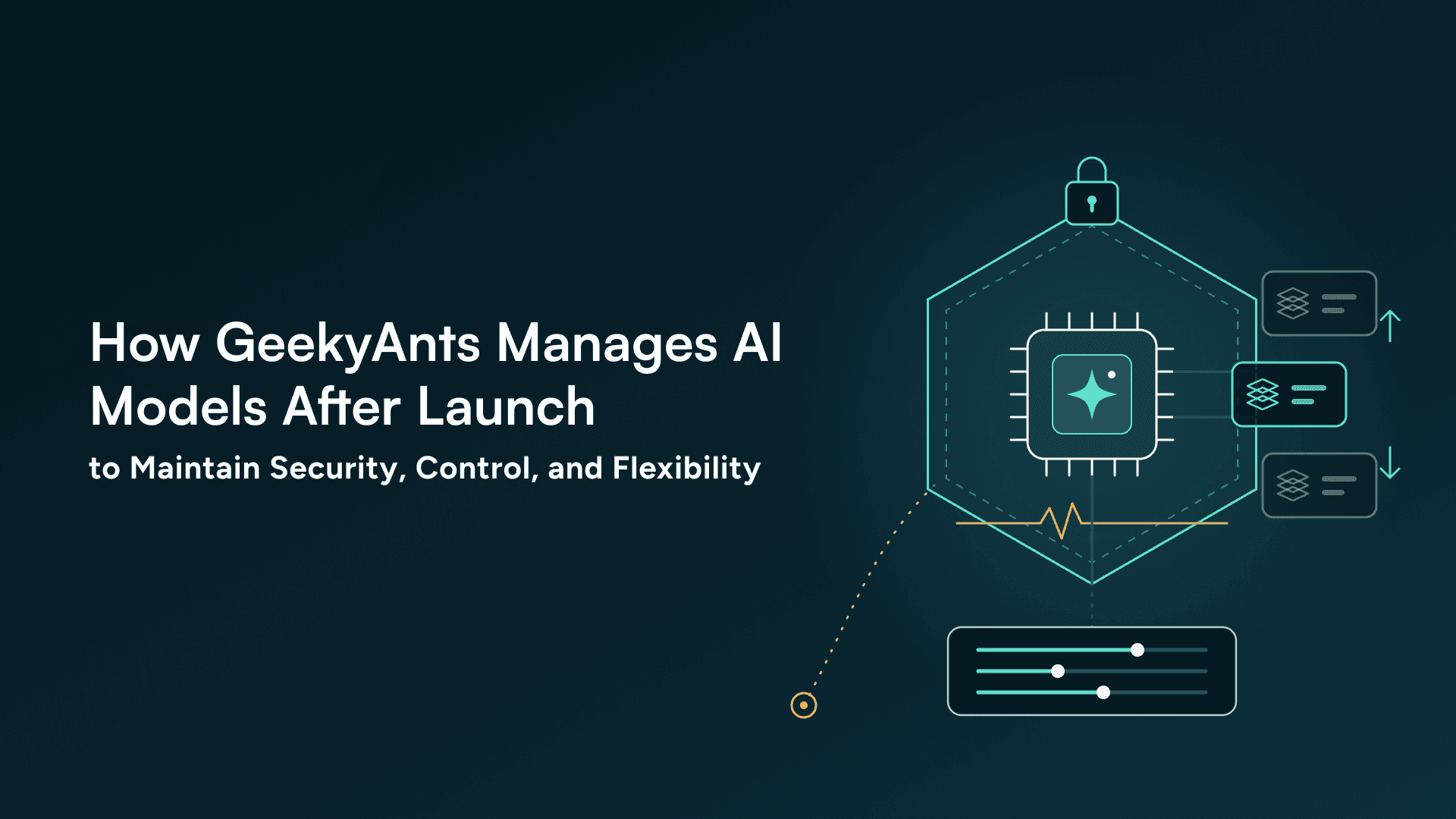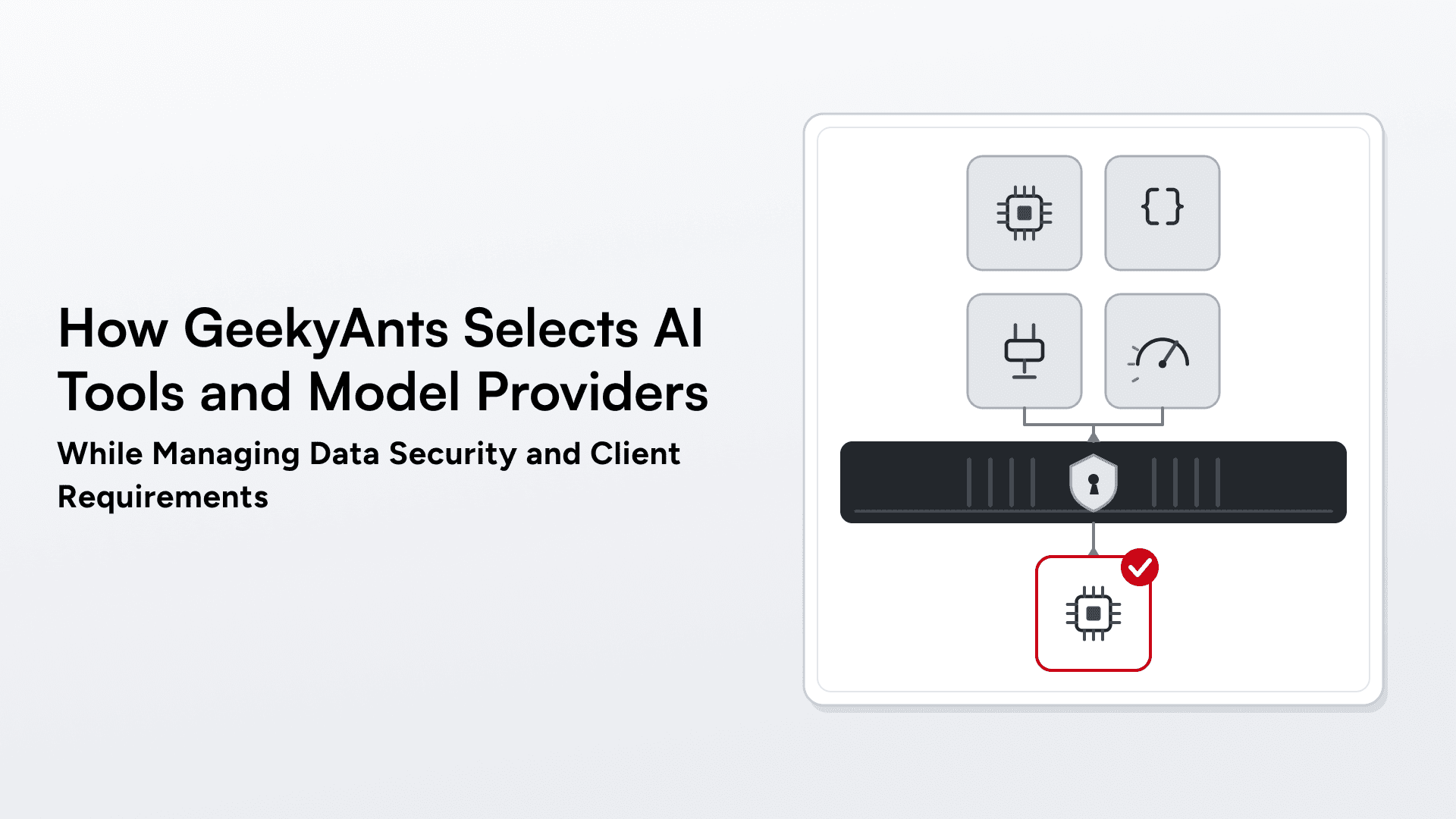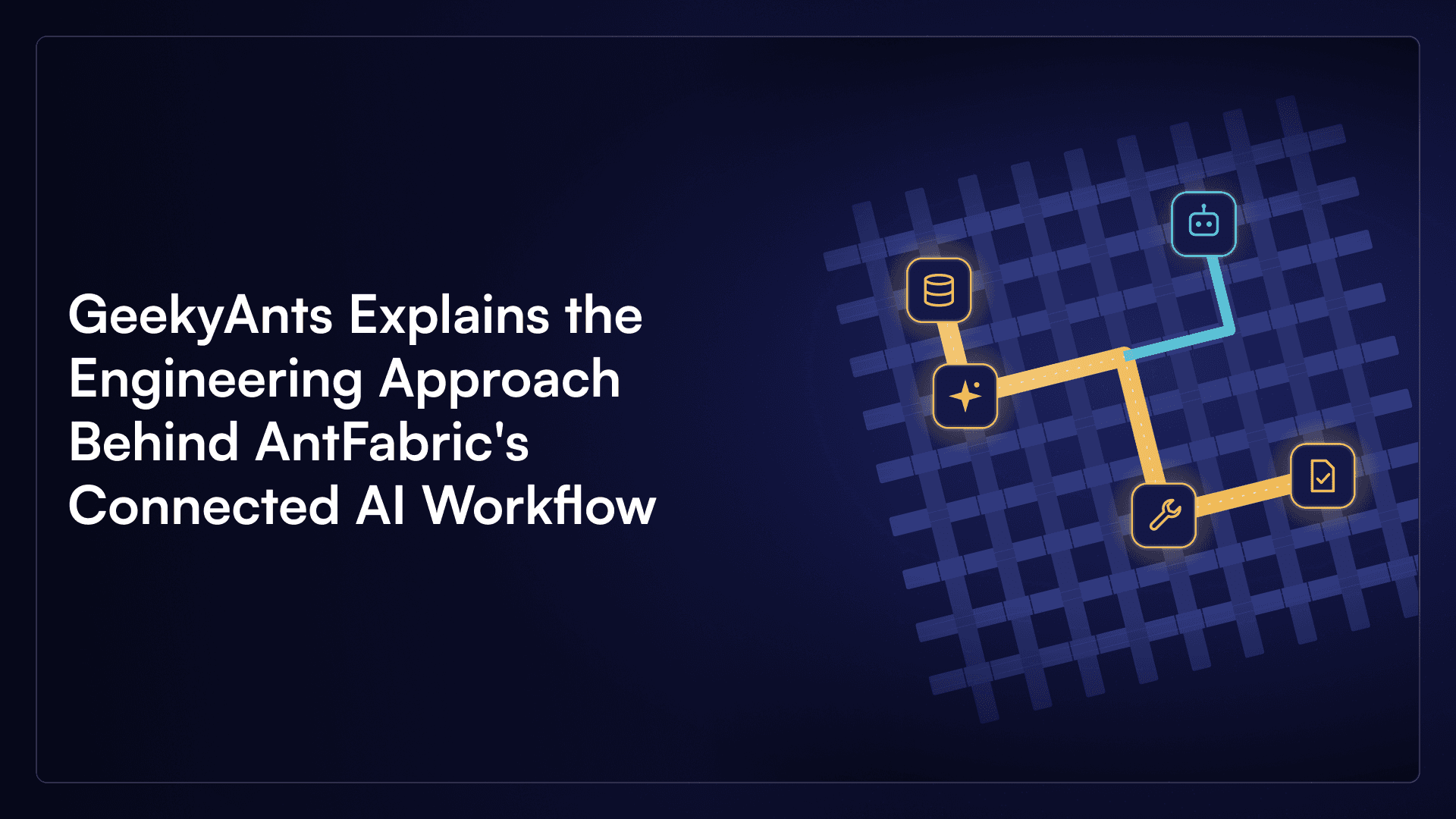

GeekyAnts has outlined how its engineering work on AntFabric addresses a growing enterprise challenge: connecting organizational knowledge, business systems, and AI agents so teams can work with shared context.
Through AntFabric, an AI-native workplace ecosystem developed and backed by GeekyAnts, the company is exploring how decisions made in meetings can remain connected to the applications where employees carry out their work. The initiative draws on GeekyAnts' experience in software product engineering, AI integration, and enterprise application development.
The AntFabric ecosystem brings these capabilities together through a shared architecture designed to support existing business operations while giving organizations control over their infrastructure and AI workflows.
Engineering Connections Between Knowledge, Systems, and AI
A common difficulty in enterprise operations is that information rarely stays in one place. Meetings, emails, messages, and documents contain valuable context, but that information often becomes disconnected as work moves between applications.
Addressing this requires more than integrating individual tools. Engineering teams must establish how information moves between systems, how AI agents access relevant context, and how actions can be coordinated without disrupting existing processes.
GeekyAnts has explored these requirements through its work on AntFabric, developing an architecture that connects approved business applications with AI models and an agent runtime.
The runtime coordinates tasks across connected systems, while an AI gateway manages model access, routing, and usage. Organizations can configure agents around established workflows and operational requirements.
This approach also informs GeekyAnts' broader AI-powered engineering services, where integrating AI into enterprise operations requires attention to application architecture, system compatibility, security, and long-term maintainability.
For organizations exploring the AntFabric architecture, GeekyAnts offers engineering support to assess requirements, establish the foundation, integrate existing applications, and develop custom agents. Teams with internal engineering capabilities can also explore licensing the underlying platform and building on its shared architecture.
Preserving Organizational Context With Human Oversight
An AI assistant working with incomplete information can easily miss the reasoning behind a decision or the conditions under which a task was approved.
GeekyAnts has addressed this concern in AntFabric through a shared-memory approach that keeps organizational knowledge connected to its original sources. This allows assistants to access relevant context instead of relying on isolated conversations or disconnected document extracts.
Making that information available to AI introduces another engineering responsibility: ensuring that access permissions, approval requirements, and accountability remain intact.
The architecture incorporates access controls, agent-action guardrails, audit trails, and human approval checkpoints. An agent may prepare a recommended action, for example, while the system requires an authorized employee to approve it before execution.
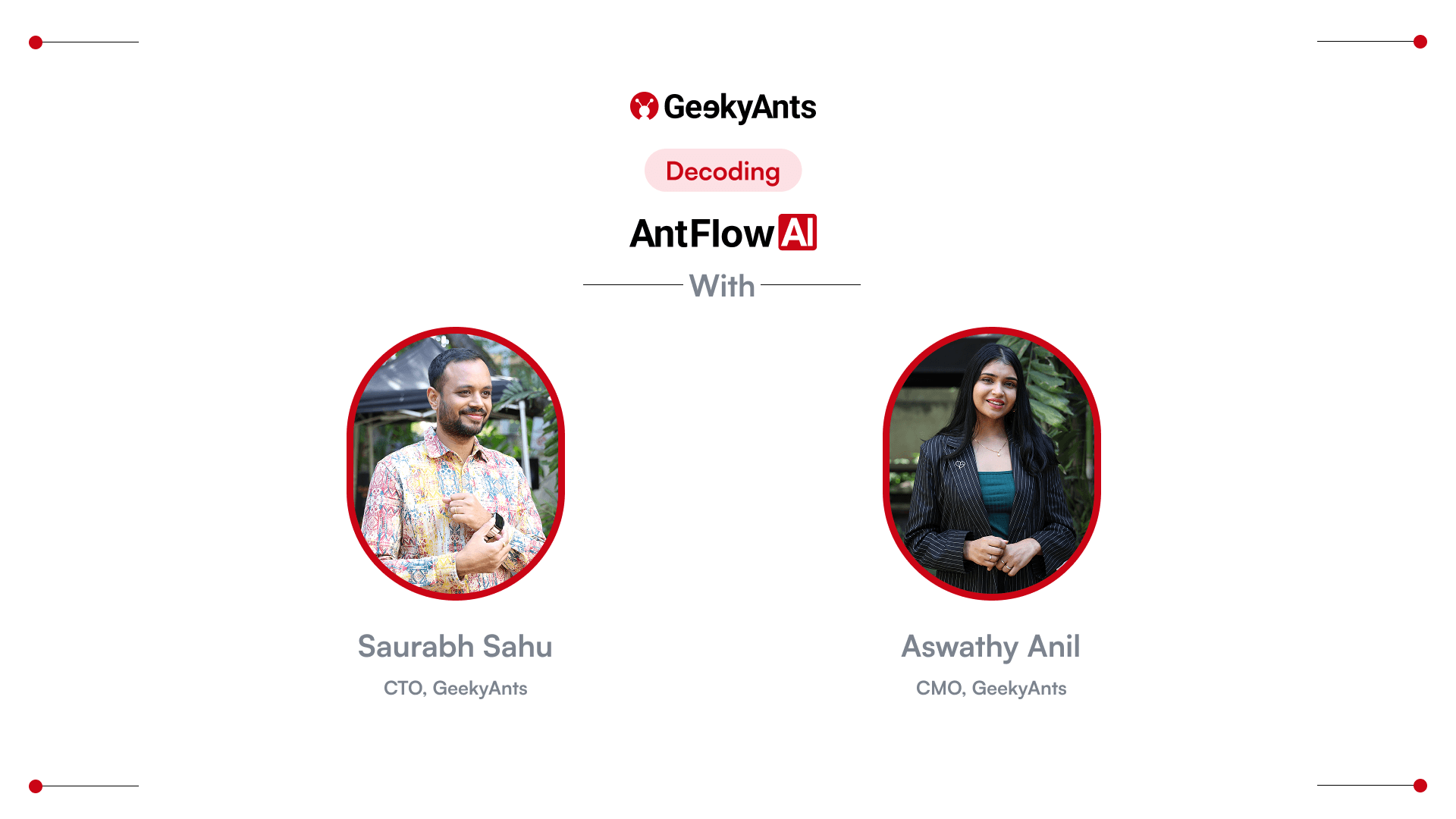
This approach aligns with GeekyAnts Chief Technology Officer Saurabh Sahu's earlier discussion of AI-native enterprise architecture, where he emphasized the need for “a common configuration layer for agents, tools, and MCPs so that all developers work from a shared foundation.”
For enterprises adopting AI in sensitive or interconnected environments, these controls need to be considered during architecture and workflow design. Connecting AI models to organizational information must be accompanied by clear rules governing access, permitted actions, and human intervention.
Developing AI Agents Around Existing Business Workflows
GeekyAnts' development work on AntFabric also explores how AI can help organizations connect workplace conversations with operational tasks.
A decision documented during a meeting could become an assigned task. A team assistant could identify a blocker using shared project information. An AI agent could prepare a follow-up action and submit it for approval.
These examples illustrate potential workflows rather than verified outcomes from a named enterprise deployment. Their effectiveness depends on the quality of available information, supported integrations, and each organization's operating rules.
The architecture supports different types of assistants based on these requirements. Personal assistants can help individuals manage their work, while team assistants can reference shared project knowledge and responsibilities. Custom agents can be engineered for processes involving multiple applications, decisions, and approval stages.
Developing these capabilities requires engineering work across APIs, data access, model selection, workflow orchestration, and security.
GeekyAnts' guide to MCP-powered enterprise workflows examines how agents can interact with business tools and organizational data, providing further technical context for the integration challenges addressed through AntFabric.
Starting Small Before Expanding AI Across Operations
Enterprise AI initiatives can become difficult to manage when organizations attempt to connect too many applications, teams, and processes at once.
GeekyAnts advocates an incremental engineering approach, beginning with a specific business operation and identifying the communications, systems, decisions, and approvals involved.
The implementation process described through AntFabric starts with a working session to understand one operational workflow and define what successful execution should look like.
From there, engineering teams can establish the supporting architecture, connect the necessary applications, and develop the assistants or agents required for that operation.
Additional capabilities can be introduced as requirements evolve, using the shared foundation to support new workflows rather than rebuilding every integration independently.
This approach allows organizations to evaluate system compatibility, information access, governance controls, and the usefulness of AI assistance within a manageable scope before considering broader adoption.
AntFabric represents one example of how GeekyAnts is applying its engineering experience to the challenges of enterprise AI adoption. The work brings together application development, systems integration, AI orchestration, and governance within a connected architecture.
As a software product engineering and consulting company, GeekyAnts helps organizations address similar challenges through AI-powered application development, modernization, and custom engineering services. Its continued development of initiatives such as AntFabric contributes to that expertise, providing practical experience in building AI systems that must work within real organizational processes.
Supporting resources
- Keep up with GeekyAnts news by visiting the company's website: www.geekyants.com/en-us
- Follow GeekyAnts on LinkedIn, X, and YouTube.
About GeekyAnts
GeekyAnts is an AI-powered digital product engineering and consulting company that helps organizations build, modernize, and scale digital products and platforms.
Contact Information
US Office
GeekyAnts Inc.
315 Montgomery Street
9th & 10th Floors San Francisco
CA 94104, USA
+1 845 534 6825
India Office
GeekyAnts India Pvt Ltd
No. 18, 2nd Cross Road
N S Palya
2nd Stage BTM Layout
Bangalore – 560076
Karnataka, India
+91 80 4305 8884
UK Office
GeekyAnts UK Ltd
SPACES Finsbury Park 17 City North Place
London N4 3FU
England, UK
+44 1702 655221
Media Contact
GeekyAnts Inc.
press@geekyants.com
+1 845 534 6825