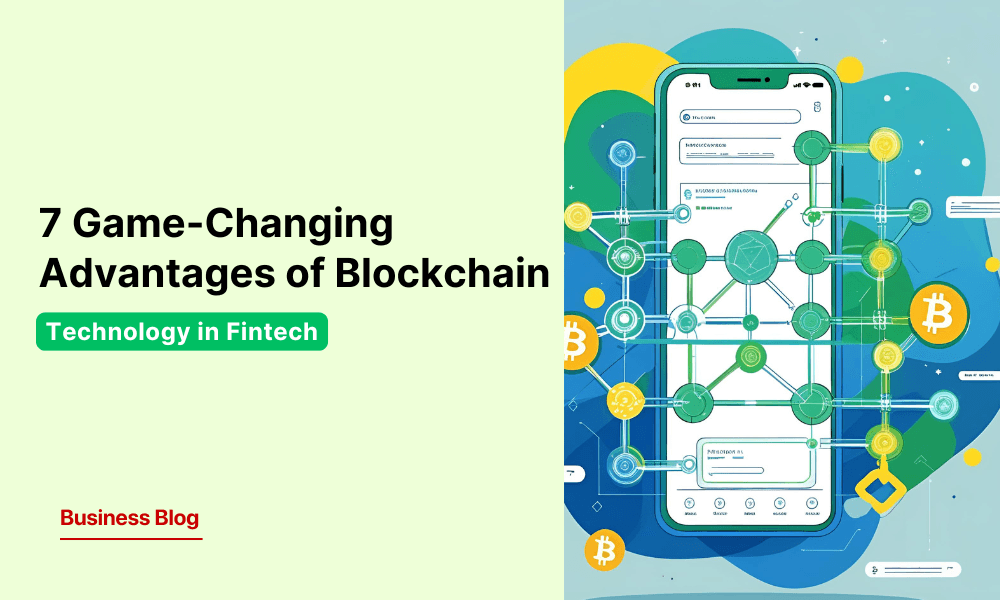

In recent years, blockchain technology in fintech has emerged as a game-changer. Blockchain, originally developed as the foundation for cryptocurrencies like Bitcoin, has rapidly evolved into a trusted tool for transforming financial services. Its decentralized, transparent, and immutable nature aligns perfectly with the needs of the financial technology (fintech) industry, which thrives on innovation, efficiency, and trust.
Fintech refers to the integration of technology into offerings by financial services companies to improve their use and delivery to consumers. The fintech landscape includes everything from mobile banking and peer-to-peer lending to cryptocurrency and robo-advisors. With millions seeking faster, safer, and more inclusive financial services, blockchain provides the critical infrastructure to meet these demands.
Enhanced Security through Blockchain
Immutable Transaction Records
One of the most significant benefits of blockchain is its immutability. Once data is added to the blockchain, it cannot be changed without consensus from all participants. This feature ensures that financial records remain accurate and tamper-proof, which is crucial for reducing fraud in banking and digital payments.
Cryptographic Protection
Blockchain uses cryptographic algorithms to protect data. Each transaction is secured with encryption and linked to the previous one using complex mathematical functions, forming a chain that’s nearly impossible to alter. This makes it highly resistant to cyberattacks and ensures the confidentiality of sensitive financial data.
Cybersecurity Improvements in Fintech
With cyberattacks on the rise, fintech firms face the challenge of securing digital assets and personal data. Blockchain’s decentralized architecture means there is no single point of failure, reducing the risk of data breaches. It enhances trust between users and platforms, fostering a more secure financial ecosystem.
Cost Reduction in Financial Operations
Elimination of Intermediaries
Traditional financial systems rely on multiple intermediaries, such as clearinghouses, banks, and brokers. Blockchain enables peer-to-peer transactions, cutting out these middlemen. This not only speeds up transactions but also significantly lowers associated costs.
Efficiency through Smart Contracts
Smart contracts are self-executing agreements coded on the blockchain. They automatically trigger actions—like payments or transfers—when predefined conditions are met. By eliminating manual processing and third-party verification, fintech companies save both time and money.
Operational Cost Savings
Whether it’s cross-border remittances or insurance claims, blockchain can streamline complex workflows. This reduces administrative overhead, minimizes human error, and ultimately results in substantial savings for fintech businesses.
Transparency and Real-Time Auditing
Public Ledgers for Transaction Traceability
All blockchain transactions are recorded on a public ledger accessible to participants. This level of transparency fosters accountability and makes it easier to identify and correct irregularities.
Audit-Friendly Data Access
Since every transaction is timestamped and immutable, auditors can easily verify financial records in real-time. This improves the accuracy of audits and ensures ongoing compliance with financial regulations.
Regulatory Benefits
Regulators can use blockchain’s transparent records to monitor transactions and enforce compliance. This capability supports the growing demand for real-time regulatory oversight in the digital financial world.
Faster and Global Transactions
24/7 Blockchain Networks
Unlike traditional banks that operate during business hours and holidays, blockchain systems work continuously. This allows users to send and receive money at any time, anywhere in the world.
Near-Instant Cross-Border Transfers
Cross-border payments typically take days due to processing delays and intermediaries. Blockchain reduces this to minutes or even seconds by using decentralized networks that process transactions faster and more efficiently.
Comparison with Traditional Systems
Compared to SWIFT or ACH payment networks, blockchain is faster, cheaper, and more transparent. This makes it especially valuable for international trade and remittances.
Promoting Financial Inclusion
Blockchain for the Unbanked
Over 1.7 billion adults globally remain unbanked. Blockchain-powered platforms like cryptocurrency wallets and mobile banking apps offer these individuals access to financial services without needing traditional bank accounts.
Decentralized Financial Services
Decentralized finance (DeFi) allows anyone with an internet connection to lend, borrow, and invest using blockchain. This levels the playing field and provides financial opportunities to underserved communities.
Micropayments and Microloans in Emerging Economies
Blockchain enables cost-effective micropayments, which are vital in regions where traditional financial infrastructure is lacking. It also supports microloans, helping entrepreneurs and small businesses grow in developing nations.
Asset Tokenization and Investment Accessibility
Tokenizing Physical and Digital Assets
Blockchain allows tangible and intangible assets—like real estate, art, or even music rights—to be tokenized. These tokens represent ownership and can be traded on digital platforms.
Increased Market Liquidity
Tokenization enables fractional ownership, allowing more investors to participate. This creates liquidity for otherwise illiquid assets, benefiting both asset holders and potential buyers.
Fractional Ownership Opportunities
Instead of buying an entire property, investors can buy a fraction of it through tokenized shares. This makes investing more accessible to a broader audience, opening up new revenue streams and opportunities.
Smart Contracts Driving Automation
Definition and Use in Fintech
Smart contracts are self-executing digital contracts stored on the blockchain that automatically fulfill the terms of an agreement once certain conditions are met. They are revolutionizing how financial transactions are conducted by replacing manual processes with automated workflows. In the fintech sector, this means faster, cheaper, and more reliable service delivery.
Benefits for Loan Agreements and Insurance
In lending, smart contracts can automate loan disbursement and repayment schedules. Once the borrower meets the agreed criteria, funds are released automatically. Similarly, in insurance, claims can be verified and processed in real-time without human intervention, improving customer experience and reducing processing times.
Examples of Applications
Platforms like Ethereum have led the way in smart contract innovation. Decentralized lending platforms such as Aave and Compound use smart contracts to manage billions in crypto loans without relying on traditional financial institutions.
Use Cases and Examples of Blockchain in Fintech
Ripple and Stellar
Ripple facilitates real-time gross settlement systems and currency exchange through its blockchain network. It’s widely used by banks for cross-border payments. Stellar, on the other hand, focuses on providing affordable financial services to the unbanked and underbanked.
Ethereum and DeFi Platforms
Ethereum powers many DeFi platforms, enabling users to earn interest, borrow funds, and swap assets without intermediaries. It has laid the groundwork for countless financial innovations built on smart contracts and decentralized apps (dApps).
Blockchain in Traditional Banking
Major banks are adopting blockchain for internal processes like clearing and settlement, identity verification, and fraud detection. JPMorgan’s Quorum and Goldman Sachs’ use of blockchain in asset management highlight how traditional players are embracing the technology.
Challenges and Limitations of Blockchain in Fintech
Scalability Issues
Blockchain networks, especially older ones like Bitcoin and Ethereum, face scalability challenges. Processing a large number of transactions per second can slow down the network, impacting user experience.
Energy Consumption Concerns
Proof-of-work (PoW) consensus mechanisms, used in some blockchains, require significant energy, raising environmental concerns. However, alternatives like proof-of-stake (PoS) are gaining traction as more sustainable options.
Regulatory Hurdles
As blockchain disrupts traditional finance, governments are grappling with how to regulate it. Unclear legal frameworks and differing global standards create uncertainty for fintech businesses aiming to scale across borders.
The Future of Blockchain Technology in Fintech
Trends in Decentralized Finance
DeFi is expected to grow exponentially, introducing more advanced lending protocols, synthetic assets, and decentralized exchanges. Innovations like flash loans and algorithmic stablecoins are changing the way we think about financial services.
Integration with AI and IoT
Blockchain will increasingly integrate with AI and the Internet of Things (IoT) to automate everything from financial reporting to smart city payments. These integrations will make fintech solutions smarter and more adaptive to real-time data.
Predictions for Global Finance
As blockchain adoption rises, we can expect a shift towards a more decentralized and democratized global financial system. Countries may even launch blockchain-based Central Bank Digital Currencies (CBDCs), redefining monetary policy.
Blockchain vs Traditional Financial Systems
Feature | Blockchain | Traditional Financial System |
Speed | Near-instant | 1-5 business days |
Transparency | Fully transparent ledger | Partial or restricted access |
Security | High (cryptographic) | Varies, often centralized |
Accessibility | Global, inclusive | Limited by location or KYC |
Cost | Low (minimal fees) | High (intermediary costs) |
Blockchain surpasses traditional systems in speed, cost, and transparency, but it still needs regulatory clarity and scalability improvements to achieve widespread dominance.
Industry Adoption and Regulatory Landscape
Governments and Blockchain Adoption
Several countries, including Switzerland, Singapore, and Estonia, have embraced blockchain-friendly policies, attracting startups and investment. These progressive frameworks are setting examples for global regulatory standards.
Fintech Regulations and Compliance
For blockchain to flourish in fintech, it must align with anti-money laundering (AML) and know-your-customer (KYC) requirements. Many blockchain platforms are now integrating identity solutions to ensure compliance without compromising user privacy.
Examples from Different Countries
In the U.S., the SEC and CFTC are working on clearer crypto regulations. Meanwhile, countries like El Salvador and the UAE have already implemented national blockchain strategies, showcasing how governments can lead in fintech innovation.
Technological Advancements Boosting Blockchain in Fintech
Layer 2 Solutions and Scalability
Layer 2 solutions like Lightning Network (for Bitcoin) and Optimism (for Ethereum) help scale blockchain by processing transactions off-chain while retaining decentralization. This dramatically improves transaction speed and reduces fees.
Interoperability Across Platforms
Projects like Polkadot and Cosmos are building infrastructure to allow different blockchains to communicate, paving the way for unified financial systems and cross-chain applications.
Energy-Efficient Consensus Mechanisms
Proof-of-stake and other low-energy alternatives to PoW are becoming mainstream. Ethereum’s shift to PoS with its “Merge” event significantly cut energy usage, setting a new standard for eco-friendly fintech infrastructure.
Conclusion
Blockchain technology in fintech is no longer a theoretical concept—it’s a practical solution already delivering real-world benefits. From improving security and reducing operational costs to fostering financial inclusion and enabling real-time transactions, blockchain is transforming how financial services operate. While challenges like regulation and scalability remain, ongoing innovations and global adoption are paving the way for a more transparent, efficient, and accessible financial future.
FAQs
1. How does blockchain improve security in fintech?
Blockchain enhances security through immutable ledgers and cryptographic encryption, reducing the risk of fraud and unauthorized access.
2. What are smart contracts, and how do they help?
Smart contracts are self-executing codes on a blockchain that automate processes like payments and loan agreements, saving time and reducing manual errors.
3. Can blockchain really lower transaction costs?
Yes. By eliminating intermediaries and automating workflows, blockchain significantly cuts down processing fees and operational expenses.
4. How does blockchain support financial inclusion?
Blockchain-powered services like mobile wallets and cryptocurrencies allow the unbanked to access financial systems without traditional banking infrastructure.
5. What is asset tokenization, and why is it important?
Asset tokenization converts physical or digital assets into blockchain-based tokens, enabling easier trading, liquidity, and fractional ownership.
6. Are there any risks or downsides to using blockchain in fintech?
Yes. Key challenges include scalability, energy consumption, and regulatory uncertainty. However, ongoing technological and policy advancements are addressing these issues.