
Content Based Web App For Quintype
Developing a Finance & Business based web app for content distribution.


ABOUT THE CLIENT
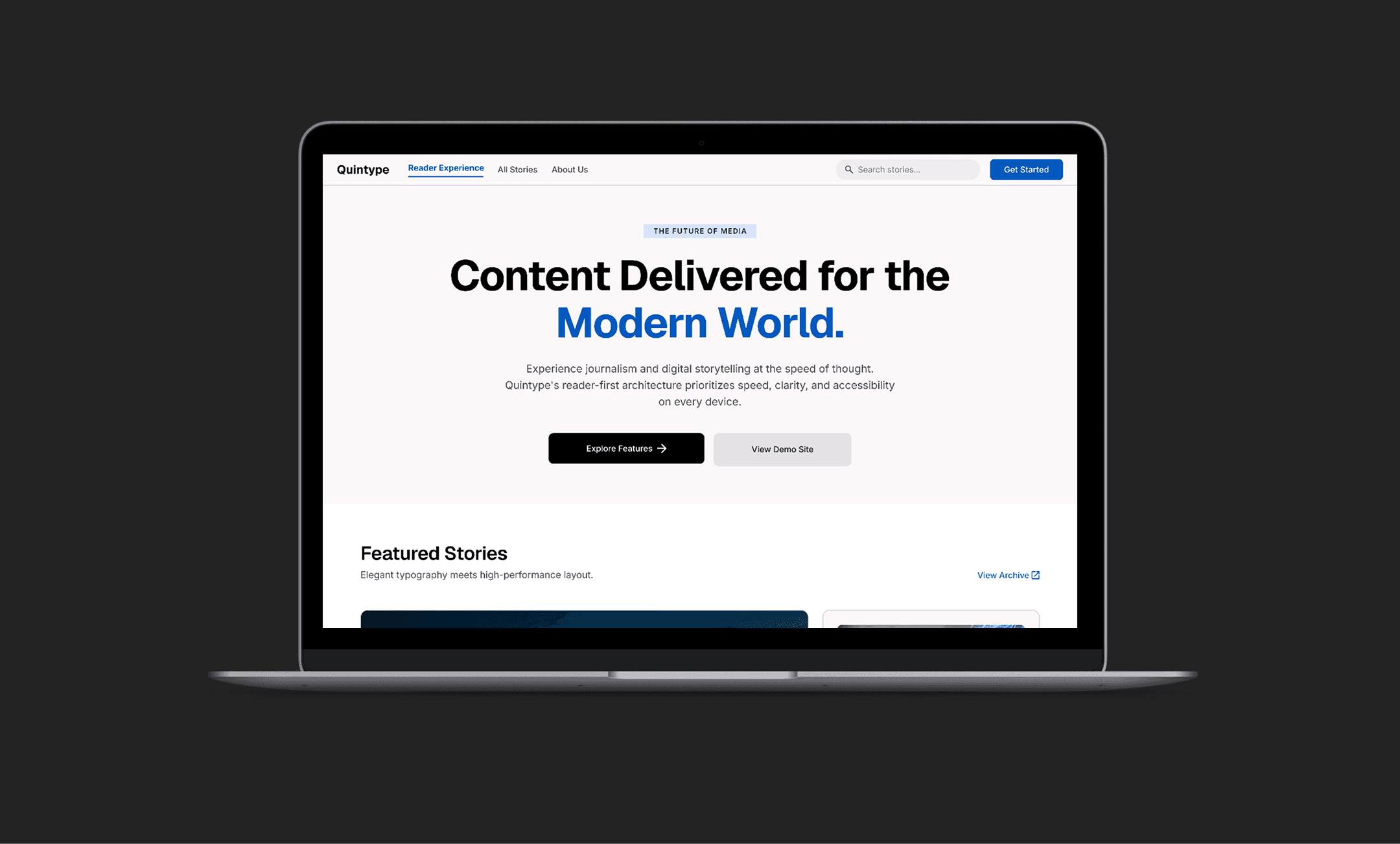
With a goal to revolutionize how content is delivered in the modern world, Quintype set out to build an inclusive CMS system that understands the new mobile-first world and deliver the best content to people across the globe. Their products are truly the harbingers of a new content-ready system that companies, big and small, require to be on-par with.
About the project
The Problem
Quintype and GeekyAnts had already collaborated on a project in the past that dealt with their CMS system and based on the experience they had with us, they referred our services to one of their partners, who reached out to us based on that referral. An extension company of Quintype got in touch with us to discuss building their content management system that would allow them to create, publish and market their content to get maximum results.
We involved ourselves in multiple sessions of extensive discussions to help understand the product better and get a clearer picture of the requirements. After the necessary documentations and agreements, the engagement with the client began in November of 2019. The client wanted to initiate the project under a Time & Material engagement model, and so we did.
OVERCOMING CHALLENGES
Taking up a project that has been under construction for long poses its own set of challenges. The biggest roadblock amongst the others was the fact that some of the pages of the web app were built on Rails. Since the pages were to remain intact, the tech team got in touch with the client-side team to understand the anatomy of the pages in this tech stack and then dealt with. Prioritizing tasks was also a challenge considering the scale of the product and support requests coming in from varied teams needed to be segregated and solved within the deadlines, which proved to be rather smooth for the team. Another challenge was posed by the 3rd party APIs that were to be integrated in the app. Some of those APIs have restrictions that made feature implementation difficult. The solution to this issue came in the form of research and brainstorming sessions on the approach taken towards these features.
In bird's eye view
- Razorpay was used to integrate payment in the app.
- Markets Mojo was used to populate Stock data on the site.
- GitHub Projects was used as the choice of Project Management tool.
- GitHub was used for version control and deployment was done through Circle CI
DEVELOPMENT
A Content Management System, in essence, is a single tool that simplifies content management and marketing. It was important to keep this goal in mind while designing the overall look and feel of the tool. The goal of the development team was clear; to build a website showing stories of specific genre in the Frontend using the API that was provided by the platform. The project was identified as a brownfield project that had been going on for the past three years and was handed over to us to take it to the next level.
Since the project did exist in a certain state before we put our hands on it, the tech stack was predetermined. React was the technology for the Frontend, the project was continued in & Redux was used for State Management.
The first step was to get on call with the client, gather as much in-depth knowledge on the requirements of the product as possible and create ballpark estimates based on the inputs of the client. After multiple iterations and alterations to suit the client's needs, the in-house design team would take the requirements and prepare different versions of the designs for the client. Once picked and approved, tickets would be created for the same and handed over to the development team.
The tech team took all the requirements and planned them based on features and their priorities. Top priority was given to the bugs that existed in the product and their fixes were developed first. These fixes were delivered to the client on a weekly basis and post-approval, the project would move forward with the development and addition of new features in the mix.
The very first feature that was introduced in the product was a subscription flow. With this, users are given the ability to subscribe to paid stories. To implement this, a little research revealed an API called Accesstype that provides the functions required to implement this feature. Based on the user's active plan, visibility of a paywall and a CTA or the active story can be managed and monitored. The next feature in line was the notification module. This would notify users whenever a new story is published. Google's Firebase was used to manage notifications in real-time. A cloud function would fire an update in the DB with the new story, that would notify the users whenever a new story is published. Similarly, a watch list feature was implemented using Firebase as well, that let users save stories and sticks against their ID and retrieve them at will. Towards the end, as the project was heading into a new direction, a new login page was also implemented with a better Log in & Sign up flow.
After every implementation, the QA team would validate Happy Path scenarios with the development team locally. These changes would then be pushed to the staging and beta environment, where the QA engineer would test all the negative and edge cases. The Business Analyst was also a part of the testing process to ensure all scenarios have been covered and the application is user ready. Once all the scenarios were tested, a demo would be delivered to client and they would involve themselves in UAT on the staging server from their end as well. Post their confirmation, we would deploy the feature onto production.
TEAM ON CALL
As a Time and Material engagement, a project can be assumed to be gradual in nature, which means that the team kept increasing with relevance to the increasing scope of the project. The initial team consisted of a single developer and a Tech Architect/Project lead, along with the design team, but the team kept expanding as the project went on. Before long, the team on call was two Reat developers, one Node developer and one QA Engineer strong, with the same tech Architect leading the pack.
A Fintech & Business based website.
The website would be backed by the proprietary CMS.
An inbuilt analytics system was also a crucial requirement.


OUR APPROACH
- After a previous engagement, we were delighted to have the opportunity to partner with Quintype on a project where we assisted them with developing a content management system for the financial and business verticals. The project, based on the T&M model, which started in November 2019 is currently ongoing.
FINAL IMPRESSION
This client was our very first venture into the media and content sector. Needless to say, it has been a great learning experience for us as a team and as an organization. The client also left no opportunity to send appreciations towards the team based on their commitment and the quality of work that was delivered. They loved the attitude of the team and the sheer professionalism that was displayed during the course of the project. They even acknowledged the work of individual contributors within the team through shoutouts and made their satisfaction extremely clear. We loved every minute of our work with them and on behalf of the team, we really look forward to working with the client in future collaborations.
The Right Conversation Can Save You Six Months
Contact us
More from our engineering work
NEXT-GEN WEALTH MANAGEMENT
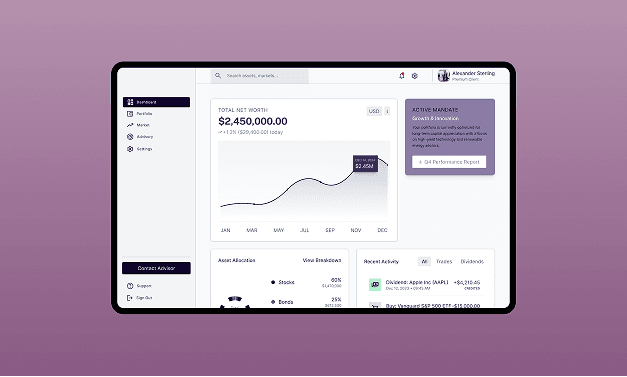
Revolutionizing investment banking with Bambu, a leader in the Fintech domain.
Read case study
Banking App for Finance Giant
We developed a modern banking app aimed at helping retail customers manage money, savings, and transaction workflows with an intuitive interface and seamless cross-platform performance.
Read case studyMORTGAGE TECHNOLOGY SOLUTION
Developing a loan optimizer and mortgage planner for a leading Fintech company in the UK.
Read case studyCRYPTO PAYMENTS & DIGITAL WALLET
Intensive support for a crypto infused complete payments app for Zapit
Read case studyA Secure Casino Web Platform Built for KYC, Payments, and Geo-Compliance
Explore how GeekyAnts built an igaming casino web application with KYC verification, secure payments, real-time notifications, geo-compliance, Next.js, and AWS Amplify.
Read case studySPORTS FAN ENGAGEMENT PLATFORM
Discover how GeekyAnts built Chant, a fan engagement platform that unified memberships, ticketing, payments, and community experiences for sports supporters.
Read case studyTransform the Way You Create and Deliver Content
Whether you're launching a new publishing platform or modernizing an existing CMS, we'll help you build secure, scalable, and high-performing digital products.
