
On-time delivery of a product is key for any business to be successful and prioritising this is critical as it defines how an organization is perceived in the long run. The timely delivery of a product depends on multiple factors ranging from collaboration within the team, clarity of requirements and product deliverables to forecasting and mitigating risk on time. This article aims to explain the importance of risk management during the product development cycle and some best practices to achieve it.
What is risk management and why is it essential?
When a project has multiple dependencies, it becomes difficult to define a clear roadmap because of which the entire development process can be adversely affected. Dependencies play a huge role when a project is following the agile model and this could cause uncertainty, which could potentially affect the delivery of the product in various ways. This unpredictability may affect multiple factors like time to market, the overall quality and even the value and experience of the product for the user. Implementing agile risk management procedures can go a long way and positively impact the delivery of the product as well as help to streamline the development process.
How to perform risk management in an Agile environment?
The first step to finding uncertainties in a project is to jot down all the deliverables involved in the development of the product, be it product core values for go-to-market or listing down the features for product development.
Going forward, it is important to analyze uncertainties and categorize the risk and its impact. Once we have defined the categorization and the impact it could have, it is straightforward for the product development team to collaborate and mitigate the risk.
Sometimes, the risk is so high that the specification of the project might have to undergo some major changes. In such cases, it is vital to discuss all aspects of the project with the team, right from the discovery phase, to get productive input which can help with defining a roadmap to go forward. A product comes to the real world because of collaboration from multiple teams that combine marketing, engineering, and sales; a strong management process needs to be implemented in order to bring all the stakeholders within the same umbrella.
Let’s have a look at some procedures which can help to mitigate risk going forward:
Daily standups: Collaborating and getting input from the team is quite critical when following the agile methodology and having daily stand ups to discuss the proceedings can massively help improve this process. Bringing in the entire team for daily updates to discuss tasks for the day and potential blockages that can hamper the desired result will not just help you to understand possible risks but it can also provide you with a mitigation strategy. Daily standups also help in the overall documentation process which can be referred to in the long run.
Weekly project reviews focused on risk management: Risk focused meetings are an essential part of product development. Risk cannot be evaluated, categorized and mitigated if it is done in isolation. All stakeholders should be present during the meeting to discuss the possible uncertainties and risks that might impact even a small part of the product. It is also important that these reviews are conducted regularly to help evaluate and understand the risk at various intervals.
Categorizing the risk: Categorizing the risk based on the severity and probability of occurrence is quite important to mitigate risk. Based on the priority of the deliverables, the respective stakeholder can draw a mitigation plan and inform the team of the tentative timeline and outcome.
It is important that the risk identified is reevaluated in the regular risk management meetings for a clear-cut strategy to be drawn. It is the responsibility of the project manager or programme manager to run the risk assessment meetings. Individual reflection from each team which can be identified with the aforementioned procedures can not only help with perspective but also how the risk is identified. Based on the reflection of the severity and probability of occurrence, a risk mitigation strategy can be recalculated to understand the impact on delivery.
Risk Prioritization:
Risk prioritization is very important in the project execution phase. Here’s how you can classify risk for a project:
- Low risk - Low risk projects can be categorized in the green zone which means that the deliverables don't need a major mitigation plan to go forward.
- Medium-risk - Medium risk projects are categorized in the yellow zone which means that certain open points need to be handled. When a project is in this zone, it indicates that there is no major risk to the project delivery and product development can continue along with a recommendation to have a mitigation plan.
- High Risk - High risk projects are categorized in the orange zone which means it needs a solid risk mitigation plan. High risk also comes with a high probability of occurrence which can have a huge impact on the delivery of the project. If a solid mitigation plan is not in place, this can have a high impact on the quality of the product which can hamper its value.
- Urgent- Urgent projects are categorized in the red zone which means it solicits urgent attention to keep the product development running without any hassles. If a solid risk mitigation plan is not in place, the product development can come to a standstill.
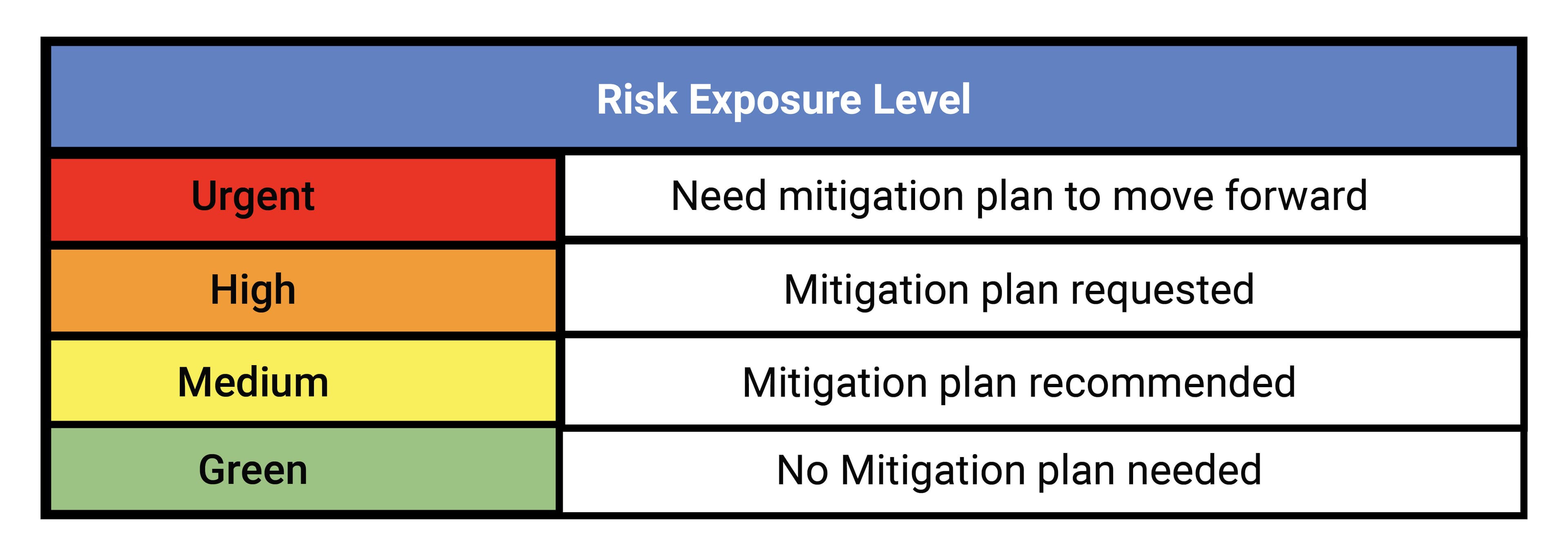
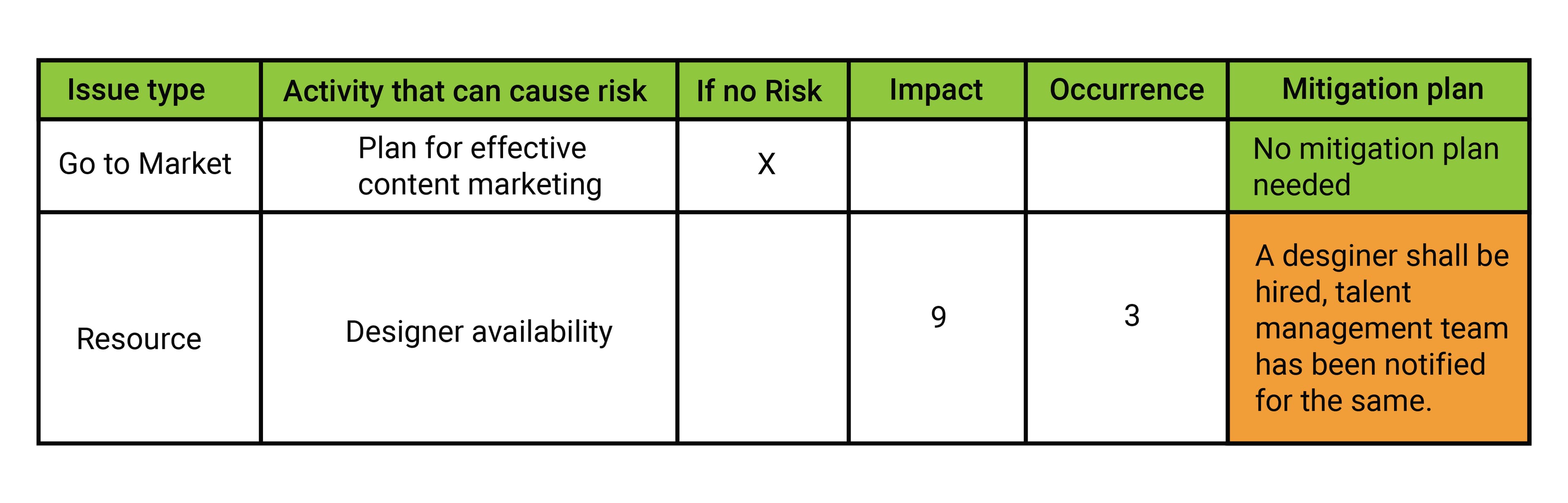
If the team working on the project is using effective project management tools, all risk exposure levels can be configured and discussed during risk management meetings. These risk meetings can be also managed easily in a spreadsheet.
A basic structure looks like this:
Conclusion
The agile framework provides a lot of flexibility for us to adapt to impending risk during a project and we can mould our development based on the decisions made during these meetings. We hope that this article has helped you understand risk management and how it can be effectively conducted in an agile environment.