Cloud Migration & Modernization
Transition to the Cloud With Precision, Speed, and Zero Regret










Client Results and Success

Production-Ready Kubernetes Architecture
The platform was designed to support scalable production deployments with minimal resource consumption, enabling faster environment provisioning and operational stability.
3
environments K8s setup
95%
environments K8s setup
35%
savings over managed Kubernetes alternatives



Our Migration Assessment Covers Three Critical Dimensions
- Current state mapping: Server inventory, virtualization layers, networking topology, and storage dependencies
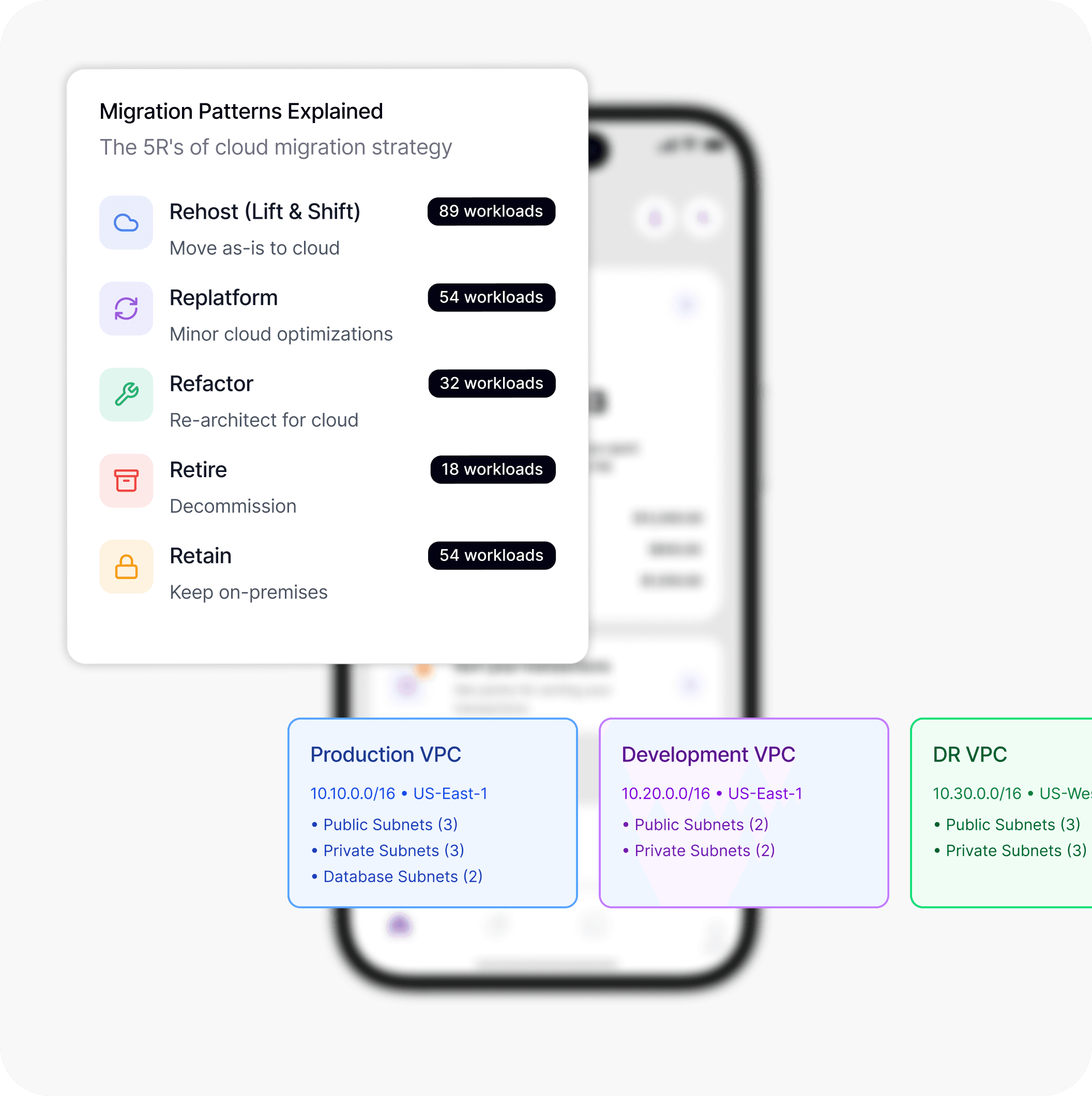
- Cloud fit analysis: Workload classification by migration pattern — rehost, replatform, refactor, retire, or retain
- Dependency chain identification: Inter-service communication, shared databases, and legacy integration points
- Network and connectivity planning: Latency requirements, hybrid connectivity options, and firewall migration considerations
- Application complexity scoring: Coupling levels, technology stack age, containerisation readiness, and refactoring effort estimates
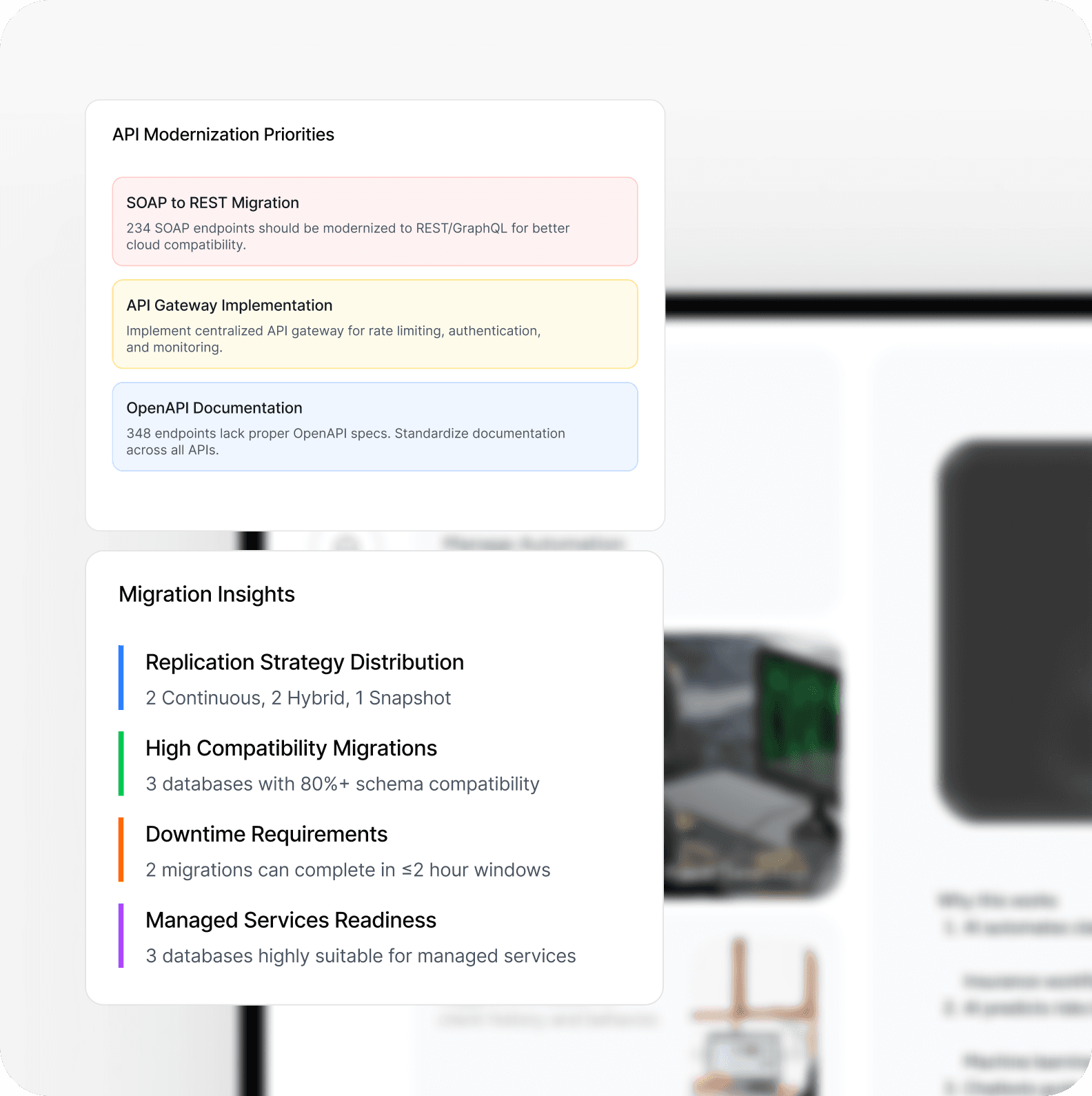
- Database migration assessment: Schema compatibility, replication strategies, cutover window requirements, and managed service suitability
- API and integration mapping: Third-party dependencies, internal service contracts, and breaking change risk analysis
- Modernization prioritization: Sequencing recommendations balancing business value, technical risk, and migration effort
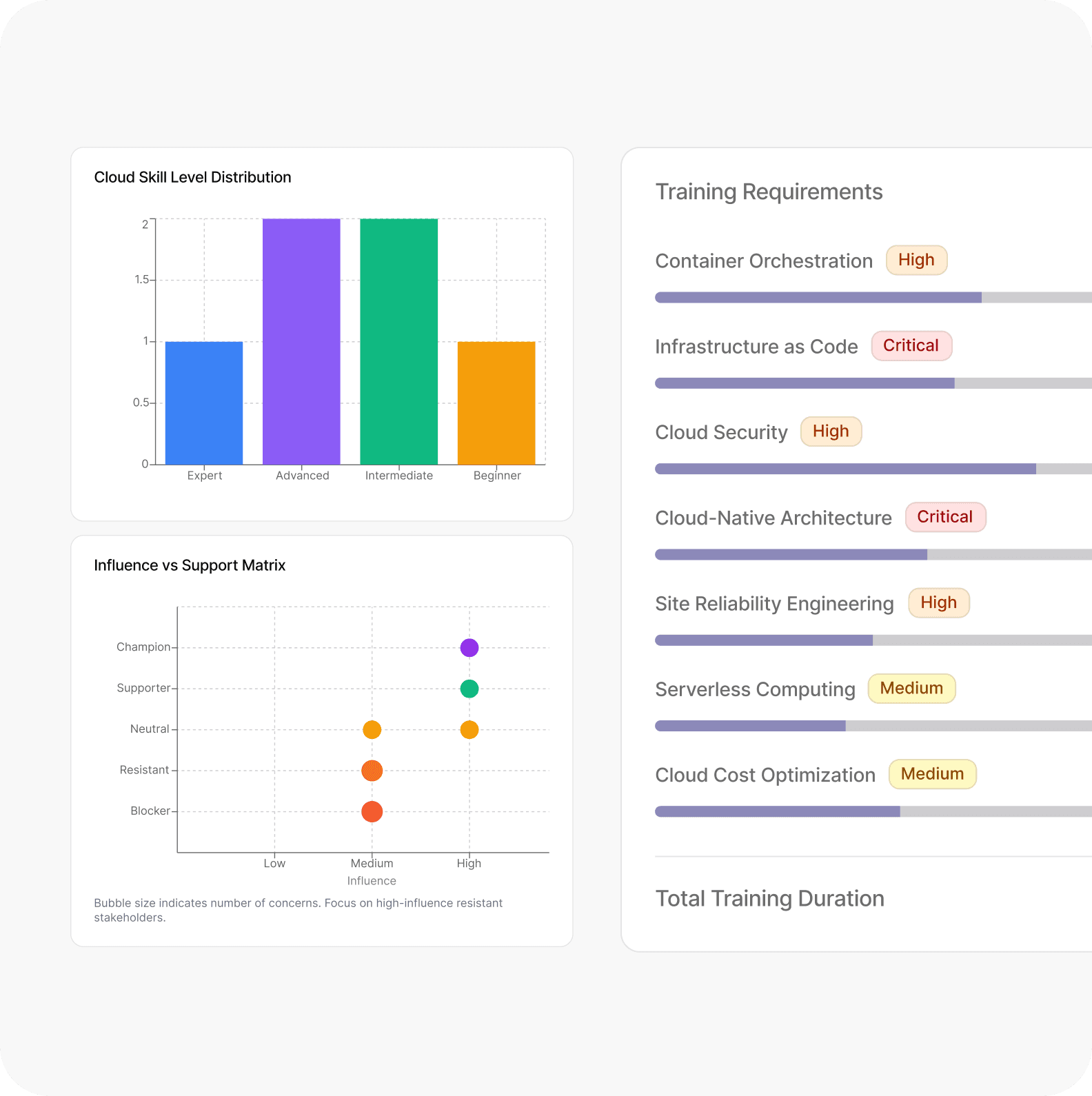
- Team capability assessment: Existing cloud skills, training gaps, and capacity available to support migration execution
- Governance and compliance alignment: Data residency requirements, regulatory constraints, and cloud policy frameworks
- Change management readiness: Stakeholder alignment, communication planning, and rollback decision authority
- Post-migration operating model: Target support structures, cloud operational tooling, and knowledge transfer requirements
Recurring Patterns We Uncover Across FinOps Engagements
12-16 wks
Average timeline extension caused by undiscovered dependencies during migration execution
60-70%
Proportion of application portfolios containing modernisation candidates misclassified as simple lifts
1 in 3
Migrations that encounter significant data migration complications not identified during planning
35%
Average reduction in post-migration costs when sequencing is planned rather than improvised
Migration Outcomes We Are Accountable For Delivering
Migrate Without Fear of What You Missed
Accelerate Cloud Adoption Without Business Disruption
Land in a Cloud Architecture Built to Last
Modernize While You Migrate, Not Years Afterward
Industries Across Which We Deliver Migration and Modernization Impact


Migration Assessments Delivered by Engineers Who Have Moved 1000+ Production Systems to the Cloud
Our Offerings in DevOps Consulting and Services
Our Latest Thinking
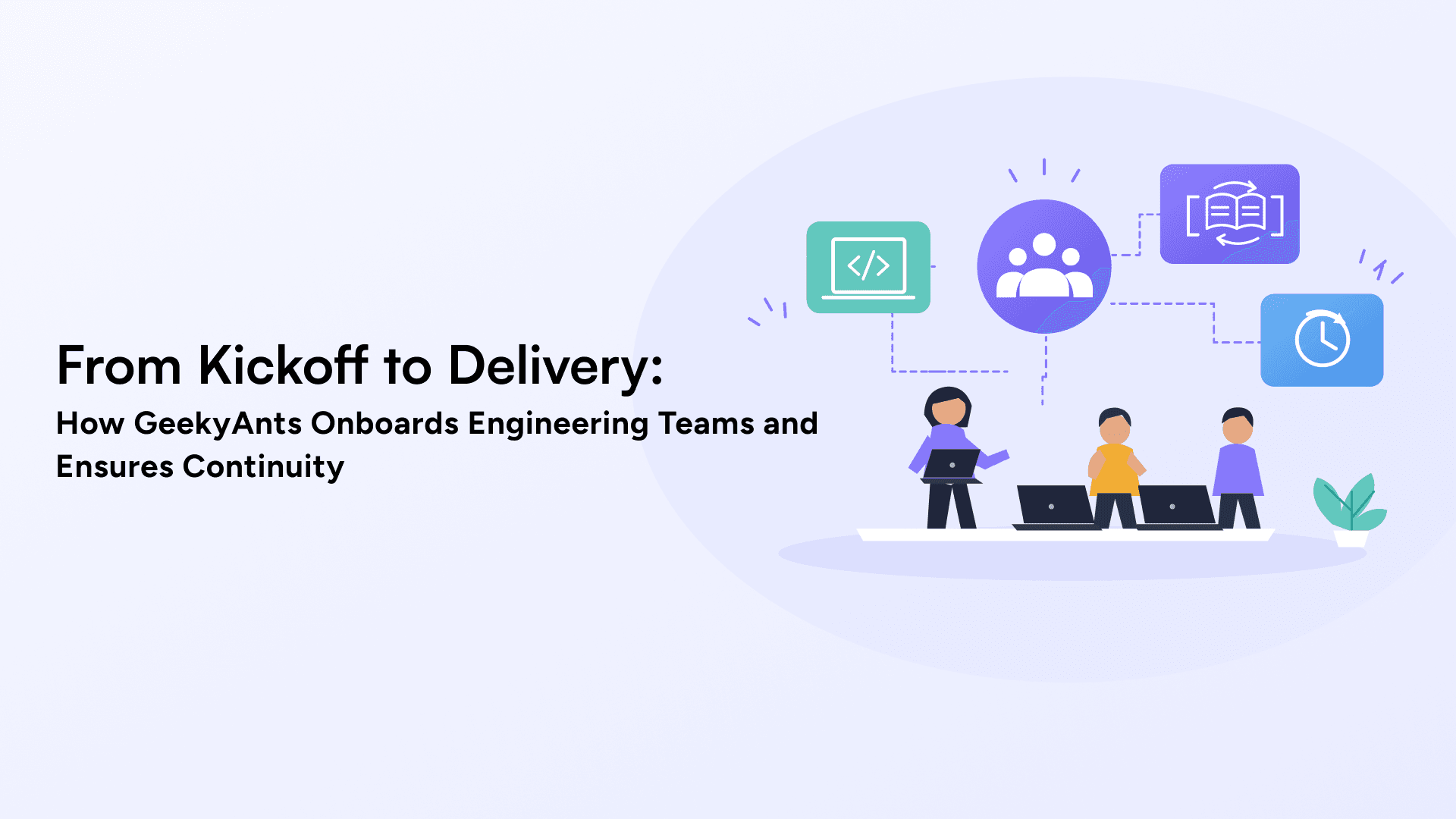
From Kickoff to Delivery: How GeekyAnts Onboards Engineering Teams and Ensures Continuity
This blog explains how GeekyAnts onboards engineering teams through structured ramp-up, knowledge transfer, replacement planning, and continuity practices.
Dedicated AI Product Pod vs. In-House Hiring vs. Staff Augmentation: A Cost, Control, and Delivery Risk Comparison
Compare dedicated AI product pods, in-house hiring, and AI staff augmentation across costs, delivery ownership, management effort, and risk to choose the right model for your product roadmap.
How GeekyAnts Manages AI Models After Launch to Maintain Security, Control, and Flexibility
AI models don’t stay predictable forever. Discover how GeekyAnts’ documented projects keep model changes in check, catch performance issues, protect sensitive data, and switch providers when requirements change or issues arise.
How GeekyAnts Evaluates AI Systems for Production Readiness
This blog explains how GeekyAnts evaluates AI systems for accuracy, security, bias, cost, and performance before production, supported by real project examples.
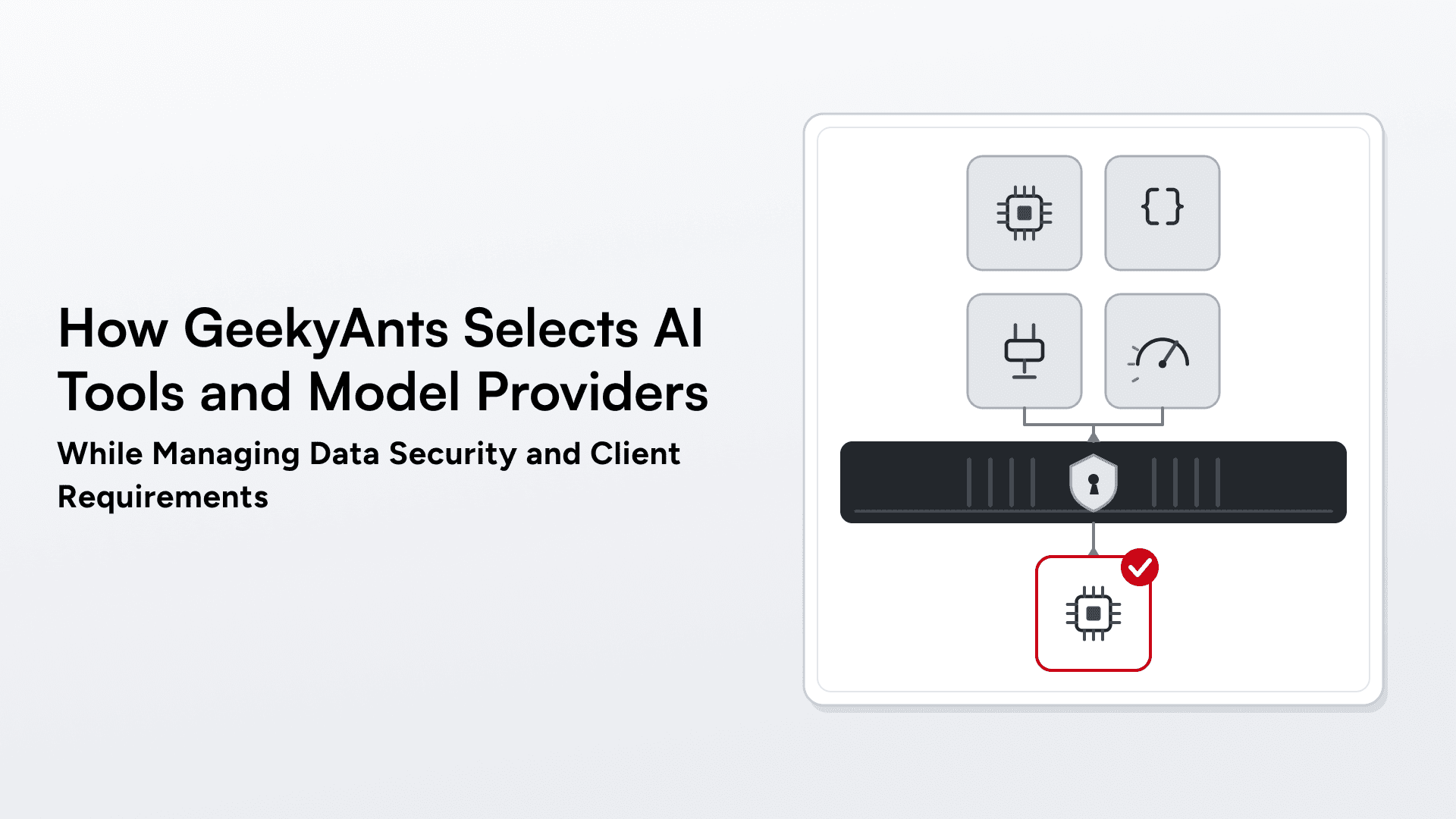
How GeekyAnts Selects AI Tools and Model Providers While Managing Data Security and Client Requirements
Explore the AI tools and model providers used in GeekyAnts’ documented projects, including Claude Code, Gemini, OpenAI, and Ollama. Learn how tool selection, data retention, subprocessors, hosting options, and client requirements shape AI adoption.
How GeekyAnts Uses AI in Software Engineering: From Requirements to Release
This blog explains how GeekyAnts uses AI across software development while maintaining human oversight, quality checks, and engineering accountability.