
DollarDash
How DollarDash cut AWS cloud costs by 60%, saving $57K+ annually without downtime or SLA impact. A real-world fintech cloud optimization case study.


About the Client
DollarDash is an overseas fund transfer company focused on simplifying global money movement. The platform enables individuals to make international transactions efficiently, helping bridge the gap between disparate financial systems and global currencies. Through streamlined cross-border payments, DollarDash aims to make global transactions more accessible, reliable, and frictionless for users navigating international finance.
*All names and logos have been changed to respect the NDA
About the project
Overview
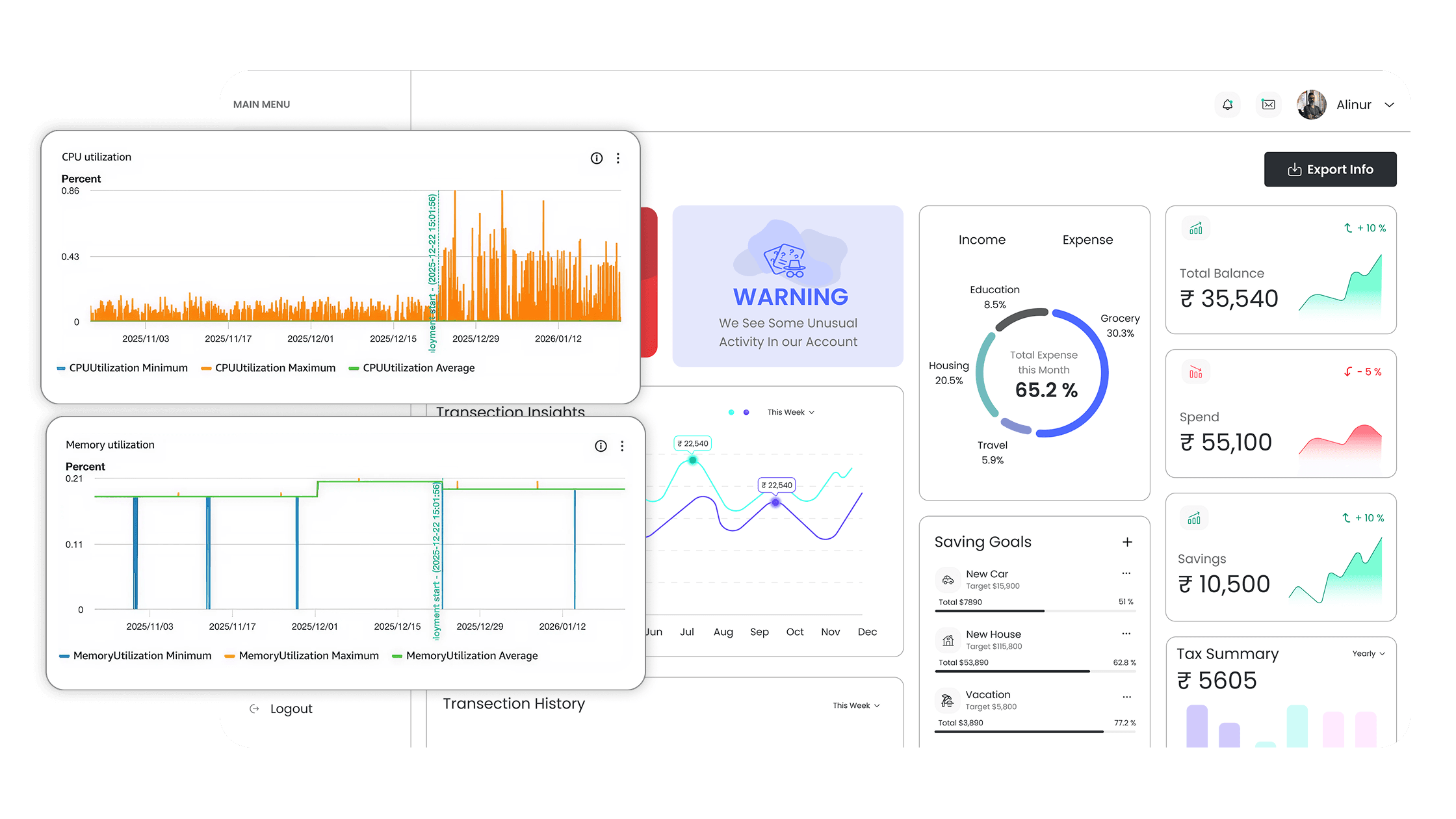
Our team inherited an AWS environment consisting of our original bootstrapped infrastructure and components handed over from previous teams. Within a single quarter, we reduced the monthly cloud spend from $8,100 to $3,300. This 60% reduction generated over $57,000 in annual savings.
No features were removed. No SLAs were compromised. Production remained stable throughout.
The engagement focused on the infrastructure lifecycle post-build, aligning existing systems with the operational requirements of the product.
60%
Reduction in monthly cloud costs$4,800
Saved per month$57,000+
Annual savings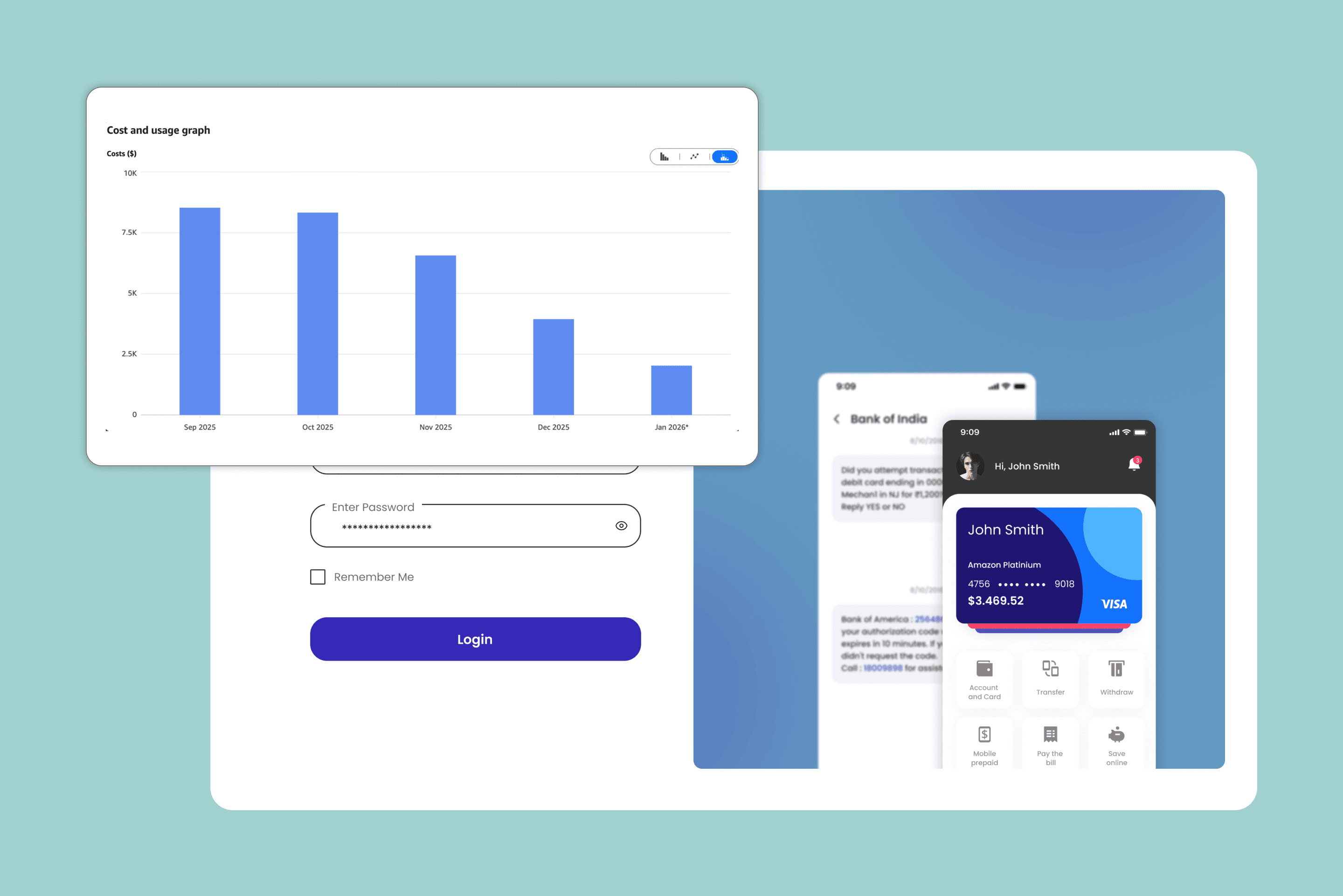
BUSINESS REQUIREMENT
The client’s primary requirement was to reduce cloud costs that had grown higher than expected, without impacting production stability or SLAs.
Key Requirements
The business goals included:
- Reducing monthly AWS spend
- Ensuring zero production downtime during optimization
- Aligning infrastructure with current usage patterns rather than historical assumptions
CHALLENGES IN EXECUTION & SOLUTIONS
To address the challenge of escalating operational expenses, we conducted an audit of inherited infrastructure assumptions, realigning them with actual usage patterns to eliminate waste. This process targeted over-provisioned non-production environments, which were right-sized and converted to on-demand models, ensuring resources remain active only when necessary.
A systematic cleanup was initiated to identify and remove legacy and orphaned resources, utilizing a shared audit and approval tracking system to maintain transparency. To mitigate the risk of breaking production during these transitions, all modifications were executed through Terraform-backed rollouts, ensuring every change was evidence-based and reversible.
Escalating Expenses
Infrastructure Assumptions
Over-provisioned Environments
Production Risk
OUR SOLUTION
GeekyAnts approached the problem as a system-alignment exercise rather than a pure cost-cutting effort.
1. Audited infrastructure usage and spend across all environments
2. Removed unused, idle, and legacy resources safely
3. Right-sized compute, databases, and storage based on real usage
4. Reworked non-production environments to operate on demand
5. Introduced governance and maintenance processes to prevent cost drift
OUR APPROACH
We followed a phased, low-risk approach with clear milestones to ensure cost reduction without compromising system stability.
- Cleanup and hygiene
- Evidence-based right-sizing
- Environment strategy restructuring
- Maintenance mode and process correction
- Post-Implementation Cost Control
- We began with the safest set of actions: removing unused and orphaned resources that had no active dependencies or clear ownership.Actions included:
- Removing idle load balancers, unattached Elastic IPs, and unused networking resources
- Cleaning up old snapshots and backups
- Adding S3 lifecycle policies for storage tiering and expiration
- Applying ECR lifecycle policies to remove unused container images
- Reviewing logging policies
RESULTS
The optimization project transitioned DollarDash’s AWS infrastructure from a high-overhead legacy configuration to a high-velocity system. Reducing monthly cloud spend by 60% unlocked over $57,000 in annual capital for reinvestment. This was achieved without compromising production stability, demonstrating that infrastructure maturity and fiscal efficiency are mutually inclusive.
The Right Conversation Can Save You Six Months
Contact us
More from our engineering work



Are You Paying More for Cloud Than You Should?
Book a Cloud Cost Assessment to uncover infrastructure waste, optimize AWS spend, and build a scalable platform engineered for long-term growth.
