


Healthcare Data Integration & Interoperability
Healthcare Data Integration & Interoperability Services for UK Healthcare Organizations
When patient information gets stuck between systems, care teams lose valuable time tracking admissions, discharges, and missing updates.
Challenges
Healthcare Data Integration Challenges We Solve
Fragmented Patient Records
Patient information remains scattered across EHRs, laboratories, and healthcare facilities, making clinical histories difficult to access. We connect these data sources and organize available information into patient-centric records, encounters, and events.Inconsistent Clinical Data Formats
Clinical information arrives through HL7 messages, C-CDA documents, laboratory results, and XML files with different structures. We validate, map, and transform supported formats into structured data that connected applications can use.Legacy Integration Systems
Established file-based exchanges and older clinical systems can limit integration options. We build integration layers around existing SFTP and HL7 workflows while introducing FHIR APIs and modern data-processing capabilities where required.Limited Provider-Payer Visibility
Disconnected facility and payer systems make it difficult for stakeholders to access relevant patient histories and operational events. We develop connected platforms with role-based access to shared healthcare information.Clinical Data Without Context
Raw healthcare files provide limited visibility into patient activity and facility operations. We transform incoming clinical information into structured encounters, events, and dashboards covering admissions, discharges, and readmissions.Data Integrity and Traceability
When processed records lack links to their source files, investigating data discrepancies becomes difficult. We preserve source-level traceability so authorized users can examine the original healthcare information behind processed records.
Services
Healthcare Data Integration & Interoperability Services We Offer


EHR & EMR Platform Engineering

Healthcare Interoperability Services

Secure Healthcare Data Exchange Gateways
Outcomes
Where Healthcare Teams Need the Most Integration Engineering Support
- 01Clinical Data IngestionHealthcare facilities exchange ADT, laboratory, radiology, and other clinical files through different interfaces. We design ingestion pipelines with file validation, processing controls, error handling, and monitoring.OutcomeTeams gain clearer visibility into incoming data and failed exchanges.
- 02Healthcare Data StandardizationDifferences in HL7 messages, C-CDA documents, and XML structures complicate data processing. We define mappings and transformation rules that convert supported formats into structured information.OutcomeConnected applications can use clinical data with consistent field definitions.
- 03Unified Patient InformationPatient histories, encounters, and clinical events may be distributed across healthcare systems. We organize processed information into patient-centric views with access to available source records.OutcomeAuthorized teams can review connected patient information across participating facilities.
- 04Facility-Payer Data ConnectivityFacilities and payers need access to different information within shared healthcare platforms. We develop controlled exchange workflows and role-based permissions.OutcomeAuthorized stakeholders can access relevant patient records and operational events through a connected application.
- 05Healthcare Operational IntelligenceAdmissions, discharges, and readmissions generate information across multiple clinical systems. We transform incoming events into structured data and operational dashboards.OutcomeHealthcare teams gain visibility into patient movement, encounters, and facility activity.

- 06Clinical Data TraceabilityProcessed healthcare records must remain connected to their original information sources. We preserve relationships between source files, patient records, and clinical events.OutcomeAuthorized users can investigate data discrepancies by reviewing the underlying healthcare files.
- 07Legacy Integration ModernizationExisting SFTP gateways and HL7-based workflows may need to operate alongside newer healthcare APIs. We design integration layers that support established exchange methods while introducing FHIR capabilities where required.OutcomeOrganizations can extend interoperability without replacing every existing clinical system.
Move Your Healthcare Integration Project Forward
Healthcare Security, Compliance, and Interoperability Standards

HIPAA
Health Insurance Portability and Accountability Act
For US healthcare organizations subject to HIPAA, we design integrations around patient-data safeguards, access controls, encryption, audit trails, and secure information exchange.

Business Associate Agreements
Contractual Safeguards for Protected Health Information
Where business associate relationships apply, agreements define permitted PHI use, data protection responsibilities, incident reporting, and requirements for subcontractors handling patient information.

HL7 FHIR
Fast Healthcare Interoperability Resources
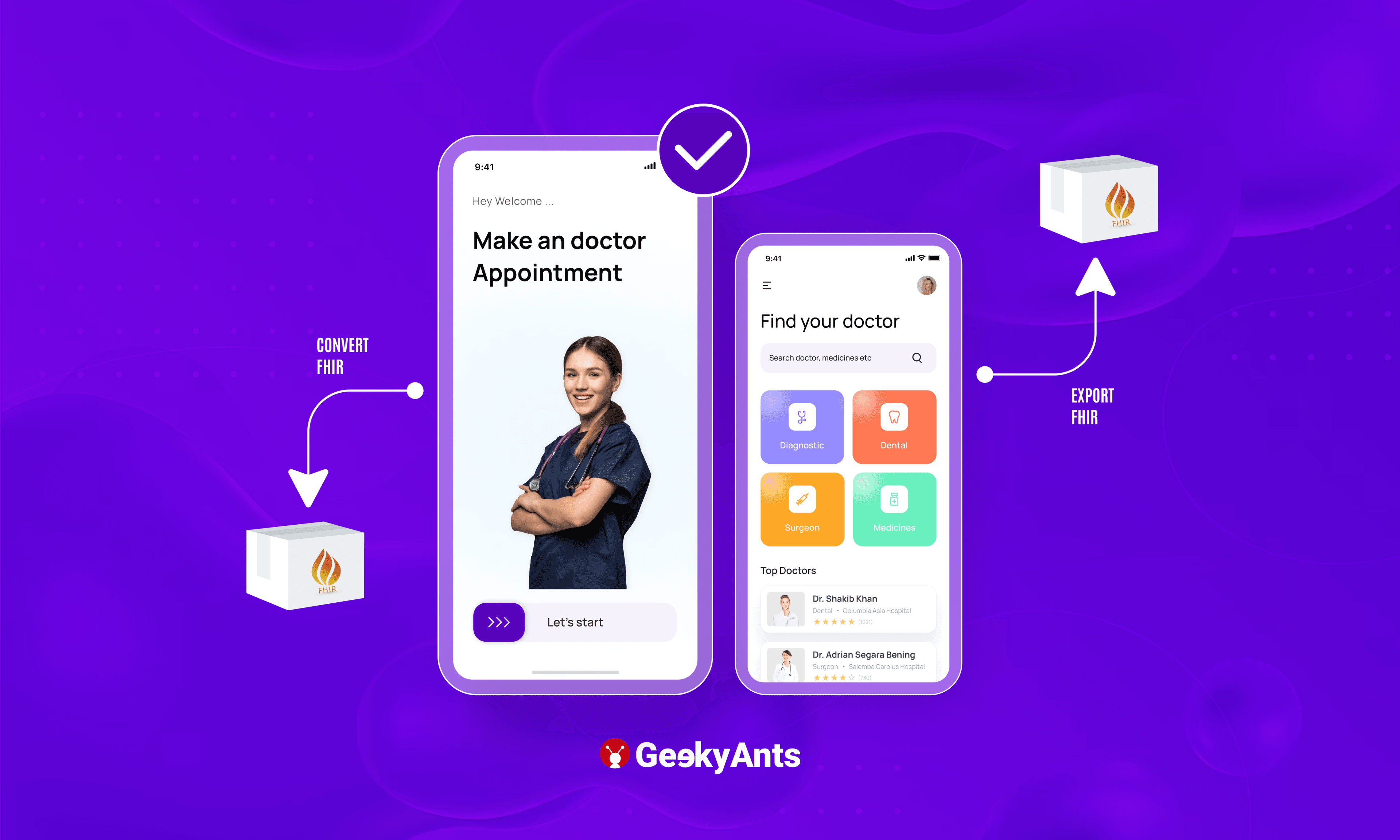
Support standardized clinical data exchange through FHIR APIs connecting EHRs, healthcare applications, and payer platforms, with authenticated access and validated data mappings.

HL7 v2
Health Level Seven Version 2 Messaging Standard
Process clinical messages for admissions, discharges, transfers, laboratory results, and other healthcare events through established HL7 interfaces and transformation pipelines.

CMS Interoperability Requirements
US Payer Data Exchange and Prior Authorization
For affected US payers, support applicable FHIR API requirements for patient access, provider access, payer-to-payer exchange, and electronic prior authorization.

GDPR
General Data Protection Regulation
For healthcare integrations within GDPR’s scope, health-data processing requires a lawful basis, an applicable special-category condition, and safeguards supporting individuals’ rights.

ISO/IEC 27001:2022
Information Security Management System
Our certified management system supports information security risk assessment, access control, data protection, and incident response across healthcare integration projects.

ISO 9001:2015
Quality Management System
Our certified quality management system supports documented engineering processes, delivery reviews, corrective actions, and consistent quality standards.

ISO/IEC 20000-1:2018
IT Service Management System
Our certified management system supports controlled changes, incident handling, monitoring, and service continuity for healthcare integration platforms operating in production.
Work
Healthcare Data Integration & Interoperability Success Stories
Clients
Built With Healthcare Teams, Trusted by Healthtech Leaders
The quality of work and the communication was impressive.
Highlights
Why Choose GeekyAnts as Your Healthcare Data Integration & Interoperability Company?
- 01
Healthcare Data Engineering Experience
Our engineering experience covers SFTP-based data exchange, HL7/XML processing, and clinical data transformation for patient records, encounters, and healthcare events. - 02
Security and Access Controls
We design healthcare integrations around secure transport, authentication, role-based permissions, data validation, and auditability to protect sensitive patient information. - 03
Interoperability-First Architecture
We connect EHRs, laboratories, diagnostic systems, and payer platforms through established healthcare messaging formats and FHIR APIs where supported. - 04
Source-Level Data Traceability
We maintain links between original healthcare files and processed records, helping authorized teams investigate discrepancies and verify clinical information. - 05
Patient-Centric Data Platforms
We organize clinical information into connected patient histories, encounters, and operational views that authorized healthcare teams can access. - 06
Phased Integration Modernization
We build integration layers around existing applications and introduce new APIs, data-processing capabilities, and monitoring without requiring complete system replacement.
Engagement
Healthcare Data Integration & Interoperability Engagement Models
01 / 03Audit / Assessment
A fixed-scope review of your healthcare systems, integration architecture, clinical data flows, security controls, and interoperability requirements.- Integration architecture review
- HL7, FHIR, and SFTP assessment
- Data mapping and security gap analysis
- Prioritized modernization roadmap
Best for: Healthcare organizations evaluating existing integration infrastructure or planning new interoperability capabilities.
02 / 03Build / Modernization Sprint
A time-boxed engagement to build or modernize a defined healthcare integration, data exchange gateway, or clinical data processing capability.- Defined integration scope and backlog
- API and data pipeline development
- Data validation and integration testing
- Deployment and release validation
Best for: Teams implementing priority integrations, upgrading legacy exchange mechanisms, or introducing FHIR APIs.
03 / 03Dedicated Engineering Team
A long-term team working alongside yours to develop, maintain, and improve healthcare integrations across connected systems.- Healthcare integration specialists
- Integration roadmap and release planning
- Monitoring and issue resolution
- Ongoing integration modernization
Best for: Healthcare organizations requiring sustained engineering support across multiple systems, facilities, and releases.
Process
Our Healthcare Data Integration & Interoperability Process

Step 1
Assess Existing Healthcare Systems
Phase 01
Review EHRs, laboratory systems, payer platforms, existing integrations, and available interfaces. Identify data sources, supported formats, access requirements, and technical dependencies before defining the integration scope.
Step 2
Design Integration Architecture
Phase 02
Define data flows, exchange methods, interface specifications, and data mappings. Establish how incoming clinical messages and documents will be validated, transformed, and connected to patient records and healthcare events.
Step 3
Develop Integration Pipelines
Phase 03
Build SFTP gateways, HL7 processing services, FHIR APIs, and data transformation pipelines based on system requirements. Connect incoming healthcare information to approved applications while retaining existing exchange mechanisms where required.
Step 4
Implement Security and Traceability
Phase 04
Define authentication, role-based permissions, secure transport, and audit logging. Preserve relationships between source files and processed records so authorized users can review clinical information and investigate data discrepancies.
Step 5
Validate and Test Data Exchange
Phase 05
Test supported healthcare messages, clinical documents, and API exchanges against agreed requirements. Verify data mappings, access permissions, error handling, and processing behavior before introducing integrations into production.
Step 6
Deploy, Monitor, and Improve
Phase 06
Deploy integrations in planned phases around existing healthcare systems. Monitor data processing, exchange failures, and operational performance. Update integration rules and extend connectivity as new systems and requirements are introduced.

Technologies
Technology Stack for Healthcare Data Integration & Interoperability
- HL7 messaging
- FHIR

- C-CDA
- ADT
- Laboratory feeds
- Radiology feeds
- ELR
- Syndromic feeds and XML
- SFTP gateways
- Healthcare APIs
- EHR interfaces
- Facility-payer connectivity
- Laboratory integrations
- Radiology integrations
- HL7 interfaces
- FHIR APIs
- Clinical file ingestion
- Data mapping
- Document transformation
- Patient record processing
- Encounter processing
- Event processing
- Operational KPIs
- Clinical data transformation
- Manual testing
- Automation testing
- API testing
- Integration testing
- Performance testing
- Security testing
- Regression testing
- Exception testing
- CI/CD
- Authentication
- Role-based access
- Encryption
- Environment separation
- Secrets management
- Recovery testing
- Access controls
- Audit logging
- Processing monitoring
- Error handling
- Alerting
- Data freshness reporting
- Source-file traceability
- Operational dashboards
- Logs and traces
Partners
Technology Partners for Healthcare Data Integration & Interoperability
- OpenAISelect PartnerOpenAI models and APIs for evaluated healthcare documentation, information retrieval, and workflow assistance.
- Anthropic /
ClaudeMember of the Claude Partner Network (Services Track)Claude-based assistants and enterprise workflows with defined data access and human oversight. - AWSConsulting PartnerCloud infrastructure for deploying, monitoring, and scaling healthcare integration platforms.
- VercelOfficial PartnerFrontend deployment and performance tools for healthcare applications and connected data platforms.
- HasuraStrategic PartnerGraphQL APIs and real-time access to application data across connected healthcare systems.
- GitHubTechnology PartnerCode collaboration, version control, and automated delivery pipelines for healthcare integration projects.

Recognition
Awards & Industry Recognition
13industry recognitions
- Clutch | Healthcare & Wellness RecognitionTop Health & Wellness App Developers 2026
- Clutch • 2025Clutch Champion
- ET Now • 2026Excellence in AI & Digital Transformation

- Business of Apps • 2026Top App Development Companies

- Clutch • 2025Top User Research Company
- Clutch • 2026Top Software Developers - Manufacturing
- Clutch • 2026Top React Native Developer
- GoodFirmsBest Company to Work With

- Clutch • 2026Top Financial App Developers
- Clutch • 2026Top App Development Company - Europe
- RightFirms • 2026Top Mobile App Development

- Clutch • 2025Clutch Global Award
- DesignRush • 2026Best Application Development Company in the US

Contact
Ready to connect your healthcare systems and improve clinical data exchange?
Contact us
Insights
Insights on Healthcare Data Integration & Interoperability

Blog
Interoperability and Data Exchange in Healthcare
Join Abhishek Anand, Tech Lead at GeekyAnts, as he delves into the world of healthcare interoperability and its profound implications on the seamless exchange of vital medical information.
Blog
FHIR and Interoperability in the US Market
Explore how Fast Healthcare Interoperability Resources (FHIR) are transforming US healthcare, prioritizing patients, and streamlining processes for providers through Ruben Viera’s talk at our recent virtual healthcare meetup.

Blog
HL7 and FHIR for AI Healthcare Platforms: What It Takes to Build for Production
A practical guide covering the HL7 and FHIR standards, production readiness requirements, implementation roadmap, architecture considerations, and compliance controls that AI healthcare teams need to address before enterprise deployment.

Blog
Interoperability in Diagnostic Labs
Dr. Anuj Parkash’s recent talk at our Virtual Healthcare Meetup explores the role of interoperability in healthcare and seamless data exchange for improved patient outcomes.
FAQ