KYC and AML Automation Services and Consultation
We build automated identity verification platforms that orchestrate parallel checks, cutting approval time from days to minutes and lifting onboarding conversion from 40% to 85%. Every decision is audit-trailed, every provider integration is fault-tolerant, and compliance with OFAC, BSA, and AML requirements is built into the architecture.
Fragmented Data Creates Compliance Gaps











Onboarding conversion fails because of the wait, not the verification itself. When a user submits documents and hears nothing for hours, they assume the process has failed and abandon it. This problem is made worse by sequential systems that check one provider at a time, stacking delays at every step. Additionally, when automation is weak, manual review queues grow into an unmanageable operational liability.
We have solved this by rebuilding the entire orchestration layer to run in parallel. Instead of waiting in a line, thirteen-plus providers, including Persona, Experian, and global watchlists, process data simultaneously. Our real-time engine delivers a final decision within minutes, automating 90% of cases that used to require a human. For the remaining 10% that still need a manual look, reviewers receive a structured audit trail instead of a mess of raw data, making the final step faster and more accurate.
Client Results and Success
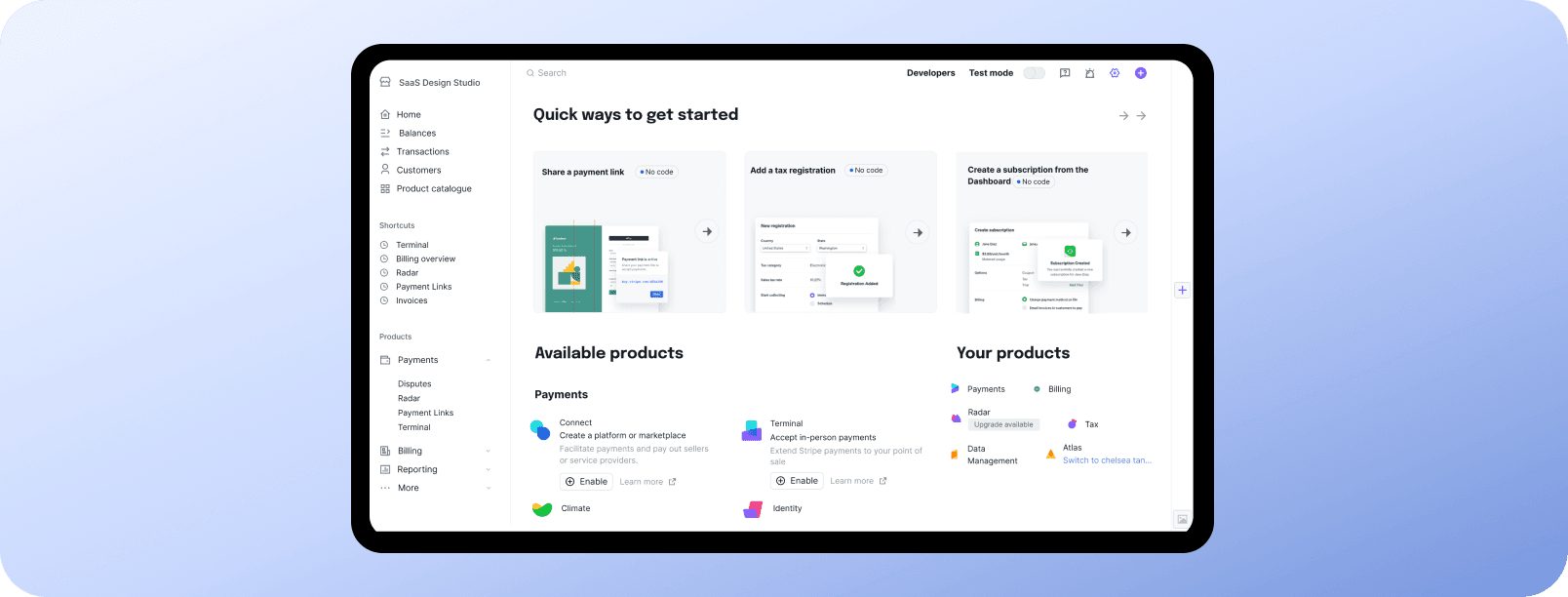
1000+ Individual Billers Supported
The platform supports over 1K unique billers within a single, low-latency mobile interface.
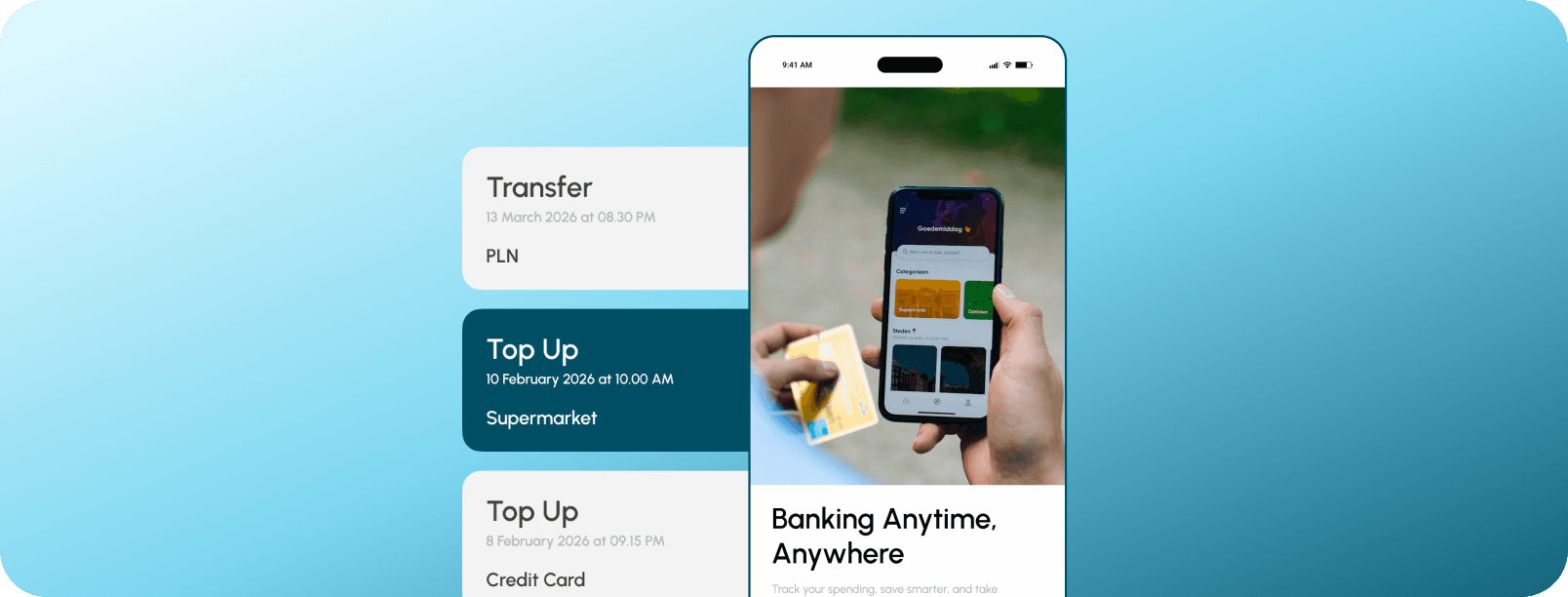
5 Million+ Active Users
The module successfully serves over 5 million users and processes transactions worth hundreds of crores daily.
100% Data Integrity
Processes 230,000+ card records daily with full synchronization completed in under 30 minutes.
MENA-Region Compliant
Immediate adherence to the UAE and Saudi Arabia’s strict data and payment laws.
Business Impacts We Have Made
95%
Fraud Detection Accuracy
60%
Reduction in Fraud-Related Costs
100ms
Real-Time Decisioning
<2%
False Positives with minimal friction
Our KYC and AML Automation Capabilities
Government ID Verification with Liveness Detection
Document authenticity is verified against government-issued ID through Persona, with liveness detection confirming the applicant is physically present rather than presenting a photograph or pre-recorded video. Anti-spoofing runs at 90%+ confidence threshold, with cases below that threshold routed to manual review rather than auto-approved.
Selfie Matching and Anti-Spoofing
Biometric selfie matching compares the applicant's live capture against the document photograph. Anti-spoofing detection runs concurrently to keep the verification step within a time window that does not contribute to drop-off.
TIN Validation
SSN, EIN, and ITIN Tax Identification Number validation covers SSN, EIN, and ITIN formats, handling the applicant types that US financial products serve without requiring separate workflows per TIN category.
Credit and Debit Bureau Verification
Soft inquiry integration with Experian and TransUnion retrieves credit profile data without impacting the applicant's credit score. ChexSystems debit bureau checks run in the same parallel orchestration cycle.
OFAC and Global Watchlist Screening
Every applicant is screened against the OFAC Specially Designated Nationals list and active global sanctions lists before a decision is made. Screening is a mandatory gate in the workflow.
Adverse Media and PEP Screening
Adverse media monitoring and Politically Exposed Person screening run as part of the same orchestrated verification cycle, identifying compliance risks that document verification and bureau checks alone do not surface.
Multi-Applicant Support and Application Resumption
Joint account applications are handled within a single unified workflow. Application resumption allows users who exit mid-flow to return to their saved progress rather than restarting, which is a material contributor to completion rates on longer verification workflows.
Complete RegTech & Compliance Automation Solutions for Financial Enterprises
KYC and AML Automation by People Who Have Delivered 1000+ Projects
Leverages 13+ providers simultaneously to eliminate sequential delays and accelerate results.

Utilizes sophisticated rule-based logic to deliver instant approvals or rejections.

Full PII encryption both at rest and in transit, ensuring data remains protected at every stage.

Built-in automatic retries and fallback mechanisms to maintain high availability and uptime.

A flexible, 10-step workflow that can be tailored to meet specific business and user requirements.

Generates a complete, structured audit trail for every session to simplify regulatory reporting.

Our Latest Thinking in RegTech & Compliance Automation

FAQs About Our KYC and AML Automation Services
Speed is the mechanism, but conversion is the outcome it produces. Users who submit documents and wait hours for a result cannot distinguish a pending verification from a failed one. That uncertainty is what drives abandonment — not the verification itself. Parallel orchestration compresses the wait from the sum of sequential provider response times to the duration of the slowest single provider. When that window closes in minutes rather than days, users remain in the flow long enough to receive a decision. The conversion improvement is a direct consequence of eliminating the uncertainty window, not a separate optimization.
Each provider returns a result against its specific verification type — Persona on document authenticity and liveness, Experian and TransUnion on credit profile, ChexSystems on banking history, OFAC on sanctions status. Conflicts between providers of different types are not contradictions — they are different data points about different risk dimensions. The decision engine applies a configurable rule set that weights each provider's result according to its role in the compliance framework. A case where Persona returns a high-confidence identity match but ChexSystems returns a banking history flag is routed to manual review with both results structured for the reviewer — not auto-resolved by either result alone.
The orchestration layer implements automatic retries with configurable backoff intervals per provider. If a provider remains unavailable beyond the retry window, fallback logic routes the affected verification component to an alternative provider where one is configured, or flags the case for manual review with the specific provider failure noted in the audit trail. The verification cycle does not halt — the decision engine produces an output based on the available results, with the missing provider's component explicitly recorded as incomplete rather than passed.
It means OFAC screening is a non-bypassable gate in the orchestration workflow — every applicant is screened before a decision is produced, regardless of volume or processing load. The screening runs against a current copy of the OFAC Specially Designated Nationals list, updated on a defined refresh schedule. A match triggers a hold and manual review flag rather than an automatic rejection — because false positives on name-matching require human review before an adverse action is taken, which is itself a regulatory requirement under US law.
Each provider receives only the specific data fields required for its verification function — Persona receives document images and liveness data, Experian and TransUnion receive the applicant's identity data for soft inquiry, and ChexSystems receives banking identity fields. No provider receives the full applicant dataset. All data in transit to providers is encrypted, and PII stored within the platform is encrypted at rest at the field level. Retention periods are configured per data category to match the applicable regulatory requirement rather than applying a single retention window across all PII.
The workflow configuration layer allows compliance teams to adjust decision thresholds, enable or disable specific verification steps for different applicant segments, and modify the rule set that the decision engine applies — without requiring a software release. For example, a threshold change on the selfie matching confidence score, or the addition of a new watchlist to the screening step, is a configuration update rather than a development task. Changes are version-controlled and logged so the compliance team has a record of what rule set was active at the time of each decision.
A full platform — covering parallel orchestration across the 13+ provider set, real-time decision engine, configurable workflow, PII encryption, audit trail, and multi-applicant support — typically runs twelve to eighteen weeks from architecture sign-off to production. The range depends on the specific providers in scope, the complexity of the existing onboarding flow being replaced or integrated with, and the regulatory jurisdiction's specific compliance requirements. We assess scope during the discovery phase before committing to a timeline.
The platform is handed over production-ready, tested against representative applicant volumes and provider response scenarios, and documented at the workflow, API, and audit trail level. Your compliance team can adjust decision rules independently. Your engineering team can extend provider integrations without GeekyAnts involvement. If a formal support arrangement post-launch makes sense for your organization, that is a separate conversation.