Discovery and Experience Strategy
A strategic deep-dive to map intuitive customer journeys, prioritize high-impact features, and build a CX strategy that delivers measurable business growth.
Even high-quality products that solve genuine problems can fail when the user experience is broken or inconsistent. Friction in the journey leads to higher churn rates and a poor brand impression that can be hard to reverse. Often, a valid idea lacks the necessary execution to bridge the gap between a strong concept and a seamless digital interaction.
Finding the correct fix converts user struggle into measurable value and drives steady customer acquisition. The ultimate goal for any product or service is to create delighted users, though this focus is frequently missing during the critical initial stages. Our clients recognize this reality and trust our proven process to deliver impactful business results that scale.
Impact Made With Customer Experience Improvements
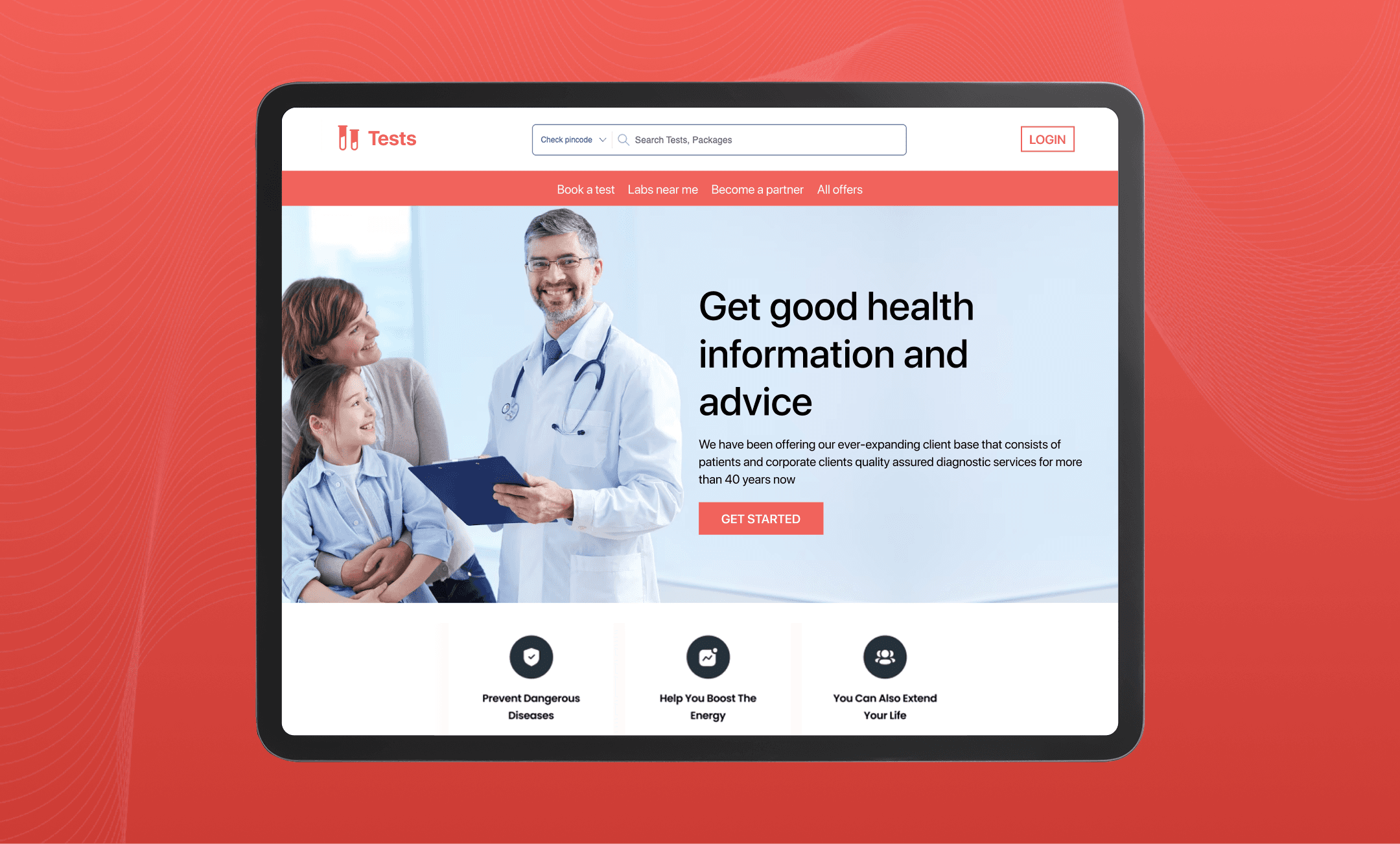
Faster, More Responsive Healthcare Journeys
Revamped a diagnostic leader’s website to improve usability, mobile responsiveness, search visibility, and load performance across customer-facing journeys.
- Website Performance Score
- 100
- SEO Best-Practice Score
- 100
- Website Load Time
- 0.7 Seconds
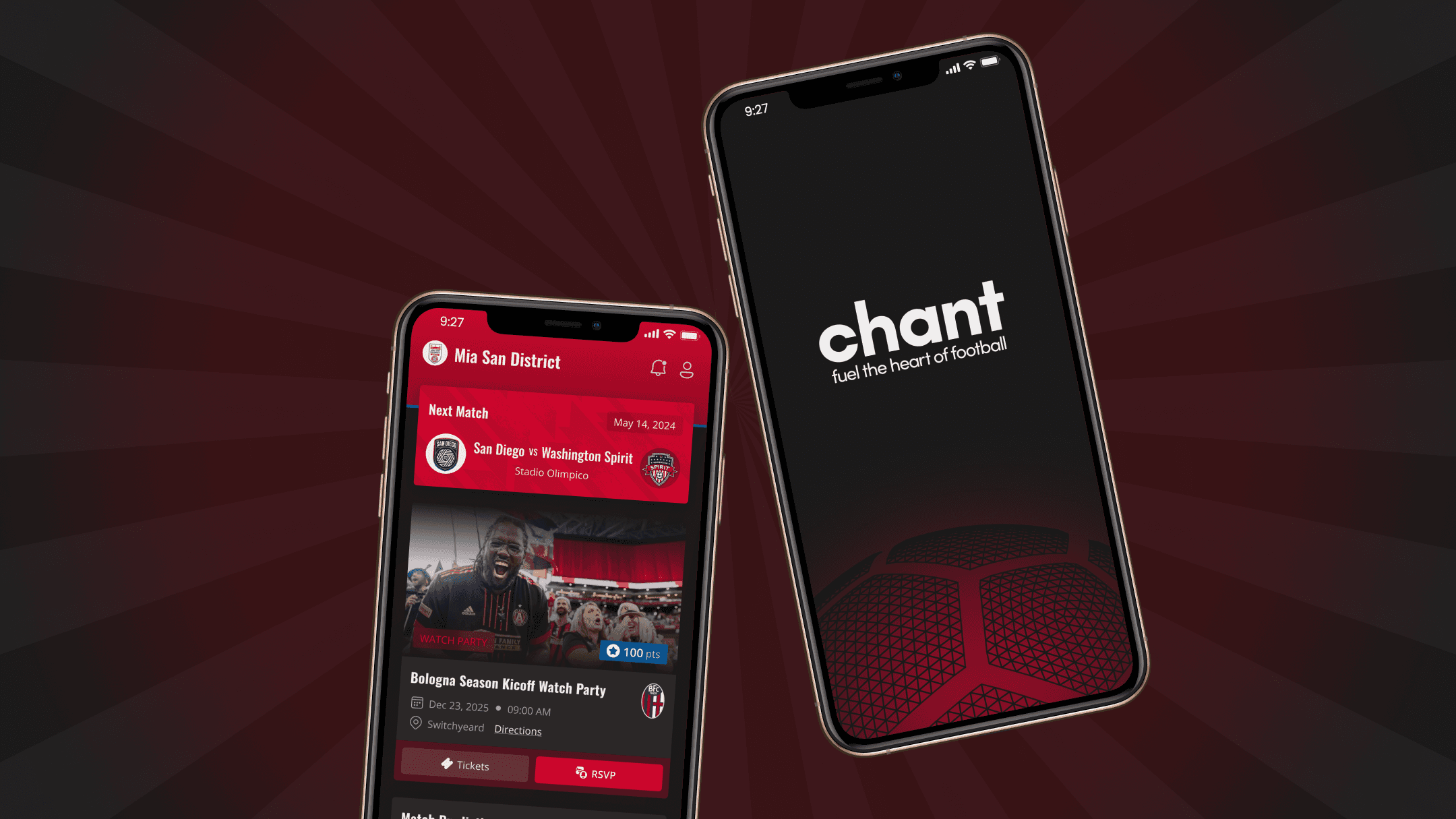
One Platform for the Complete Supporter Journey
Unified memberships, ticketing, payments, match-day engagement, and community interactions to replace fragmented processes with a consistent digital fan experience.
- Digital Membership Lifecycle
- 100%
- Organic Impressions Generated
- 359K+
- Disconnected Workflows Unified
- 4+
Customer Interactions Designed for Scale and Continuity
Concurrent User Capacity
- Concurrent User Capacity
- 1 Million
- Potential Development Time Saved
- 5,000+ Hours
- Integration and Installation
- 30 Minutes
Building a Customer Experience Strategy Framework
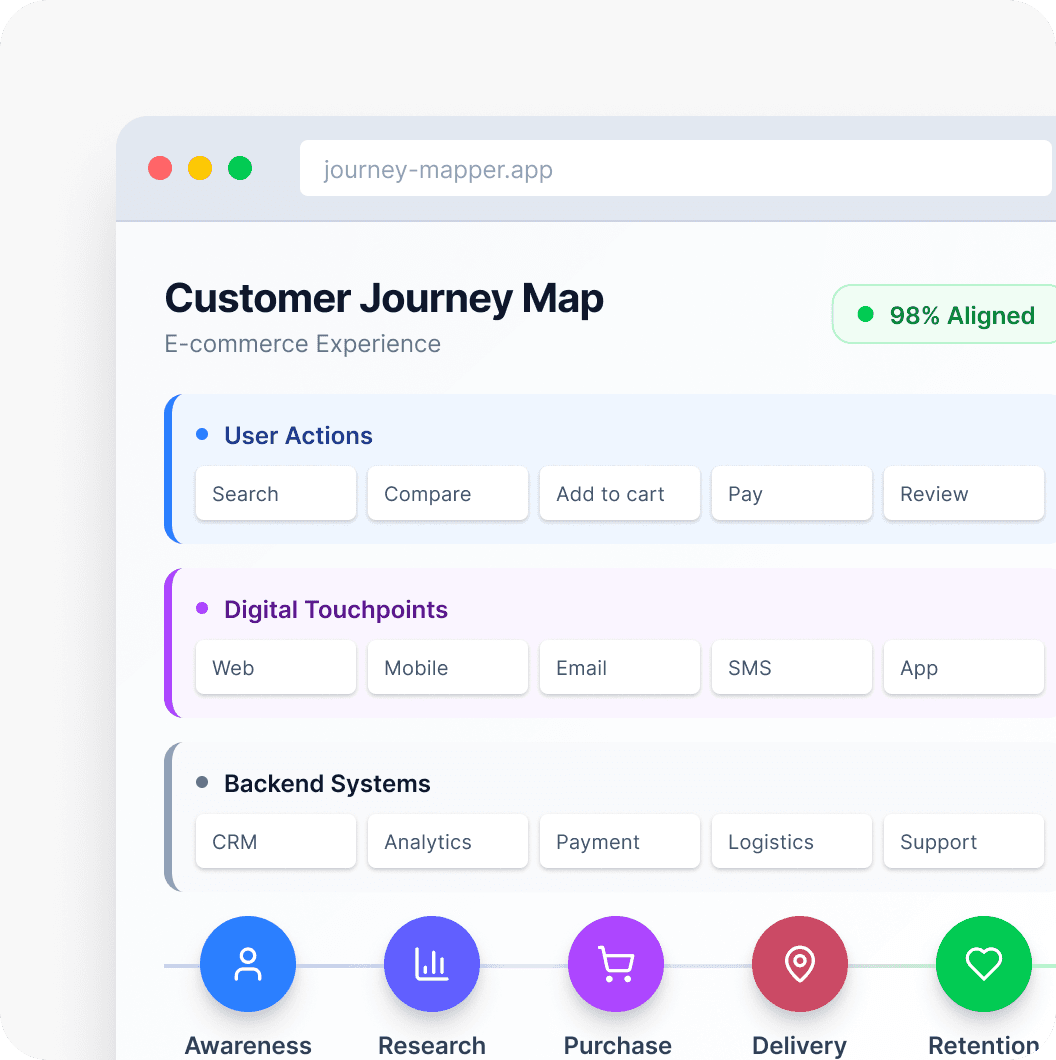
We visualize end-to-end interactions to ensure every touchpoint aligns with user expectations and operational efficiency.
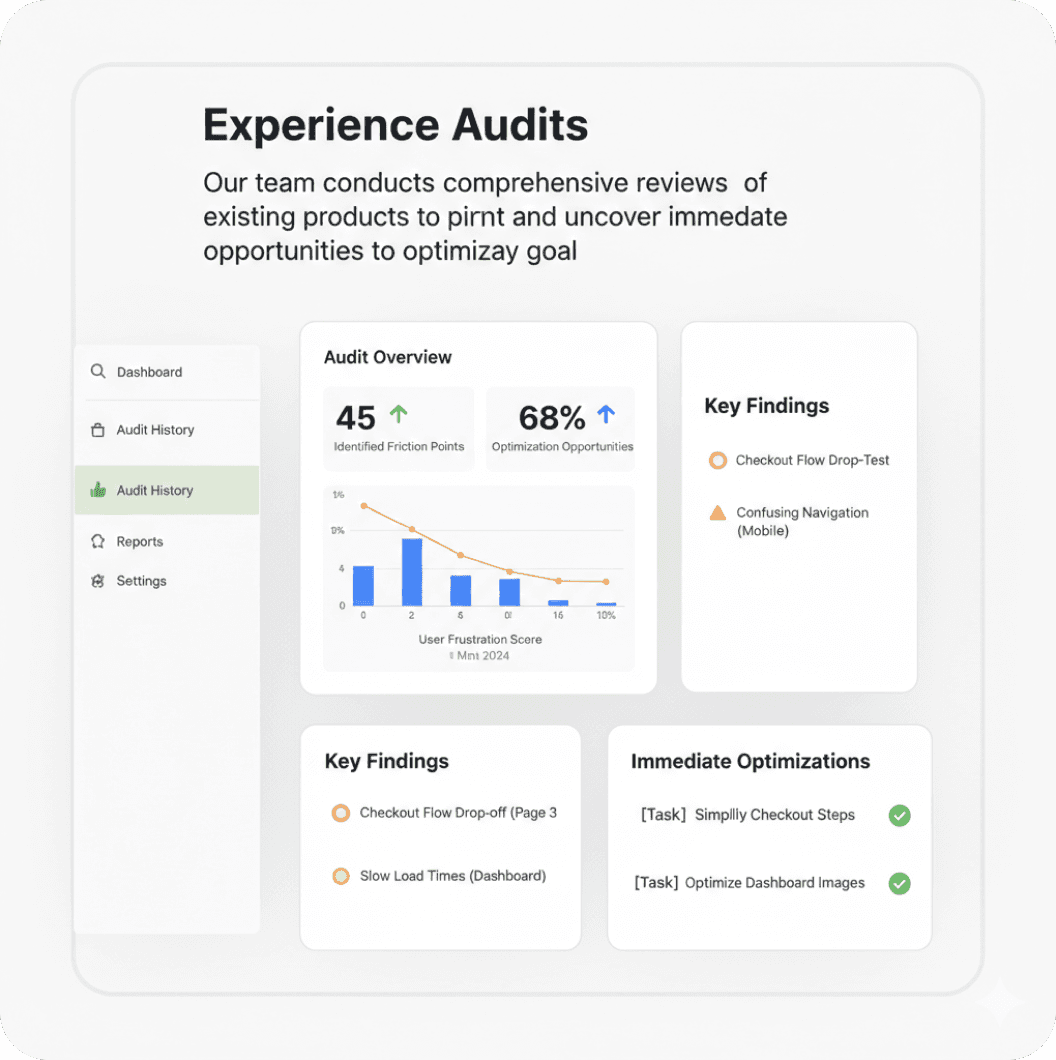
Our team conducts comprehensive reviews of existing products to pinpoint friction and uncover immediate opportunities for optimization.
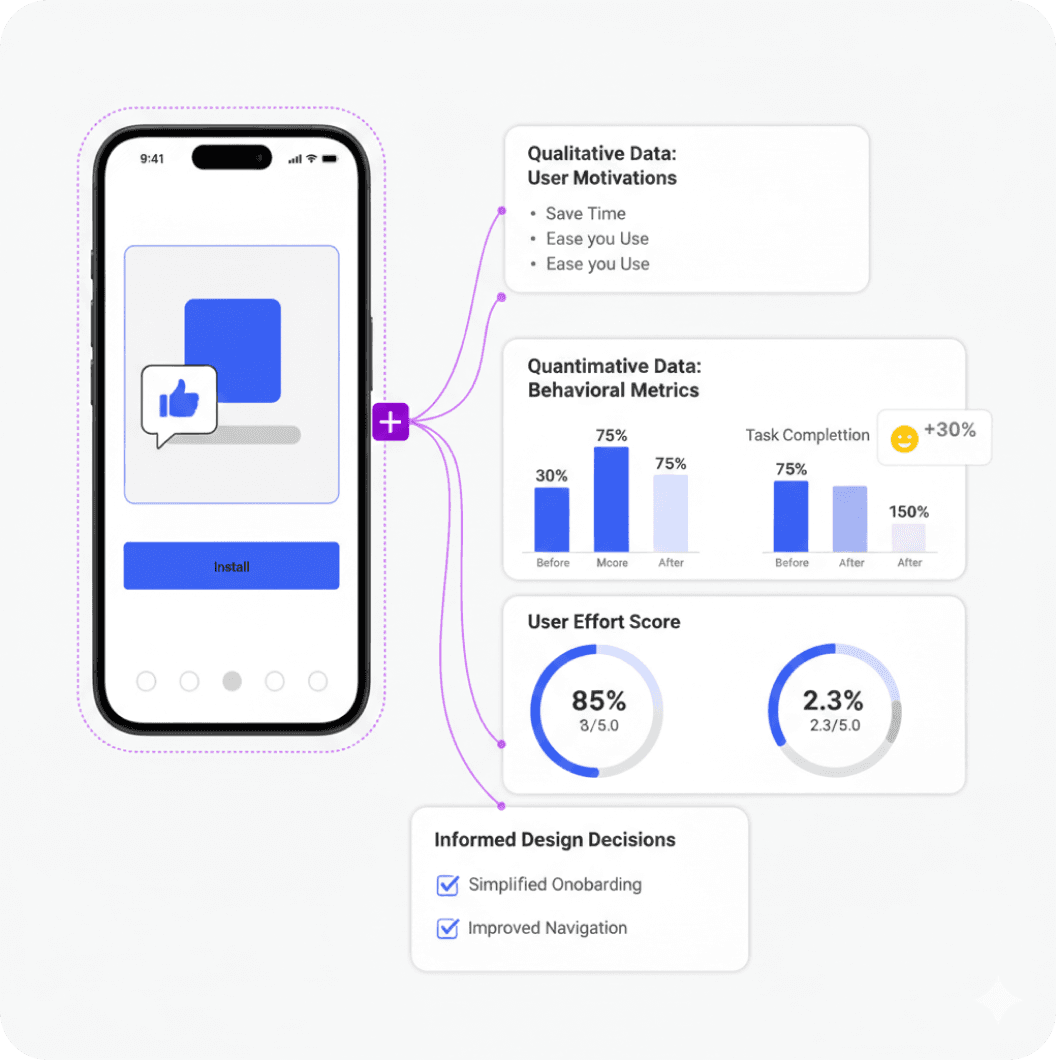
We use qualitative and quantitative data to understand user motivations and drive informed design decisions based on real-world evidence.
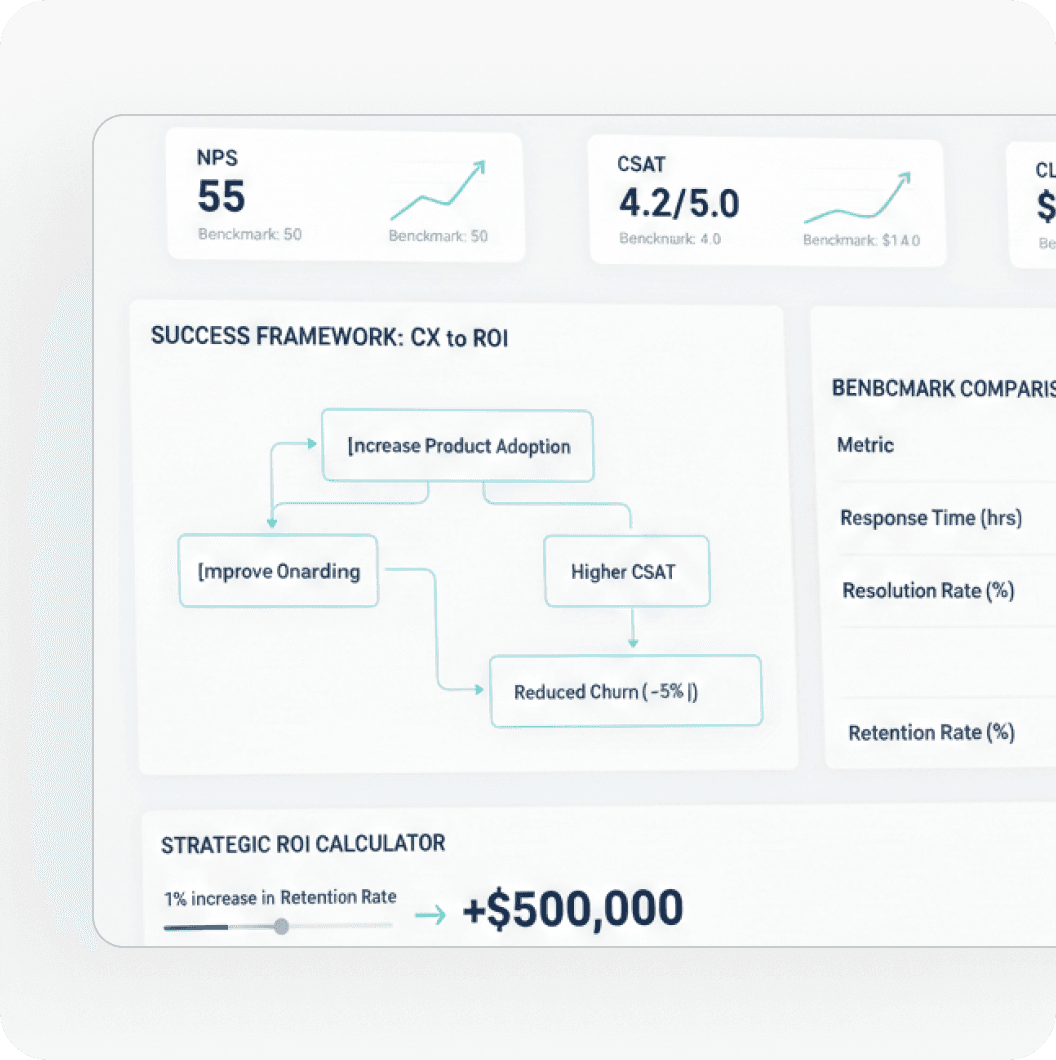
We establish clear benchmarks and KPIs to measure the impact of experience improvements on your core business goals.
We create structured, actionable plans that focus development efforts on the features that deliver the highest return on investment.
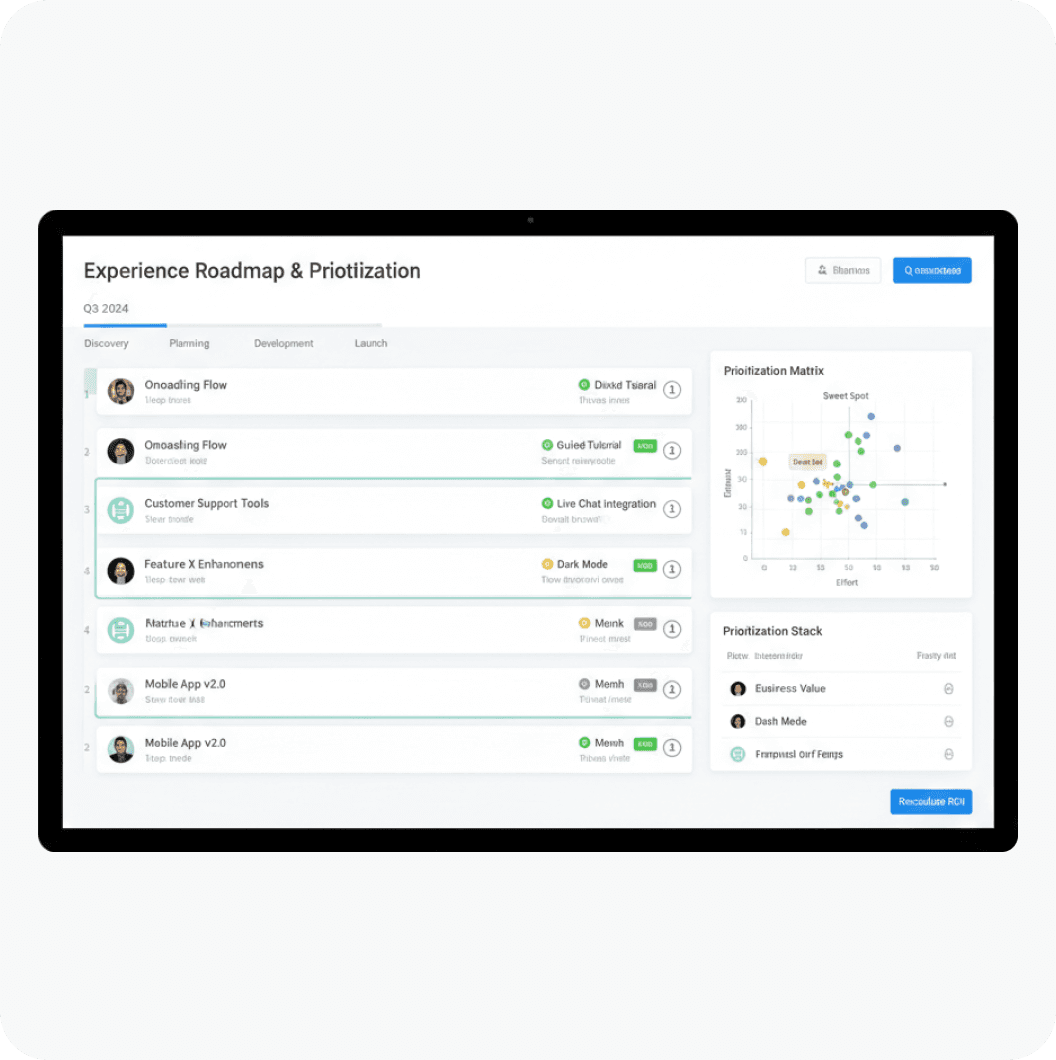
We specialize in making advanced technologies like Agentic AI accessible and intuitive through strategic experience design.
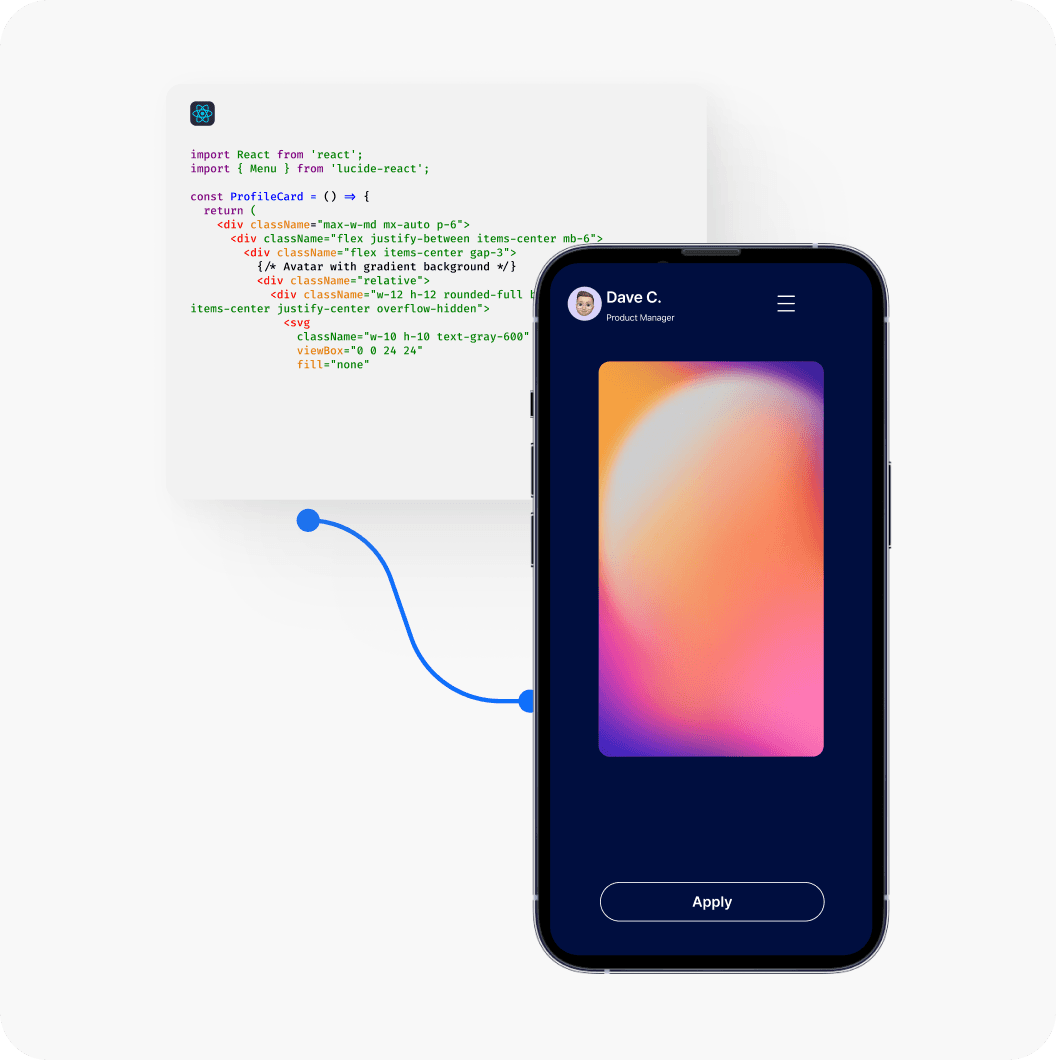
CX Strategy Geared for Growth
We collaborate across products, platforms, and services to help organizations design experiences that customers trust, adopt, and return to. Our philosophy is built on three core pillars: Design for humans. Align with business. Enable scale.
A transparent view of how users interact with your brand.
Insights derived from research rather than guesswork.
Universal alignment on user needs and business goals.
Our Customer Experience Services
Our Latest Thinking in CX Discovery and Experience Strategy




Turn complex customer journeys into seamless experiences that drive loyalty.
Book a discovery consulting call with our CX strategy consultants today.
Contact us
Customer Experience Challenges We Help You Solve
Customer experiences lose momentum when journeys, systems, and business processes fall out of sync. Our CX strategy services help teams uncover friction, simplify priority journeys, and create consistent experiences across digital and service touchpoints.
Fragmented Journeys and Touchpoints
Connect disconnected workflows, channels, and customer interactions to create a smoother end-to-end experience.
High-Friction Onboarding
Simplify sign-up, authentication, and early-use journeys so users can reach value with less effort.
Inconsistent Customer Experiences
Improve responsiveness, reliability, and cross-device consistency across critical customer-facing journeys.
Limited Personalization
Use contextual, behavioral, and preference data to deliver experiences that feel relevant rather than generic.
Complex AI-Enabled Interactions
Make AI experiences clear and dependable through contextual responses, privacy safeguards, confidence handling, and human fallback.
Accessibility and Inclusion Gaps
Design for diverse ages, abilities, care contexts, and access needs so more users can complete essential tasks confidently.
Customer Experience Strategy Across Industries
Every industry has distinct customer journeys, operating models, and expectations. Our discovery and customer experience strategy connects user insight with business priorities to create intuitive, consistent, and measurable experiences across every touchpoint.


Choose the Right Customer Experience Strategy Engagement Model
Start with a focused CX assessment, validate priority experiences, or continuously improve customer journeys through an ongoing strategy and design partnership.
- STAGE 01
CX Discovery Sprint
A structured starting point for new products and experience transformation initiatives. We assess customer needs, existing journeys, business priorities, and operational constraints to define a clear CX strategy and actionable roadmap.2–4 Weeks - STAGE 02
Experience Strategy and Validation
Validate priority journeys and experience concepts through research, prototyping, and user testing. Our customer experience strategy services turn discovery insights into evidence-backed solutions ready for implementation.Scope Defined in Stage 1 - STAGE 03
End-to-End Experience Transformation
Redesign, launch, and continuously improve experiences across products, services, and digital touchpoints. Our teams support journey design, service design, experience measurement, and ongoing optimization.Follows Validated Experience Outcomes
Frequently Asked Questions On Customer Experience Discovery And Strategy
Analyze behavioral data alongside qualitative research to separate experience friction from fit failures. Poor product-market fit shows as low activation, weak retention, and users unable to articulate your product's value. Experience issues surface as task abandonment, support ticket spikes, and low feature adoption despite strong intent.
Use Jobs-to-be-Done interviews and funnel analytics to isolate root causes before investing in redesign. Structured discovery prevents misdiagnosing a positioning problem as a UX problem or vice versa.
Declining NPS, high drop-off rates with no clear UX explanation, and conflicting stakeholder assumptions are strong discovery triggers. When teams rely on opinion-led decisions over user evidence, redesigns frequently miss the mark and generate costly rework.
Rising support costs, stagnant conversion, and low feature engagement signal an under-researched problem space. Discovery methods like journey mapping and contextual inquiry surface the "why" behind these metrics. Skipping discovery here increases the risk of building expensive solutions to the wrong problems.
Yes, discovery consistently reveals monetizable opportunities far beyond fixing UI friction or improving task completion. Deep customer interviews surface unmet needs, underserved segments, and willingness-to-pay signals that roadmaps often overlook. Opportunity solution trees and value proposition mapping translate user pain directly into new features or service lines.
Discovery also exposes journey gaps where competitors are capturing demand your product could own. Organizations treating discovery as a revenue strategy — not just a design input — consistently outperform those that don't.
Structured discovery replaces opinion-driven debates with shared, user-validated evidence across product, engineering, marketing, and sales. Co-participation in interviews and synthesis sessions shifts alignment from hierarchy-driven to evidence-led. Assumption mapping and prioritization matrices give diverse teams a common language for evaluating risk and opportunity.
Discovery surfaces conflicting mental models early, before they become costly roadmap disagreements. The result is faster decisions, less inter-team friction, and strategy grounded in real customer behavior.
Stop asking leading questions in user interviews — confirmation bias is the most common and costly research pitfall. Avoid recruiting only loyal users; survivorship bias blinds teams to the needs of churned or non-adopting segments. Stop treating surveys as qualitative substitutes — closed-ended questions confirm hypotheses rather than challenging them.
Never synthesize research in silos; without cross-functional input, critical business context gets lost in translation. Most importantly, stop using discovery to validate decisions already made — it must be structured to uncover truth.
User mental models around AI, trust, and automation are deeply contextual and rarely match what engineering teams assume. Discovery reveals where users accept AI recommendations versus where explainability and human control are non-negotiable. Without it, AI features get built around model capabilities rather than actual user needs — driving low adoption.
Research also surfaces data sensitivity concerns, regulatory expectations, and edge cases invisible to internal teams. Teams investing in discovery before AI builds significantly reduce post-launch redesign costs and accelerate user trust.
Latent user needs — unspoken workarounds and normalized frustrations — are completely invisible without structured discovery. Emotional and contextual drivers of decision-making, which heavily influence conversion, never appear in analytics or support tickets. Teams miss how their product fits into users' broader workflows, tool stacks, and organizational dynamics.
Segment-specific differences in mental models go undetected, causing features to work for power users but confuse first-timers. The result is a product that is technically functional but experientially misaligned, stalling growth and advocacy.
Adopt a continuous discovery model rather than a front-loaded research phase that gates delivery. Run lightweight weekly research sprints — five interviews synthesized into actionable insights — parallel to product development. Prioritize high-risk assumptions for deep qualitative research; use analytics for faster, lower-stakes validation.
Shared research repositories and living journey maps give delivery teams on-demand insight access without waiting on discovery cycles. Done right, discovery accelerates delivery over time by reducing rework — not competing with it.