
Core Banking Modernization
Stop worrying about the dangers of replacing your entire banking system at once. We use a step-by-step approach that wraps your old systems in modern, high-speed software. This gives you a massive boost in performance and speed while keeping your bank online and 100% available at all times.
Modernize without the downtime risk











Legacy core banking systems often cause high latency, frequently exceeding 500ms. These systems are difficult to scale and act as bottlenecks that block innovation. Traditional modernization approaches are often avoided because they require risky big-bang migrations that can disrupt entire banking operations.
Client Results and Success

Healthcare SaaS Platform
We modernized Dentify’s onboarding workflows by introducing AI-driven automation and optimizing backend workflows, reducing friction in doctor onboarding and improving operational efficiency.
- Improvement in the doctor's efficiency for treatment planning
- 35%
- Reduction in onboarding completion time
- 40%
- Patient Management
- Real-Time
Consumer Commerce Platform
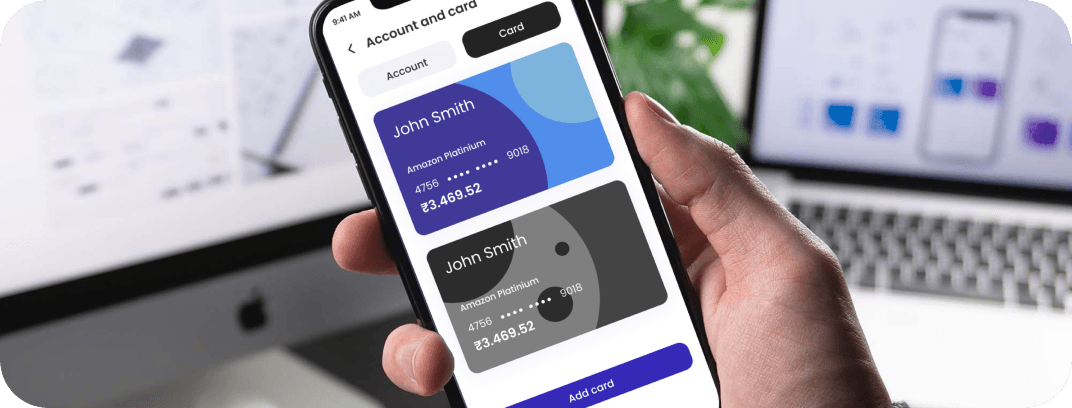
We executed a comprehensive cloud infrastructure overhaul for this digital banking platform to eliminate over-provisioning and inefficient resource allocation. By rightsizing database instances and automating environment scaling, we stabilized the backend while slashing overhead.
- Reduction in monthly cloud costs
- 60%
- Saved per month
- $4800
- Annual savings
- $57,000+
AI-Powered Mobile Banking App Modernization
We upgraded a public sector bank’s mobile app to improve performance, security, and customer experience using event-driven architecture and real-time processing.
- downtime updates
- 0
- real-time processing
- 100%
Fintech Admin Engine
We built a centralized, high-concurrency admin platform for this North American fintech to manage cross-border payments. The architecture allows for regional feature toggling and real-time monitoring across multiple countries from a single interface.
- Active Users in UK, Canada, Europe, and Australia
- 120k+
- Global Payments Processed Annually
- 400M+
- Downloads Across iOS and Android
- 350k+
Business Impacts We Have Made
56%
Latency Reduction
10x
Performance Boost
100%
System Uptime
+40%
Developer Velocity
Our Customer Experience and Onboarding Services
Strangler Fig Pattern Implementation
We incrementally replace legacy monolithic functions with modern microservices. This avoids risks by wrapping legacy OBP and FlexCube systems in high-performance Golang layers.
SOAP/XML to gRPC/REST Conversion
We modernize the communication protocol of your core. Our centralized OBP Proxy Service handles complex XML transformations, exposing clean REST APIs for frontends and gRPC for internal services.
Multi-Tier Redis Caching
We implement intelligent caching strategies with optimized TTLs. This reduces the load on the core banking system by serving frequently accessed data directly from high-speed memory.
Traffic Shadowing and Verification
Before going live, we use traffic shadowing to test new services with real-world production data. This validates performance and logic without affecting the live user experience.
Connection Pooling Optimization
We re-engineer how your application interacts with the core database, preventing connection exhaustion and ensuring stable performance during peak transaction periods.
Independent Service Scaling
By containerizing modernized functions with Kubernetes, we allow individual banking modules (like Payments or Ledgers) to scale independently based on demand.
Engineering Digital Banking for Global Enterprises and Agile Startups
Core Banking Modernization Services by Engineers Who Have Delivered 1000+ Projects
Production-proven implementations with enterprise-grade architecture.
Our Golang microservices wrap each domain of the legacy core banking system. Golang's concurrency model and low memory overhead make it well-suited to the high-throughput, low-latency requirements of a banking API layer sitting in front of a SOAP system.
gRPC handles service-to-service calls within the microservices mesh. Binary serialization over HTTP/2 reduces the payload and round-trip overhead that SOAP/XML introduced at every internal call boundary.
REST APIs are exposed to the frontend layer. Teams consuming these APIs work against a standard interface without needing awareness of what is running behind it.
Redis multi-tier caching is configured per data domain. TTL values are set based on the update frequency and consistency requirements of each data type, not applied uniformly across the system.
Kubernetes manages the independent scaling of each microservice. Services with high call volumes can scale horizontally without affecting services that do not need additional capacity.
Audit trails are maintained throughout the migration. Regulatory reporting requirements are not disrupted during or after the modernization.
Our Latest Thinking in Core Banking Modernization




Accelerate Your AI-Native Digital Banking Transformation
Speak with our digital banking experts about modernizing legacy systems, improving performance, or building a new banking platform without disrupting critical operations.
Contact us
FAQs About Our Core Banking Modernization Service
The Strangler Fig Pattern is an incremental migration approach where new services are built alongside the existing system rather than replacing it all at once. Each new microservice takes ownership of one domain, account queries, transaction lookups, and balance checks, while the legacy system continues handling everything else. Over time, the legacy system's responsibilities shrink until it is either fully replaced or isolated to a minimal footprint. In core banking, this approach is used because a big-bang replacement requires a cutover window where the system is unavailable. For a bank processing live transactions, that window is not acceptable.
The OBP Proxy Service handles all translation between the legacy SOAP/XML interface and the gRPC layer that the new microservices use. Existing integrations that already speak SOAP continue to work unchanged — they communicate with the proxy, which translates their requests and routes them appropriately. New services built on gRPC never interact with SOAP directly. The translation boundary is maintained in one place, which makes it auditable and testable.
It means the production system remains live and serving real user traffic throughout the entire migration. There is no scheduled maintenance window during which the banking app goes offline. Traffic shadowing is used to validate new microservices: a copy of live traffic is sent to the new service in parallel with the existing one, and the outputs are compared before the new service takes over. Only after validation does traffic shift.
TTL values are set per data type based on its update frequency and its tolerance for staleness. Balance data — which changes on every transaction — has a short TTL or is invalidated on write. Reference data — product terms, branch details — has a longer TTL because it changes infrequently. Session data is scoped to the session lifetime. Caching is not applied uniformly; it is tuned to the consistency requirements of each domain.
No. Audit trail continuity is a specific requirement built into the architecture. The Golang microservices maintain the same audit logging as the legacy system. Regulatory reporting is not disrupted during the migration or after it.
Scope determines timeline. A single-domain modernization — wrapping one OBP service boundary in a Golang microservice with Redis caching and gRPC — can be delivered in eight to twelve weeks. Full platform modernization across multiple domains runs longer and is typically phased, with each phase delivering production-live services before the next begins.
The Strangler Fig Pattern and the Golang wrapper approach are not specific to OBP or FlexCube. The feasibility with other platforms depends on the API surface available for integration. We assess this during the discovery phase.
The system is handed over production-ready, benchmarked, and documented. Your team can maintain and extend it independently. We do not build on proprietary frameworks that require ongoing vendor involvement to operate. If your team wants a formal support arrangement post-launch, that is a separate conversation.