
Application Security (RASP)
We implement Runtime Application Self-Protection for banking applications, detecting and responding to threats from within the application layer itself.
Our implementations cover malicious app detection, reverse engineering prevention, screen recording blocking, SIM swap detection, and sensitive data redaction in crash analytics, with full compliance built into the security architecture.
Fragmented Data Creates Compliance Gaps











Firewalls only guard the front door of your servers. But if a customer’s phone is infected with malware or a spy app that records their screen, the hacker can see everything. Most apps are blind to this.
We fix this by making the app smart enough to protect itself. If the app detects that someone is recording the screen or using a fake or hacked device, it immediately shuts down that feature or hides the data. We also link the app to the user’s physical SIM card. This means even if a hacker steals a password, they can't log in from a different device. We turn the app into a vault that stays locked even on a dirty phone.
Client Results and Success
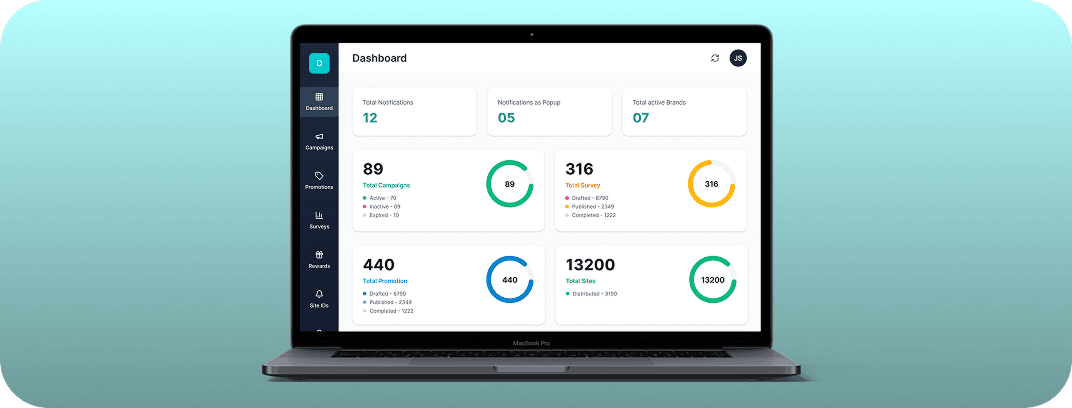
UK Billing and Logistics App
We restructured the UI/UX for the largest billing service provider in the UK to expand their service avenues.
- Growth in Online Market Presence
- 17%+
- Growth in Parcel Transactions
- 20%
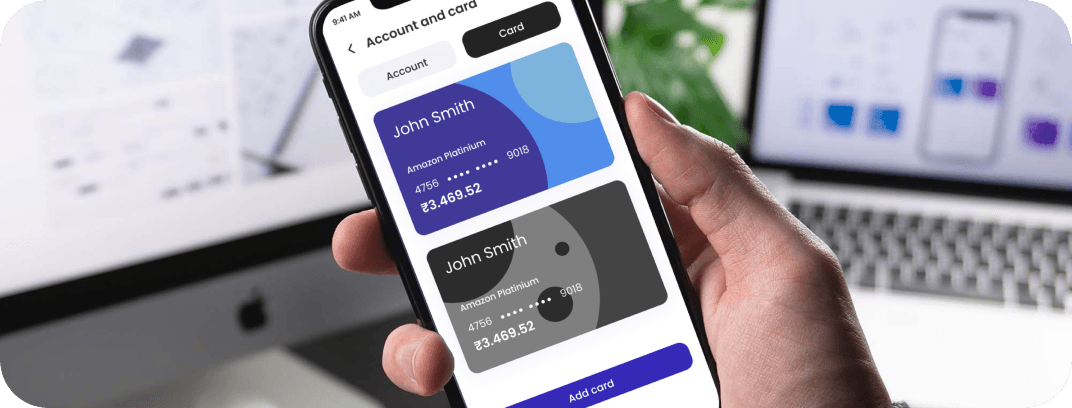
Consumer Commerce Platform
We executed a comprehensive cloud infrastructure overhaul for this digital banking platform to eliminate over-provisioning and inefficient resource allocation. By rightsizing database instances and automating environment scaling, we stabilized the backend while slashing overhead.
- Reduction in monthly cloud costs
- 60%
- Saved per month
- $4800
- Annual savings
- $57,000+
Fintech Admin Engine
We built a centralized, high-concurrency admin platform for this North American fintech to manage cross-border payments. The architecture allows for regional feature toggling and real-time monitoring across multiple countries from a single interface.
- Active Users in UK, Canada, Europe, and Australia
- 120k+
- Global Payments Processed Annually
- 400M+
- Downloads Across iOS and Android
- 350k+
Business Impacts We Have Made
90%
Fewer Security Breaches
100%
Regulatory Compliance
100%
User Trust
Our Application Security (RASP) Capabilities
RASP & Security
We use Lookout SDK for real-time, on-device threat response. This prevents hacks without slowing down the app experience.
Device Integrity
The app blocks access on rooted, jailbroken, or emulated devices. This ensures your banking data stays in a secure environment.
Reverse Engineering Fix
We detect attempts to decompile or hook the app. This protects your business logic and APIs from being stolen or spoofed.
Screen & Privacy Locks
The app blocks screen sharing and recording at the OS level. This prevents data theft during sensitive transactions.
SIM Swap Protection
We bind the app to your SIM identity. Any swap is detected instantly, blocking fraud before a transaction is authorized.
Safe Crash Analytics
Our DevRev integration redacts personal data from crash reports. We get the tech data we need without any compliance risk.
Backend Compliance Logging
Every security event is logged with full device context. This meets RBI audit rules and helps teams track attack patterns.
Complete RegTech & Compliance Automation Solutions for Financial Enterprises
Application Security (RASP) by People Who Have Delivered 1000+ Projects
We integrate the Lookout Sentinel engine to scan the device's health constantly. It identifies thousands of known mobile threats, such as malicious apps or risky Wi-Fi networks, and alerts the RASP layer to block access before a breach occurs.

Our system creates a cryptographic fingerprint by linking the user’s account to their specific physical SIM card and IMEI. This prevents SIM Swap fraud, as the app will automatically lock itself if it detects the account is being accessed from a different or cloned SIM tray.

We use advanced obfuscation to scramble the app's internal logic. If a hacker tries to use a debugger or a decompiler to read your code or change the app’s behavior, the RASP system detects the tampering and instantly kills the active session.

Every blocked screenshot, detected root attempt, or blocked login is recorded in a tamper-proof backend log. These reports provide the structured proof of security required by bank auditors and government regulators to show that your app is actively defending user data.

Our RASP engine is built using event-driven logic, meaning it stays dormant and uses near-zero battery during normal use, only springing into action during high-risk events like login, payment, or sensitive data entry.

Our Latest Thinking in RegTech & Compliance Automation



FAQs About Our Application Security (RASP) Service
A Web Application Firewall and API security controls operate at the network boundary — they inspect and filter traffic between the client and the server. They have no visibility into what is happening on the device running the application. RASP operates inside the application's runtime environment — it observes the execution context directly and can detect threat conditions that never produce anomalous network traffic. A rooted device, a reverse engineering tool attached to the process, or a screen recording running in the background are invisible to network-layer controls and detectable by RASP. The two layers are complementary, not interchangeable.
Android exposes SIM card identifiers — ICCID, IMSI — through standard APIs that a banking application can read and bind to at onboarding. iOS does not. Apple restricts direct SIM API access for privacy reasons, which means the standard Android SIM binding approach is not available on iOS. Our implementation uses network operator identity and SIM tray validation as proxy signals — combinations of values that change when a SIM swap occurs. This requires a custom detection model rather than a direct API read, and it requires validation against the specific ways iOS handles network identity across devices and carrier configurations. Most implementations skip this and leave SIM swap detection as an Android-only capability.
The standard React Native bridge operates asynchronously — native module calls from JavaScript are queued and processed on a separate thread, introducing latency between the security event and the application's response to it. For UI rendering, this latency is acceptable. For security instrumentation, where the response needs to happen within the execution cycle in which the threat is occurring, asynchronous processing means the threat may complete before the response reaches it. JSI provides synchronous access to native modules from JavaScript — detection and response happen in the same execution cycle, which is what makes real-time RASP practical in a React Native banking application.
DevRev receives diagnostic data needed for crash analysis and session replay — stack traces, device state at the time of the crash, and user interaction sequences leading to the crash event. The masking layer redacts field categories defined in the masking configuration: account numbers, card numbers, transaction amounts, names, addresses, and any other PII field types the configuration specifies. What DevRev does not receive is any data that would allow a person with access to the analytics platform to reconstruct a user's financial position or identity. The masking configuration is versioned and auditable, so the compliance team has a documented record of what the masking rules covered at any point in time.
Screen recording prevention uses OS-level APIs — specifically, the secure flag on Android window rendering and equivalent iOS mechanisms — to mark the application's views as protected content. The OS then excludes those views from screen capture, screen recording, and AirPlay/screen mirroring output. This applies at the view level rather than the application level, so it can be applied selectively to the screens that contain sensitive data — transaction confirmations, account balances, card details — while leaving non-sensitive screens unaffected. Attempts to bypass this through third-party recording tools are detected by Lookout SDK's runtime monitoring.
RBI's guidelines for mobile banking security require that security events — including authentication failures, unusual access patterns, and security control activations — be logged with sufficient detail to support audit investigation. Our backend logging captures each security event with a timestamp, the device identifier, the event type, and the context data relevant to the event — a SIM validation failure includes the validation mechanism used and the mismatch detected, a malicious app detection event includes the detection category and the Lookout SDK confidence level. This produces a structured, queryable audit record rather than raw application logs that require interpretation to extract compliance evidence.
A full RASP implementation — covering Lookout SDK integration, custom iOS and Android SIM binding, JSI security bridge, screen recording prevention, DevRev data masking, and backend compliance logging — typically runs eight to twelve weeks from architecture sign-off to production. The range depends on the complexity of the existing application's native module architecture, the specific RBI compliance requirements in scope, and whether the DevRev integration is greenfield or requires migration from an existing analytics platform. We assess scope during the discovery phase before committing to a timeline.
The implementation is handed over production-ready, tested against the threat scenarios it is designed to detect, and documented at the SDK integration, JSI bridge, and compliance logging levels. Your security team can adjust Lookout SDK detection thresholds and your engineering team can extend the masking configuration independently. We do not build on proprietary frameworks that require ongoing GeekyAnts involvement to operate. If a formal support arrangement post-launch makes sense, that is a separate conversation.