

Editor’s Note: This article was originally written by Amrit Saluja and published in December, 2025. It was revised and updated by Shivangi Agarwal in August, 2026 to include current technologies, implementation practices, industry requirements, and examples. The technical content was reviewed by Kumar Pratik, Founder & CEO, and Kunal Kumar, Chief Revenue Officer
Key Takeaways
- The global BNPL payment market is expected to reach US$509.2 billion in 2026 and grow at a 14.7% CAGR through 2031, positioning it as one of fintech’s fastest-growing segments.
- Compliance and scalability remain the two pillars of Buy Now, Pay Later app success, as US regulators tighten oversight and platforms require strong data protection and adaptable infrastructure to sustain profitability.
- Gen Z and millennials continue to lead BNPL adoption in the US, with 59% of Gen Z and 58% of millennials using BNPL, compared with 52% of Americans overall.
- BNPL ROI depends on risk control and user retention. AI-based credit scoring and personalized repayment experiences can reduce defaults and improve lifetime value, turning compliance investments into ROI accelerators.
The digital economy is changing the very idea of credit, transforming payments into relationships of trust. What began as a convenient checkout option—“split your payment in four”—has grown into one of the fastest-moving sectors in fintech. According to 2026 market estimates, the global BNPL services market is valued at approximately US$750 billion in 2026 and is projected to reach US$1.64 trillion by 2031, growing at a 16.76% CAGR.
Younger consumers continue to lead BNPL adoption. A 2026 industry analysis found that 59% of Gen Z and 58% of millennials in the US used BNPL in 2025, compared with 52% of Americans overall.
Yet, beneath the rapid adoption lies a fault line for fintech enterprises. The opportunity is vast, but so are the demands of compliance, scalability, and ROI. Regulators are treating BNPL platforms more like credit providers, insisting on data-protection frameworks, transparent disclosures, and lending-risk controls. At the same time, brand trust hinges on infrastructure that can scale to millions of users without outage. And investors demand growth, profitable unit economics, low default rates, and clear lifetime-value curves.
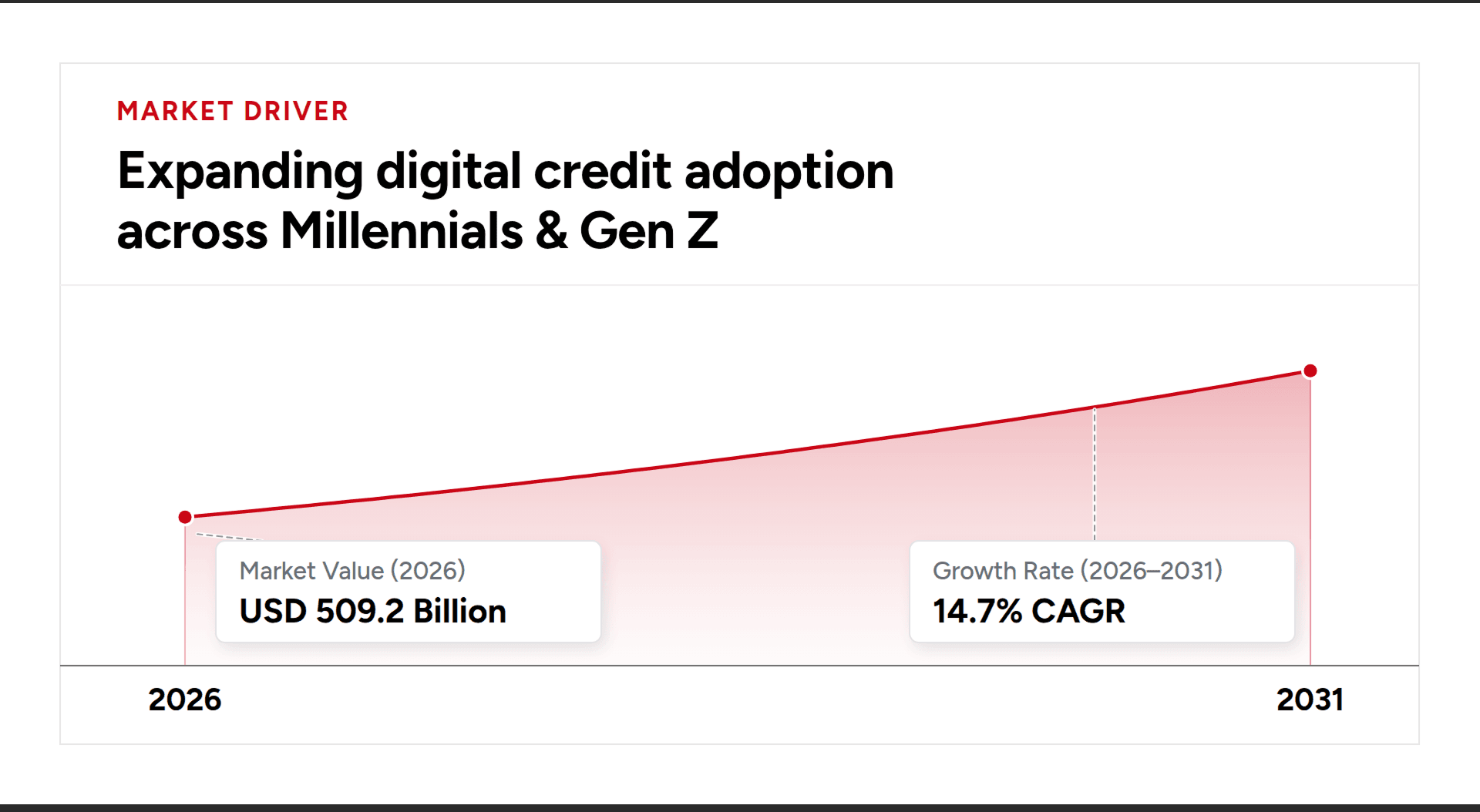
Source: Global News Wire
For founders and product leads who aim to build a BNPL platform that lasts, success will hinge on three pillars:
- Building a regulatory-ready architecture,
- Scaling infrastructure for exponential growth, and
- Turning compliance and risk-visible investments into meaningful ROI.
This guide unpacks those pillars—covering cost structures, compliance frameworks (including PCI-DSS), scalable cloud-native architectures, and ROI modelling—so you can move beyond the hype and build a sustainable BNPL business in the U.S. market.
Why BNPL App Development Is a Smart Investment for Businesses Today
The BNPL market is maturing under increased regulatory pressure. Pay Later option providers are facing compliance standards comparable to traditional credit card companies. This trend is already separating serious players from opportunistic ones. The businesses building strong risk and fraud frameworks early are setting themselves up for sustainable growth.
While these regulations tighten, the market opportunity remains open—the Global BNPL market is expected to reach USD 681.13 billion by 2033—but the window for establishing leadership is narrowing as regulatory requirements solidify and operational barriers rise.
The strategic value to BNPL Business growth lies in understanding the following areas:
- Expanded customer access,
- Incremental transaction volume,
- And higher order values.
BNPL also reaches underserved segments (Millennials and Gen Zs) and converts purchases that would otherwise be abandoned. McKinsey research indicates that 61% of BNPL transactions represent new business rather than substitution from existing payment methods.
For Fintech enterprises, this means genuine revenue expansion, improved conversion rates, and competitive differentiation in markets where payment flexibility has become a customer expectation. Success requires treating compliance and risk management as foundational investments.
Customers choose predictability over credit. BNPL gives businesses a direct way to meet that expectation while controlling conversion, risk models, and repayment visibility. When companies build BNPL themselves, they don’t just improve checkout—they strengthen loyalty and reduce long-term acquisition costs
 Kunal KumarChief Revenue Officer
Insight: BNPL users return more often when repayment terms are clear and consistent. Owning the BNPL experience lets brands convert that trust into higher lifetime value.
Types of BNPL Apps and Their Estimated Development Costs
Every BNPL app begins with, “What kind of product are you building, and who is it for?” The answer defines every subsequent choice — from system architecture and compliance scope to total development cost. A BNPL platform designed for mass consumer adoption, for instance, requires greater scalability and stronger risk frameworks than a single-merchant pilot. Achieving that level of reliability calls for developers who understand both financial regulations and high-performance engineering.
The table below outlines the main types of BNPL apps, their estimated cost ranges, recommended development approaches, and key considerations for each.
App Type | Typical Cost Range | Build Approach Options | Key Considerations |
|---|---|---|---|
Basic MVP BNPL | US$ 30k-60k | Outsource/freelancers can work well | Focus on core features only: sign-up, checkout integration, simple instalments. |
Moderate Complexity BNPL | US$ 60k-150k | Hybrid (outsourced + small internal team) | More merchant integrations, maybe multiple platforms (web + mobile), basic risk/credit logic. |
Enterprise/Full-feature BNPL | US$ 150k-300k+ | Ideally, in-house or a large outsourced partner | Features like AI credit scoring, fraud detection, a deep merchant ecosystem, multi-region/currency, and regulatory compliance. |
Build Approach – In-house vs Outsource | In-house: Higher upfront cost (salaries, overhead) | Choose based on long-term strategy | In-house gives control & integration; outsource gives cost savings & speed but needs strong management. |
Factors that affect the BNPL App Development Cost for Scaling and Compliance.
Building a Buy Now, Pay Later (BNPL) app requires balancing cost, compliance, scalability, and customer trust. Whether you are a fintech startup or an enterprise scaling your credit offering, understanding what drives development cost helps you build smarter and faster.
This section breaks down the major factors affecting BNPL app cost and growth, complete with tables, business impact, and actionable insights. At the end of every section, we highlight how you can save costs while ensuring compliance and scalability.
1. App Type & Complexity
The foundation of BNPL app development begins with the app’s type and depth of functionality. A minimal MVP helps startups test demand fast, while enterprise-grade ecosystems combine multiple merchant dashboards, AI-driven risk modules, and region-specific compliance layers.
A modular structure gives teams the flexibility to add new features without rebuilding the core later. For startups, simplicity accelerates validation. For large fintechs, a robust, extensible architecture supports future integrations and regional expansion.
Variant | Description | Estimated Cost (USD) | Best Suited For |
|---|---|---|---|
Basic Consumer BNPL App | Simple “Pay in 4” model; single merchant integration; limited reporting | $30K–$60K | Startups, MVP validation |
Multi-Merchant Aggregator App | Merchant dashboard, admin portal, consumer app, payment APIs | $80K–$150K | Fintech SMEs or expanding startups |
Enterprise BNPL Platform | Full ecosystem: AI risk engine, multi-country support, regulatory compliance | $200K–$500K+ | Established fintechs, banks |
Insight: Complexity determines your app’s scalability ceiling — a modular architecture early on saves 2–3x rework costs during scale-up.
2. Architecture & Scalability
Once the app structure is defined, scalability determines how far it can go. BNPL platforms process millions of microtransactions; reliability, uptime, and fault tolerance become business-critical. A cloud-native, event-driven, microservices setup ensures that performance stays steady—even during peak load spikes.
A scalable architecture ensures performance even with 10× user growth — preventing outages and protecting merchant confidence.
Component | Role in BNPL | Pros | Cons | Cost Impact | Business Need |
|---|---|---|---|---|---|
Microservices Architecture | Breaks the app into independent modules (payments, user, risk) | Easier scaling; independent deployments | Requires strong DevOps | +15–25% dev cost | Long-term scalability |
Cloud Infrastructure (AWS/GCP) | Enables auto-scaling, high uptime | Flexible, reliable | Monthly cloud costs | $2K–$10K/month | Real-time, global access |
Event-Driven Processing | Handles transaction bursts efficiently | High performance | Complex testing | +10% | Peak-time stability |
Insight: For BNPL, scalability equals reliability — downtime during payment approval can result in direct revenue loss.
3. Risk & Credit Scoring Systems
Scalability brings growth, but growth introduces risk. A strong scoring engine—whether rule-based or AI-driven—decides who gets approved and how safely. While rule-based systems work for MVPs, AI models predict defaults, detect anomalies, and cut bad debt over time. GeekyAnts integrates intelligent scoring modules and predictive analytics for clients, helping them make faster and safer lending decisions.
If you are planning to scale, invest in AI-driven credit models early — it is an investment in trust and profitability.
Feature | What It Does | Cost Range | Business Need |
|---|---|---|---|
Rule-Based Scoring | Uses fixed criteria (income, history) | $10K–$20K | MVPs, pilot launches |
AI/ML Credit Scoring | Predicts default using behavioral data | $40K–$100K+ | Mature BNPLs, data-driven firms |
Fraud Detection Engine | Monitors anomalies & user patterns | $10K–$25K | Compliance-driven markets |
Insight: AI risk modeling increases ROI by reducing defaults 10–30%, but requires large user datasets — best integrated after scale.
4. Compliance & Regulation
BNPL’s credibility hinges on trust—and trust begins with compliance. With agencies like the CFPB and GDPR tightening scrutiny, apps must embed KYC, AML, and affordability checks by design. Compliance adds upfront cost, but protects against far higher penalties and reputational loss later, and it also prevents fines and builds consumer confidence.
GeekyAnts designs fintech platforms with data encryption, consent management, and regulatory workflows already built in, helping clients stay compliant across regions.
Area | Function | Pros | Cons | Cost Range | Business Need |
|---|---|---|---|---|---|
Identity & anti-fraud verification | Instant compliance; automation | Vendor cost | $5K–$15K/integration | U.S./EU BNPLs | |
Credit Bureau Reporting | Submits repayment history to bureaus | Builds consumer credit | Legal complexity | $10K–$25K | Regulated markets |
Legal Compliance Engine | Terms, disclosures, limits | Regulatory peace of mind | Legal overhead | $15K–$30K | U.S., EU |
Insight: CFPB’s new BNPL supervision (2025) makes compliance a top 3 cost driver — investing early saves reengineering later.
5. Third-Party Integrations
Integrations transform a BNPL app from a standalone to a connected app. Payment APIs, open banking, KYC, and analytics platforms enable rapid scalability without reinventing core infrastructure. Partnering with trusted providers reduces build time by 4–6 months while meeting international compliance benchmarks.
Integration Type | Example APIs / Services | Integration Cost | Best For |
|---|---|---|---|
Payments | Stripe, Adyen, Visa APIs | $5K–$15K each | Merchant BNPL |
Bank Data / Open Banking | Plaid, TrueLayer, MX | $8K–$20K | AI underwriting |
KYC / AML | Onfido, Trulioo, Alloy | $10K–$25K | User onboarding |
Messaging / Notifications | Twilio, Firebase | $2K–$5K | Customer communication |
Analytics / BI | Mixpanel, Segment, Looker | $5K–$10K | Scale stage |
Insight: Third-party integrations can consume 20–30% of the total budget, but cut development time by 4–6 months.
6. UX/UI & Customer Experience
In BNPL apps, clear repayment timelines, transparent installment details, and frictionless checkout experiences keep users confident and returning. Good UI/UX design directly affects conversions and reduces support calls by helping users understand what they owe and when.
Investing in a clean, transparent design pays off in loyalty and retention by your customers.
Aspect | Role in BNPL | Cost Range | Business Need |
|---|---|---|---|
Transparency Design | Shows installment terms clearly | $5K–$15K | Consumer BNPL apps |
One-Tap Checkout | Fast approvals | $10K–$20K | Retail BNPL |
Merchant Dashboard UI | Data analytics for merchants | $10K–$25K | Multi-merchant apps |
Insight: Good UX = higher trust. A 1-second delay or unclear installment flow can cause a 15–20% checkout drop.
7. Backend Infrastructure & Data Security
Behind every BNPL transaction lies sensitive financial data, and protecting it is non-negotiable. A secure backend with encryption, tokenization, and 24/7 monitoring ensures your platform runs safely and meets legal data-protection standards. Though building secure infrastructure adds cost, it prevents far bigger losses from breaches or downtime. GeekyAnts engineers secure backend systems with built-in encryption and monitoring, helping fintech apps maintain compliance and customer confidence.
Think of security as an investment in brand trust — it is what keeps customers, investors, and regulators confident in your platform.
System | What It Does | Pros | Cons | Cost | Business Need |
|---|---|---|---|---|---|
Cloud Hosting | Stores app & user data | Reliable, scalable | Ongoing cost | $2K–$10K/month | Uptime-critical apps |
Encryption & Tokenization | Secures user data | Prevents breaches | Adds latency | +10% infra cost | All fintech apps |
Logging & Monitoring | Tracks system health | Detects issues early | Setup complexity | $5K–$10K | Large BNPLs |
Insight: Security spend = trust spend. Each $1 in cybersecurity saves ~$4 in data loss recovery (IBM 2024).
8. AI, Analytics & Personalization
AI in BNPL helps personalize offers, predict repayment behavior, and detect fraud early. Data-driven insights allow you to understand your users better and tailor credit terms that suit their needs, improving both conversions and repayment rates. While AI app development costs more initially, it boosts ROI significantly through automation and smarter decision-making. GeekyAnts uses AI and ML models to help fintech apps make predictive, data-backed choices, just like we did for a Global Payment Processing AI-powered platform.
Adopt AI once your user data starts scaling, and it will become your secret weapon for personalization, risk control, and growth.
AI Capability | Function | Cost Range | Ideal For | GeekyAnts Expertise |
|---|---|---|---|---|
Personalized Credit Offers | Predicts affordability | $30K–$60K | Mature BNPLs | AI Interview System |
Behavioral Analytics | Tracks purchase trends | $20K–$40K | Growth stage | FleetEdge |
Fraud Detection AI | Monitors real-time anomalies | $30K–$80K | Large BNPLs | FleetEdge + UnoJobs |
Insight: Adding AI increases build cost by 20–25% but can double ROI by cutting credit losses.
9. Developer Location & Expertise
Where your development team is based greatly influences project cost and quality. U.S. and European come with higher hourly rates. Asia has equally skilled developers at a fraction of the cost, ideal for startups and scale-ups looking to build efficiently. The right mix of global expertise and local efficiency can save up to 50% in costs without sacrificing quality.
If you are a startup or scaling platform aiming for cost-efficiency and speed, consider partnering with a team like GeekyAnts, while ensuring strong project oversight and clear governance.
Region | Avg. Hourly Rate | Pros | Cons | Suitable Business Type | Estimated Full App Cost | Notes |
|---|---|---|---|---|---|---|
U.S. & Canada | $120–$200/hr | Proximity, fintech law familiarity, timezone alignment | Expensive; lower flexibility | Enterprises needing compliance-ready builds | $250K–$600K | Ideal for regulated markets |
Europe (UK, Germany, Nordics) | $80–$150/hr | Strong fintech ecosystem; PSD3 experience | Limited availability; timezone gap | Cross-border fintechs | $150K–$400K | Great for EU-focused BNPL |
Asia (India) | $25–$60/hr | Cost-effective, scalable teams, fintech-savvy | Requires project management | Startups, scale-ups | $60K–$200K | hybrid pricing and top quality |
Insight: Choosing an offshore team from India can reduce cost by 40–50% while retaining compliance quality.
10. Estimating U.S.-Based Development Costs
Understanding U.S.-based BNPL app development costs requires shifting focus from scalability to regulatory precision and operational economics. Unlike offshore builds, U.S. projects must account for compliance engineering, audit readiness, and financial reporting requirements that directly influence hourly rates and project scope. For fintech founders targeting domestic markets or bank partnerships, these higher upfront costs translate into faster licensing approvals, stronger investor confidence, and long-term ROI stability.
The following estimates reflect GeekyAnts’ fintech cost benchmarks, comparing onshore, hybrid, and offshore delivery models to help enterprises balance quality, compliance, and cost-efficiency in their BNPL journey.
Region | Avg. Hourly Rate (USD/hr) | Total Estimated Project Cost | Best Suited For |
|---|---|---|---|
U.S. (Partner Teams) | $90–$150/hr | $250K–$600K | Regulated enterprises, U.S. fintechs |
Hybrid (U.S. + Offshore Mix) | $40–$90/hr | $120K–$300K | Scale-ups and global BNPL platforms |
Offshore (India) | $25–$60/hr | $60K–$200K | Startups and early-stage fintech MVPs |
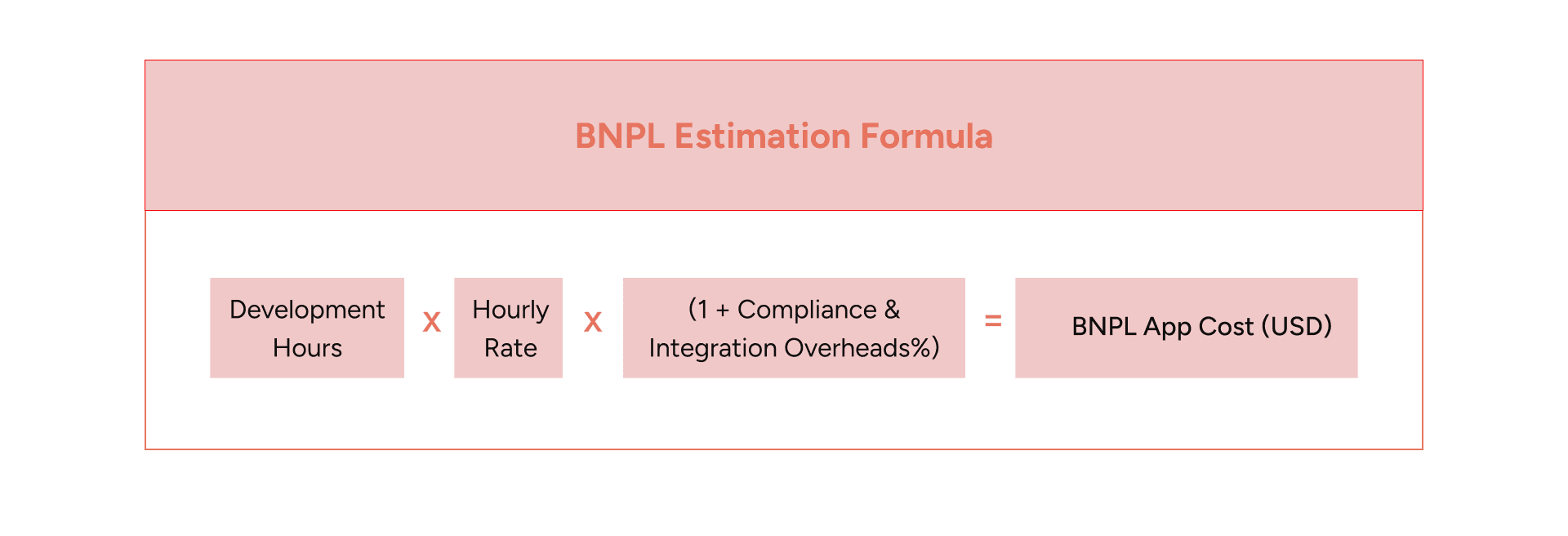
U.S.-based BNPL projects often start with higher per-hour costs, but integration accuracy and compliance readiness deliver faster ROI once scaling begins. Hybrid engagement models—like GeekyAnts’ U.S.-plus-offshore delivery—cut total costs by 45% without compromising quality.
 Kumar PratikFounder & CEO
11. Maintenance, Support & Compliance Updates
After launch, your BNPL app must evolve — laws change, markets shift, and customer expectations grow. Continuous updates keep your system fast, compliant, and user-friendly. Neglecting maintenance leads to bugs, slower performance, and potential legal risks. Ongoing monitoring and performance improvements protect your investment and maintain customer trust.
Category | Function | Pros | Cons | Annual Cost | Business Need |
|---|---|---|---|---|---|
Feature Enhancements | Adding new merchants, APIs, and dashboards | Continuous growth | Adds cost | $10K–$30K/year | All active BNPLs |
Compliance Updates | Adjust to new regulations | Legal protection | Requires vigilance | $10K–$20K/year | Regulated markets |
Performance Optimization | Scaling infra, caching, bug fixes | Faster user experience | Recurring expense | $10K–$25K/year | Growth-phase BNPLs |
Insight: Neglecting maintenance for 6 months can increase bug density by 40–60%. Continuous improvement ensures ROI continuity.
Building a BNPL app for the U.S. market demands strategic cost management rooted in compliance and scalability. With a structured, compliant foundation, your BNPL platform can scale confidently while keeping financial, regulatory, and operational risks in check.

Buy Now Pay Later App Development Like Klarna or Tabby in the USA: A Complete Guide
12 Must-Have Features of a Modern BNPL App
As BNPL becomes a mainstream credit and checkout option, the competitive edge lies in building a system that balances compliance, scalability, and experience. Below are the 12 essential features that define a successful BNPL platform.
1. User Onboarding & KYC Verification
BNPL platforms handle credit at scale, which makes identity verification and eligibility assessment non-negotiable from a risk and regulatory perspective. A modern onboarding system must support multi-layer sign-up via email, mobile, and ID matching, while automating KYC and AML checks through providers like Onfido or Trulioo. Bank account verification and fraud detection should be embedded in the flow to ensure only legitimate users enter the system. This builds user trust, ensures legal compliance, and minimizes risk exposure from the first interaction.
2. Payment Gateway & Checkout Integration
Checkout integration in Buy Now Pay Later Apps enables users to split payments instantly and merchants to boost conversions at the point of sale. The platform must offer "Pay-in-4" or custom installment options with instant approval powered by API-based verification. Integrations with processors like Stripe, Adyen, or proprietary payment systems ensure compatibility across merchant platforms. Seamless checkout experiences increase merchant sales and drive user adoption by removing friction at the moment of purchase. GeekyAnts' fintech teams have delivered multi-country payment gateway integrations for large-scale platforms.
3. Repayment & Installment Management
Transparent repayment management reduces defaults and improves user satisfaction by keeping customers informed and in control. The system should provide dynamic payment calendars with automated reminders, support both auto-debit and manual repayment options, and automate late fees with proactive alerts. Clear visibility into upcoming payments and flexible repayment options ensures users stay on track, which reduces collection costs and improves portfolio health.
4. Credit Scoring & Risk Engine
Accurate credit assessment protects both revenue and compliance by ensuring that lending decisions are based on reliable data. The platform must incorporate AI or rule-based scoring models, integrate with credit bureaus like Experian and Equifax, and include fraud analytics with risk visualization dashboards. This minimizes defaults, improves lending accuracy, and sustains profitability by aligning credit offers with actual user risk profiles. GeekyAnts' experience with AI-driven decision engines enhances BNPL risk evaluation accuracy.
5. Transaction History & Analytics
Users and merchants need complete visibility into their financial interactions to build trust and manage reconciliations. The platform should provide detailed transaction logs and repayment summaries, spending trend analysis, and exportable reports in formats like PDF and CSV. This transparency simplifies merchant operations and gives users confidence that their financial data is accessible and accurate.
6. Notifications & Alerts
Real-time communication prevents missed payments and improves engagement by keeping users informed at every stage of the transaction lifecycle. The system must support push notifications and email reminders for upcoming dues, transactions, and approval alerts, and promotional updates for limited offers. Consistent communication improves repayment rates and keeps users active within the ecosystem.
7. Merchant & Admin Dashboard
Operational control drives merchant retention and BNPL growth by providing the tools needed to manage transactions, settlements, and performance. The dashboard should support merchant onboarding and KYC, transaction tracking with refund and settlement workflows, and revenue analytics with performance insights. Data-driven visibility helps merchants understand how BNPL impacts their sales and allows administrators to monitor system health. GeekyAnts' Fintech and FleetEdge case studies highlight their ability to build multi-role dashboards with real-time visibility.
8. Security & Compliance Modules
BNPL is a financial product, which means compliance with data protection and lending laws is central to sustainability. The platform must implement AES-256 encryption and tokenization, OAuth 2.0 authentication, and built-in frameworks for GDPR and CFPB compliance. Fraud detection systems should run continuously to identify suspicious activity before it impacts users or merchants. These measures reduce regulatory risk and enhance customer confidence in the platform.
9. Customer Support & Dispute Resolution
Dispute handling and user support impact brand trust more than marketing does, particularly when financial transactions are involved. The system should offer in-app chat, ticket management, refund automation, along with complaint tracking and escalation workflows. Feedback capture mechanisms allow the platform to improve service quality over time. Strong support capabilities improve retention, reduce churn, and ensure customer protection.
10. Analytics & Reporting Suite
Real-time analytics turn data into actionable insights for growth and compliance by consolidating information across users, merchants, and transactions. The platform must provide revenue dashboards and default-rate reports, operational and customer behavior analytics, and ROI monitoring tools. Leadership teams rely on these insights to make informed, data-backed decisions about product development, risk management, and market expansion. GeekyAnts builds real-time analytics layers that consolidate user, merchant, and transaction data into actionable dashboards.
11. Loyalty Programs & Rewards
As BNPL competition intensifies, retaining users is as vital as acquiring them, and loyalty programs help encourage repeat usage. The platform should offer reward points for timely repayments, tiered loyalty levels like Silver, Gold, and Platinum, cashback and referral bonuses, and gamified repayment milestones. These features improve repayment behavior, build brand loyalty, and create a differentiated user experience. GeekyAnts' UX-first projects like WaxBuddy demonstrate expertise in gamified engagement and loyalty-based design.
12. Integration with Other Apps & Ecosystems
BNPL thrives when integrated into user and merchant ecosystems, making payments an embedded experience rather than a separate task. The platform must support e-commerce plugins for Shopify and WooCommerce, wallet and bank integrations with Apple Pay, Google Pay, and Plaid, and connections to CRM, ERP, and accounting tools. Open APIs for third-party developer extensions expand reach and strengthen partnerships, positioning BNPL as part of a broader fintech ecosystem. GeekyAnts' Fintech Global Payment Processing platform showcases how strategic API integrations drive multi-region BNPL scalability.
Every BNPL platform must balance user trust, compliance, and growth readiness. These 12 features form the backbone of any scalable BNPL ecosystem—from user onboarding to loyalty retention and ecosystem integration.
BNPL ROI Forecasting: How U.S. Fintechs Can Balance Compliance, Cost, and Scale
Formula-wise, ROI can be expressed as:
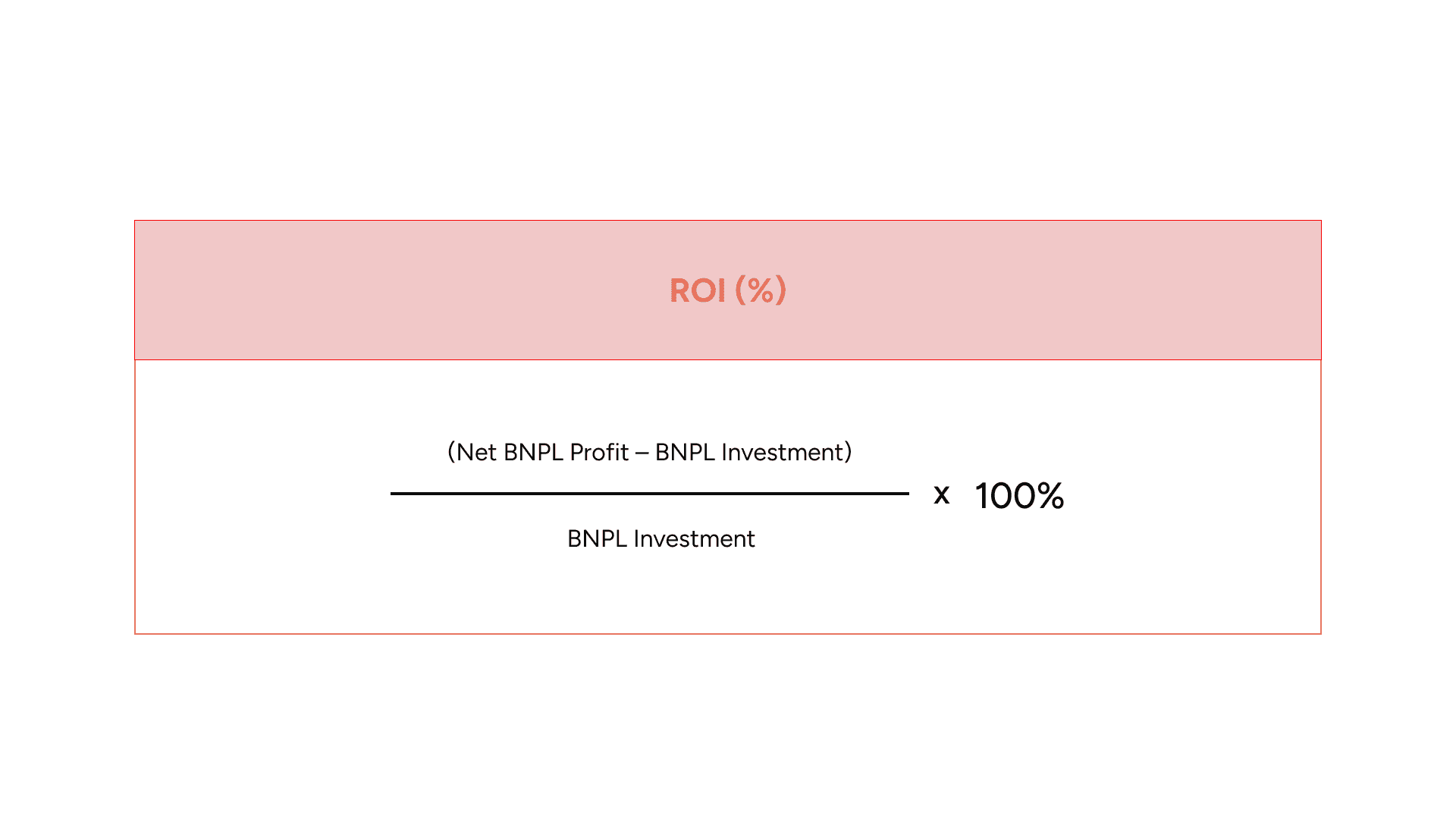
Understanding return on investment for BNPL requires enterprises to project revenue streams against the full spectrum of costs and risks. The ROI model should account for incremental revenue from merchant fees, consumer charges, and interest income, balanced against credit risk, fraud exposure, regulatory compliance expenses, and infrastructure investments.
Accenture previously estimated that embedding BNPL into credit card offerings could increase credit utilisation at large US banks from 21% to 26%, potentially lifting credit card income by 10%–16%.
The framework must capture both the opportunity—higher transaction volumes, expanded customer segments, reduced cart abandonment—and the reality that growth alone guarantees nothing. Grant Thornton emphasizes that U.S. lenders must integrate all cost strands and delayed repayment patterns into their forecasts as regulatory requirements tighten.
Strategic ROI modelling demands scenario planning across base, aggressive, and stressed cases, with conservative assumptions on default rates reflecting current consumer financial pressures and compliance burdens. Enterprises should measure time to profitability, not just velocity of growth, and align the model with their specific business context—retailers may prioritize conversion lift and order value over take-rate optimization.
Key variables include merchant take rates (2-6% of transaction value), repeat usage patterns that amortize acquisition costs, and the trade-offs between rapid scaling and sustainable unit economics. The model serves as both a financial tool and a strategic compass, informing decisions on merchant segmentation, underwriting standards, and expansion pace. Regular updates matter: competitive dynamics, regulatory evolution, and consumer behavior shifts will reshape assumptions, and enterprises that treat their ROI model as static will find themselves navigating with an outdated map.
Uncovering the Hidden Costs Of BNPL Apps After Go-Live
The most expensive part of BNPL apps begins after they go live. BNPL platforms must adapt to new compliance requirements, rising transaction volumes, and evolving consumer expectations. If these ongoing costs are ignored, your ROI projections can quickly fall apart.
1. Post-Launch Maintenance & Support
Ongoing maintenance ensures your BNPL platform remains secure, stable, and compliant. Regular updates, API upgrades, and feature enhancements protect uptime and user experience while adapting to regulatory shifts. The 2025 BNPL outlook highlights a market focused on “recovery, regulation, and reinvention”—where continuous improvements are not optional but essential for sustainable growth.
2. Third-Party Service Fees
Every external integration—payments, KYC/AML, and fraud detection—introduces recurring vendor costs. These services often charge per-transaction or monthly fees that rise with volume. Over time, vendor renewals, API usage surcharges, and compliance-driven adjustments can collectively add 20–30% to annual operating expenses.
3. Infrastructure & Scalability
As users and merchants scale, so do hosting, data storage, and processing demands. BNPL is transitioning into a “structured, compliant credit ecosystem,” requiring enterprise-grade cloud infrastructure and redundancy systems. This ongoing investment ensures performance, availability, and regulatory data retention across regions.
4. Ongoing Compliance & Security Costs
Regulators like the CFPB and FCA are tightening BNPL oversight, mandating affordability checks, transparency, and secure data handling. Continuous compliance audits, legal reviews, and system updates add measurable recurring costs but safeguard long-term credibility. Providers that embed compliance by design avoid re-engineering later—saving significant future expense.
5. Compliance & Legal Oversight
Evolving policies demand legal counsel, regulatory audits, and real-time reporting systems. These activities form a hidden yet critical expense, typically consuming 3–5% of annual operational budgets. Investing in proactive compliance avoids penalties and reinforces brand trust.
6. Partner and Merchant Servicing
As merchant partnerships grow, so do reconciliation, settlement, and reporting costs. Maintaining merchant satisfaction requires dedicated account management and automation tools. Over time, this becomes a predictable expense tied directly to transaction volume.
7. Customer Dispute Resolution
Disputes over repayments, chargebacks, or refunds increase as adoption scales. Efficient dispute handling needs automated workflows, trained support staff, and strong CRM systems. Without automation, these operations can consume up to 10% of yearly OPEX.
8. Data Storage, AI Monitoring, and Insurance Premiums
Massive transaction data requires secure, compliant storage and periodic AI model retraining. Combined with fintech insurance premiums against fraud or credit defaults, these costs grow steadily alongside platform expansion. Together, they represent a crucial but often overlooked component of long-term sustainability.
Post-launch success depends on planning for maintenance, vendor renewals, compliance, merchant support, and data resilience as ongoing cost centers. Enterprises that account for these hidden expenses early build scalable, trustworthy, and regulation-ready BNPL ecosystems with predictable ROI.
Most fintech founders underestimate the post-launch cost curve. The real ROI challenge is not development—it’s maintaining compliance, performance, and vendor relationships profitably.
Kumar PratikFounder & CEO
How Leading USA Fintechs Reduce Buy Now Pay Later App Build Costs Without Sacrificing Quality
Building a BNPL app doesn’t have to drain your entire product budget. With a cost-sensitive and modular approach, founders can control development spend while still delivering enterprise-grade fintech quality. Here are proven strategies backed by industry insights.
1. Start with an MVP (Minimum Viable Product)
Prioritize the core flow—checkout integration, payments, user onboarding, and repayment tracking. According to fintech best practices, starting lean allows faster market validation and lowers upfront risk.
Once the MVP succeeds, scaling features like loyalty rewards and multi-currency support become easier.
2. Adopt Cross-Platform Frameworks
Instead of building separate native apps, use shared frameworks like React Native or Flutter. This approach supports faster time-to-market and cost efficiency. As Gartner indicates, mobile development frameworks that enable cross-platform compatibility reduce rewrite efforts and lower the cost burden. Cross-platform solutions also simplify post-launch updates and API version management.
3. Leverage Existing APIs and SaaS Infrastructure
Integrating established fintech APIs—such as payments, identity verification, or risk tools—cuts development time. Strategic outsourcing and platform ecosystem approaches are emphasised in KPMG’s outsourcing research: “future of outsourcing… goes beyond simple cost metrics or geographic shifts.” KPMG
This means using pre-built systems rather than building everything in-house.
4. Outsource Strategically
A hybrid resourcing model—offshoring development to skilled teams while keeping product management local—can deliver cost savings. EY, through its insights on software engineering economics, highlights the importance of efficient teams and deliberate resourcing decisions. This model allows many fintech firms to hit the market sooner, with lower fixed costs.
5. Modular Architecture for Future Growth
Adopt a microservice-based architecture to enable independent feature additions. This avoids large rewrites later. Digital platforms should be built on modular foundations to generate value and avoid technical debt. This ensures your BNPL system can scale without inflating cost.
Business Takeaway
A cost-efficient BNPL app comes from structuring smart choices—technology reuse, lean MVP development, and location optimization. Each decision compounds into long-term ROI by reducing technical debt and accelerating market entry.
Reducing BNPL app costs isn’t about doing less—it’s about building smart. A modular, API-first design lets you scale features as revenue grows, keeping your burn rate sustainable.
Kumar PratikFounder & CEOThe smartest BNPL strategies balance cost, compliance, and scalability. Hidden expenses like maintenance and third-party fees can erode profit if ignored, while a phased, modular approach ensures flexibility. Businesses that plan for these realities upfront not only save costs but also build fintech platforms designed to evolve with the market.
Regulations and Compliance for a BNPL App Development
Launching a BNPL app in the U.S requires regulatory readiness. Compliance defines whether your platform can operate legally, earn user trust, and scale without risk. BNPL providers are subject to a mix of federal, state, and financial security regulations that directly influence development cost, investor confidence, and long-term ROI.
U.S. BNPL Compliance Requirements, Cost, and Business Impact:
Regulation / Compliance Area | Estimated Cost Impact | Business / ROI Impact |
|---|---|---|
CFPB & Regulation Z (Truth in Lending Act) | 10–15 % of total development cost (billing system, refunds, dispute workflows) | Enables full federal compliance; builds user trust; failure risks fines and reputational loss. |
State-Level Licensing (California, New York) | $50 000–$150 000 per year (legal filings + license maintenance) | Grants legal entry into key U.S. markets; non-compliance leads to operational shutdowns or bans. |
PCI-DSS Data Security Standards | $20 000–$80 000 annually (audits, encryption tools, monitoring) | Reduces breach risk; safeguards user data; supports merchant and card-network partnerships. |
OCC Guidance for Banks | $25 000–$60 000 annually (audit and vendor-management costs) | Makes the platform bank-partnership ready; ensures safe expansion into regulated financial ecosystems. |
Credit Reporting & Emerging Regulations | $10 000–$30 000 (one-time API integration + data reporting setup) | Improves transparency and trust; aligns with FICO and bureau standards; future-proofs the product. |
Finish / Refund / Dispute Handling Obligations | Adds 5–10 % to the initial build cost for automation and merchant integration | Enhances customer experience; reduces chargebacks; avoids CFPB penalties. |
Vendor and Third-Party Risk Management | $10 000–$40 000 per vendor for audits and compliance contracts | Protects against partner non-compliance; lowers reputational and regulatory risk. |
Affordability & Creditworthiness Verification | $15 000–$50 000 (development + API licensing for AI/credit checks) | Lowers default rates; improves ROI via better risk scoring; aligns with regulatory expectations. |
Advertising, Disclosure & Marketing Compliance | $10 000–$25 000 per year for legal review and campaign monitoring | Prevents misleading claims; safeguards brand credibility; mitigates enforcement risk. |
1. CFPB & Regulation Z (Truth in Lending Act)
The Consumer Financial Protection Bureau (CFPB) has clarified that BNPL products often fall under Regulation Z, part of the Truth in Lending Act. This means your app must provide clear billing statements, manage refunds, and resolve disputes. According to the CFPB’s interpretive rule and KPMG’s analysis, BNPL lenders need standardized disclosures, transparent fees, and robust refund workflows.
For a founder, this affects backend design. There is a need for automated refund tracking, dispute management tools, and compliance dashboards to meet these standards. Ignoring them risks enforcement penalties or restricted operations.
Cost & Impact: Building Reg Z-compliant systems adds roughly 10–15 % to development cost but reduces chargebacks and strengthens customer trust.
2. State-Level Licensing
States are now tightening their control over BNPL operations. New York’s 2025 BNPL law, explained by Greenberg Traurig, and California’s Department of Financial Protection and Innovation (DFPI) guidance both classify certain BNPL products as consumer loans. This means you need state-level lending licenses to operate legally. So, you must plan for multi-state compliance and legal filings if they expect national coverage.
Cost & Impact: Securing state licenses and legal reviews can cost $50 000–$150 000 per year, but it ensures uninterrupted operations and avoids forced market exits.
3. PCI-DSS Data Security Standards
Handling cardholder data requires full compliance with the Payment Card Industry Data Security Standard (PCI-DSS). The PCI Security Standards Council explains that encryption, firewalls, and tokenization are mandatory to protect customer transactions.
For a fintech founder, PCI-DSS compliance means integrating secure APIs, limiting data access, and maintaining audit-ready logs.
Cost & Impact: Achieving PCI-DSS v4.0 certification costs $20 000–$80 000 annually, yet non-compliance can lead to million-dollar breach penalties and user attrition.
4. OCC Guidance for Banks
The Office of the Comptroller of the Currency (OCC) directs banks offering BNPL-type products to adopt “safe and sound” risk controls. The 2023 bulletin emphasizes strong vendor oversight, responsible lending, and data security.
If your BNPL app partners with a bank, you must align with OCC governance — requiring audit logs, vendor-risk monitoring, and model-risk documentation.
Cost & Impact: Adds recurring expenses for audits and compliance officers but makes your BNPL platform eligible for large-scale banking partnerships.
5. Credit Reporting & Emerging Regulations
BNPL credit scoring will be getting more prevalent. FICO's recently introduced Score 10 BNPL and Score 10 T BNPL models have been built to include data on the repayment of BNPL loans as soon as the lenders provide that information to credit bureaus. According to the CFPB’s 2026 study, 85% of BNPL loan customers will see less than 10-point score differences, and good repayment habits will make their creditworthiness better.
For founders, this means creating data pipelines to credit bureaus and updating user consent flows.
Cost & Impact: Integrating credit-reporting APIs adds limited upfront cost but improves lending transparency and trust.
6. Finish / Refund / Dispute Handling Obligations
Under CFPB rules, BNPL providers must pause payment collection during dispute investigations and issue refunds for returned products — similar to credit-card practices. Your platform, therefore, needs a refund module and automated merchant coordination.
Cost & Impact: Development of refund and dispute automation adds 5–10 % to initial build cost but protects ROI by reducing chargebacks and complaints.
7. Vendor and Third-Party Risk Management
Every BNPL platform depends on external vendors — from KYC providers to payment processors. The CFPB and OCC expect founders to maintain written vendor-risk policies and regular compliance audits.
Cost & Impact: Adds legal and contract-management costs, but reduces exposure if a partner violates data or lending laws.
8. Affordability & Creditworthiness Verification.
Regulators increasingly demand responsible lending practices to prevent “loan stacking.” BNPL companies must evaluate a user’s ability to repay, using soft-pull credit data or AI-based scoring. Norton Rose Fulbright notes that stronger underwriting is becoming a regulatory expectation.
Cost & Impact: Adding credit-assessment APIs or AI models raises development cost, but reduces default rates and boosts ROI sustainability.
9. Advertising, Disclosure & Marketing Compliance
BNPL advertising must present credit terms clearly and avoid portraying deferred payment as risk-free or consequence-free. A 2026 ASA ruling also reinforced that BNPL promotions must not irresponsibly encourage non-essential spending through credit.
Cost & Impact: Requires legal review of all campaigns and automated compliance tracking, but safeguards brand credibility and prevents regulatory fines.
Complying with these regulations increases development cost upfront but pays back through stability, investor confidence, and user trust. For BNPL founders, embedding compliance early — from Reg Z to PCI-DSS and credit reporting — transforms regulation from a cost center into a strategic advantage that strengthens ROI and positions your product for sustainable growth.
Hiring Models for Buy Now Pay Later App Development That Drive ROI and Compliance
Choosing the right hiring model has a direct impact on the overall cost, efficiency, and scalability of BNPL app development. Models like in-house and dedicated development teams offer greater control and long-term consistency, while fixed-cost and T&M models help manage budgets during early or evolving project stages. Hybrid models combine offshore development with local coordination, giving global BNPL operators the advantage of faster delivery and cost optimization without compromising quality.
Hiring Model | Description | Cost Range (USD/hr) | Financial Impact on BNPL | Best Suited For | |
|---|---|---|---|---|---|
In-House Model | Provides a managed in-house team working directly within the client’s project scope — full control, full-time engagement, and often colocated management. | $50–$90/hr | Ensures premium delivery quality- Ideal for sensitive fintech systems needing regulatory precision | Enterprises with regulated BNPL systems | |
Dedicated Team Model | The Exclusive GeekyAnts team acts as a remote extension of the client’s in-house workforce. | $25–$60/hr | Saves 40–50% vs U.S. in-house- Sustainable ROI- Long-term consistency | Mid-to-large BNPL fintechs | |
Fixed-Cost Project Model | Predefined scope, cost, and deadline for an MVP or pilot BNPL build. | (Project-based)$30K–$80K | High ROI for MVP validation- Budget-safe for early startups | Startups validating BNPL concept | |
Time & Material (T&M) Model | Payment based on hours/resources; perfect for evolving BNPL features or compliance-driven iterations. | $30–$70/hr | Adaptive to changing compliance- Reduces downtime & rework | Scale-ups & compliance-heavy BNPLs | |
Hybrid Model | A mix of offshore and client-region coordination (U.S./EU PMs or product leads). Balances cost, communication, and speed. | $30–$80/hr (avg.) | Fast global delivery with balanced cost- Ideal for multinational fintech ecosystems | Global BNPL operators & cross-border lenders |
Selecting the right hiring model is as strategic as choosing the right tech stack. It defines how efficiently a BNPL product can scale, adapt to compliance, and reach the market faster without inflating costs.
Kunal KumarChief Revenue OfficerWhy GeekyAnts — Your Trusted BNPL & FinTech App Development Company
For over 20 years, GeekyAnts has delivered leading-edge fintech and BNPL solutions globally. With more than 550+ clients globally and a deep focus on U.S.-grade compliance and offshore efficiency, we position ourselves as your go-to BNPL and fintech app development company.
We bring three core strengths:
- Proven BNPL / FinTech Delivery Experience: For example, our “Fintech Mobile Web App Development For Global Payment Processing” case study shows that we processed 400 M+ global payments annually, served 120k+ active users across the UK, Canada, Europe & Australia, and built a system capable of handling rapid growth.
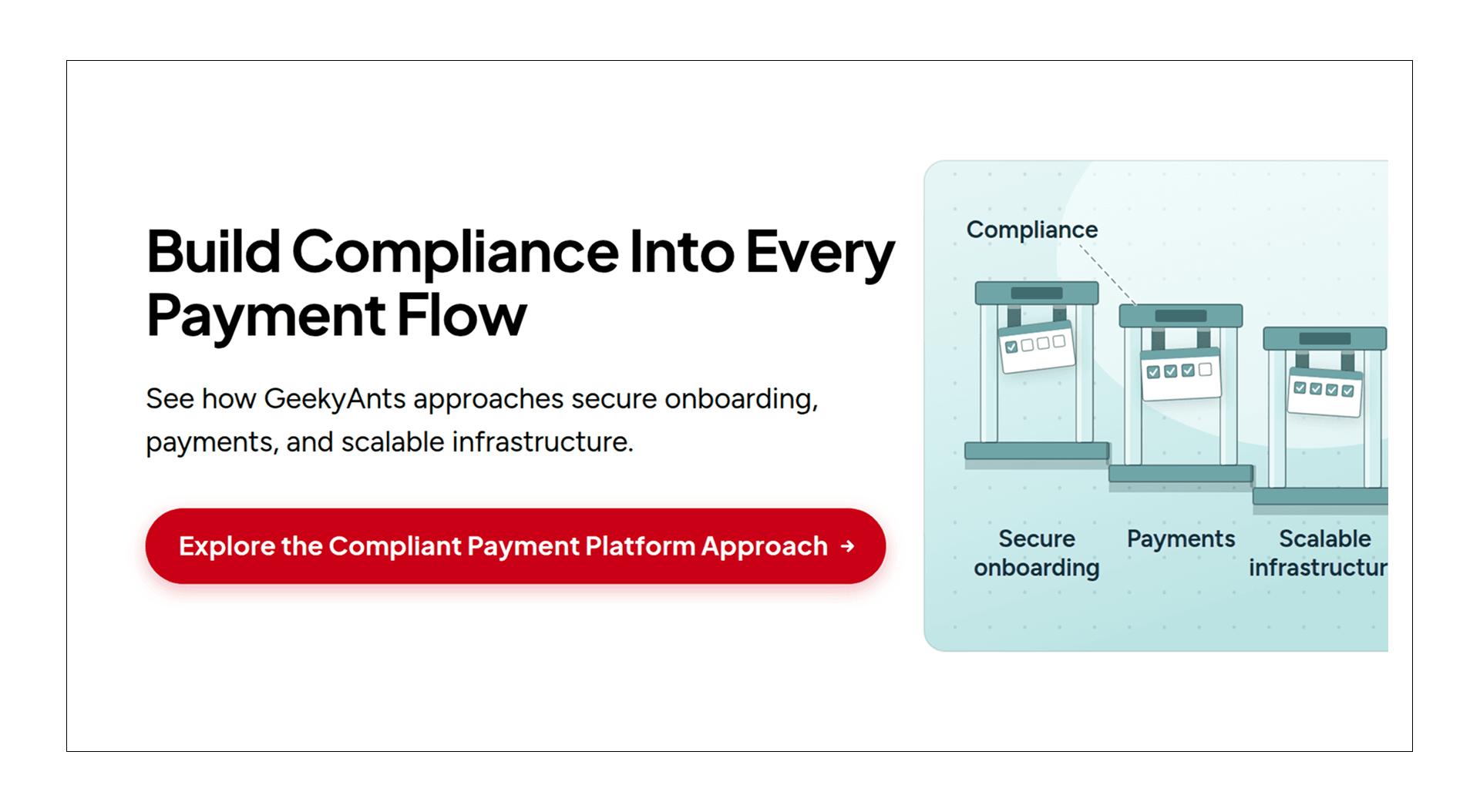
- PCI-DSS & Fintech Compliance Expertise: Our blog post “Building a Scalable, Compliant Payment Platform: An Approach” outlines how we built fintech platforms with automated KYC/KYB, bank connectivity, and security-first architecture.
- U.S. + Offshore Delivery Model: We combine U.S. product-leadership with offshore engineering to deliver premium quality at cost efficiency—giving you the control of a domestic team and the scale advantages of offshore talent.
When you partner with GeekyAnts, you gain a team that understands the full BNPL lifecycle: payment orchestration, installment logic, merchant integration, risk engines, and compliance. We are built for scale, compliance, and fintech speed.
Building BNPL Platforms That Last Beyond the Trend
Sustainable BNPL platforms require strategic planning beyond initial launch. Every platform that scales securely and sustainably will do so because it chose to treat compliance not as red tape but as a compass—guiding growth, protecting users, and ensuring trust.
Measure your compliance, architecture, and costs with precision before you build. That is how businesses turn regulatory pressure into a strategic advantage and transform a good idea into a lasting financial ecosystem.
Success requires balancing rapid innovation with regulatory compliance.