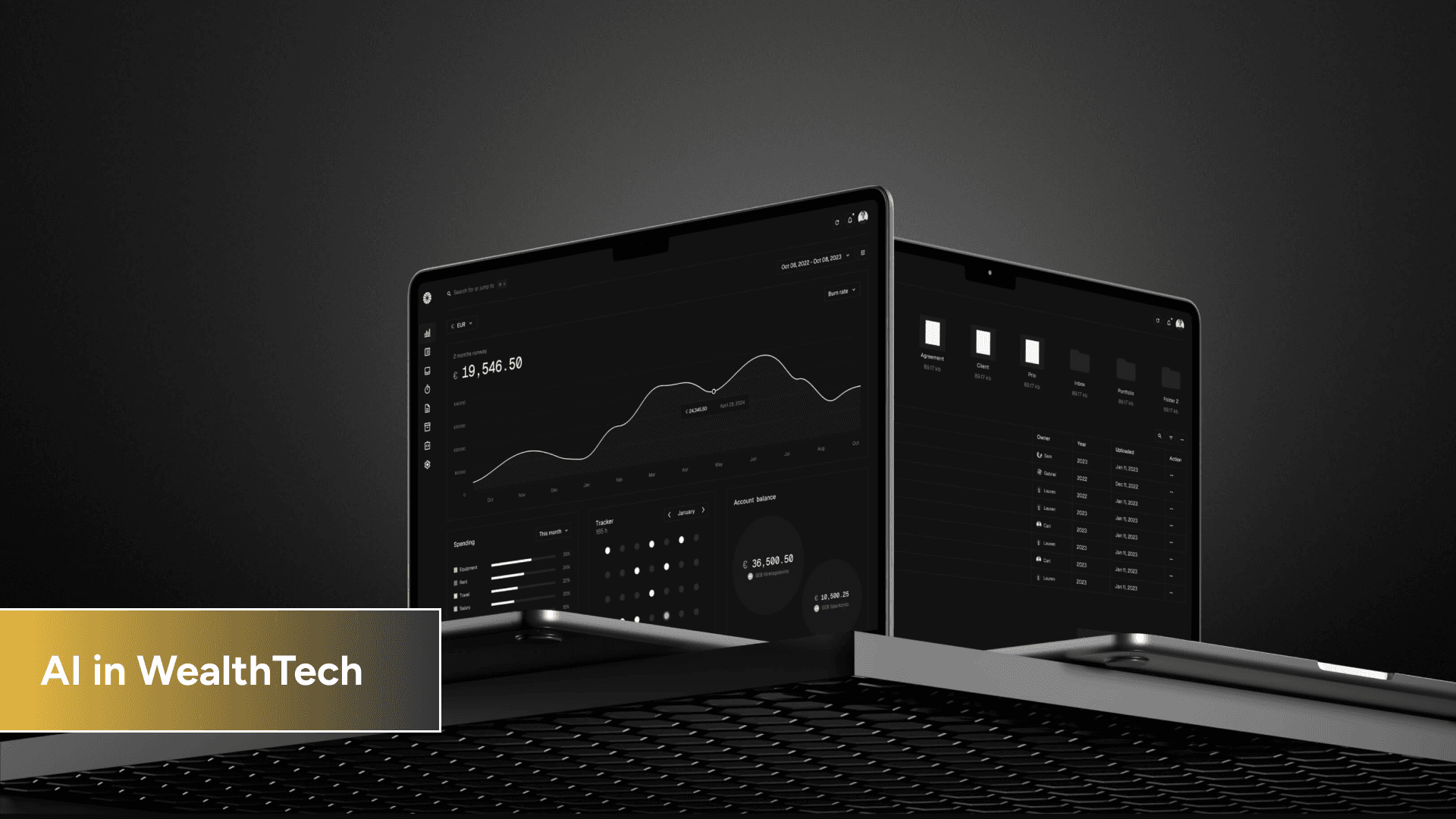

The global wealth management landscape is experiencing its most significant structural shift in a generation. According to recent 2026 data from McKinsey, asset management firms using advanced predictive AI platforms have grown their net new flows at twice the rate of traditional competitors.
A separate study by Celent reveals that 78 percent of high-net-worth investors now expect real-time, predictive risk adjustments rather than monthly balance sheets. Legacy portfolio systems designed for quarterly rebalancing can no longer keep pace with modern market volatility.
The traditional reactive approach to investment advisory is officially dead. For Chief Executive Officers and technology leaders, the imperative is clear. Winning the future of WealthTech requires building scalable, AI-native portfolio management platforms that forecast risk and identify investment opportunities before they happen.
Moving Beyond Simple Automation
Many early WealthTech platforms mistook basic automated algorithms for true artificial intelligence.
Simple robo-advisors merely rebalance portfolios based on static, backward-looking rules. True predictive investing relies on processing unstructured data in real time to anticipate shifting market conditions. Modern platforms must ingest earnings call transcripts, global supply chain metrics, and regulatory filings simultaneously.
When you feed this data into an enterprise-grade machine learning pipeline, the system uncovers non-obvious correlations across global asset classes. Instead of telling you how a portfolio performed last month, the platform simulates how it will react to an unexpected economic event tomorrow. This predictive capability transforms wealth managers from administrative reporters into proactive strategic partners.
The Operational Pillars of a Predictive Platform
Building a platform that can handle this level of complexity requires a radical shift in your software engineering priorities. To deliver actual financial value to your firm, your technology architecture must excel across three core operational capabilities.
Core Capability | Engineering Requirement | Strategic Business Outcome |
|---|---|---|
Data Ingestion | Real-time processing of structured and unstructured feeds | Total elimination of information latency in advisory loops |
Risk Modeling | High-concurrency, continuous stress-testing engines | Immediate protection against systemic market downturns |
Hyper-Personalization | Dynamic portfolio generation for thousands of distinct users | Maximum client retention through highly tailored strategies |
If your system cannot process data streams within milliseconds, your predictive models are already obsolete.
Overcoming the Infrastructure Challenge
The true obstacle to launching a successful WealthTech platform is not the complexity of the AI model itself. The primary challenge lies in the engineering infrastructure required to run these models at a global scale.
Predictive algorithms demand immense computational power and can quickly cause cloud infrastructure costs to spiral out of control. Furthermore, financial technology platforms face the strictest regulatory scrutiny in corporate history.
Your engineering teams must implement strict data governance to ensure proprietary client information never leaks into public models. Every single predictive recommendation generated by your AI must be fully explainable to satisfy compliance audits.
Black-box systems that cannot prove exactly why an investment decision was made will fail regulatory reviews immediately. Therefore, you must build security, data privacy, and audit logs directly into the foundation of your core architecture.
Executing the WealthTech Roadmap
Transitioning your enterprise to an AI-powered predictive model is a business transformation, not an IT upgrade. Do not try to rebuild your entire enterprise investment system in a single development cycle. Begin by isolating a specific, high-value workflow such as automated tax-loss harvesting or predictive risk forecasting for a single asset class.
Deploy a dedicated, cross-functional engineering team to build a secure, production-grade microservice for that specific function. Measure the accuracy of the predictive models and the operational cost of the computing infrastructure against your traditional methods.
Once your team proves the economic viability of the small-scale system, expand the architecture to support your broader product offerings. By enforcing rigorous engineering discipline from day one, you ensure your WealthTech platform scales efficiently, protects client assets, and dominates the market.