UPI and Real-Time Payments
We build production-grade UPI systems that handle the full payment lifecycle, from registration and MPIN setup to recurring mandates and third-party bank management.
Payment Downtime Costs Millions.











UPI looks simple until you build it.
NPCI SDK version conflicts across devices, unreliable third-party QR scanners in real-world conditions, race conditions in concurrent API calls, and weak token storage can quickly turn into failed transactions, user complaints, and compliance risks.
NPCI SDK version conflicts across devices, unreliable third-party QR scanners in real-world conditions, race conditions in concurrent API calls, and weak token storage can quickly turn into failed transactions, user complaints, and compliance risks.
We build UPI systems and Real-Time Payment applications from the ground up. A custom native QR scanner enables sub-second detection even in low-light and high-traffic scenarios. We securely manage app versions and sensitive payment credentials in one controlled layer. A three-level tracking system across the bank and payment networks gives full visibility into every transaction. Built-in safeguards ensure payments never end up in confusing or incomplete states.
Client Results and Success
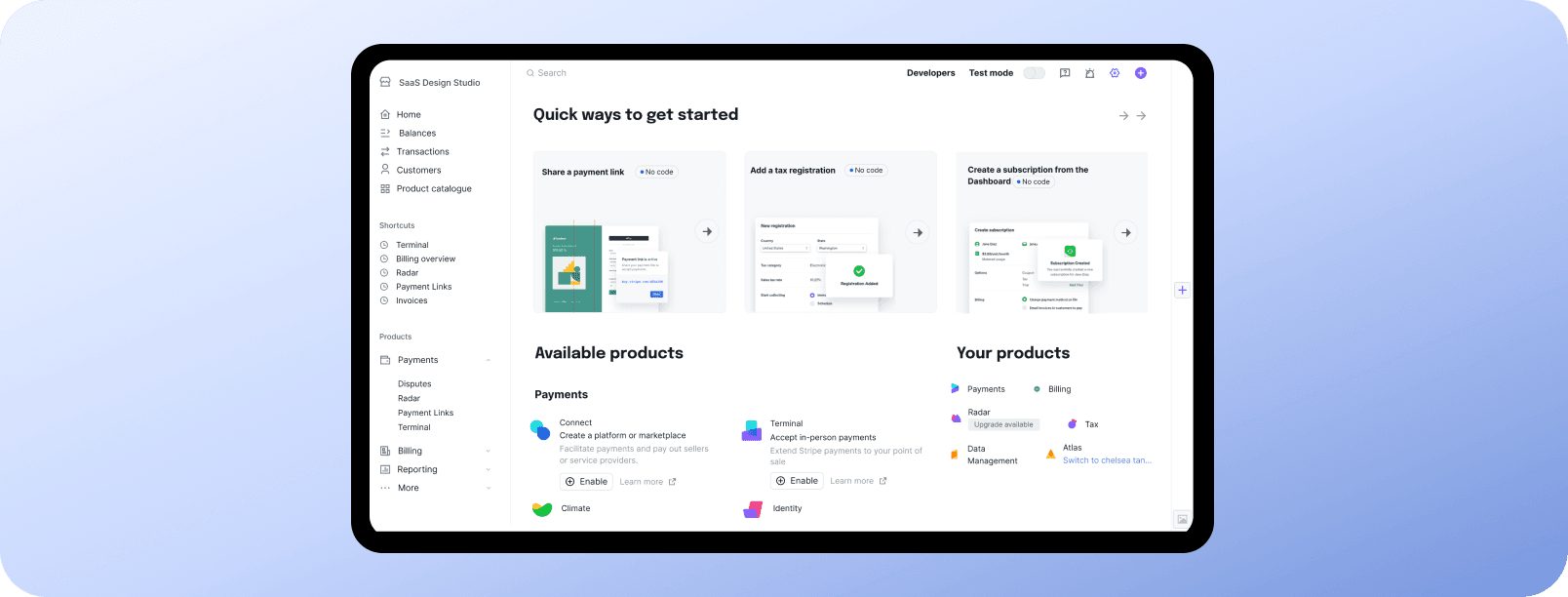
1000+ Individual Billers Supported
The platform supports over 1K unique billers within a single, low-latency mobile interface.
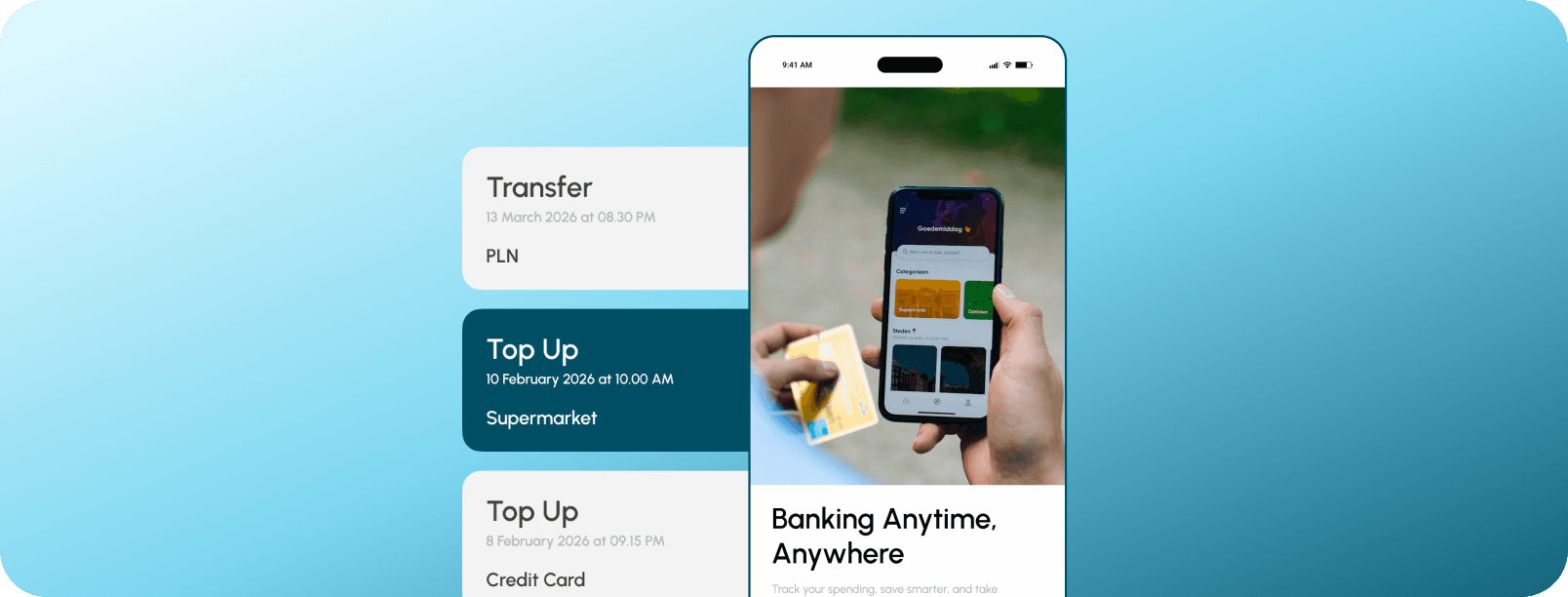
5 Million+ Active Users
The module successfully serves over 5 million users and processes transactions worth hundreds of crores daily.
100% Data Integrity
Processes 230,000+ card records daily with full synchronization completed in under 30 minutes.
MENA-Region Compliant
Immediate adherence to the UAE and Saudi Arabia’s strict data and payment laws.
Business Impacts We Have Made
< 2
Second Transactions
5M+
Monthly Active Users
< 1
Second QR Detection
1B+
Daily Transaction Volume
Our UPI and Real-Time Payments Capabilities
Complete UPI Registration and MPIN Setup
We implement the full NPCI-compliant registration flow, device binding, bank account linking, and MPIN configuration, with token management handled securely at the Keychain layer from the first session.
Custom-Built Native QR Scanner
Our QR scanner is built from scratch using native iOS and Android camera APIs rather than a third-party library. This is what produces sub-1-second detection — including in low-light conditions and on lower-end devices where off-the-shelf scanners consistently underperform.
P2P, P2M, and Self-Transfer Flows
All three core UPI transfer types are supported within a unified payment interface, with flow logic and validation appropriate to each transfer category — including payee verification, transaction limits, and confirmation handling.
UPI Collect Request with Push Notifications
Incoming collect requests surface through push notifications with the full request context available inline. Users can approve or decline without navigating away from the notification, reducing the friction that leads to collecting request abandonment.
UPI Mandate for Recurring Payments
We implement mandate creation, modification, and revocation flows for recurring UPI payments — covering setup, approval, and the edge cases around mandate execution failures and retry logic.
Biometric UPI for Small Transactions
Low-value transactions can be authenticated biometrically rather than requiring MPIN entry — reducing the friction on high-frequency small payments while maintaining the authentication boundary that NPCI requires.
Third-Party Bank UPI Management
Users can manage UPI IDs linked to banks outside the primary application — a capability not standard in most UPI implementations — giving them a single interface for their complete UPI account portfolio.
Engineering UPI and Real-Time Payments Service for Global Enterprises and Agile Startups
Payments and Digital Wallet Services by People Who Have Delivered 1000+ Projects
Instead of using slow, off-the-shelf tools, we built our QR scanner from scratch using native code. By talking directly to the phone’s camera hardware, we achieve sub-1-second scan speeds. This ensures a smooth experience for your 5M+ users, even on older or budget devices.

We keep your users' data safe by storing security tokens in the phone’s hardware-backed keychain. This architecture ensures that even if the app layer is attacked, the sensitive payment keys remain untouchable. We also handle the complex UPI Intent flows so users can switch between apps during payment without losing the transaction.

Our system tracks every payment across three layers—the Bank, Mindgate, and NPCI. This gives your support team a clear paper trail to solve disputes instantly. We also built in Race Condition Handling, which prevents duplicate transactions if a user accidentally taps “pay” twice at the exact same time.

Our Latest Thinking in UPI and Real-Time Payments
FAQs About Our UPI and Real-Time Payments Service
Third-party QR libraries are built for general use cases. In a payments context, detection speed and reliability across device types and lighting conditions directly affect transaction completion rates. Our scanner is built on native camera APIs — Objective-C on iOS, Java on Android — which gives us control over frame processing, focus behaviour, and fallback logic that a library wrapper does not expose. The result is sub-1-second detection in real-world conditions, including on lower-end devices that represent a significant share of the active user base.
NPCI periodically releases updated SDK versions, and managing these across a large active user base requires tracking which SDK version each device is running and handling version-specific behaviour differences. We manage this through React Native Keychain, where SDK version metadata is stored alongside authentication tokens. This keeps version management at the secure storage layer rather than in application state, and allows version-specific handling without requiring users to update the application before completing a transaction.
Every UPI transaction passes through three systems — the bank, Mindgate as the payment service provider, and NPCI. A failure or discrepancy at any layer can produce a transaction state that is ambiguous from the user's perspective but needs to be resolved definitively for settlement purposes. Our audit trail captures state at each of the three layers independently, so operations teams can identify exactly where a transaction diverged from expected behaviour without reconstructing the sequence from fragmented logs.
Race conditions occur when concurrent API calls — for example, a user tapping pay while a preceding request is still in flight — produce conflicting transaction states. Without explicit handling, this can result in duplicate debits, stuck transactions, or states that require manual intervention to resolve. We implement locking and request deduplication at the API call layer, so concurrent requests resolve to a single deterministic outcome regardless of network timing.
Most UPI applications only manage UPI IDs linked to accounts held at the primary bank. Third-party bank UPI management allows users to link and transact from UPI IDs associated with accounts at other banks — within the same application. This requires handling multiple VPA registrations, separate token sets per linked bank, and bank-specific flow variations within a unified interface. It is uncommon because the integration complexity is significant, but it is what allows users to manage their complete UPI footprint from a single application.
A full UPI system — covering registration, custom QR scanner, P2P and P2M transfers, collect requests, mandates, and biometric authentication — built on React Native with NPCI SDK integration typically runs fourteen to twenty weeks from architecture sign-off to production. The range depends on the number of transfer types in scope, the complexity of the bank's existing authentication infrastructure, and whether third-party bank UPI management is included. We assess scope during the discovery phase before committing to a timeline.
Yes. The shared application layer is built in React Native with TypeScript. The QR scanner, biometric authentication, and Keychain token management use native Objective-C on iOS and Java on Android — because these functions require platform-level access that a cross-platform layer cannot reliably provide at the performance and security standard a payments application requires.
The system is handed over production-ready, load-tested, and documented. Your team can maintain and extend it independently. We do not build on proprietary frameworks that require ongoing vendor involvement to operate. If your team wants a formal support arrangement post-launch, that is a separate conversation.