Java and Springboot Systems
We take ownership of your JVM architecture and concurrency patterns from the ground up, so the performance your users depend on is the last thing your team ever has to worry about.
Move Beyond Slow APIs to Production-Grade Spring Systems











Our Java Performance service exists to break the cycle of unoptimized garbage collection, blocking I/O operations in Spring MVC hot paths, or a microservices mesh that has been stopped being efficient so long that nobody remembers why.
We begin by understanding exactly where your request handling and Spring Data processing are creating lag. We then replace them with lean, benchmarked systems—leveraging Virtual Threads or reactive patterns—that give your platform a foundation it can genuinely grow on.
Client Results and Success

400M+ global payments processed annually
The system provides the scalability required to handle millions of transactions while maintaining data integrity and administrative control.
- Active Users in the UK, Canada, Europe, and Australia
- 120k+
- Global Payments Processed Annually
- 400M+
- Downloads Across iOS and Android
- 350k+

3x faster AI feature iteration
The modular backend architecture allowed the team to deploy new AI capabilities and personalized features significantly faster than industry benchmarks.
- Reduction in meal decision time
- 40%
- Increase in daily active usage during pilot
- 2x
- Faster iteration on new AI-driven features
- 3x
$57,000+ Annual Savings
The project achieved a 60% reduction in monthly cloud costs (from $8,100 to $3,300) without any loss in transaction speed or system security.
- Reduction in monthly cloud costs
- 60%
- Saved per month
- $4800
- Annual savings
- $57,000+
50% reduction in manual validation cycles
The integration of automated benchmarking frameworks and AI-driven process automation also resulted in 30% faster internal testing workflows.
- faster internal testing
- 30%
- reduction in manual validation
- 50%
Our Java and Spring Boot Engineering Services
Runtime complexity should not be a tax your engineers pay every day. Our services eliminate the friction that comes from slow JVM startup times, bloated JAR binaries, and code that only runs fast on a local machine.
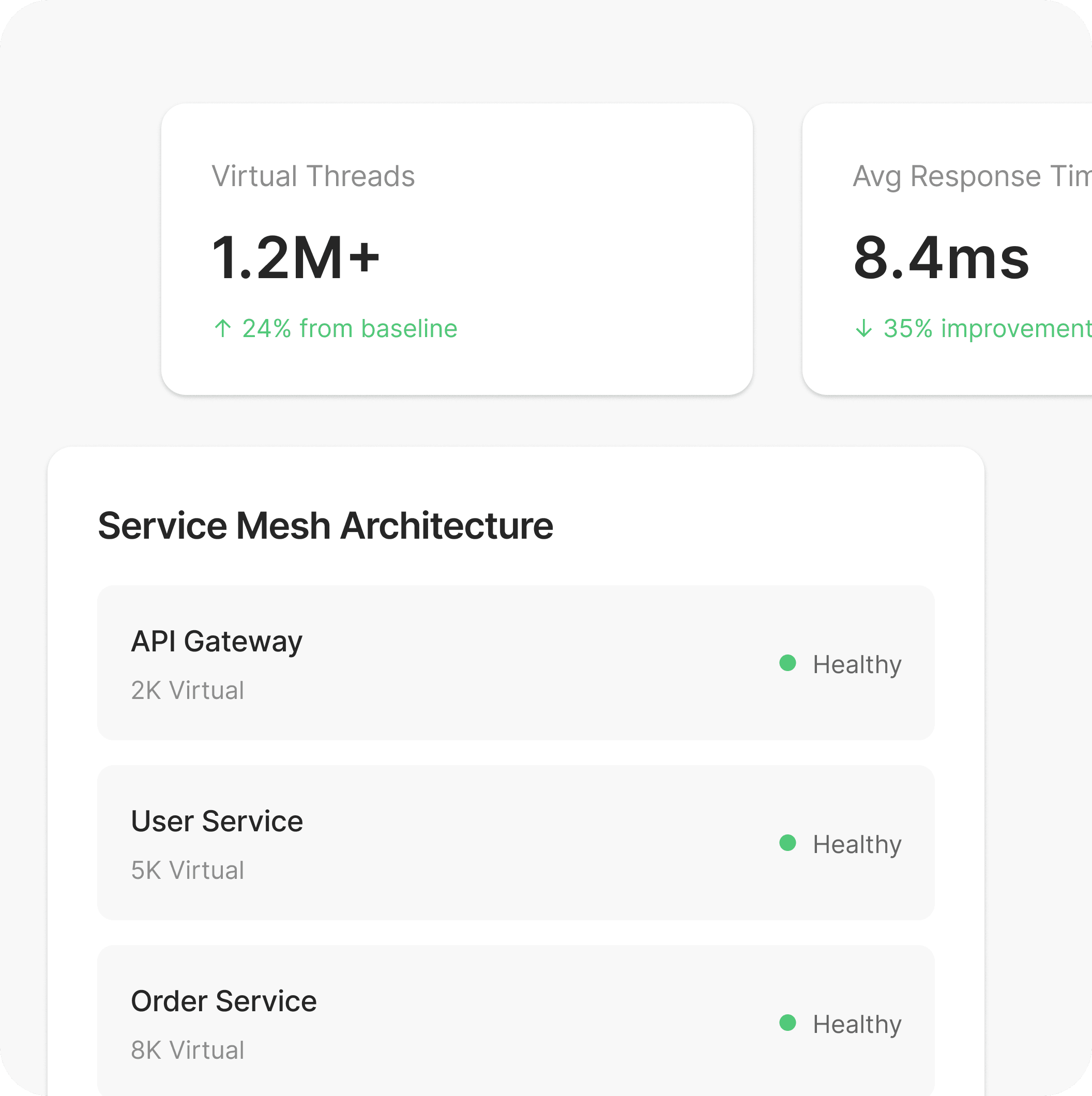
Full system design covering Project Loom (Virtual Threads), ExecutorService tuning, and context management across your Spring Cloud service mesh.
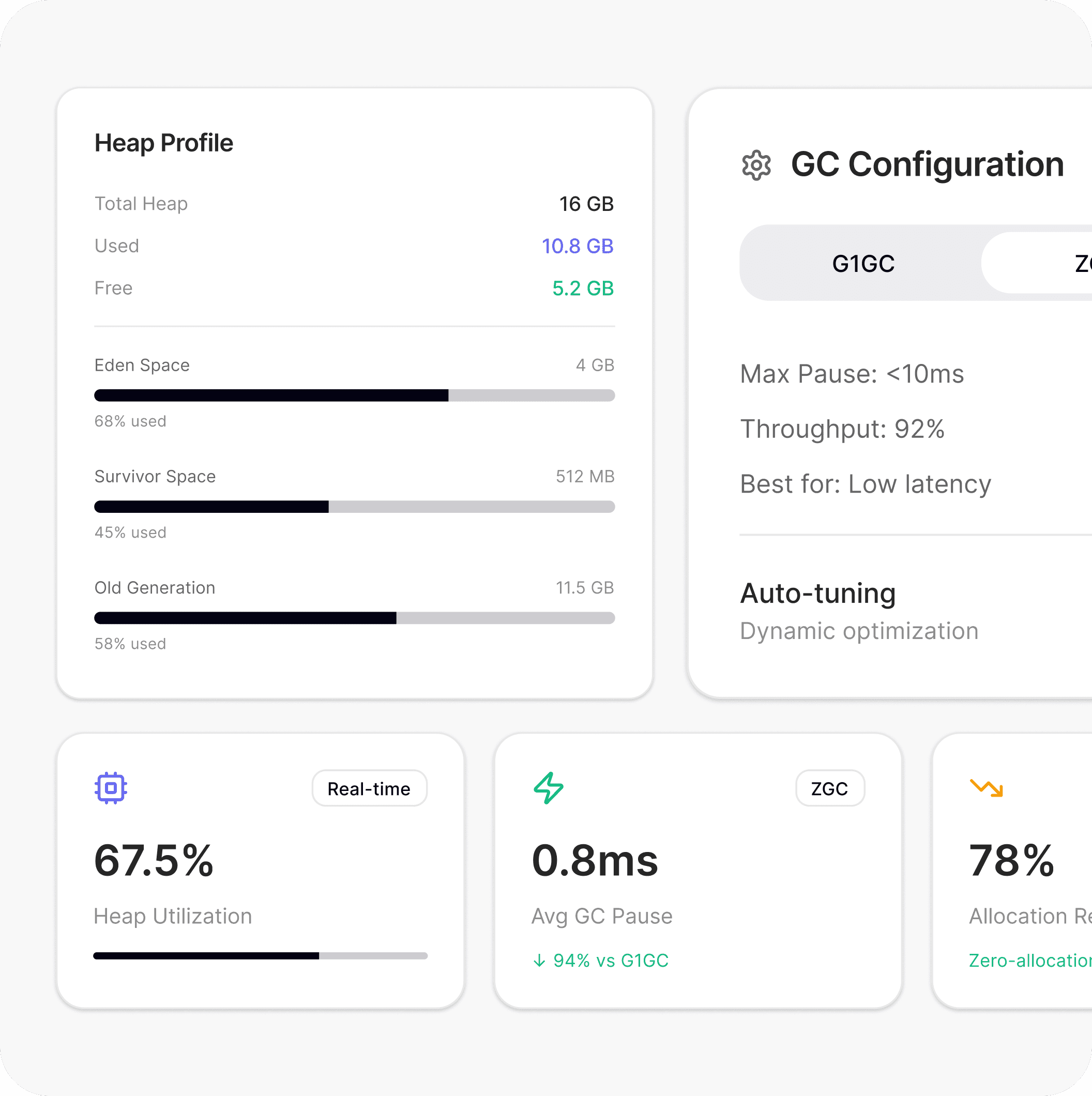
Strategy built around zero-allocation patterns and G1/ZGC escape analysis suited to your specific heap profile and traffic
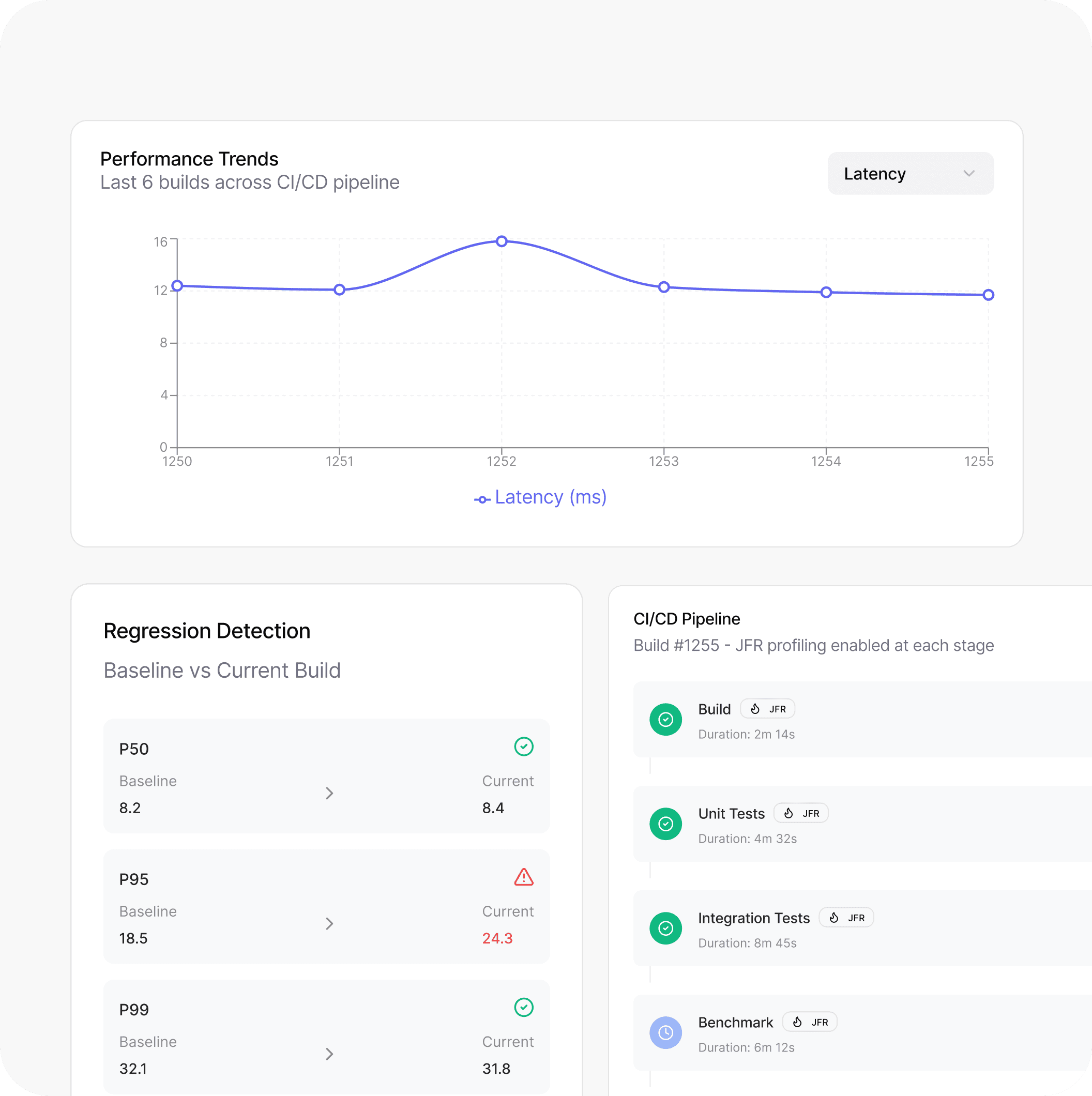
Continuous profiling with regression detection using JFR (Java Flight Recorder) built into the CI/CD pipeline from development through to production.
Complete Backend Engineering Services for Enterprises and Companies
Industry-based Java and Spring Boot Systems
The behavior required of a production Spring Boot system shifts considerably by domain. Connection pool sizing, transaction isolation levels, cache eviction policy, and latency tolerance in a compliance-bound financial ledger share almost nothing with those of a real-time content delivery platform. We design Java backend systems around the actual operational constraints your team is accountable for, not a generic template applied without any regard for context.
Java / Spring Boot Systems by Engineers Who Have Delivered 1000+ Projects
The same senior Java engineers who assess your codebase refactor your hot paths and tighten your transaction boundaries.
We work across Spring MVC, WebFlux, and Micronaut with a solid grounding in Kafka, PostgreSQL, Redis, and Hibernate. The right stack is what meets your throughput requirements.
Every deliverable is load-tested and structured, so your team can own and extend it without needing external support.
Our Latest Thinking
FAQs About Java / Spring Boot Systems
We cover everything from initial profiling sessions to a tuned runtime delivery, including thread pool configuration, data source optimization, cache layer design, dependency cleanup, and distributed tracing integration. The outcome is a stable backend that your engineers can operate confidently without leaning on heroics or temporary fixes that only the original developer fully understands.
Most engagements close within three to six weeks. Duration depends on how many services are included, the current state of test coverage and profiling instrumentation, and whether the primary objective is lower latency or higher throughput.
We begin with what you have already built. Improving and restructuring existing Spring services is almost always the most direct path. When a bigger change to your persistence model or threading design is warranted, we explain the reasoning clearly and execute it without disrupting live production traffic.
That is the intended outcome. Every engagement is scoped to leave your engineers with a system they understand and can fully operate. Load test suites, tuning runbooks, and architecture documentation are standard, not optional extras.
Following Spring Boot conventions and building a system that holds up under load are different skills. Most codebases carry undetected N plus one query problems, oversized thread pools, and cache configurations that create contention at scale. These stay hidden until a traffic event or new release pushes the system past its threshold.
Refactored Java services, configured profiling tooling, performance runbooks, latency and error rate alerting, a written architecture summary, and a structured handover session with the engineers taking ownership of the system.
We operate without preference across Spring MVC, WebFlux, and Micronaut, with hands-on experience in Kafka, Hibernate, Redis, JProfiler, Micrometer, and Datadog. Tool selection is driven by your performance targets and infrastructure constraints.
Yes. P99 response time targets, non-blocking data access, efficient serialization pipelines, and autoscaling are built into engagements where teams operate under financial processing, live auction, or internally defined throughput commitments.
Most teams register noticeable gains within the first two weeks — faster response times, reduced memory churn, and more predictable GC behavior. Full delivery of the complete optimization scope typically lands within four to six weeks.
An internal hire needs substantial ramp time before safely addressing production bottlenecks. Our engineers arrive with that context already built, deliver a profiled and documented system on a fixed timeline, and carry none of the overhead of recruiting or a slow onboarding period.