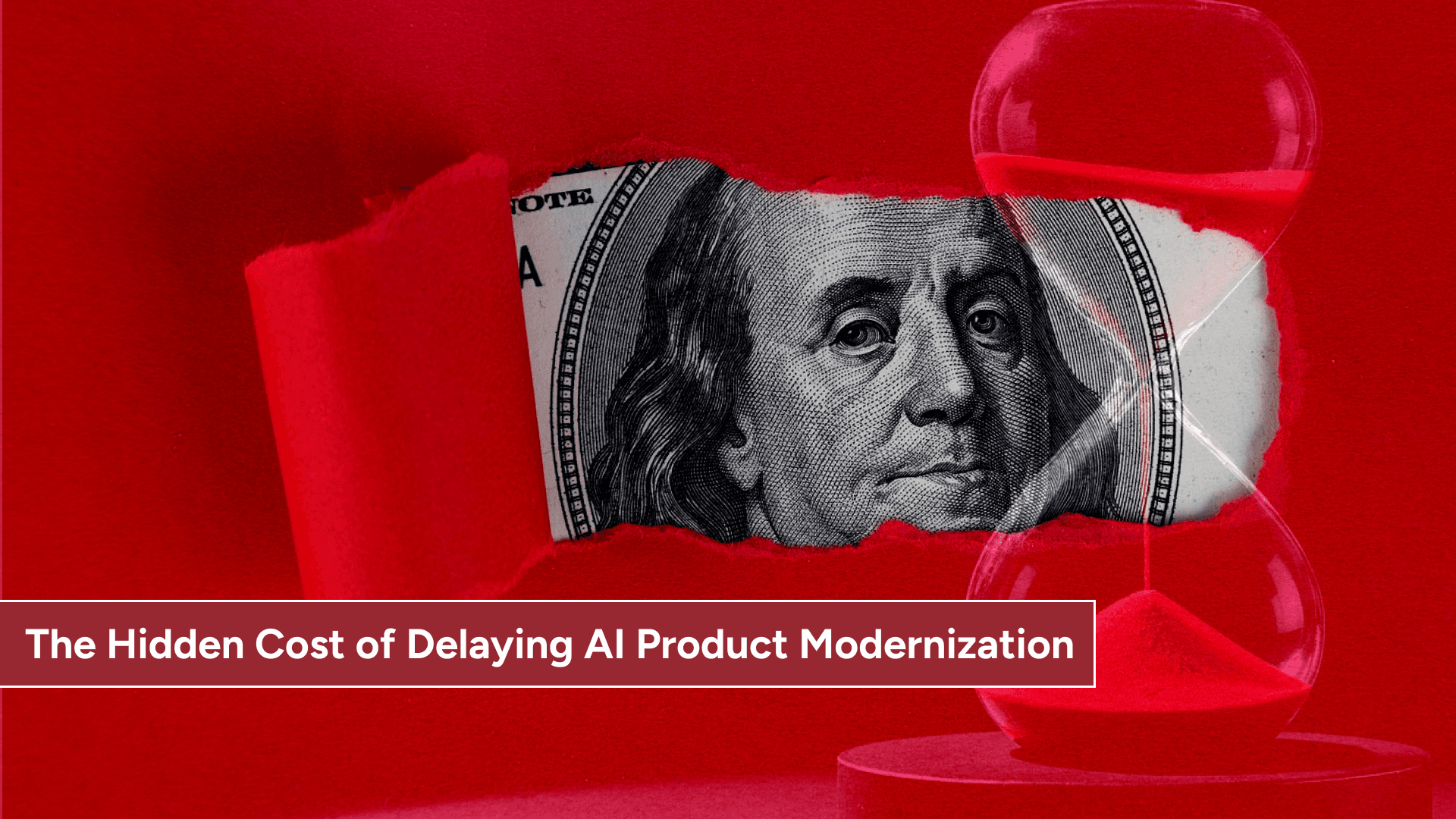

Across enterprise organizations, AI product modernization keeps appearing on roadmaps and getting pushed to the next planning cycle. The reasons are familiar: migration risk, budget pressure, and systems that still perform their core functions. What receives less attention is the cost of that delay in the current year. Maintenance expenses continue to rise, AI initiatives take longer to launch, and competitors gain experience that cannot be acquired through spending alone. Those costs accumulate whether they appear in planning documents or not.
Maintenance Is Consuming Resources Meant for Growth
Ask technology leaders where most IT budgets go, and the answer is often the same: maintaining existing systems. The scale of that spending is larger than many organizations expect.
Gartner estimates that technical debt, the accumulated cost of outdated code, deferred upgrades, and short-term technology decisions, consumes 40% of IT budgets. McKinsey places the value of technical debt at 20 to 40% of the value of an enterprise's technology estate. The Consortium for IT Software Quality estimates that technical debt principal in the United States has reached $1.52 trillion.
These costs continue year after year. Legacy hardware maintenance can increase by 10 to 15% after warranty coverage ends. Systems that remain in operation beyond their supported lifecycle often require premium support contracts that cost 50 to 200% more than standard agreements. One multinational insurance company examined by McKinsey found that technical debt consumed between 15 and 60% of its IT spending.
Budgets directed toward maintenance are budgets that cannot support new products, improved customer experiences, or AI initiatives. Organizations facing these costs are funding stability rather than progress.
Legacy Infrastructure Creates AI Adoption Barriers
Many enterprise AI projects begin with a promising business case. The technology performs well during demonstrations, leadership approves funding, and implementation begins. The first obstacle usually appears long before the AI model enters production.
Enterprise data is often spread across multiple systems, departments, and formats. Building the connections needed to make that information usable takes far longer than expected. Projects planned for a few months can stretch across multiple quarters as teams work through integration challenges.
McKinsey found that organizations operating on fragmented legacy infrastructure are 30% more likely to experience significant AI implementation delays because their data environments cannot support modern AI requirements. Successful AI systems depend on data that is accessible, structured, and consistent across the organization.
Architecture creates another challenge. Many enterprise platforms were built as monoliths, meaning large applications where components are tightly connected and changes in one area can affect the entire system. These environments make it difficult for AI systems to access real-time information, which is necessary for accurate and relevant outputs. Adding AI tools on top of this architecture does not remove the underlying limitation. In many cases, it exposes the problem at a larger scale.
McKinsey estimates that AI-assisted modernization can reduce modernization timelines by 40 to 50% compared with traditional approaches. The benefit is significant, but modernization still needs to occur before organizations can realize those gains
Competitive Gaps Expand With Time
Maintenance costs appear in budget reports. Competitive losses emerge over longer periods, but recovery becomes more difficult once leading organizations establish an advantage.
Companies that began AI modernization programs in 2023 and 2024 have spent the past two years building operational knowledge through production deployments. Their teams have developed data pipelines, refined governance processes, resolved implementation issues, and identified practical use cases. Those lessons now shape how these organizations operate.
McKinsey's 2025 research found that enterprises with mature AI programs reported EBITDA growth rates that were 20 to 30% higher than sector peers during the same period. EBITDA is a measure of operating profit before interest, taxes, depreciation, and amortization. Higher profitability creates more capacity for future investment, while organizations that delayed modernization must fund both catch-up efforts and ongoing operations.
Broader adoption trends show how quickly the market is changing. In 2023, 55% of organizations reported using AI in at least one business function. By 2024, that figure reached 78%. Generative AI adoption increased from 33% to 71% during the same period.
Organizations already using AI are refining live systems, collecting operational data, and establishing processes that customers and employees may soon view as standard expectations. Each year of delay widens the gap between organizations that are learning from production environments and those that remain in planning stages.
What Waiting Is Costing Enterprises
Viewing modernization as a future project creates a misleading picture of its financial impact. The costs appear long before a modernization initiative begins. They show up through rising maintenance expenses, delayed AI deployments, slower product development cycles, and lost opportunities to build operational experience.
For enterprise leaders evaluating modernization plans, the most useful question is not what modernization will cost. The more important question is what the organization has already spent by waiting and how much another year of delay will add to that total.
GeekyAnts works with enterprise teams to assess existing technology environments, identify modernization priorities, and build implementation roadmaps that reduce risk throughout the process. If your organization is evaluating its next step, our team can help determine where modernization will deliver the greatest impact.