Performance Engineering Services
We build systems that scale effortlessly under pressure, ensuring a seamless experience for every user, every time. From load testing to bottleneck analysis, our engineers optimize your infrastructure for peak performance.












Companies often conduct performance tests under staged, controlled environments, which do not reflect real-world user traffic patterns and environments. This affects the product’s performance upon being deployed, resulting in latencies, lower throughput, and crashes.
Our performance engineering prevents such errors. By conducting and analyzing strategic tests, we build systems that are primed to endure a large number of concurrent users without any depletion in performance ability.
Our Performance Metrics
We track key performance indicators, which provide a detailed insight into your system’s functions and guarantee an optimal user experience.
250MS
Response Time
5000
Req/Sec Throughput
Our Capabilities in Performance Engineering
Our QA practice spans the full spectrum of quality engineering from test strategy and functional validation to performance, security, and accessibility.
Load Testing
Simulating real-world user traffic to identify a baseline performance and ensure the system’s stability under the expected load.
Outcome
Identifies capacity limits, thereby improving and stabilizing performance during normal traffic.
Stress Testing
Pushing systems beyond their limits to identify the breaking points and evaluate recovery strategies under extreme conditions.
Outcome
Enables strengthening the system and a smooth degradation in case of heavy or unexpected traffic.
Scalability Testing
Validating the system’s ability to handle increasing loads by scaling resources horizontally or vertically.
Outcome
Confirms the infrastructure’s competency during high-demand periods and supports future growth.
Endurance Testing
Evaluating the system’s scalability and resource usage over extended periods to identify memory leaks and performance degradation.
Outcome
Prevents system crashes during prolonged usage, thus ensuring long-term reliability.
Impact We Have Made
We have partnered with 700+ clients across more than 50 industries to build systems that handle real-world scale. These stories show how we turn complex technical challenges into business growth and reliable performance.
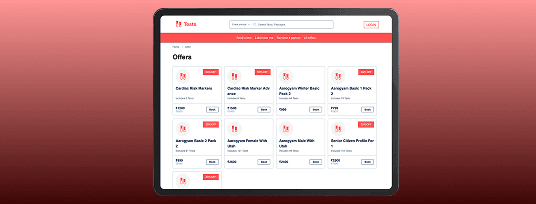
Diagnostic Platform Website Modernization
We implemented comprehensive QA testing, including UI, regression, functional, and cross-browser validation, to ensure performance and stability after the platform migration.
- performance score
- 100
- best-practice SEO score
- 100
- sec page load time
- 0.7

MSAL Authentication Integration Platform
We implemented structured testing across web and mobile environments to validate authentication flows, integrations, and security compliance.
- Development Hours Saved
- 70%
- Boost in Security
- 80%
- Reduction in Compliance Risks
- 60%
FleetEdge Fleet & Fuel Management Platform
We implemented continuous QA validation during agile development to ensure system reliability for real-time fleet monitoring and analytics.
- week development timeline
- 6
- reduction in SMS notification costs
- 80%
Pillar Engine AI Document Intelligence Platform
We implemented validation testing and workflow checks to ensure the accuracy and reliability of automated document intelligence workflows.
- reduction in manual effort
- 99%
- pages processed in 2 minutes
- 10,000
- insight accuracy
- 85%+
AI Testing and Validation Platform
We built an AI-driven workflow validation system to automate repetitive QA and verification processes across engineering workflows.
- reduction in manual validation cycles
- 50%
- faster testing cycles
- 30%
Performance Testing Tools
Apache JMeter
- Comprehensive load testing across HTTP, FTP, and JDBC protocols.
- Ideal for enterprise-grade validation and heavy server-side load analysis.
- An extensible plugin ecosystem with robust reporting and visualization.
K6
- Developer-centric testing using JavaScript for scripting and automation.
- Optimized for CI/CD integration and shift-left performance engineering.
- Resource-efficient architecture with seamless cloud scalability.
Locust
- Python-based distributed load testing for complex user behavior.
- Supports millions of concurrent users with an event-driven architecture
- Highly hackable and developer-friendly for dynamic load simulation.
Comprehensive Solutions for QA Engineering
Our Latest Thinking


Unstable systems drain your ROI.
Book a consulting session with our QA experts and improve your system’s performance.
Contact us
FAQs on Performance Engineering
Performance engineering benefits a wide range of applications, including web applications, mobile apps, APIs, SaaS platforms, and enterprise systems. Any system that handles user interactions, processes data, or supports business-critical operations can benefit from improved speed, stability, and scalability.
Yes, performance engineering is valuable for businesses of all sizes. For small and mid-sized companies, even minor performance issues can significantly impact user retention and growth. Investing early helps build a strong technical foundation and prevents costly scalability issues as the business expands.
Yes, optimizing performance often leads to more efficient resource utilization. By identifying bottlenecks and eliminating unnecessary resource consumption, businesses can reduce over-provisioning and lower their overall cloud or infrastructure costs without compromising performance.
Performance engineering should start as early as the design and architecture phase. Addressing performance upfront helps avoid costly fixes later. A shift-left approach ensures systems are built with scalability and efficiency in mind from the beginning.
Accurate results depend on realistic test scenarios, production-like environments, and reliable data. This includes simulating real user behavior, using representative datasets, and minimizing external variables that could skew results. Proper monitoring and validation also help ensure that findings are actionable and trustworthy.
Performance engineering is an ongoing process. As applications evolve, user expectations grow, and traffic patterns change, continuous monitoring and optimization are necessary to maintain optimal performance and prevent new issues from emerging.
Yes, performance engineering is most effective when done collaboratively. Working alongside your in-house developers, DevOps teams, and stakeholders ensures that performance improvements are aligned with your development practices and can be implemented efficiently.
Results vary depending on the system, but common outcomes include faster response times, improved system stability, better scalability, and enhanced user experience. These improvements often translate into higher user engagement, increased conversions, and reduced operational costs.