PostgreSQL Product Architecture
We design PostgreSQL architectures that handle complex, evolving data requirements without accumulating the technical debt that makes schema changes a production risk.
Stop fighting your Database’s Limits.











Scaling a product often turns a database into a data mess of slow queries and inconsistent records. We prevent this by designing PostgreSQL infrastructure that balances relational rigor with JSONB flexibility, allowing your data to evolve without losing speed.
To ensure sub-millisecond responses, we implement Composite and Partial Indexes that target only the data you need. We also move your core business logic into the database layer using Check Constraints and Foreign Keys, ensuring your records stay accurate and corruption-free, even under high traffic.
Client Results and Success

400M+ global payments processed annually
The system provides the scalability required to handle millions of transactions while maintaining data integrity and administrative control.
- Active Users in the UK, Canada, Europe, and Australia
- 120k+
- Global Payments Processed Annually
- 400M+
- Downloads Across iOS and Android
- 350k+

3x faster AI feature iteration
The modular backend architecture allowed the team to deploy new AI capabilities and personalized features significantly faster than industry benchmarks.
- Reduction in meal decision time
- 40%
- Increase in daily active usage during pilot
- 2x
- Faster iteration on new AI-driven features
- 3x
$57,000+ Annual Savings
The project achieved a 60% reduction in monthly cloud costs (from $8,100 to $3,300) without any loss in transaction speed or system security.
- Reduction in monthly cloud costs
- 60%
- Saved per month
- $4800
- Annual savings
- $57,000+
50% reduction in manual validation cycles
The integration of automated benchmarking frameworks and AI-driven process automation also resulted in 30% faster internal testing workflows.
- faster internal testing
- 30%
- reduction in manual validation
- 50%
Our PostgreSQL Product Architecture Capabilities
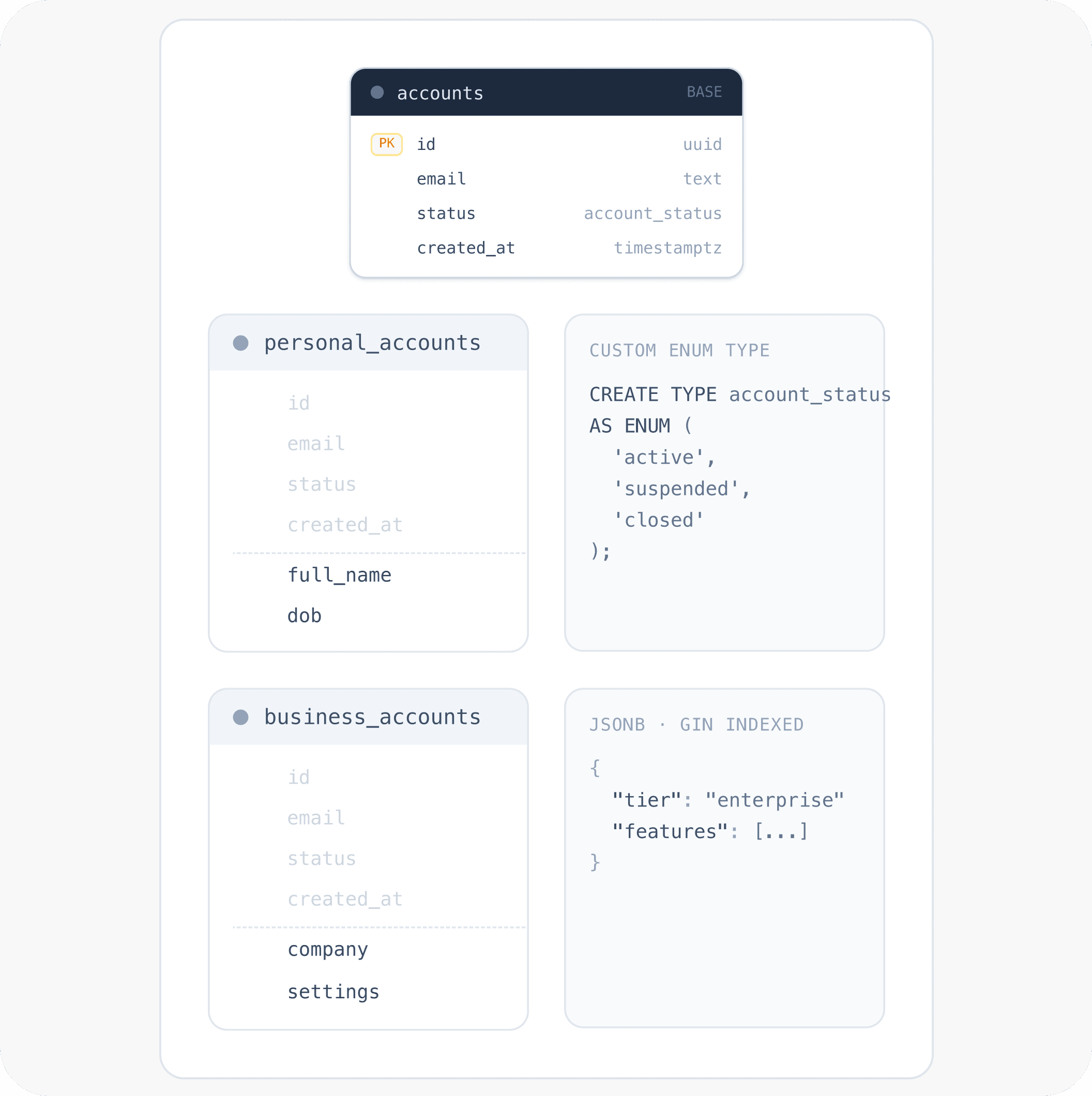
We design schemas that grow with your product. By utilizing Table Inheritance and Custom Types, we build databases that can handle complex relationships while maintaining the flexibility of a document store through optimized JSONB indexing.
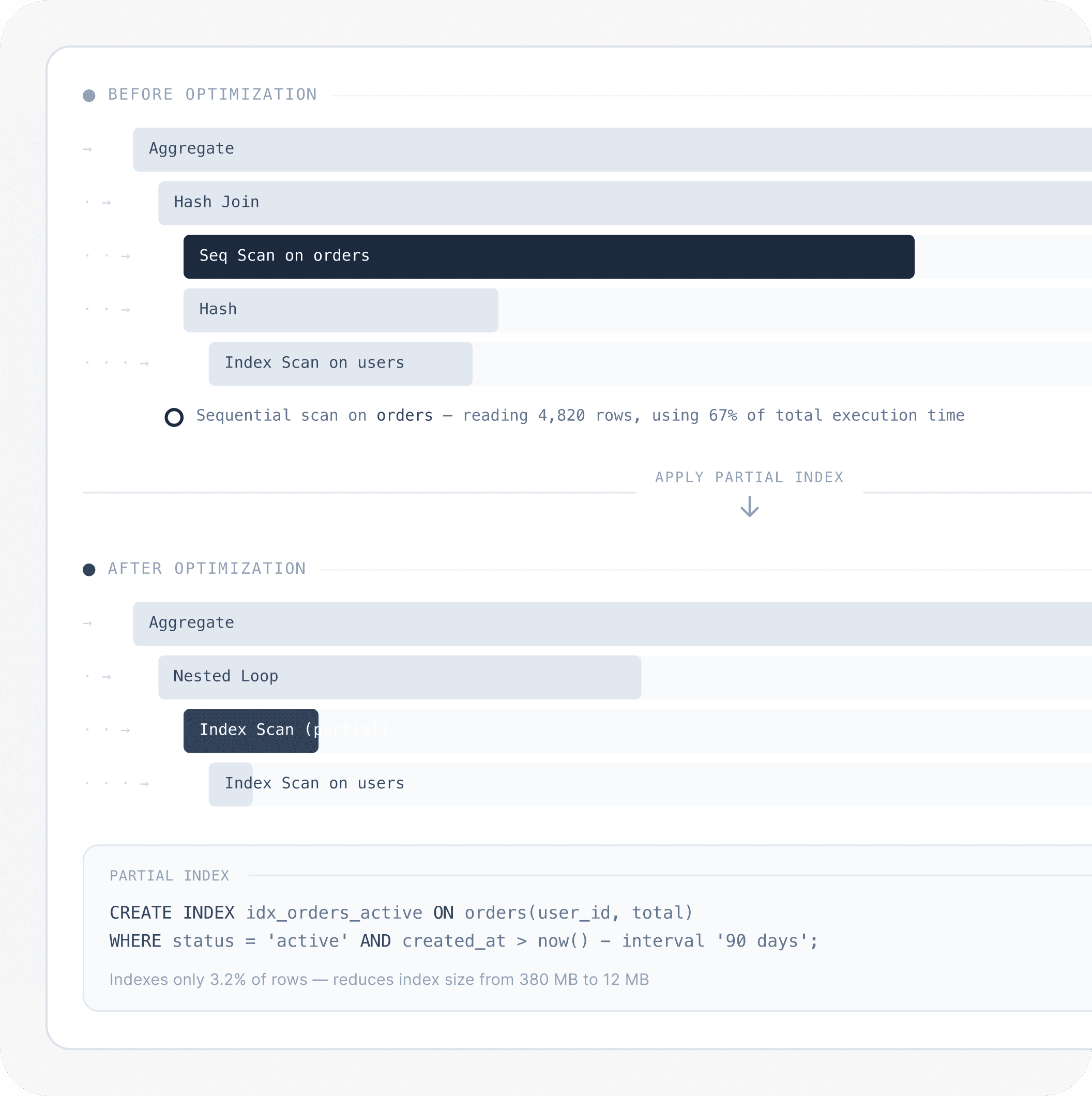
We go beyond basic queries. We perform deep Query Analysis to identify slow paths and apply Partial Indexes—indexing only the data that matters—to reduce disk usage and speed up search results.
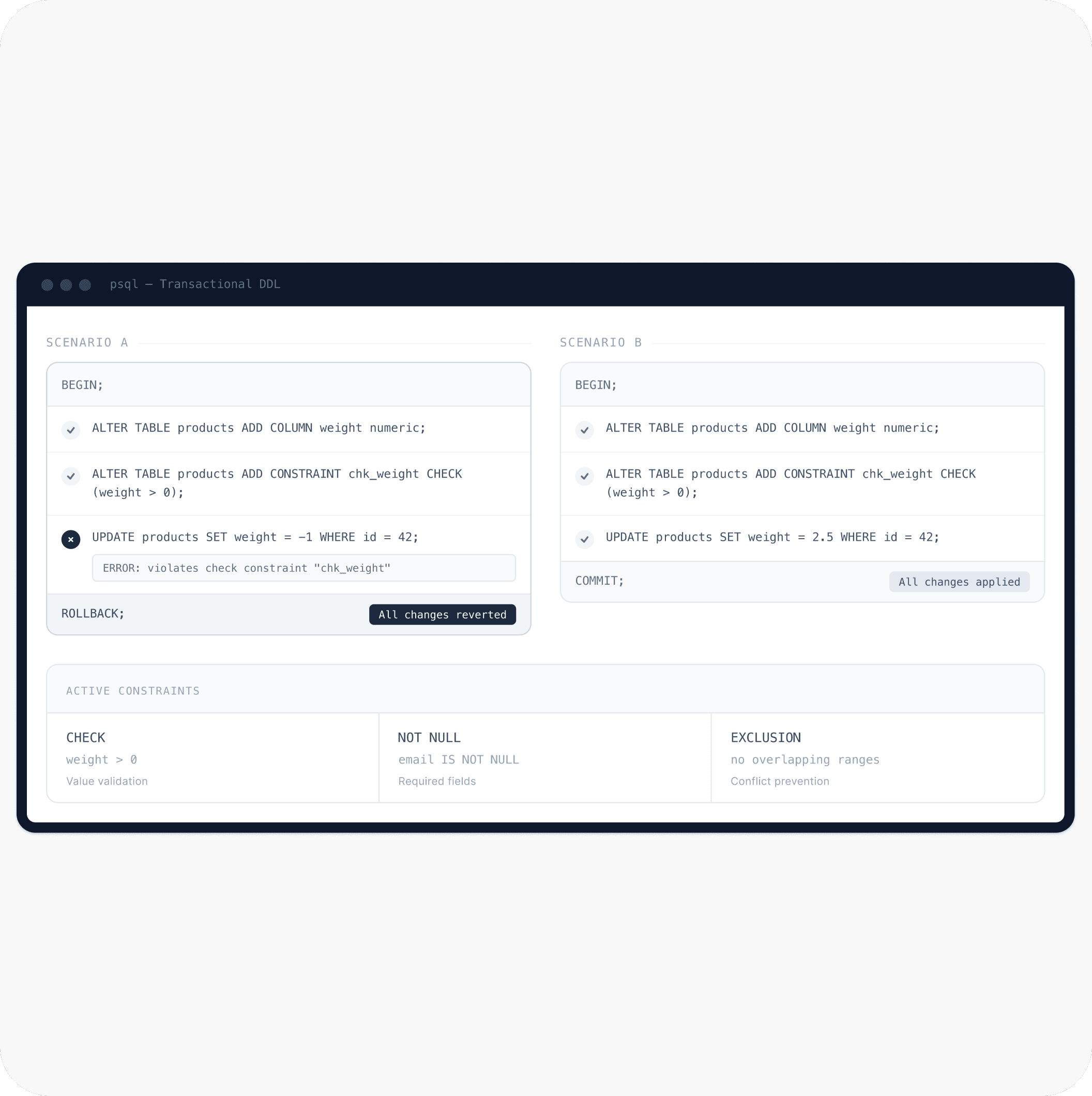
We believe the database should be the source of truth. We implement Check Constraints and Transactional DDL so that invalid data never enters your system, protecting your application from bugs that originate at the code level.
Complete Backend Engineering Services for Enterprises and Companies
Industries-Based PostgreSQL Product Architecture Services
The data integrity and performance requirements that a PostgreSQL schema must meet shift by product type. We design PostgreSQL schemas around the actual data model, query patterns, and integrity requirements of the product.
PostgreSQL Product Architecture by Engineers Who Have Delivered 1000+ Projects
We have worked on databases where inventory race conditions were accepted as normal, where reporting queries were timing out because nobody had added a materialized view, and where JSONB had been added without indexing because the flexibility was needed, but the performance implications were not considered.
The senior engineers who plan your architecture are the same ones who write the code.
We work with NestJS, Express, GraphQL, and more. We choose the technology that fits your team, not just what is trendy.
We provide clear documentation and Architecture Decision Records. When we finish, your team will have everything they need to run and grow the system without us.
Our Latest Thinking
FAQs About PostgreSQL Product Architecture Services
We cover schema design, JSONB data modeling, constraint and trigger implementation, index strategy, query optimization, and materialized view setup. The end state is a data model that enforces the product's business rules at the database layer and performs at the query volumes the product generates.
Most engagements are completed within three to six weeks. Duration depends on the complexity of the existing schema, the number of tables and relationships in scope, and whether performance tuning requires extended query analysis under production load.
Both. For new products, we design the schema from the start. For existing databases, we assess the current data model, identify the highest-risk gaps in constraints and indexing, and implement changes incrementally without downtime.
Yes. Every engagement delivers schema documentation with constraint rationale, index strategy records, and architecture decision notes covering the key modeling choices — so your team can add tables and columns following the same patterns without guidance from us.
Having a PostgreSQL database and having a well-architected PostgreSQL schema are different things. Most schemas that grew organically carry missing constraints, indexes that no longer match the queries being run, and business rules enforced only in the application layer. Those gaps accumulate quietly until a race condition or a slow query makes them visible.
A production-ready schema with constraints implemented and documented, indexes validated against the actual query patterns, materialized views configured where needed, row-level locking applied to concurrent write paths, and full documentation covering schema decisions and query analysis findings.
We work across JSONB, table inheritance, custom types, partial and composite indexes, materialized views, row-level locking, check constraints, foreign keys, triggers, transactional DDL, explain analyze, and pg_stat_statements. Feature selection is based on the product's data model and performance requirements.
Yes. Audit logging via triggers, data retention constraints, encryption at the column level, and access control at the row level are part of how we build schemas for products operating under PCI-DSS, HIPAA, SOC 2, or GDPR requirements.
Index and query optimisation improvements are visible within the first week. Constraint implementation and materialized view setup complete within two to three weeks. Full schema documentation and handover typically complete within four to six weeks.
An internal hire needs ramp time before safely making structural changes to a production schema. Our engineers arrive with that experience in place, deliver a documented and tested data model on a fixed schedule, and carry none of the overhead of recruiting or onboarding.