8-WEEK AI-NATIVE BUILD

AI-Native Engineering

AI Native Engineering belongs in the architecture. Not bolted on after.

We embed managed engineering pods, Senior Engineers, Tech Leads, and QA into your workflow. We use your stack, attend your standups, and assist in delivery targets.
Start with AI Architecture Review

Comparison

Bolted-On AI vs. AI-Native Engineering

Most products treat AI as a cosmetic feature, a quick API wrapper, and a hope for the best. AI-Native Engineering treats the model as a first-class citizen, built with the same architectural rigor as your database or security layer.
Single API calls that break when models update, or rate limits are hit.
Model-agnostic abstractions with automatic failovers and graceful degradation.
Raw prompts are buried in code, making iteration slow and risky.
Versioned prompt management with A/B testing and multi-model routing.
Stateless requests that ignore your proprietary data.
Production-grade RAG pipelines using vector search for hyper-relevant results.
Surprise API bills at the end of the month with no usage visibility.
Real-time token budgeting, semantic caching, and per-feature cost tracking.
Relying on "it seems to work" until a customer reports a hallucination.
Automated evaluation suites with CI/CD regression alerts and quality metrics.
A city of glass blocks linked by glowing violet lines

The Production Gap, Stagnation, and Debt are predictable. They are also fixable.

Stop guessing where your technical vulnerabilities are. We’ll tell you exactly where your AI stack sits.
Get a Free Architecture Review — Talk to our Engineers
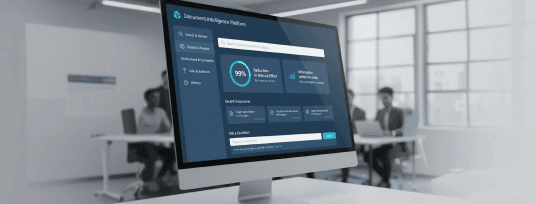
Document Intelligence: Pillar Engine
E-commerce

Document Intelligence: Pillar Engine

We developed an AI-driven document intelligence platform that extracts answers and insights from large document repositories using LLM pipelines and automated workflows.
Reduction in manual effort
99%
To process 10K Pages
2 mins
Accuracy in responses
85%+

Read case study

We use AI to shrink months of development into weeks.

Our engineering fundamentals stay the same, but your time-to-market is cut in half.

AI at the Core

Six Strategic AI Native Engineering Capabilities

We build the full spectrum of AI-native software engineering infrastructure—from retrieval pipelines to autonomous agents and production-grade AI Ops.
  1. We build Retrieval-Augmented Generation systems that ground LLM responses in your proprietary data. We handle the entire lifecycle: document ingestion, chunking strategies, embedding models, and hybrid search architectures using Pinecone, Weaviate, or pgvector.

    Common Use Cases:
    • Knowledge bases with document-level grounding
    • Context-aware customer support
    • Automated legal analysis.
  2. We implement multi-step agents that reason, plan, and execute across tools and APIs. Using frameworks like LangGraph or CrewAI, we build custom agentic workflows with strict guardrails, human-in-the-loop checkpoints, and full observability.

    Common Use Cases:
    • Research assistants for data synthesis
    • Automated sales qualification
    • Intelligent support ticket routing.
  3. We provide production-grade integration featuring model abstraction layers, prompt versioning, and structured generation. Our prompt architectures are designed to be reliable, testable, and maintainable at enterprise scale.

    Common Use Cases:
    • Brand-consistent content generation
    • Unstructured data extraction
    • Domain-accurate translation.
  4. When off-the-shelf models fail to meet domain-specific requirements, we build custom training pipelines. We manage data preparation, evaluation frameworks, and deployment infrastructure for specialized model serving.

    Common Use Cases:
    • Proprietary code generation
    • Industry-specific language models
    • High-precision classification.
  5. Most AI systems degrade silently and scale expensively. We implement monitoring, token tracking, and caching strategies that typically reduce LLM API costs by 40–70% while detecting quality regressions before users notice.

    Common Use Cases:
    • Real-time latency monitoring
    • Feature-level cost attribution
    • Quality scorecards.
  6. Not every AI feature justifies a custom build. We evaluate your roadmap against cost, quality, and privacy requirements to determine when to use off-the-shelf APIs, when to fine-tune, and when to host proprietary models.

    Common Use Cases:
    • API vs. Fine-tuning trade-offs
    • Cloud inference vs. self-hosted models
    • Long-term TCO frameworks.

Process

From Architecture to Autonomy in 8 Weeks

A structured approach that de-risks AI development. We prove the concept before building the pipeline, and we build the monitoring before we go to production.
  1. A GeekyAnts team working through ideas beside a whiteboard

    Week 1

    AI Architecture Discovery

    Phase 01

    We map your product’s AI requirements against proven architecture patterns. Before writing a line of code, we determine exactly where RAG adds value, where LLMs are overkill, and where simpler ML wins.

    Strategic Outputs:

    • AI Feature Requirements Matrix
    • Architecture Decision Records (ADRs)
    • Model Selection with clear cost/quality tradeoffs.
  2. GeekyAnts engineers building at their desks

    Weeks 2 – 3

    Proof of Concept & Evaluation

    Phase 02

    We build a working PoC for your highest-risk AI feature to establish quality baselines. This isn’t a "shiny demo"—it’s a measured experiment with latency and cost benchmarks that prove the approach works before you invest in production infrastructure.

    Strategic Outputs:

    • Working PoC with real data
    • full evaluation suite with quality metrics
    • A data-backed Go/No-Go recommendation.
  3. A robotic hand reaching toward a human hand

    Weeks 3 – 6

    Production AI Pipeline

    Phase 03

    We engineer the "plumbing" that chatbot wrappers ignore: data ingestion, embedding generation, vector storage, and the orchestration layer. Our AI native software engineering approach builds a model abstraction layer with fallbacks to ensure your system never stays down.

    Strategic Outputs:

    • Production RAG/Agent pipeline
    • Prompt versioning system
    • Seamless integration with your existing product backend.
  4. GeekyAnts engineers at work at their screens

    Weeks 5 – 7

    AI Ops & Monitoring

    Phase 04

    Most AI systems fail without warning. We build the observability layer to catch "hallucination decay" before your users do. We implement token tracking, response quality dashboards, and automated alerting for when quality drops below thresholds.

    Strategic Outputs:

    • AI Monitoring Dashboard
    • Cost attribution (per feature/user)
    • An automated quality regression framework.
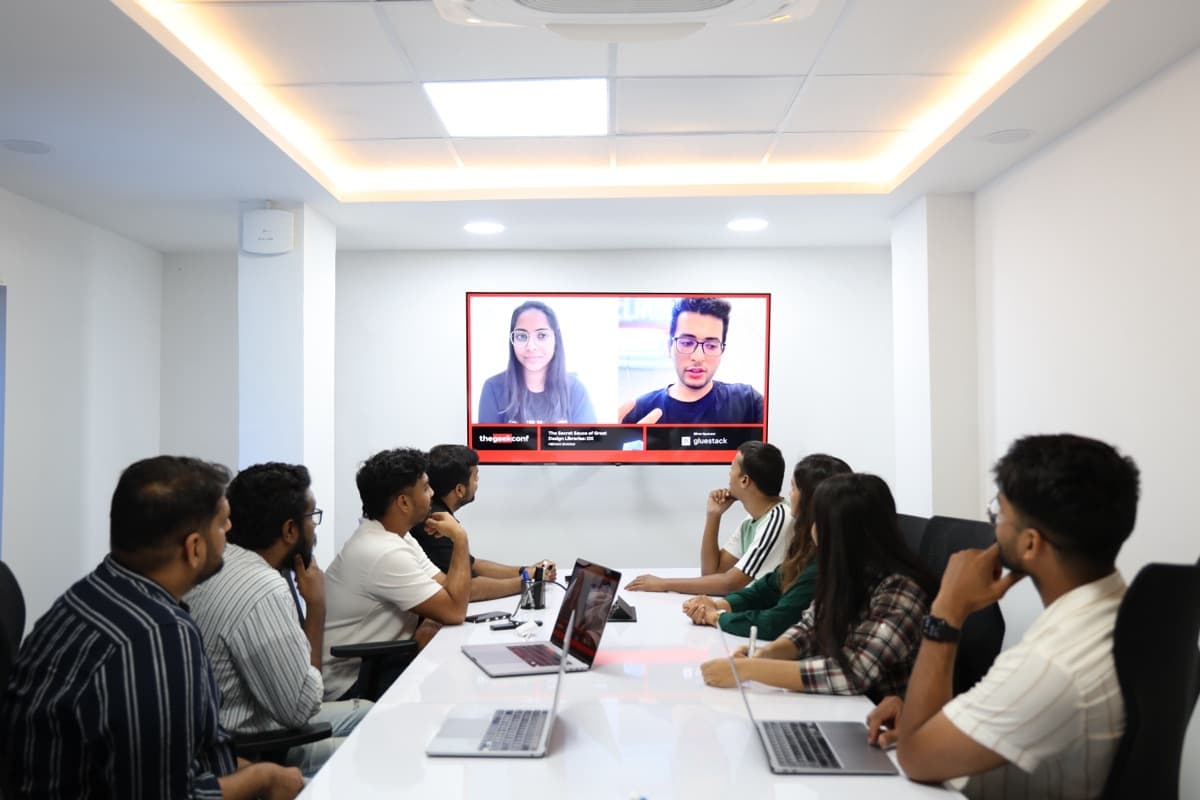
  5. A GeekyAnts team reviewing work together in a meeting room

    Weeks 7 – 8

    Optimization & Handoff

    Phase 05

    We refine the system for the bottom line. Through semantic caching, prompt compression, and model routing, we typically achieve a 40–70% reduction in operating costs. We hand off a documented, tested, and monitored system that your team can actually own.

    Strategic Outputs:

    • Performance tuning, full operations documentation
    • A comprehensive knowledge transfer to your internal team
Years of Engineering Products
20+

Products Shipped to Production
1000+
Engineers
350+
Projects
600+

Want to discuss more?

Tell us where your AI roadmap is stuck. A senior architect will map the fastest path to production.
Talk to an AI Architect

Industries

Engineering AI Digital Products Across Every Industry

We build industry-compliant, high-concurrency systems for every vertical. From HIPAA in Healthcare to real-time precision in Fintech, our engineering pods adapt to the regulatory and technical demands of your specific AI digital product.

Partners

Partnered With the Platforms That Power Modern Enterprise.

  • AWSCONSULTING PARTNER
  • VercelOFFICIAL PARTNER
  • GitHubTECHNOLOGY PARTNER
  • Anthropic/ClaudeMEMBER OF THE CLAUDE PARTNER NETWORK (Services Track)
  • OpenAISELECT PARTNER

Technologies

Technology We Work With

We are model-agnostic and framework-flexible. We choose the right tool for your requirements.
  • GPT
  • Google gemini
  • Anthropic Claude
  • Meta Llama 2
  • Mistral AI
  • Cohere

Download the AI-Native Engineering Stack Guide

See how our AI stack powers real-world AI products, including the tools we use, the architecture patterns behind them, and the measurable results they delivered across GeekyAnts projects.

Services

More Ways We Can Help You with AI-Powered Product

Talk to Our AI Experts
Laptop showing an analytics dashboard

Prototype to Production

We transition your MVP into a professional-grade system by implementing the infrastructure, security, and monitoring required for market deployment.
Rendered neural sphere of dots and lines

AI-Native Engineering

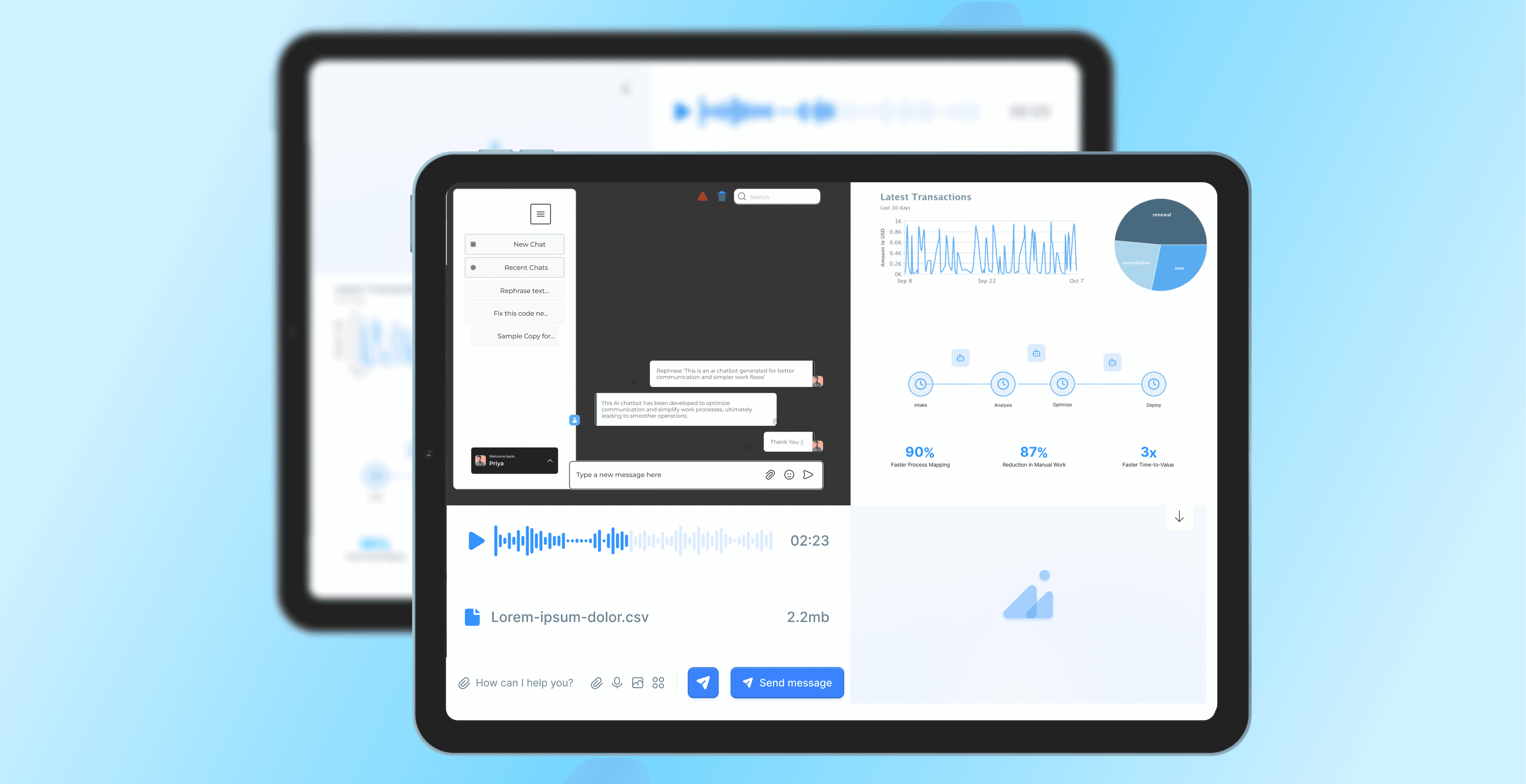
We integrate AI into your core architecture using RAG pipelines, LLM orchestration, and agent frameworks, ensuring AI is a functional engine, not an afterthought.
Network cabling in server racks

Fractional Engineering Team

We help companies build an AI native engineering team by providing dedicated pods of senior engineers who embed into your workflow, shipping at high velocity without the overhead of internal hiring.
Long data centre corridor with glass doors

Scaling MVP to Market Leader

We manage the complex transition to microservices, database optimization, and infrastructure scaling as you achieve product-market fit.
Multicoloured glass cube on a white ground

Product Studio for the AI Era

We provide the strategic leadership necessary to navigate the "hard middle" between a prototype and a global scale-up.

Contact

Demos Don't Scale. Systems Do

Book a technical strategy call to harden your AI native engineering architecture for production-grade traffic.

Contact us

Insights

Our Latest Thinking

FAQ

Frequently Asked Questions

Start a project

The Right Conversation Can Save You Six Months.