
Introduction
Modern applications are increasingly tested through automated CI/CD pipelines. Tools such as Playwright allow teams to execute hundreds or thousands of browser tests consistently across environments. However, automation solves only one part of the problem: detecting that something failed.
The more time-consuming problem often starts after the failure.
A CI pipeline may report:
FAILED checkout.spec.ts

TimeoutError:

Expected "Order confirmed" to be visible
But this message does not immediately tell the engineer what actually went wrong.
- Was the application broken?
- Was the API unavailable?
- Was the test data incorrect?
- Did a network request fail?
- Was the locator outdated?
- Was there a race condition?
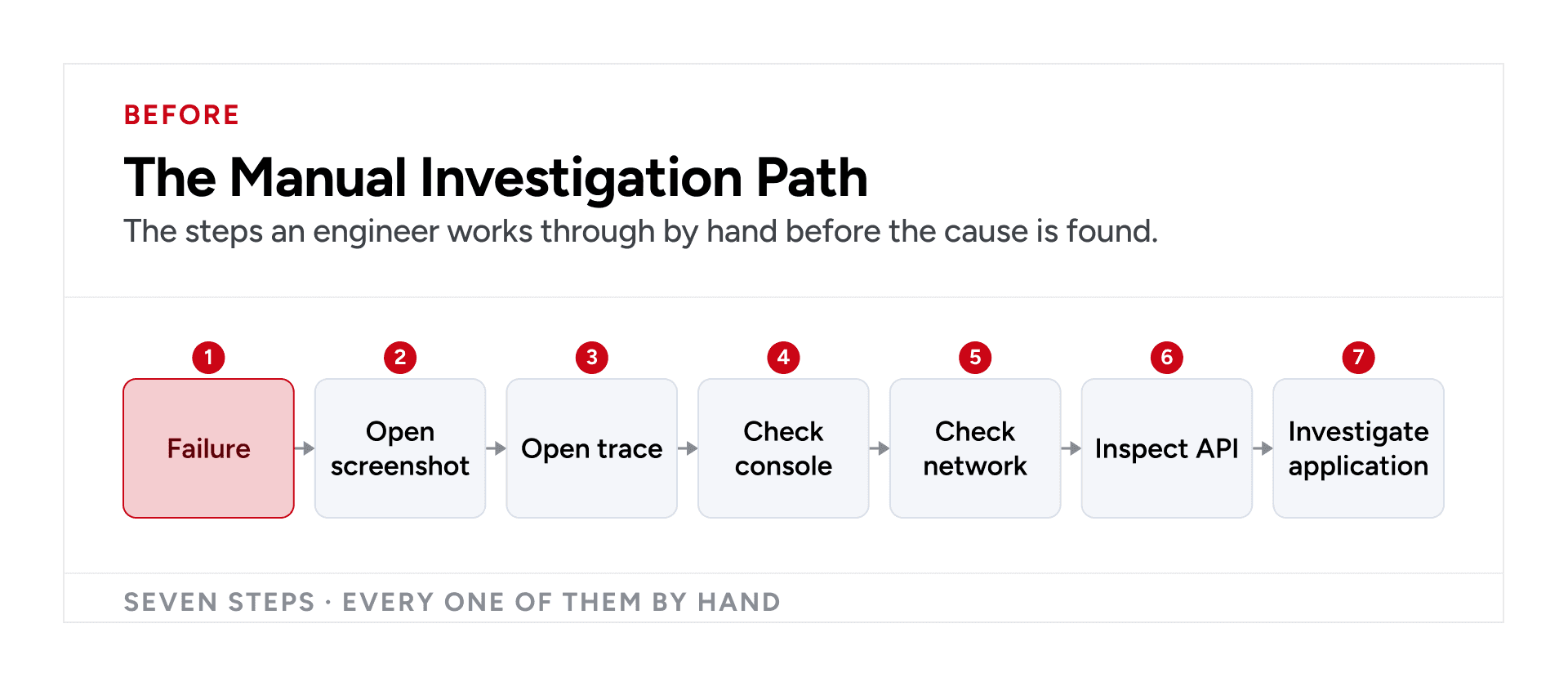
As automation suites grow, engineers can spend considerable time collecting screenshots, checking logs, opening traces, inspecting network requests, and reproducing failures locally.
This creates an opportunity for AI.
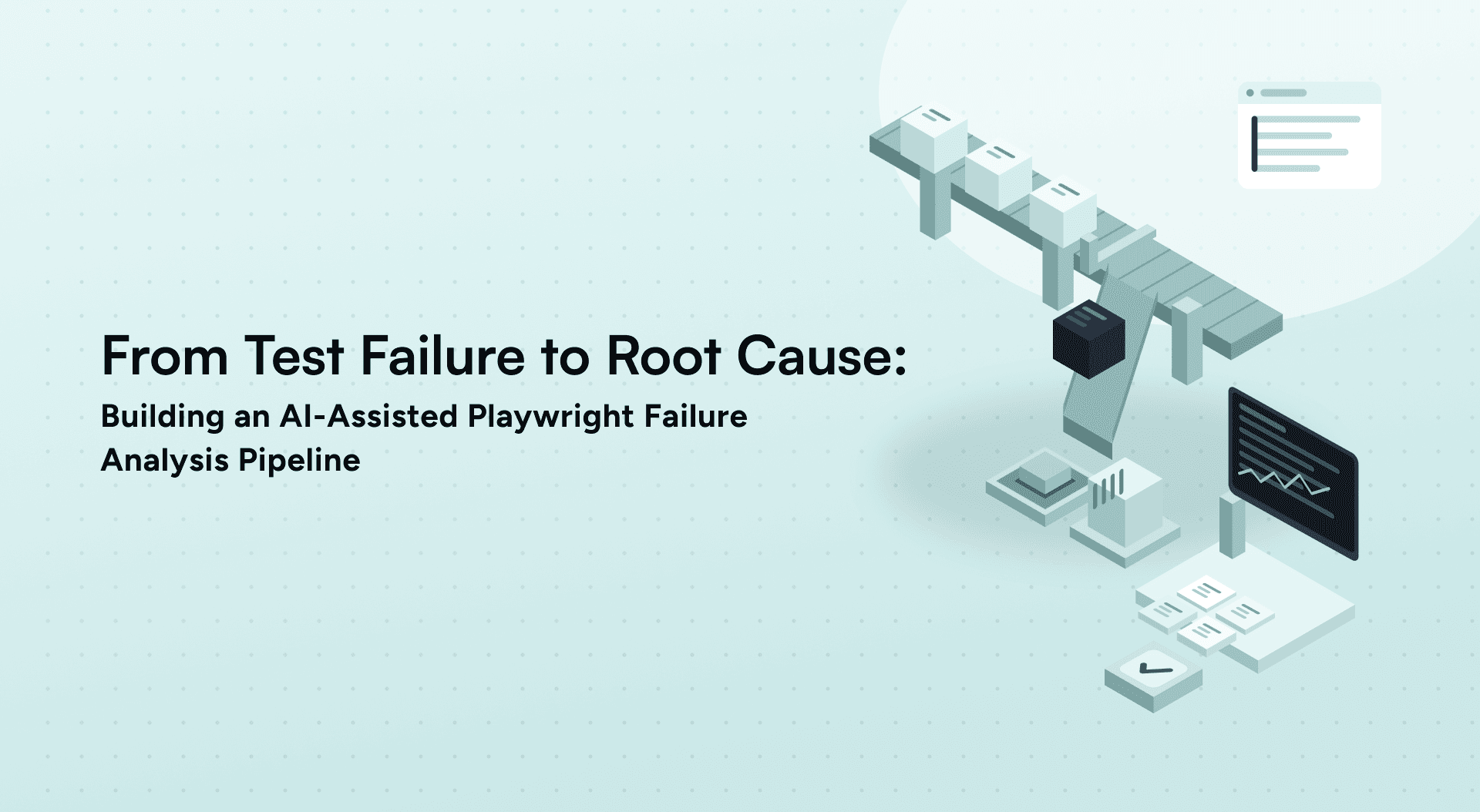
Instead of allowing AI to execute or modify tests autonomously, we can use it as a failure-analysis layer that consumes the evidence already produced by Playwright and generates an evidence-backed diagnosis for an engineer to validate.
The resulting workflow is:
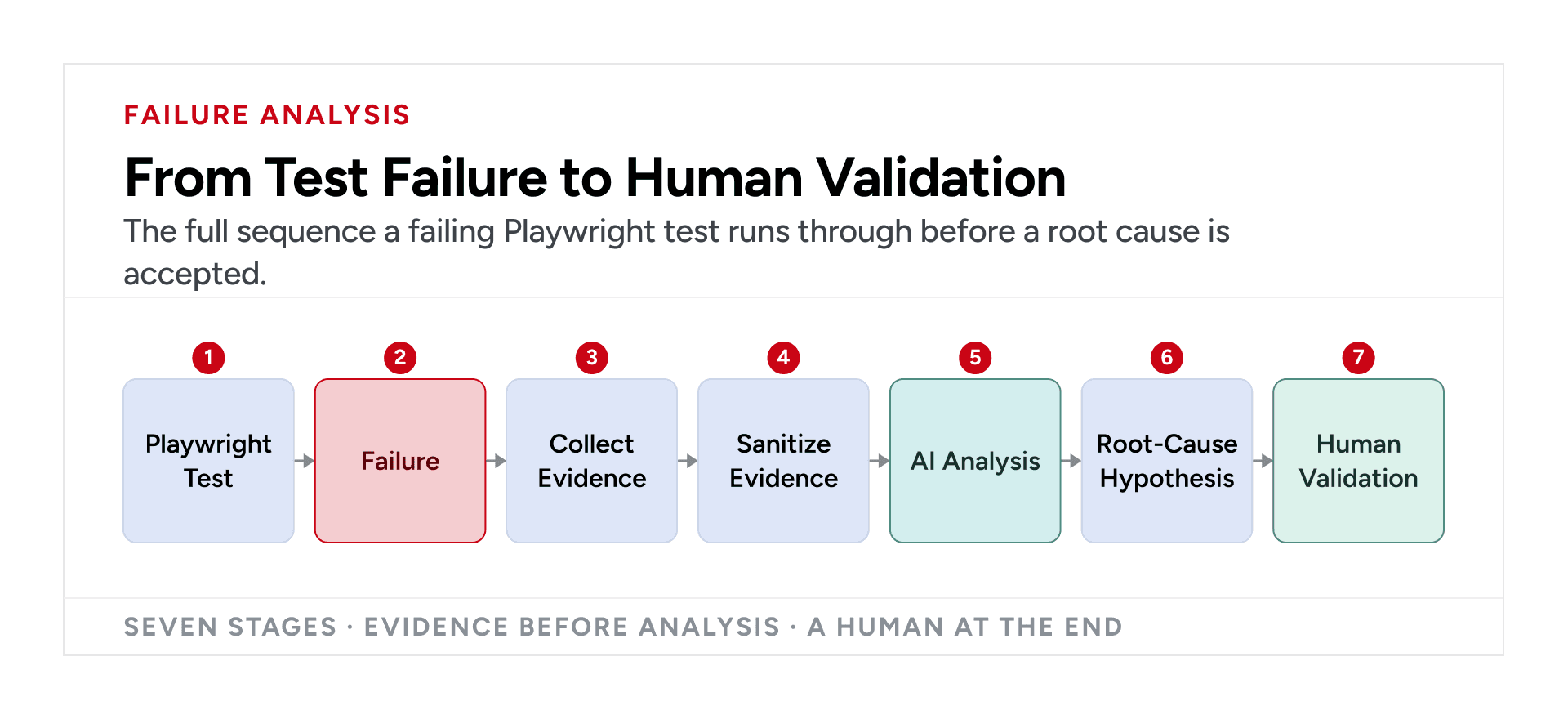
The goal is not to replace the QA engineer, but to reduce the distance between ‘the test failed’ and ‘this is why it probably failed.’
The Problem With Traditional Test Failure Analysis
A typical Playwright test might look like this:
test("user can complete checkout", async ({ page }) => {

await page.goto("/checkout");

await page.getByRole("button", {

name: "Place Order"

}).click();

await expect(

page.getByText("Order confirmed")

).toBeVisible();

});
Suppose the test fails. The CI system might only show:
TimeoutError:
"Order confirmed" was not visible
The underlying cause could exist at several layers:
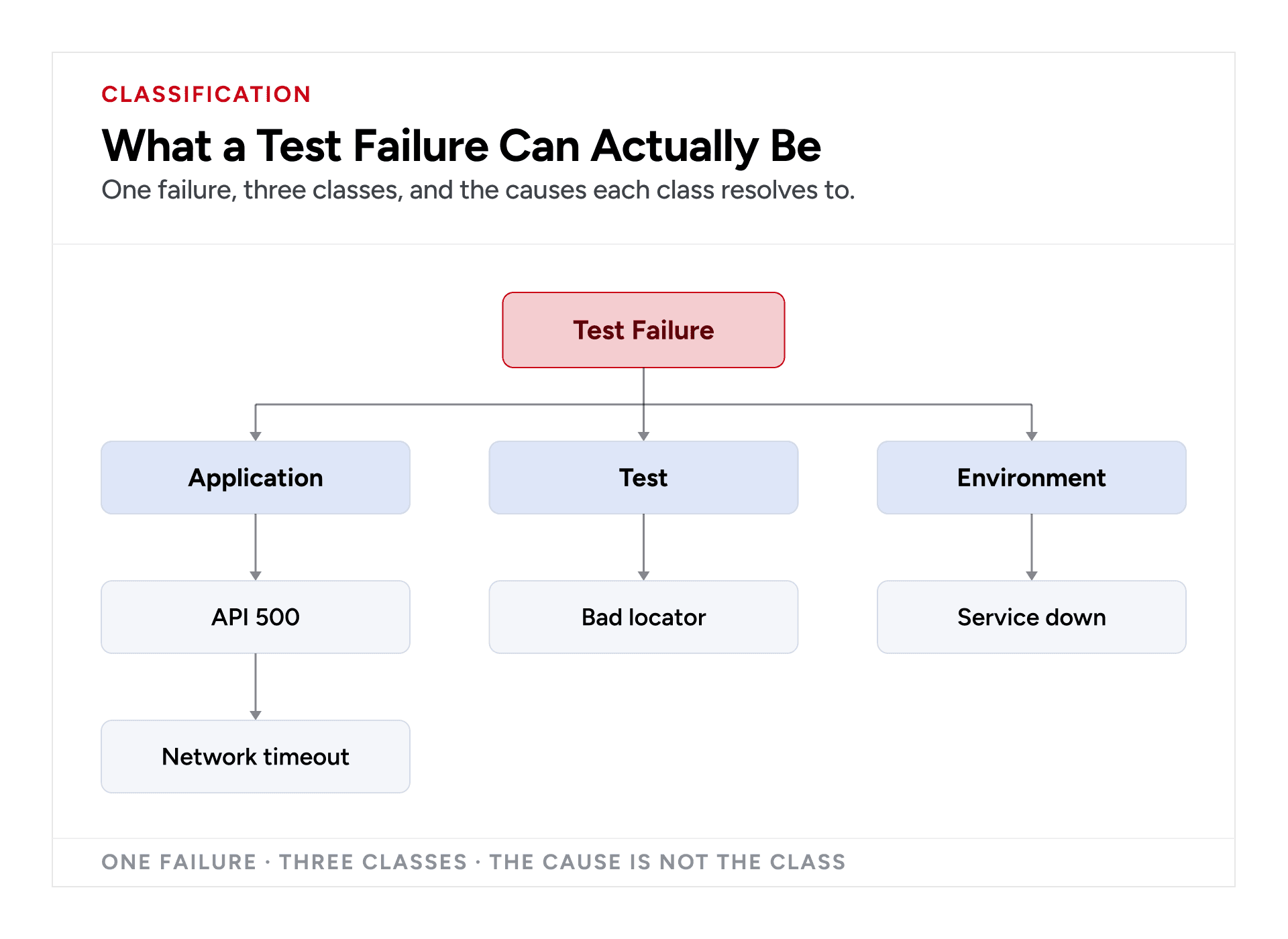
A useful failure-analysis system therefore needs more context than the final assertion message.
Turning Playwright Into an Evidence Source
Playwright already provides many of the artifacts required for deeper diagnosis.
Its Trace Viewer can expose the action timeline, DOM snapshots, screenshots, console output, network activity, source information, and other metadata associated with a test execution.
Instead of treating a failed test as:
PASS / FAIL
we can treat it as:
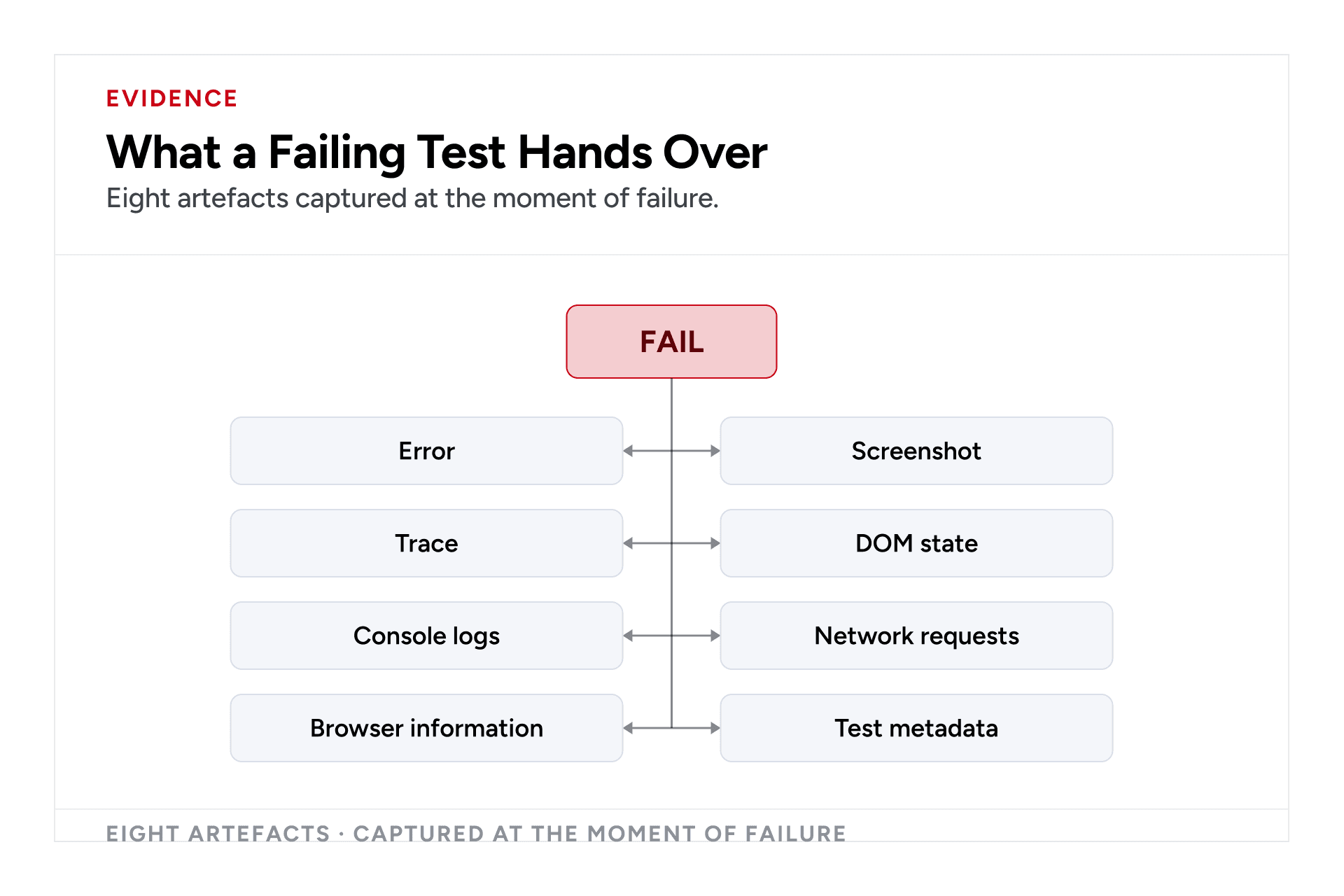
For CI, Playwright supports collecting traces on retry and screenshots when failures occur, providing useful debugging information without collecting the full set of diagnostic artifacts for every successful test.
A practical configuration is:
import { defineConfig } from "@playwright/test";

export default defineConfig({

retries: 1,

use: {

trace: "on-first-retry",

screenshot: "only-on-failure",

video: "retain-on-failure"

}

});
The result is a much richer failure package.
The AI-Assisted Failure Analysis Architecture
The proposed architecture separates execution from reasoning.
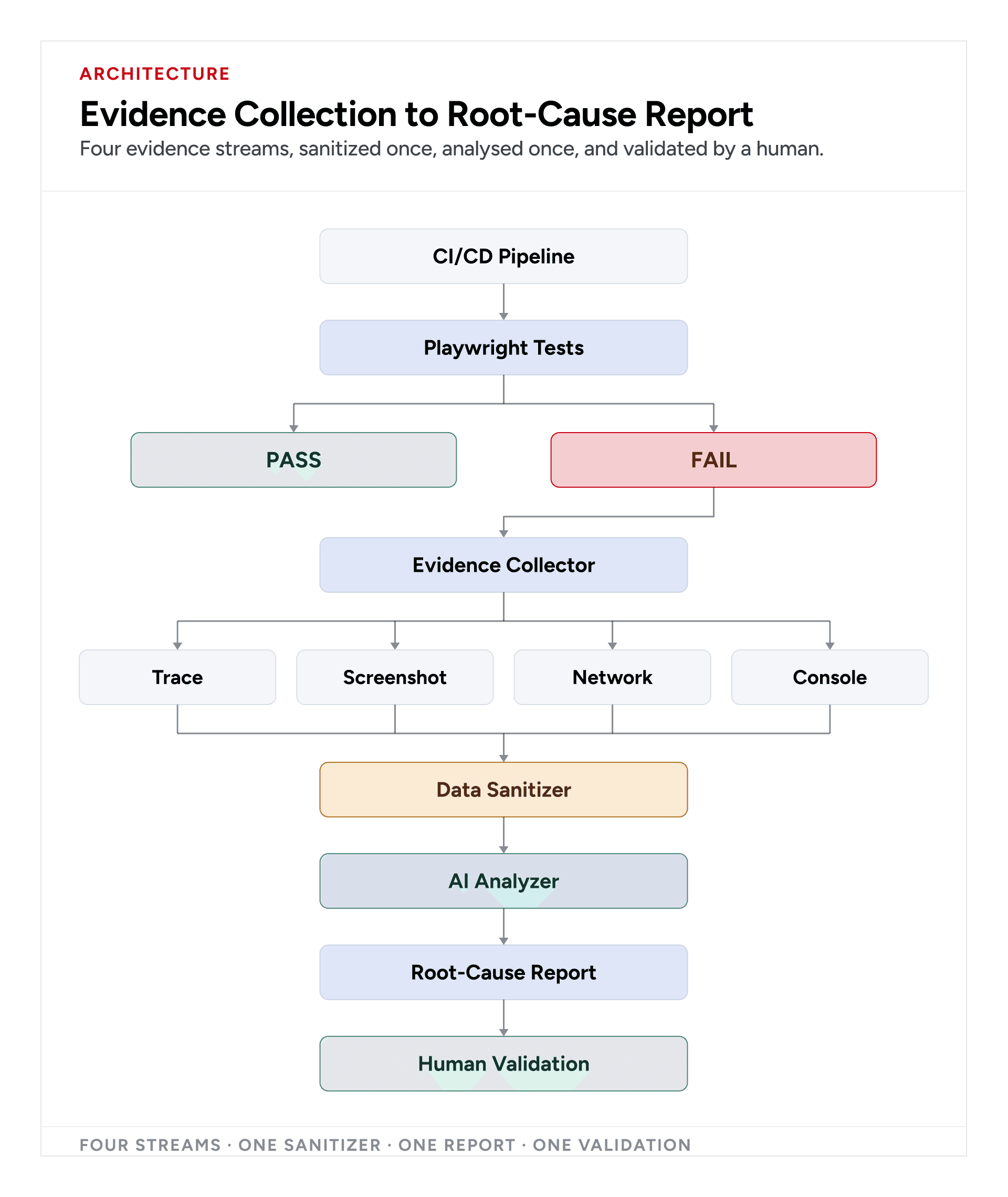
This architecture keeps Playwright's role deterministic.
AI does not decide whether a test passes or fails. Playwright makes that decision. AI helps explain why the failure may have happened.
Building a Structured Failure Package
Sending an entire CI workspace to an AI model would be inefficient and potentially unsafe. Instead, the pipeline can create a structured failure object:
interface FailureEvidence {

testName: string;

file: string;

error: string;

url?: string;

browser?: string;

duration?: number;

consoleErrors: string[];

networkFailures: string[];

screenshotPath?: string;

tracePath?: string;

}
For example:
{

"testName": "checkout payment",

"file": "checkout.spec.ts",

"error": "Order confirmation not visible",

"url": "/checkout",

"browser": "chromium",

"consoleErrors": [],

"networkFailures": [

"POST /api/payment -> 500"

]

}
The AI now has structured context instead of receiving only:
Test failed.
Why?
What the AI Should Analyze
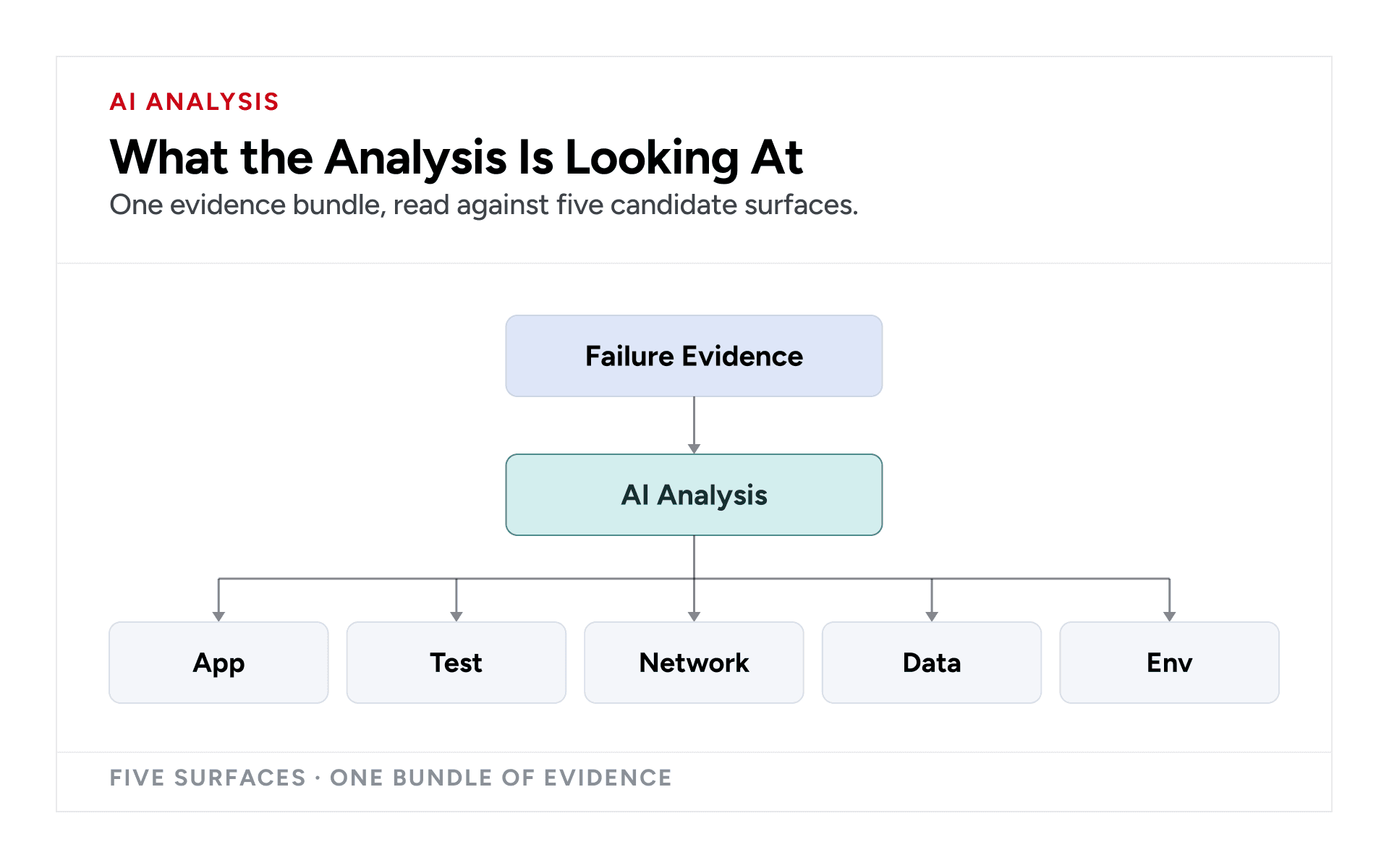
The AI layer can classify failures into a controlled set of categories:
- Application
- Test
- Network
- Test Data
- Environment
- Unknown
The analysis flow becomes:
A structured prompt can encourage a consistent output format:
Analyze the Playwright failure using only the supplied evidence. Classify the failure as:
APPLICATION
TEST
NETWORK
DATA
ENVIRONMENT
UNKNOWN
Return:
- Classification
- Probable root cause
- Supporting evidence
- Confidence
- Recommended next investigation
Do not invent information.
Do not modify the test.
Do not modify application code.
The AI could then return:
{
"classification": "APPLICATION",
"rootCause": "Payment API returned HTTP 500",
"confidence": 0.91, "evidence": [ "POST /api/payment returned 500",
"Checkout page loaded successfully"
],
"nextStep": "Inspect payment service logs"
}
The distinction between evidence and AI interpretation is important:
Observed Evidence
≠
AI Hypothesis
Example: Diagnosing a Checkout Failure
Imagine that Playwright reports:
Timeout:
"Order confirmed" was not visible
A conventional debugging process might look like:
The AI-assisted workflow can consolidate this:
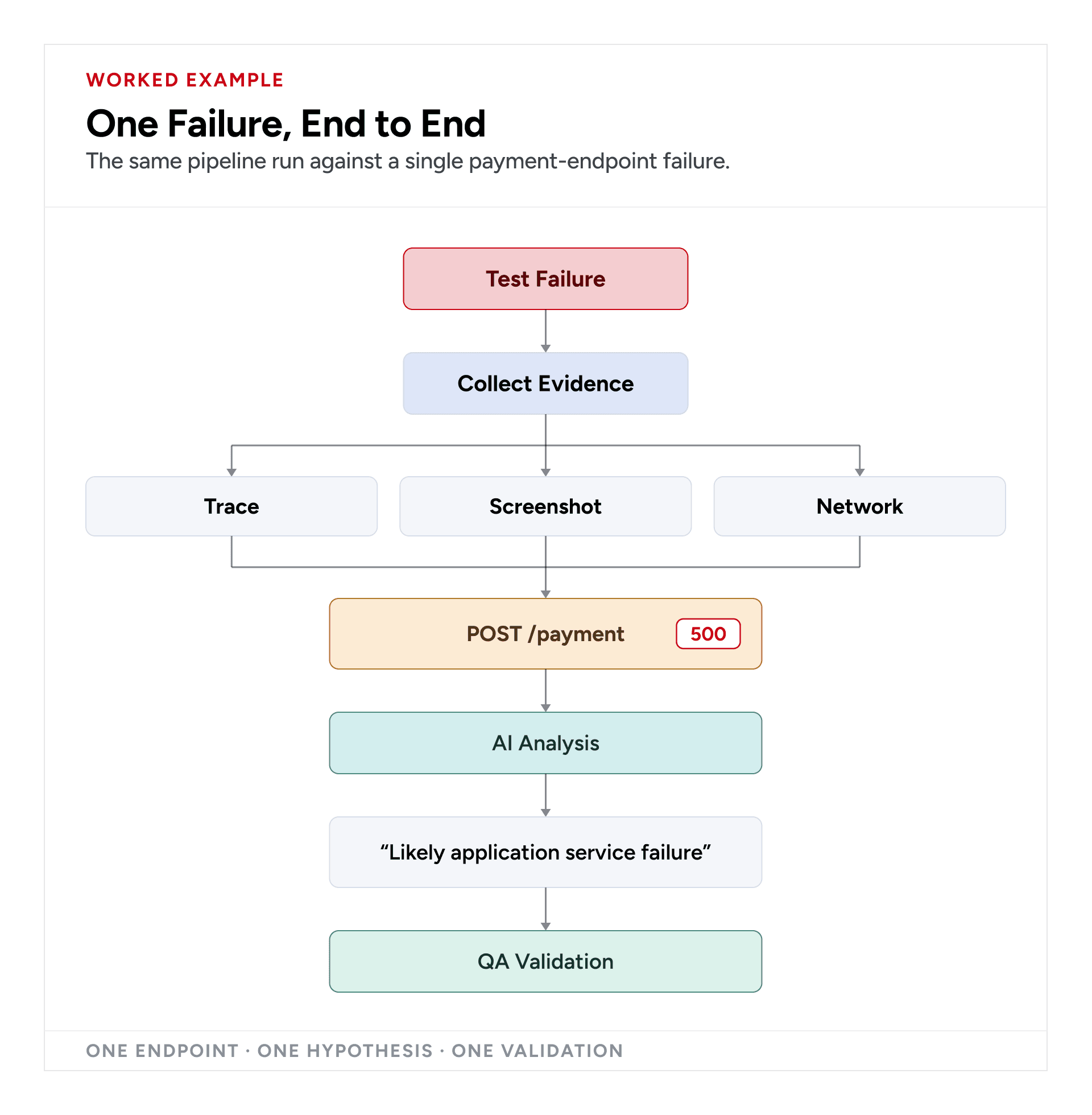
The engineer still validates the diagnosis, but the investigation starts with a more focused hypothesis.
Why AI Should Not Automatically Fix the Test
An obvious extension would be:
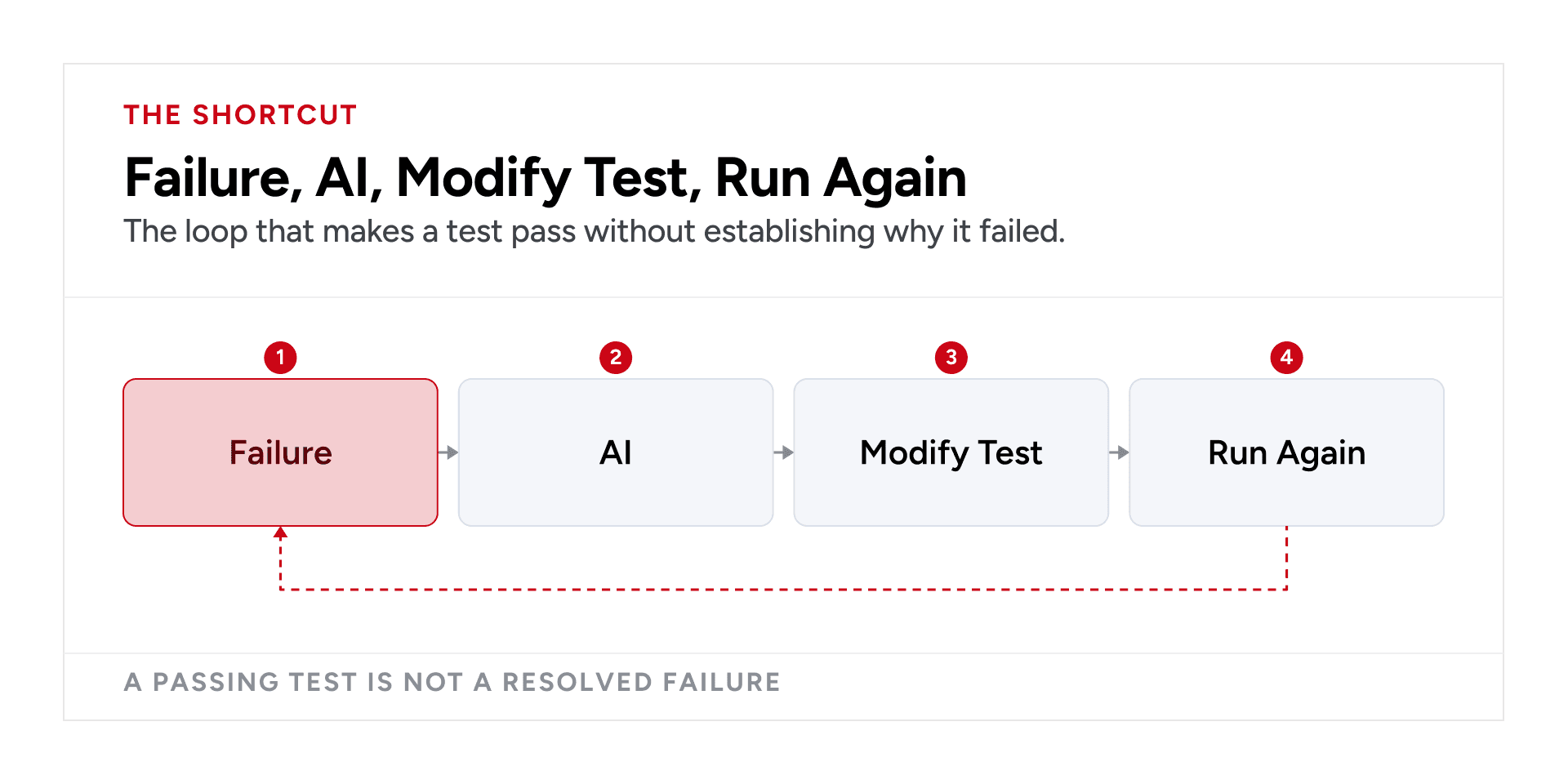
This can create a serious testing risk. Suppose the application introduces a genuine regression, but the AI incorrectly concludes that the locator is outdated. It changes the test. The test passes. The application defect remains.
A safer architecture is:
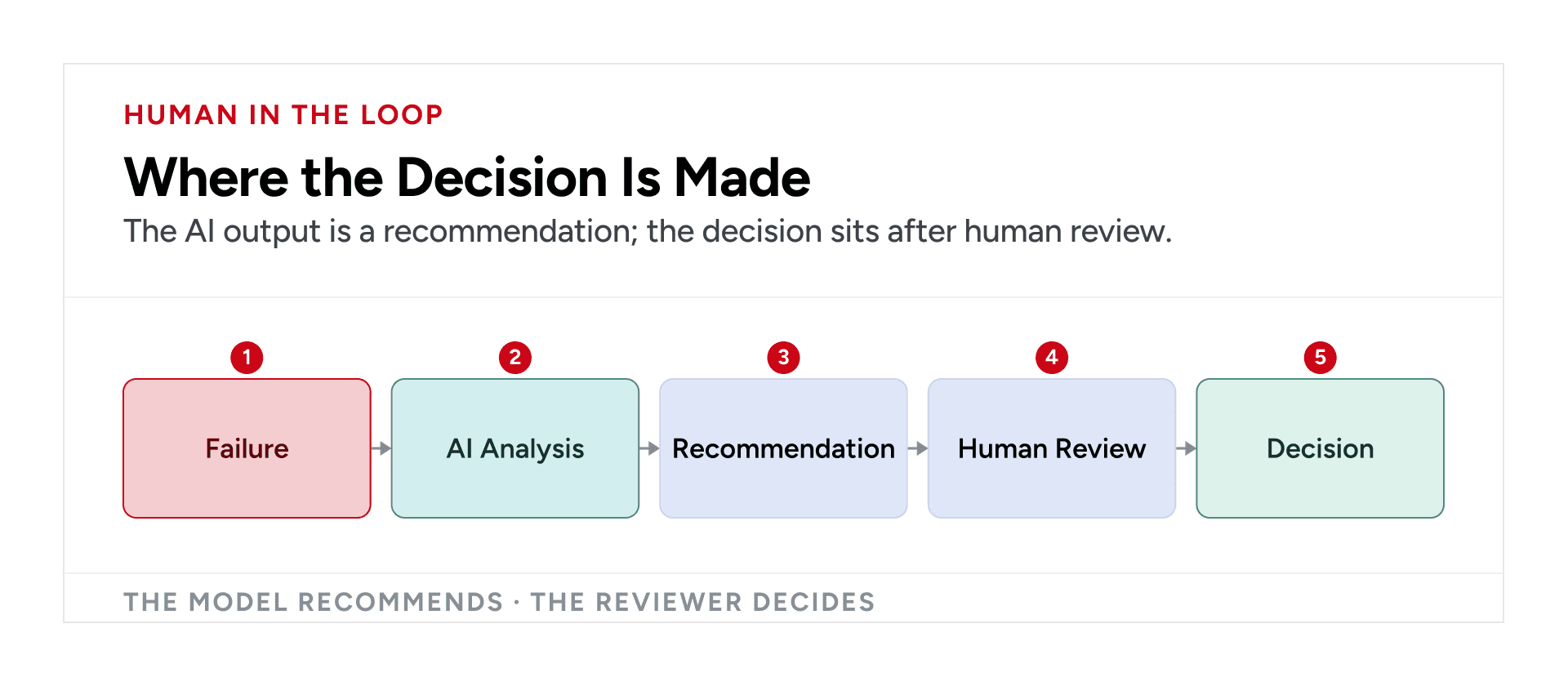
AI therefore becomes a diagnostic assistant rather than an autonomous test maintainer.
Handling Security and Sensitive Test Data
Failure artifacts can contain sensitive information:
- Access tokens
- Cookies
- User information
- API payloads
- Authorization headers
- Screenshots
Therefore, evidence should be sanitized before it reaches the AI service. A simple example:
function sanitize(value: string): string {

return value

.replace(

/Bearer\s+\S+/g,

"Bearer [REDACTED]"

)

.replace(

/password=\S+/gi,

"password=[REDACTED]"

);

}
The complete flow becomes:
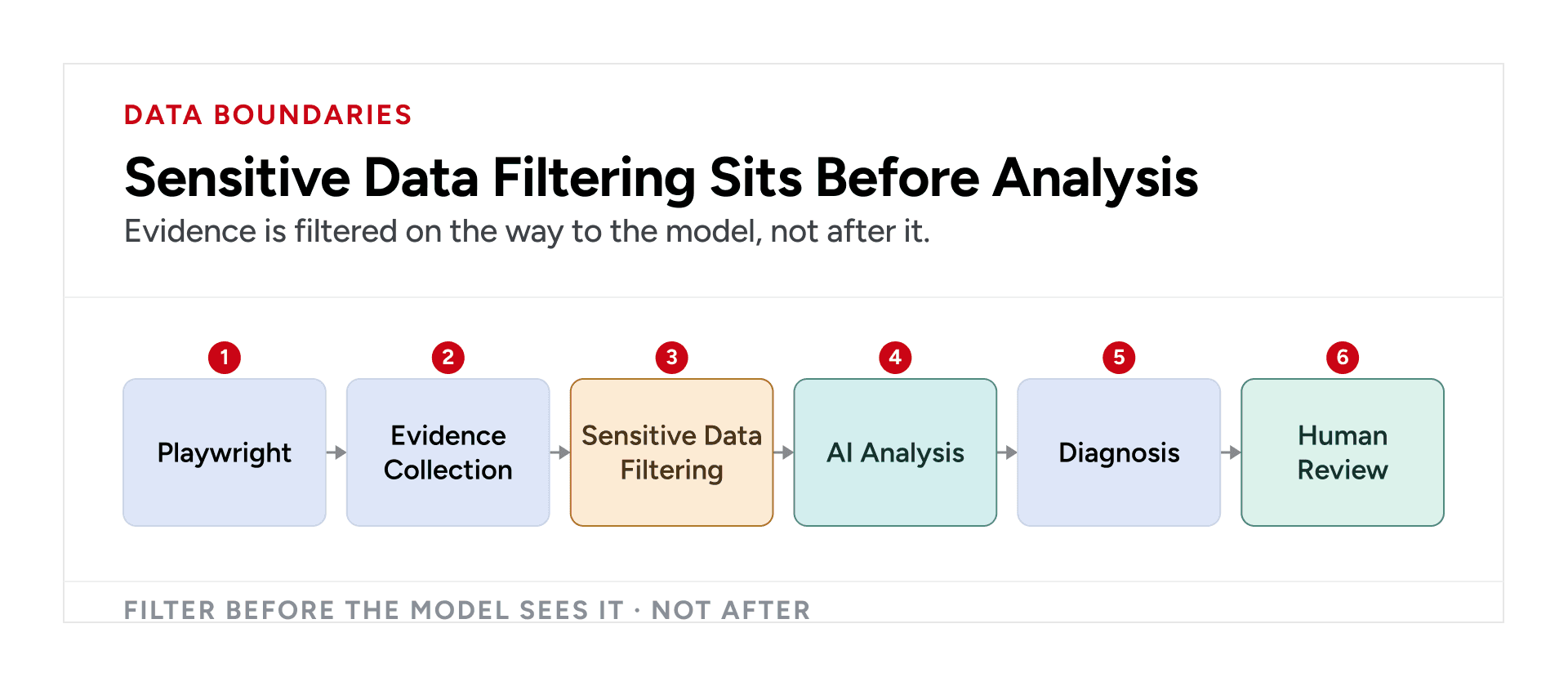
For production implementations, sanitization should be treated as part of the architecture rather than an optional enhancement.
Measuring Whether AI Actually Helps
A key part of evaluating this system is experimentation.
Producing an AI-generated summary is straightforward. The more useful question is whether the system reduces engineering effort while maintaining acceptable diagnostic accuracy.
A controlled experiment could contain:
- 10 locator failures
- 10 API failures
- 10 network failures
- 10 data failures
- 10 environment failures
Then compare:
Metric Traditional AI-Assisted |
Mean diagnosis time Measure Measure |
Correct classification Measure Measure |
Incorrect classification Measure Measure |
Human intervention Measure Measure |
Analysis latency Measure Measure |
One particularly useful metric is Mean Time to Diagnose (MTTD). For example:
Traditional:
Failure → Investigation → Root Cause
18 min
AI-assisted:
Failure → AI Analysis → Validation → Root Cause
5 min 2 min
These numbers should come from the actual experiment rather than assumptions.
Failure Modes of AI-Assisted Diagnosis
AI does not eliminate debugging problems. It introduces another layer of possible failure.
- The system may classify an application defect as a test defect.
- It may generate a plausible explanation when insufficient evidence exists.
- It may infer behavior that was never present in the application.
- It may become overconfident when the available evidence is incomplete.
Therefore, the system should support an explicit unknown state:
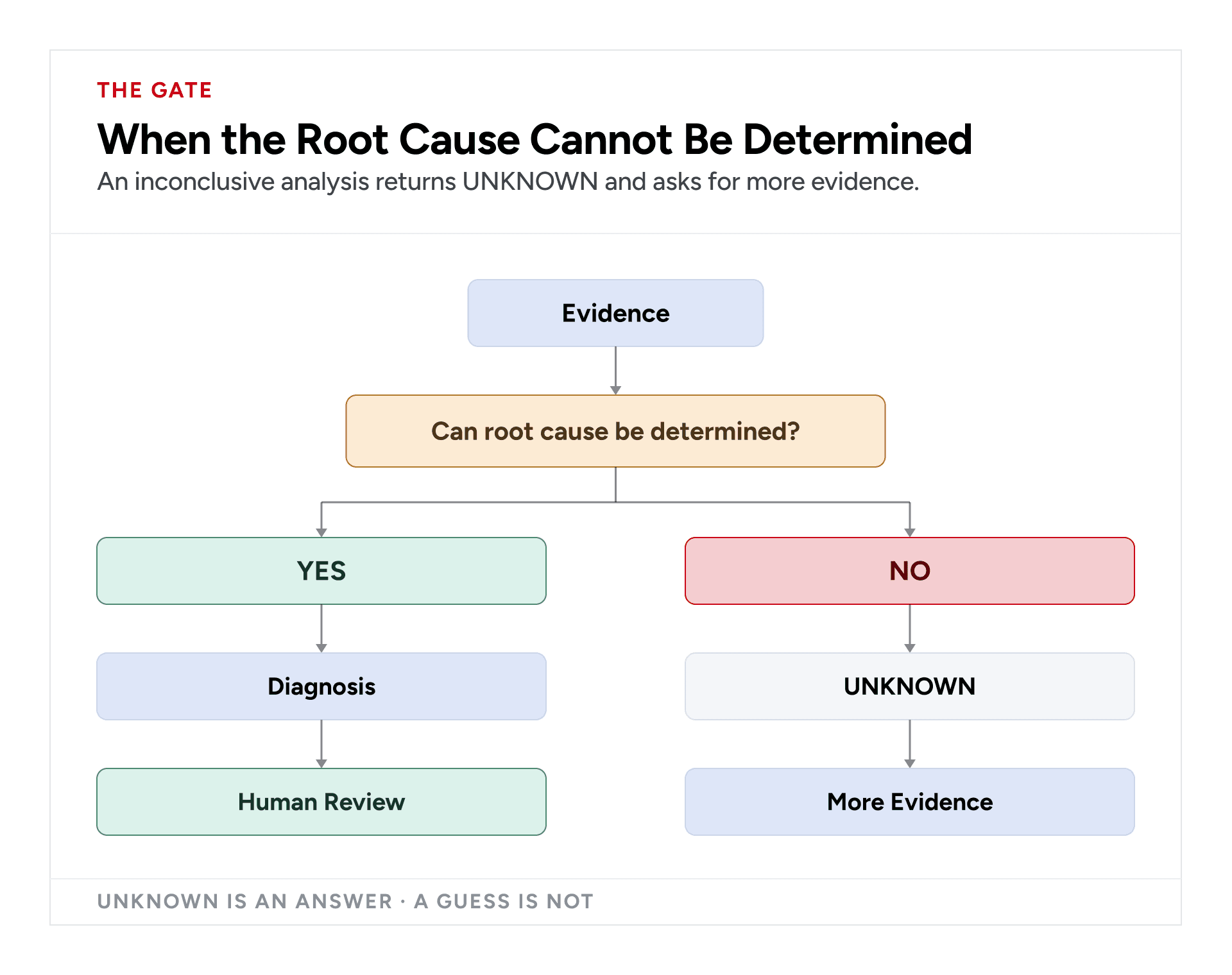
A system that says “insufficient evidence” is often safer than one that confidently invents a root cause.
Production-Ready Pipeline
A production implementation can evolve into:
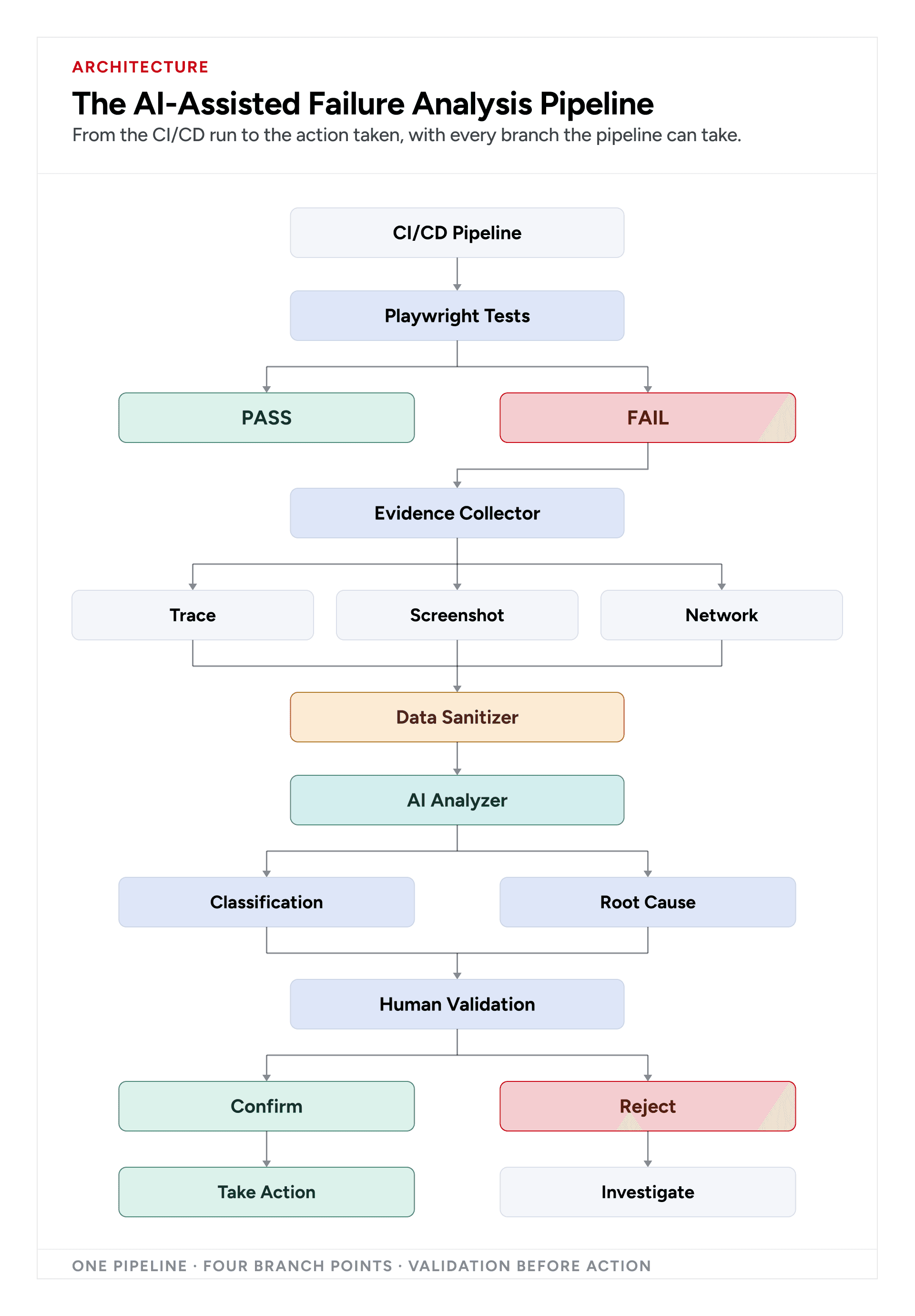
This architecture can also be extended with historical test results, defect-management systems, CI metadata, and application logs. As the evidence pipeline becomes more reliable, the AI analysis can provide more useful diagnoses.
Conclusion
Automated testing addresses a major part of software quality workflows by executing tests consistently at scale.
The next challenge is understanding failures efficiently.
An AI-assisted Playwright failure analysis pipeline addresses this by combining:
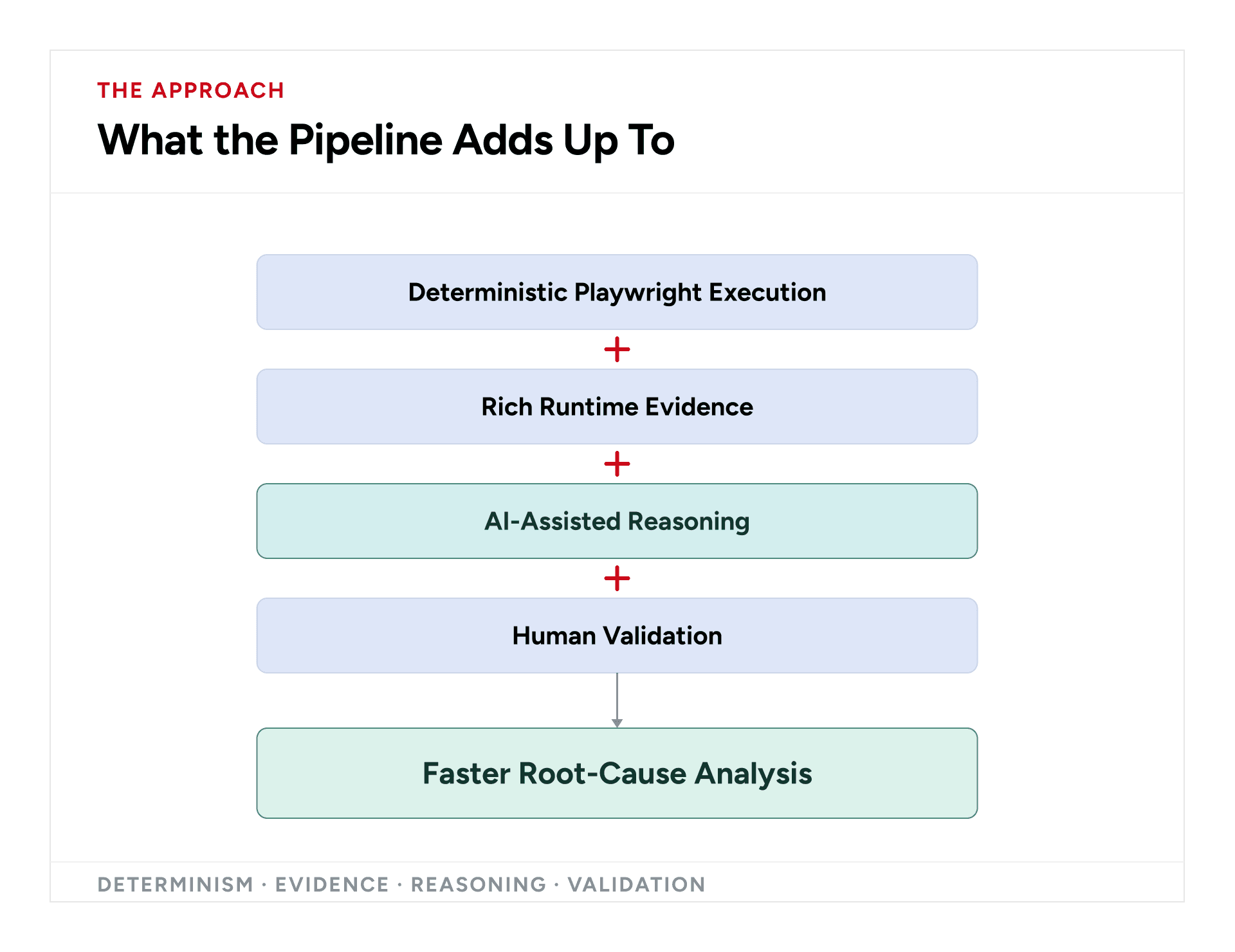
The key is not to position AI as a replacement for Playwright or QA engineers.
Playwright should remain responsible for deterministic test execution. AI should focus on interpreting evidence, correlating signals, classifying failures, and suggesting where engineers should investigate.
The real measure of success is therefore not:
“Can AI explain a failed test?”
It is:
“Can AI measurably reduce the time engineers spend moving from a test failure to a validated root cause without introducing unacceptable diagnostic errors?”
That is a problem that can be tested, measured, and improved. This makes AI-assisted failure analysis a practical engineering problem rather than another demonstration of generative AI.
From Test Failure to Faster Diagnosis
AI-assisted failure analysis is most useful when it strengthens the testing workflow without replacing deterministic execution or human judgment. By combining Playwright evidence with structured AI analysis and human validation, teams can investigate failures with clearer context and make informed decisions about the next step. For teams looking to extend this approach across automated testing and continuous validation, explore GeekyAnts’ Automation Testing Services.